
Optimum pre workout breakfast for wholefood performance
The optimum pre-workout breakfast is a carbohydrate-forward wholefood meal with moderate protein and low fat, eaten 2–3 hours before training. Carbohydrate is the primary fuel for most exercise intensities, and the closer you are to your session, the simpler and more digestible that carbohydrate should be. The British Dietetic Association (BDA) advises keeping protein consistent across the day, with carbohydrate taking priority in the pre-session window.
Two examples to start with:
- 60–90+ minutes of moderate or high intensity: Ancient grain porridge made with spelt or einkorn flour, topped with a tablespoon of Granavitalis Raw Organic Pecan Butter and half a banana. Eat 2–3 hours before your session.
- Short or early-morning session under 60 minutes: A banana and a rice cake with a thin spread of nut butter, eaten 20–30 minutes before you start.
Table of Contents
- How do you adapt your pre-workout breakfast to your training goal?
- Eight wholefood breakfast builds you can make this week
- What portion sizes and foods should you avoid before training?
- How to prep your pre-workout breakfasts in advance
- Who should get professional advice before changing their pre-workout diet?
- Key takeaways
- Why wholefoods make the better pre-workout choice
- Build your optimum pre-workout breakfast with Granavitalis
- Useful sources
How do you adapt your pre-workout breakfast to your training goal?
Timing and macronutrient balance shift depending on what you are about to do. A 45-minute steady run needs a different approach from a two-hour endurance ride or a high-intensity strength session.
Timing windows at a glance:
| Session type | Lead time | What to prioritise | Example |
|---|---|---|---|
| Short / low intensity (<60 min) | 20–30 min | Simple carbohydrate, minimal fat/fibre | Banana, rice cake with nut butter |
| Moderate intensity (60–90 min) | 1–2 hours | Moderate carb + small protein | Oats with fruit and a spoonful of nut butter |
| Long / high intensity (90+ min) | 2–3 hours | Slow-release carb + moderate protein, low fat | Ancient grain porridge, eggs on wholegrain toast |
| Fasted / early morning | 15–20 min | Liquid or fast carb top-up | Smoothie, honey in warm water, small banana |
The UK Sports Institute’s fuelling guidance recommends consuming your last main meal 2–4 hours before a session, with a small top-up 1–2 hours before if needed. Fat and high-fibre foods slow gastric emptying, so both should be kept low the closer you get to your start time.
For goal-dependent fuelling, training intensity determines how precisely you need to plan. Lightly fasted low-intensity work can be appropriate for some people, while long or high-intensity sessions require deliberate carbohydrate planning to avoid glycogen depletion mid-session.
Pro Tip: If nausea or nerves kill your appetite before a hard session, keep a small pot of honey or a ripe banana in your kit bag. A fast-carb top-up 15–20 minutes before you start is far better than training on empty.
Eight wholefood breakfast builds you can make this week
Sports nutritionists favour wholefoods for long-term recovery and immune support, while accepting pragmatic use of refined low-fibre carbs immediately pre-session when GI comfort is the priority.
Carbohydrate targets by training intensity (g per kg of body weight per day):
| Activity level | Carbohydrate target |
|---|---|
| Light (e.g. walking, yoga) | 3–5 g/kg |
| High endurance (e.g. marathon training) | 6 g/kg |
Use these ranges to sense-check whether your breakfast portion is proportionate to what you are about to do.
Eight quick builds:
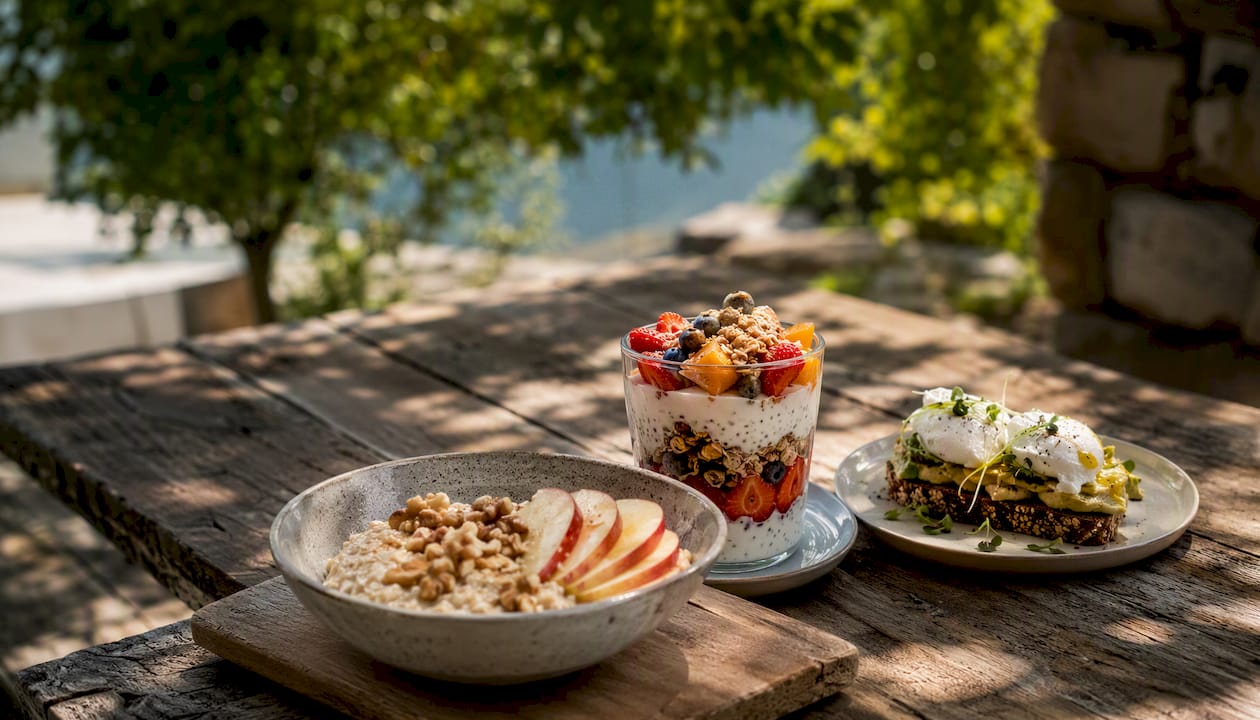
- Ancient grain porridge (2–3 hrs before): Cook spelt or einkorn with oat milk, top with half a banana and a tablespoon of Granavitalis Raw Organic Pecan Butter. Roughly 55–65 g carbohydrate, 12–15 g protein. See the high-protein instant oatmeal guide for exact ratios.
- Vegan protein oats (1.5–2 hrs before): Rolled oats blended with Granavitalis high-impact vegan protein, topped with berries and a pinch of Granavitalis Superfoods Immunity Mix. Good for plant-based athletes needing a consistent amino acid intake.
- Eggs on wholegrain toast (2 hrs before): Two scrambled eggs on two slices of wholegrain sourdough. Classic carb-protein pairing; swap to spelt bread for an ancient grain base.
- Rice cakes with nut butter and banana (30–45 min before): Two rice cakes, a tablespoon of nut butter, half a banana. Low fibre, fast carbohydrate, easy on the stomach.
- Greek yoghurt with oats and honey (1–1.5 hrs before): 150 g Greek yoghurt, 40 g oats, a teaspoon of honey. High protein, moderate carbohydrate, easy to digest.
- Smoothie (20–30 min before): Blend a banana, oat milk, a tablespoon of Granavitalis Organic Nut & Seed Butter, and a teaspoon of Granavitalis Beauty Superfoods Mix (açaí, chia, acerola). Liquid meals absorb faster and suit people who struggle to eat solid food early.
- Overnight oats (ready the night before): Soak 60 g oats in oat milk overnight with chia seeds and a spoonful of nut butter. Grab and go; see the high-protein overnight oats method for protein-boosted variants.
- Honey and banana on white toast (15–20 min before): Lowest-fibre option for those with very little time. Fast carbohydrate, minimal GI risk.
For plant-based swaps, Granavitalis’s easy plant-based breakfasts guide covers vegan protein sources that work well in each of these builds.
What portion sizes and foods should you avoid before training?
Simple hand-portion rules remove the need to weigh everything at 6 AM.
A fist-sized portion of carbohydrate (roughly 40–60 g cooked oats or two slices of bread) suits most moderate sessions. Add a palm-sized protein source (two eggs, 150 g yoghurt, or a scoop of vegan protein). Keep fat to a thumb-sized portion or less within 90 minutes of training.
Avoid within 60 minutes of your session:
- High-fat foods (full-fat cheese, large amounts of nut butter, avocado in quantity) — fat slows gastric emptying and can cause cramping.
- High-fibre foods (bran cereals, raw cruciferous vegetables, whole pulses) — fibre ferments in the gut under exercise stress and increases GI distress risk.
- Spicy foods — they irritate the gut lining and compound nausea during high-intensity work.
Hydration: Aim to arrive at your session well hydrated. The British Nutrition Foundation recommends drinking fluids before, during, and after exercise; for sessions under 60 minutes, water is sufficient. For longer or more intense efforts, a drink containing carbohydrate and electrolytes can help maintain performance.
Caffeine: A moderate amount of caffeine (coffee or green tea) with your pre-workout meal is well tolerated by most people and can sharpen focus. Avoid it on an empty stomach if you are prone to nausea.
How to prep your pre-workout breakfasts in advance
Batch preparation cuts decision fatigue on training mornings.
- Sunday overnight oats batch: Prepare four jars of oats soaked in oat milk with chia seeds. Store in the fridge for up to four days. Add nut butter and fruit each morning.
- Pre-portioned nut butter: Spoon individual servings of Granavitalis Raw Organic Pecan Butter into small pots or reusable pouches. Grab one with a banana and two rice cakes for a sub-five-minute pre-session snack.
- Ancient grain porridge base: Cook a large batch of spelt or einkorn porridge, refrigerate, and reheat in two minutes. Top with whatever fruit is to hand.
UK-friendly shopping checklist:
- Carbohydrates: Rolled oats, spelt flour or einkorn flour (Granavitalis ancient grain range), wholegrain sourdough, rice cakes, bananas, honey
- Protein: Eggs, Greek yoghurt, Granavitalis high-impact vegan protein, tinned chickpeas
- Healthy fats: Granavitalis Raw Organic Pecan Butter, Granavitalis Organic Nut & Seed Butter Selection Box, Granavitalis Nibbed Hazel Nuts (for evening meals and snacks away from training)
- Superfood boosts: Granavitalis Superfoods Beauty Mix, Granavitalis Superfoods Immunity Mix, Granavitalis Immune Booster Superfood Bundle
- Fast-carb top-ups: Ripe bananas, honey sachets, rice cakes
For early mornings or travel, keep honey sachets and a banana in your bag. The ancient grains pre-workout guide has further ideas for portable wholefood options.
Who should get professional advice before changing their pre-workout diet?
Anyone managing diabetes, IBS, Crohn’s disease, pregnancy, or recovering from surgery should consult a GP, registered dietitian, or sports nutritionist before adjusting their pre-exercise nutrition, as carbohydrate and timing needs differ significantly from general guidance.
For those with GI sensitivity, liquid meals (smoothies, oat milk with protein powder) and low-fibre options (white rice, banana, honey) are safer choices than high-fibre wholegrains close to a session. The BDA’s sport and exercise resource is a useful starting point for understanding how individual health conditions interact with exercise nutrition.
This article provides general information only. Confirm guidance with a qualified dietitian or sports nutritionist for your individual circumstances.
Key takeaways
The optimum pre-workout breakfast is a carbohydrate-forward wholefood meal with moderate protein and low fat, timed to your session length and intensity.
| Point | Details |
|---|---|
| Carbohydrate is the priority | Choose slow-release carbs 2–3 hours before; switch to simple, low-fibre carbs within 60 minutes. |
| Timing windows matter | Full meal 2–3 hours before; light snack 20–30 minutes before short or early sessions. |
| Portion rule of thumb | Fist-sized carb, palm-sized protein, thumb-sized fat — scale to session intensity. |
| Avoid GI disruptors | Cut high fat, high fibre, and spicy foods within 60 minutes of training to reduce gut distress. |
| Granavitalis products | Ancient grain porridges, Raw Organic Pecan Butter, and Superfoods mixes map directly to these breakfast builds. |
Why wholefoods make the better pre-workout choice
The processed supplement industry has spent decades persuading athletes that performance nutrition lives in a foil pouch. Granavitalis takes a different view, one grounded in the same logic sports nutritionists have always used: food built from recognisable ingredients does more than fuel a session. It supports recovery, immune function, and the kind of consistent energy that compounds over weeks of training, not just one morning.
Ancient grains like spelt and einkorn carry a broader micronutrient profile than refined wheat. Nut butters made from single ingredients deliver healthy fats and protein without the emulsifiers and sweeteners that dominate commercial alternatives. Superfood blends, when used as a topping rather than a replacement meal, add antioxidant density without disrupting the carbohydrate-forward structure that pre-workout nutrition requires.
Ingredient transparency is central to the Granavitalis approach. Every product in the range is minimally processed and sourced with that clarity in mind, so you know exactly what you are eating before you train. For a deeper look at how sustained energy from wholefoods compares to ultra-processed alternatives, the Granavitalis blog covers the evidence in detail.
Build your optimum pre-workout breakfast with Granavitalis
The recipes and timing guidance in this article map directly to the Granavitalis product range. Ancient grain flours form the base of slow-release porridges for longer sessions. The Raw Organic Pecan Butter works as a quick top-up spread on rice cakes or toast within 30–45 minutes of training. The Immune Booster Superfood Bundle adds micronutrient density to smoothies and porridge without complicating the macro balance.

For variety across the week, the Organic Nut & Seed Butter Selection Box lets you rotate flavours and fat profiles without buying multiple full-sized jars. Browse the full range at Granavitalis and build a shopping list that matches your training week.
Useful sources
- British Dietetic Association: Sport and Exercise Nutrition — BDA guidance on protein, carbohydrate, and timing for active people.
- British Nutrition Foundation: Sport and Exercise — Overview of glycogen, hydration, and carbohydrate needs across activity levels.
- UK Sports Institute: Sports Nutrition Fundamentals — Practical fuelling checklist and timing guidance used by elite UK athletes.
- London Bridge Sports Medicine: Eating for Performance — Sports nutritionist podcast covering carbohydrate priority, top-up strategies, and event-day nutrition.
- BBC Food: Carbohydrate and protein guidance for active people — Accessible summary of g/kg carbohydrate recommendations and wholefood preference.
- British Heart Foundation: Food for Fitness — Practical guidance on low-fibre pre-session carbs and wholefood choices.
- STRYQ: What to eat before and after a run — Runner-focused pre and post-session nutrition guide with wholefood top-up examples.