
Sustained energy from wholefoods: your diet guide
TL;DR:
- Eating wholefoods stabilizes blood sugar and provides sustained energy by retaining fiber and complex carbohydrates. Incorporating ancient grains and pairing carbohydrates with proteins and healthy fats significantly improves energy levels and appetite control. Consistent, deliberate choices, such as swapping refined grains for whole alternatives and prioritizing protein, can transform energy management across the day.
Most people reach for a coffee or a cereal bar when their energy dips, and most people are back to square one an hour later. The real problem is not a lack of energy. It is the wrong kind of fuel. Getting sustained energy from wholefoods is not a niche wellness trend. It is the way the human body was always designed to be fed. This guide explains exactly why wholefoods keep you going without the crash, which ancient grains and proteins deliver the best results, and how to put it all together in a way that actually fits real life.
Table of Contents
- Key takeaways
- How wholefoods sustain your energy levels
- Ancient grains versus refined grains for energy
- Combining proteins and fats with wholefood carbs
- Building a sustained energy diet: practical steps
- My honest take on wholefoods and lasting energy
- Fuel your day with Granavitalis wholefoods
- FAQ
Key takeaways
| Point | Details |
|---|---|
| Wholefoods stabilise blood sugar | Complex carbohydrates and fibre slow glucose absorption, preventing the spikes and crashes common with refined foods. |
| Ancient grains outperform refined cereals | Grains like rye, quinoa, and barley carry superior fibre and lower glycaemic indices than modern refined wheat products. |
| Protein-first eating regulates appetite | Starting a meal with protein triggers satiety hormones that control hunger and steady blood sugar throughout the day. |
| Combining nutrients creates synergy | Pairing wholefood carbohydrates with healthy fats and protein slows digestion further and prolongs energy release. |
| Minimal processing is non-negotiable | Steel-cut oats, whole ancient grains, and raw nut butters consistently outperform their processed equivalents for sustained energy. |
How wholefoods sustain your energy levels
The gap between wholefoods and processed foods comes down to structure. Whole grains and legumes keep their fibre, bran, and germ intact. Refined products strip most of that away. What remains in refined food is glucose that hits your bloodstream fast, spikes your insulin, and leaves you feeling flat within the hour.
Wholefoods work differently through three key mechanisms:
- Fibre slows absorption. Soluble fibre in oats, barley, and legumes forms a viscous barrier in the digestive tract. Beta-glucan forms a gel that physically slows the rate at which glucose passes into the blood, preventing rapid spikes and the crashes that follow.
- Complex carbohydrates release glucose gradually. Unlike simple sugars, complex carbs from wholegrains take longer to break down. Your body gets a steady, measured supply of fuel rather than a sudden flood.
- Protein and fibre together regulate hunger hormones. Eating protein at the start of a meal activates GLP-1 and PYY, the hormones that tell your brain you are full and reduce cravings for hours.
The evidence here is striking. Wholegrain diets reduce post-prandial insulin responses by 29% and triglyceride responses by 43% compared to refined cereal diets, based on a 12-week crossover trial in people with metabolic syndrome. That is not a marginal difference. It is the metabolic difference between a food that works for you and one that constantly works against you.
“Oatmeal is more filling than calorie-matched cold cereals, which means you eat less later without trying.” This is largely driven by beta-glucan viscosity and the protein content of whole oats combined.
Pro Tip: Aim to consume at least 3 grams of beta-glucan daily from oat sources. That amount, roughly 1.5 cups of cooked oatmeal, supports steady post-meal glucose levels and heart health in one go.
Ancient grains versus refined grains for energy
Not all carbohydrates are created equal, and nowhere is that more visible than in the comparison between ancient whole grains and modern refined products. Ancient grains like rye, quinoa, barley, and spelt have been largely untouched by industrial hybridisation. They retain a nutritional complexity that modern processing removes.
The glycaemic index (GI) tells part of the story. A lower GI means a slower, more stable rise in blood sugar. But GI alone does not capture everything. Fibre content, resistant starch, and the presence of micronutrients all play a role in how a grain affects your energy over time.
| Grain | Glycaemic index | Fibre per 100g | Key energy benefit |
|---|---|---|---|
| Barley (whole) | 25 | 17g | Very high beta-glucan content, exceptional blood sugar control |
| Rye (whole) | 34 | 15g | Superior satiety, strong insulin response reduction |
| Quinoa | 53 | 7g | Complete protein profile, sustained amino acid availability |
| Spelt (whole) | 54 | 8g | Good magnesium content, supports cellular energy production |
| White bread (refined wheat) | 75 | 2.7g | Fast glucose release, minimal satiety |
| White rice (refined) | 72 | 0.4g | Rapid absorption, no buffering fibre |
The contrast is clear. Whole-grain rye, for example, is not just a lower-GI swap for white bread. Research shows that individuals with insulin resistance benefit disproportionately more from wholegrain rye than from refined wheat, particularly in terms of metabolic stability. If you carry any degree of inflammation or blood sugar irregularity, that distinction matters considerably.
Quinoa earns its reputation not just from its GI but from being one of the few plant foods with a complete amino acid profile. That means it contributes directly to muscle repair and steady energy alongside its carbohydrate content. Barley’s beta-glucan levels rival those of oats, making it one of the most underrated sources of long-lasting energy snacks in a savoury form.
Pro Tip: When choosing between ancient grain options, look at fibre content alongside GI. A grain with a moderate GI but very high fibre, like barley or rye, will almost always outperform a lower-calorie refined option in terms of sustained post-meal energy.
Combining proteins and fats with wholefood carbs
Here is where the real power of a wholefood meal for energy comes together. No single macronutrient is the answer on its own. The combination of wholefood carbohydrates, quality protein, and healthy fats creates a metabolic effect greater than any one of them achieves independently.

Pairing grains with healthy fats and protein creates a synergistic slowing effect on glucose absorption that neither nutrient achieves in isolation. A bowl of plain brown rice will raise your blood sugar faster than the same rice eaten with avocado and grilled legumes. That is not theory. That is measurable physiology.
The protein-first approach deserves particular attention. Eating protein at the start of your meal before your wholefood carbohydrates can blunt the glucose spike by up to 50% by slowing gastric emptying and activating satiety hormones. This makes a significant practical difference over the course of a day.
Here are four meal combinations that put this into practise:
- Oats with hemp seeds and almond butter. Start with a spoonful of almond butter and the hemp seeds before eating the oats. You get protein and fat first, then the beta-glucan-rich carbohydrate. You can find more on this approach in this protein-oatmeal guide.
- Quinoa salad with chickpeas, roasted vegetables, and olive oil. The chickpeas lead on protein and fibre. The olive oil and quinoa round out the macronutrient balance. This is one of the best wholefood energy sources for a working lunch.
- Rye crispbread with nut butter and sliced banana. The rye provides sustained release. The nut butter delivers fat and protein. The banana adds potassium alongside natural sugars buffered by everything else in the combination.
- Barley porridge with walnuts and a soft-boiled egg. A lesser-known swap for oatmeal. Barley has exceptional beta-glucan content, and the egg protein served alongside it creates a genuinely powerful breakfast for focus and energy through the morning.
Pro Tip: A practical portion guide: half a cup of cooked ancient grain paired with a palm-sized protein source and a thumb-sized amount of healthy fat. That ratio consistently delivers longer satiety without overeating.
Building a sustained energy diet: practical steps
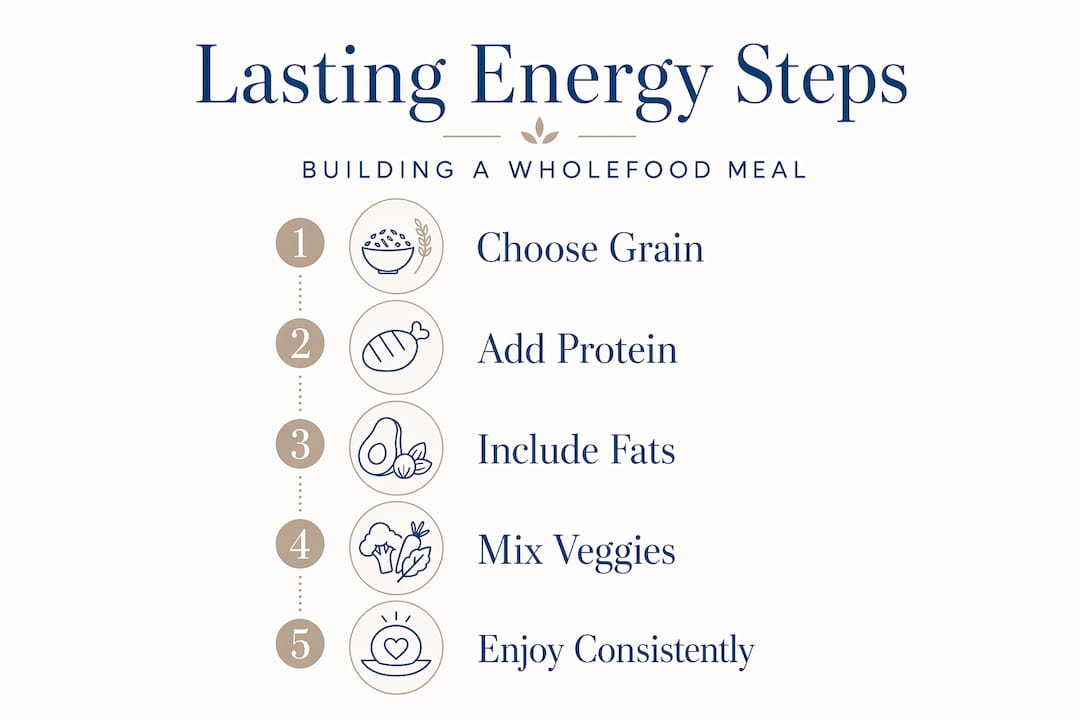
Adopting a sustained energy diet does not require a complete kitchen overhaul. It requires consistent, deliberate choices that replace fast fuel with lasting fuel. Here is how to approach that shift without making it complicated:
- Swap refined grains one at a time. Replace white rice with barley or quinoa once a week. Move from instant oats to steel-cut oats, which carry more resistant starch and a meaningfully lower glycaemic index. The habits form faster than you expect.
- Read labels for what is missing. The most useful thing on a food label is not the calorie count. It is fibre content and the ingredient list. If the first or second ingredient is a refined flour or added sugar, it will not support sustained energy regardless of what the front of the packet claims.
- Keep long-lasting energy snacks on hand. A handful of walnuts and a rye cracker. A small pot of chickpeas with lemon. A tablespoon of raw nut butter with an apple. These combinations of natural energy foods take two minutes to prepare and last hours.
- Avoid the instant oat trap. Instant oats are pre-cooked and flattened. They absorb far faster than steel-cut or rolled varieties, which undermines the blood sugar stability you are trying to achieve. The extra five minutes for a proper portion of rolled or steel-cut oats is a worthwhile investment in your afternoon energy.
- Use plant-based proteins as a practical convenience tool. A high-quality plant protein powder or nut butter added to a morning oat bowl can complete your macronutrient needs quickly. They work especially well on mornings when a full cooked meal is not realistic.
Consistency matters more than perfection here. Three or four genuinely wholefood meals a week will create noticeable differences in how you feel by mid-afternoon. Every whole grain swap, every protein-first meal, and every natural fat addition compounds. Building this way is how you actually maintain energy levels across a full day rather than just managing the morning.
My honest take on wholefoods and lasting energy
I’ve watched too many people fall into the trap of treating energy as a symptom to suppress rather than a system to build. They reach for another coffee at 3pm because they are running on refined carbohydrates and willpower. What I’ve found, both personally and working alongside people who have genuinely shifted their energy, is that the change happens faster than most expect once you remove the obvious culprits and replace them with something the body actually recognises.
The “carbs are bad” narrative frustrates me because it collapses an enormous spectrum of foods into one useless category. Instant white bread and whole-grain rye porridge with seeds are both “carbs.” They have almost nothing else in common metabolically. The people I’ve seen achieve the most consistent energy and appetite control are those who stopped avoiding carbohydrates entirely and started choosing them deliberately. Ancient grains, legumes, whole oats with added protein and fat. That is the difference. It is not about restriction. It is about specificity.
One thing I’d add for anyone concerned about hormonal balance through nutrition: the protein-first approach does more than steady your blood sugar. It also supports the hormonal signals that govern satiety and stress appetite. Getting that right has knock-on effects well beyond energy alone.
— Jarrod
Fuel your day with Granavitalis wholefoods

Knowing which foods to choose is half the battle. Having them ready in your kitchen is the other half. Granavitalis brings together organic nut and seed butters, ancient grain flours, and superfood mixes precisely for this purpose. The organic nut and seed butter selection box gives you a range of protein-rich, healthy-fat sources ready for oat bowls, crispbreads, and on-the-go snacks. If you prefer to start with a single standout option, the raw organic pecan butter is one of the richest natural energy foods you can keep in your cupboard. For micronutrient support alongside your wholefood meals, the Granavitalis superfoods immunity mix provides zinc and B vitamins that directly support energy metabolism every day.
FAQ
What makes wholefoods better for energy than processed foods?
Wholefoods retain their fibre, protein, and complex carbohydrates in intact form, which slows glucose absorption and prevents the blood sugar spikes and crashes caused by refined alternatives. The result is a steadier, longer-lasting supply of fuel throughout the day.
Which ancient grains are best for sustained energy?
Barley, rye, and quinoa consistently rank among the best wholefood energy sources for sustained energy. Barley and rye offer high beta-glucan and fibre content, while quinoa adds a complete amino acid profile that supports both energy and recovery.
How does the protein-first approach boost energy with wholefoods?
Eating protein before your wholefood carbohydrates activates satiety hormones GLP-1 and PYY, slows gastric emptying, and can reduce the post-meal glucose spike by up to 50%, keeping your energy levels more stable for longer.
Are instant oats a good source of sustained energy?
No. Instant oats are pre-cooked and have a higher glycaemic index than steel-cut or rolled oats. They absorb faster and provide a shorter window of sustained energy. Steel-cut oats are the better choice for blood sugar stability and longer-lasting satiety.
How quickly can I expect to notice a difference with a wholefood diet?
Most people notice an improvement in afternoon energy and reduced cravings within two to three weeks of consistently replacing refined grains with wholefood alternatives and adopting a protein-first meal structure. Results are faster when the changes are made across multiple meals rather than one.