
High protein instant oatmeal: your quick fitness breakfast
TL;DR:
- High protein instant oatmeal combines oats with protein sources like egg whites, cottage cheese, or protein powder to deliver 20g or more of protein in under 15 minutes. Proper technique involves cooking oats first, then adding protein off the heat to ensure a smooth, satisfying texture. Batch cooking options include baked or stovetop oats stored for up to a week, providing a quick, nutritious breakfast.
High protein instant oatmeal is a breakfast format that combines rolled or quick oats with concentrated protein sources to deliver 20g or more of protein in a single bowl, prepared in under 15 minutes. Unlike standard porridge, which relies on oats alone for its modest 3g of protein per serving, a properly built high-protein version uses whey protein powder, liquid egg whites, or cottage cheese to reach the protein targets that support muscle repair and sustained energy. Quaker Protein Instant Oatmeal, for example, delivers 12g protein per sachet from wholegrain oats alone. Build your own version at home and you can comfortably exceed 25g. For anyone serious about a quick protein breakfast that does not compromise on nutrition or taste, this guide covers every method, ingredient, and technique you need.
What ingredients do you need for high protein instant oatmeal?
The foundation of any strong high-protein oat bowl is the oat itself. Quick oats and rolled oats are both excellent choices for instant preparation. Quick oats cook in two to three minutes on the hob or in the microwave, while rolled oats take five to seven minutes but hold their texture better. Instant oats (the pre-cooked, flattened variety) are the fastest option, though they produce a softer, more uniform texture that some people find less satisfying.
The protein sources you layer on top are where the real nutrition is built. Each option brings different benefits:
- Whey protein powder (vanilla or unflavoured): adds 20g to 25g protein per scoop, mixes smoothly when added off the heat
- Liquid egg whites: add approximately 10g protein per serving and create a fluffy, custard-like texture without any eggy flavour
- Cottage cheese: blends into warm oats for creaminess and contributes around 12g to 14g protein per 100g
- Nut butters: almond butter, peanut butter, or pecan butter add 4g to 8g protein per tablespoon alongside healthy fats that slow glucose release
Beyond protein, you will want a liquid base. Whole milk adds protein and richness; oat milk or almond milk keeps things plant-based. A pinch of salt sharpens every flavour in the bowl. Natural sweeteners such as raw honey, maple syrup, or mashed banana round out the taste without artificial additives.
| Protein source | Protein per serving | Texture contribution |
|---|---|---|
| Whey protein powder | 20g to 25g per scoop | Thick, creamy if added off heat |
| Liquid egg whites | ~10g per serving | Fluffy, custard-like |
| Cottage cheese | 12g to 14g per 100g | Smooth, rich |
| Nut butter (almond/pecan) | 4g to 8g per tbsp | Creamy, slightly dense |
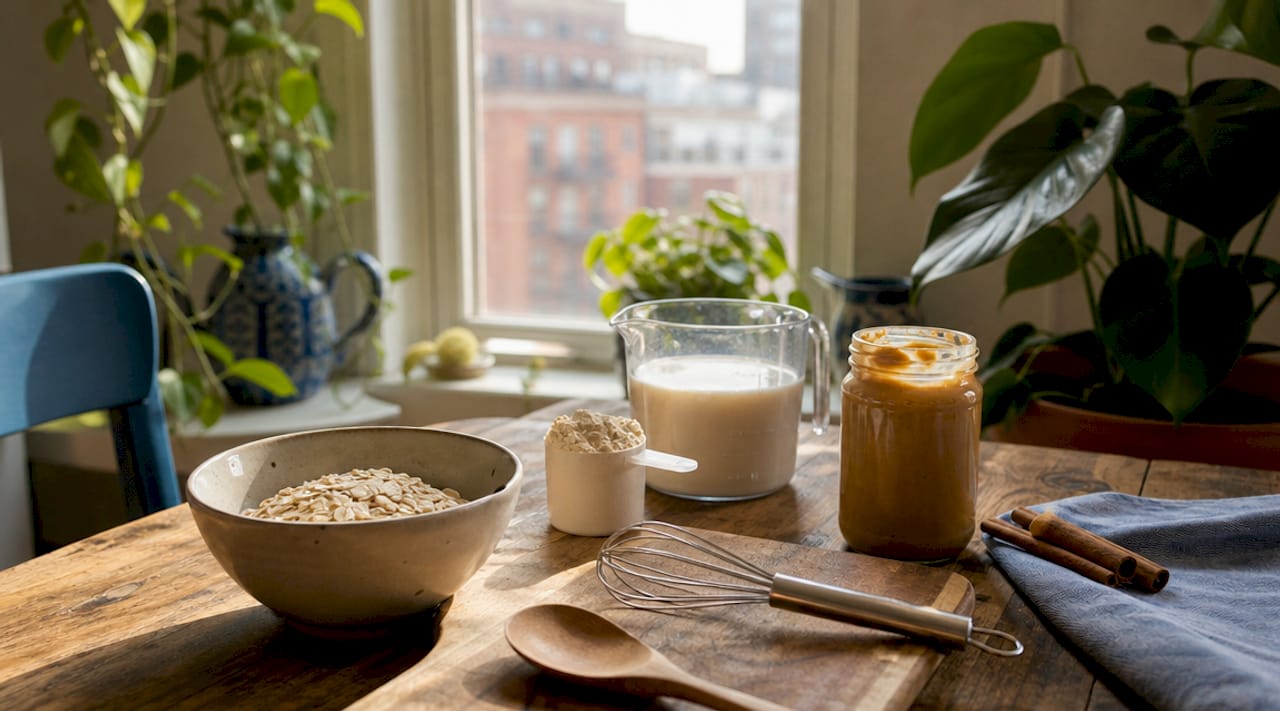
For equipment, a small saucepan, a whisk, and a heatproof bowl are all you need. A microwave works perfectly well for quick oats if you are short on time. The whisk is non-negotiable when using egg whites.
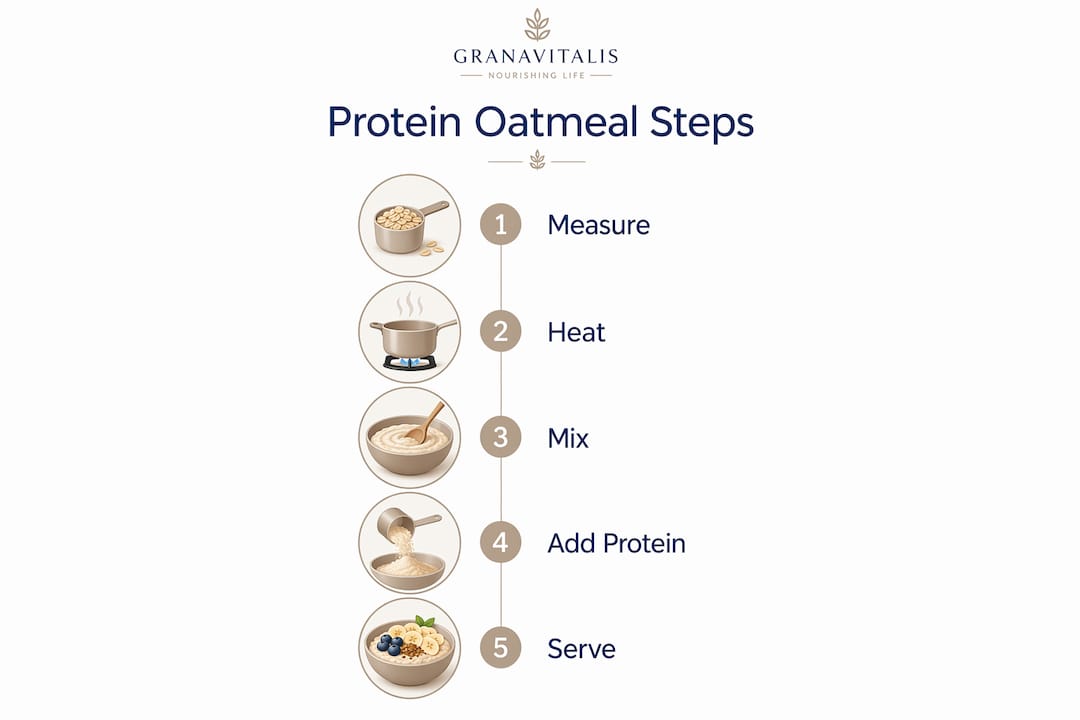
How to make instant oatmeal with protein powder: step by step
The two-stage cooking method is the single most important technique for avoiding gritty texture when using protein powder. Most people add powder directly to boiling oats and wonder why the result tastes chalky. Heat denatures protein powder rapidly, causing it to clump and lose its smooth consistency. The fix is simple: cook the oats first, then add the powder.
- Cook your oats. Combine 50g of rolled or quick oats with 250ml of milk or water in a small saucepan. Bring to a gentle simmer over medium heat, stirring regularly, for three to five minutes until the oats absorb most of the liquid and reach your preferred consistency.
- Remove from heat. Take the pan off the hob completely before adding any protein powder. This is the step most people skip, and it is the reason their oatmeal ends up grainy.
- Stir in the protein powder. Add one scoop of whey or plant-based protein powder and stir firmly for 30 to 60 seconds. The residual heat is enough to incorporate the powder without denaturing it.
- Adjust consistency. If the mixture thickens too much, add a splash of milk or water and stir again. Protein powder absorbs liquid quickly, so this step is often necessary.
- Add toppings. Sliced banana, a tablespoon of almond butter, a handful of blueberries, or a drizzle of raw honey all work well. Toppings are not decoration. They add micronutrients, fibre, and additional protein.
Homemade recipes using this method typically yield over 25g protein per serving and take roughly 10 to 15 minutes from start to finish. That is a meaningful protein target reached faster than most gym-goers manage with a protein shake and toast.
Pro Tip: Never add protein powder to oats that are still on the heat. Even 30 extra seconds of direct heat turns a smooth bowl into a grainy, unpleasant texture. Off the heat, always.
For flavour variety, vanilla whey pairs naturally with cinnamon and banana. Chocolate whey works well with peanut butter and a few dark chocolate chips. Unflavoured plant protein is the most versatile base if you prefer to control sweetness yourself. You can find more ideas for plant-based protein choices that work particularly well in oat bowls.
How to make high protein oatmeal without protein powder
Dietitians frequently recommend egg whites as the preferred protein source for oatmeal, and the reason is practical. Clients often find protein powder oatmeal gritty or overly sweet, whereas egg whites produce a fluffier, more naturally flavoured bowl. The technique requires a little more attention but the result is noticeably better in texture.
- Cook oats to near completion. Simmer 50g of oats in 200ml of milk over medium heat for three to four minutes, stirring regularly. You want the oats about 80% cooked, still slightly loose.
- Whisk the egg whites separately. Measure 80ml to 100ml of liquid egg whites into a small bowl or jug and whisk briefly to break them up. Do not whip to stiff peaks. You want them fluid but aerated.
- Pour egg whites into the oats slowly. Reduce the heat to low and pour the egg whites into the oats in a thin, steady stream while whisking constantly. This is the critical step. Stop whisking and you get scrambled eggs in your porridge.
- Cook for one to two minutes more. Keep the heat low and keep stirring. The mixture will thicken noticeably as the egg whites set. The result is a custard-like, fluffy texture that holds its shape in the bowl.
- Finish with cottage cheese or nut butter. Stir in two tablespoons of cottage cheese for extra creaminess and protein, or a tablespoon of pecan butter for richness and healthy fats.
Oats combined with milk and egg whites can reach 21g of protein per serving without a single gram of protein powder. That is a genuinely nutritious instant oatmeal option that requires no supplements at all.
Pro Tip: Keep the heat on low when adding egg whites and whisk without stopping. Medium or high heat causes the whites to cook in lumps before they can blend into the oats. Low and slow is the rule.
Can you batch cook high protein oatmeal for the week?
Batch cooking is the most practical solution for anyone who wants a quick protein breakfast every morning without cooking from scratch each day. Two formats work well: baked oatmeal and stovetop oats stored in jars.
Baked oatmeal keeps for three to seven days refrigerated, depending on the ingredients used. Egg-based baked oatmeal lasts three to four days. Versions made with protein powder and nut butter, without eggs, can stretch to seven days. Stovetop oats stored in sealed jars last four to five days and reheat well with a splash of added milk.
For baked oatmeal, the key ingredient decision is your nut butter. Natural, drippy peanut butter blends into the wet mixture far more evenly than thick, no-stir varieties. Thick nut butters create pockets of dense fat that prevent the oatmeal from setting properly. The same logic applies to peanut butter powder, which should be whisked gradually into the wet ingredients rather than added all at once.
When reheating, add a spoonful of nut butter or a splash of milk before microwaving. This restores the creaminess that refrigeration tends to reduce. Reheating without added liquid produces a dry, dense texture that is far less enjoyable.
| Prep method | Storage life | Best reheating approach |
|---|---|---|
| Stovetop oats (jar) | 4 to 5 days | Add milk, microwave 90 seconds |
| Baked oatmeal (egg-based) | 3 to 4 days | Microwave with splash of milk |
| Baked oatmeal (powder-based) | Up to 7 days | Add nut butter, microwave 2 minutes |
For those who want structured meal prep guidance, planning three to four portions at the start of the week removes the daily decision entirely. Baked oatmeal is particularly well suited to this approach because it combines indulgent taste with sustained fuel, making it easier to stay consistent with your nutrition goals across a full week.
Key takeaways
High protein instant oatmeal reaches 20g to 25g of protein per bowl by combining oats with egg whites, protein powder, or cottage cheese, and takes under 15 minutes to prepare.
| Point | Details |
|---|---|
| Protein powder technique | Always add protein powder off the heat to prevent grittiness and clumping. |
| Egg white method | Whisk liquid egg whites into nearly cooked oats on low heat for a fluffy, custard-like result. |
| Protein targets | Oats with milk and egg whites deliver around 21g protein per serving without any supplements. |
| Batch cooking | Baked oatmeal stores up to 7 days refrigerated; reheat with added nut butter or milk to restore texture. |
| Ingredient quality | Natural, drippy nut butters blend more evenly than thick varieties in both stovetop and baked recipes. |
Why texture is the real barrier, not protein content
I have made hundreds of bowls of high-protein oatmeal over the years, and the question I hear most often is not “how do I get more protein?” It is “why does mine taste like chalk?” The answer is almost always the same: protein powder added directly to boiling oats, or egg whites poured in too fast over high heat.
The nutritional case for this breakfast is straightforward. What keeps people from sticking with it is texture. A gritty, dense bowl feels like a punishment, not a meal. Once you solve the texture problem, the habit forms naturally because the food actually tastes good.
My honest preference is the egg white method for weekday mornings. It produces a bowl that feels genuinely satisfying rather than functional. The protein powder method is faster and works well when I am short on time or travelling. Both are worth knowing. For natural ingredient approaches that go beyond powder, there is a lot of room to experiment with ancient grains and whole food proteins.
The one thing I would push back on is the idea that you need a branded product to get a good result. Quaker Protein Instant Oatmeal is a convenient option, but 12g of protein per sachet is a ceiling, not a target. Build your own bowl and you can double that figure with ingredients you already trust.
— Jarrod
Upgrade your oatmeal with Granavitalis nut butters

The right nut butter transforms a good bowl of oatmeal into something genuinely worth waking up for. Granavitalis stocks RAWGORILLA’s range of organic nut butters, made from single-origin nuts with no added oils, sugars, or fillers. A tablespoon of raw organic pecan butter adds healthy fats, natural sweetness, and a depth of flavour that no flavoured protein powder can replicate. For those who want to explore further, the nut and seed butter selection box from RAWGORILLA gives you a range of options to find what works best in your morning bowl. Clean ingredients, real flavour, and genuine nutrition. That is the Granavitalis standard.
FAQ
How much protein does instant oatmeal with egg whites contain?
Oats combined with milk and liquid egg whites deliver approximately 21g of protein per serving without any protein powder. Egg whites alone contribute around 10g of that total.
Why does my protein powder oatmeal taste gritty?
Grittiness occurs when protein powder is added to oats that are still on direct heat. Adding powder off the heat and stirring thoroughly prevents clumping and produces a smooth, creamy texture.
How long does batch-cooked high protein oatmeal last?
Baked oatmeal made with protein powder and nut butter keeps up to 7 days refrigerated. Egg-based versions last three to four days. Stovetop oats stored in sealed jars keep for four to five days.
Can I make high protein oatmeal without any supplements?
Yes. A bowl built from oats, whole milk, liquid egg whites, and cottage cheese reaches 20g or more of protein using only whole food ingredients. No protein powder is required. See high-protein breakfast ideas for further whole food approaches.
What are the best protein oatmeal brands for convenience?
Quaker Protein Instant Oatmeal is the most widely available option, providing 12g of protein per sachet from wholegrain oats. For higher protein targets, homemade versions using egg whites or protein powder consistently outperform packaged products.