
Post-workout morning breakfast build: your 2026 guide
TL;DR:
- Eating a high-protein, moderate-carbohydrate meal within 1–2 hours after training supports muscle repair and glycogen restoration. Consistency and proper macronutrient targets are more important than strict timing or the 30-minute window. Whole foods like eggs, yogurt, oats, and plant-based pairings effectively meet recovery needs.
A post-workout morning breakfast build is defined as a structured, high-protein meal consumed within 1–2 hours after training to trigger muscle repair and restore glycogen. Sports nutrition guidelines recommend 20–40g of protein and 30–60g of carbohydrates in this window for maximal muscle protein synthesis. The industry term for this practice is post-exercise recovery nutrition. Getting it right is not complicated, but it does require knowing your targets, your timing, and your food choices. Sources like eggs, Greek yoghurt, oats, and Granavitalis nut butters each play a distinct role in meeting those targets with real, whole food.
What are the optimal macronutrient targets for a post-workout breakfast?
Protein is the non-negotiable anchor of any recovery meal. Strength training requires 30–40g of protein post-workout, while endurance and HIIT sessions push carbohydrate needs to 40–60g. Fat intake should stay below 10g immediately after training. High fat slows gastric emptying, which delays amino acid delivery to muscle tissue at the exact moment it matters most.

Leucine is the amino acid that flips the switch on muscle protein synthesis. Each post-workout meal should contain at least 2.5–3g of leucine to reach the muscle protein synthesis threshold. Eggs, whey, and Greek yoghurt hit this threshold easily in a single serving. Plant-based athletes need to be more deliberate, as most plant proteins are lower in leucine per gram.
Plant-based athletes require 30–45g of protein post-workout, compared to 20–40g for those eating animal protein. That gap exists because plant proteins contain fewer essential amino acids per gram, particularly leucine. A larger portion of lentils, tofu, or a blended plant protein powder closes the gap. Pairing complementary proteins, such as rice with pea protein, also improves the overall amino acid profile.
| Training type | Protein target | Carbohydrate target | Fat limit |
|---|---|---|---|
| Strength training | 30–40g | 30–50g | Under 10g |
| Endurance or HIIT | 30–40g | 40–60g | Under 10g |
| Plant-based athlete | 30–45g | 30–60g | Under 10g |
| Light or moderate session | 20–30g | 30–40g | Under 10g |
Pro Tip: Build your breakfast around a high-protein ancient grain base such as teff or amaranth to add leucine-supporting amino acids alongside complex carbohydrates in one ingredient.
When should you eat your post-workout breakfast after a morning session?
Timing matters, but not in the rigid way most athletes assume. The anabolic window lasts hours, not minutes, and protein synthesis remains elevated for 3–5 hours after exercise. Missing the 30-minute mark does not ruin your recovery. What matters far more is eating a quality meal within a reasonable window and maintaining consistent daily intake.
That said, two scenarios do make timing more urgent:
- Fasted training: If you trained without eating beforehand, your body has no circulating amino acids to draw on. Eating protein within 60 minutes of finishing is the priority.
- Multiple daily sessions: If you train again within 8 hours, glycogen replenishment becomes time-sensitive. Delaying your post-workout meal by 3–4 hours reduces recovery effectiveness before your next session.
- Appetite suppression: Exercise-induced appetite loss is common. If eating a solid meal feels difficult, start with a liquid option immediately and follow with solid food once hunger returns.
- Blood sugar stability: Eating within 60–90 minutes stabilises blood sugar and prevents the energy crash that often hits mid-morning after an early training session.
- Fed state training: If you ate a full meal 2–3 hours before training, the post-workout window extends to 2 hours without any meaningful loss of recovery benefit.
The practical takeaway is straightforward. Aim for a meal within 60–90 minutes of finishing your session. If your appetite is low, a protein smoothie with banana and oats counts as a legitimate recovery meal. Consistency across the full day matters more than hitting an exact minute on the clock.
Which foods make the best post-workout morning breakfasts?
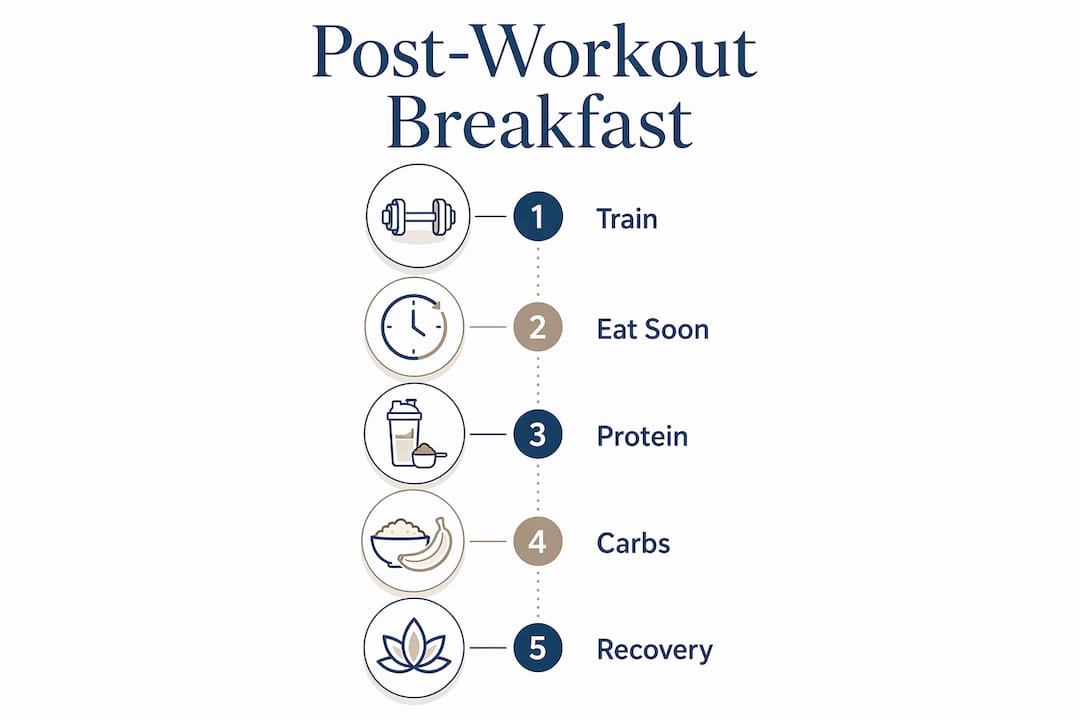
The best post-workout breakfasts combine fast-digesting protein with moderate-GI carbohydrates and a small amount of healthy fat. Classic combinations include Greek yoghurt with berries and oats, eggs on whole-grain toast with fruit, and whey protein smoothies with banana and oats. Each pairing delivers both fast and slow-digesting nutrients alongside antioxidants from fruit.
Real food outperforms supplements for micronutrient density. Eggs provide choline, B vitamins, and selenium alongside their protein. Greek yoghurt adds calcium and probiotics. Oats contribute beta-glucan fibre, which supports gut health and sustained energy. A high-protein instant oatmeal base built on whole rolled oats is one of the most practical and complete recovery breakfasts available.
For athletes with appetite suppression immediately after training, liquid nutrition is the practical bridge. A smoothie with whey or pea protein, a ripe banana, oats, and a tablespoon of nut butter delivers 30–40g protein, 50g carbohydrates, and enough micronutrients to initiate recovery. Follow it with a solid meal within 60–90 minutes once appetite returns.
Plant-based athletes need larger portions and more deliberate pairing. A bowl of lentils with rice and roasted vegetables, or a tofu scramble on sourdough with avocado, can meet the 30–45g protein target when portions are scaled correctly. Berries and leafy greens add antioxidants that reduce exercise-induced oxidative stress. Antioxidant-rich foods post-workout support focus and reduce inflammation without compromising recovery.
| Meal | Protein | Carbohydrates | Best for |
|---|---|---|---|
| Greek yoghurt, oats, berries | 25–30g | 40–50g | Strength and moderate sessions |
| Eggs on whole-grain toast with fruit | 25–35g | 35–45g | Strength training |
| Whey smoothie, banana, oats | 30–40g | 50–60g | HIIT or fasted training |
| Tofu scramble on sourdough | 30–40g | 35–50g | Plant-based athletes |
| Lentils, rice, roasted vegetables | 30–40g | 50–60g | Endurance athletes, plant-based |
Pro Tip: High-GI carbohydrates such as ripe banana, white rice, or potatoes accelerate glycogen storage when digestion speed is the priority, particularly after HIIT or fasted sessions. Swap oats for rice if your stomach feels unsettled post-training.
For athletes who want to maintain healthy eating habits on the road, the same real-food principles apply. Greek yoghurt, fruit, and portable nut butters travel well and require no preparation.
How to tailor post-workout breakfast nutrition to training intensity and schedule
Recovery nutrition is not one-size-fits-all. The right meal depends on what you just did, how hard you pushed, and when you train next. Scaling your intake to match your session prevents both under-fuelling and unnecessary surplus.
-
High-intensity or multiple daily sessions. Carbohydrate intake becomes the priority. Recovery nutrition should target 1.0–1.2g of carbohydrate per kilogram of bodyweight per hour when training again within 8 hours. A 75kg athlete needs 75–90g of carbohydrates in the first hour post-workout. Protein targets remain at 30–40g. Meal timing becomes non-negotiable in this scenario.
-
Moderate or single daily sessions. A balanced breakfast with 25–35g protein and 35–50g carbohydrates is sufficient. There is no need for aggressive carbohydrate loading after a 45-minute moderate run or a standard gym session. Overeating carbohydrates after light sessions adds surplus calories without recovery benefit.
-
Strength-focused sessions. Protein is the priority. Aim for 30–40g from high-quality sources such as eggs, Greek yoghurt, or whey. Carbohydrates support glycogen replenishment and insulin-driven amino acid uptake, so include 30–50g from oats, whole-grain toast, or fruit. Keep fat low to speed digestion.
-
Endurance sessions lasting over 90 minutes. Both protein and carbohydrates are critical. Muscle breakdown during prolonged aerobic work is significant. A meal with 30–40g protein and 50–60g carbohydrates addresses both repair and replenishment. Plant-based protein breakfast ideas built on ancient grains and legumes work well here.
-
Hydration alongside nutrition. Fluid and electrolyte replacement runs parallel to food intake. Sweat losses during a morning session can reach 500ml to 1 litre. Rehydrating with water or an electrolyte drink alongside your meal supports nutrient transport and reduces fatigue.
Key takeaways
A post-workout morning breakfast build requires 20–40g of protein, 30–60g of carbohydrates, and less than 10g of fat, consumed within 1–2 hours of training, with daily consistency delivering greater results than rigid minute-by-minute timing.
| Point | Details |
|---|---|
| Protein target | Consume 20–40g of high-quality protein post-workout to trigger muscle protein synthesis. |
| Carbohydrate scaling | Match carbohydrate intake to session intensity, ranging from 30g for light sessions to 60g for HIIT. |
| Timing flexibility | Aim for a meal within 60–90 minutes; daily intake consistency matters more than hitting an exact window. |
| Plant-based adjustment | Plant-based athletes need 30–45g of protein per meal to compensate for lower leucine density. |
| Real food first | Whole foods such as eggs, oats, and Greek yoghurt deliver micronutrients that supplements alone cannot replicate. |
Jarrod’s take on building a breakfast habit that actually sticks
The biggest mistake I see athletes make is treating post-workout nutrition as an all-or-nothing discipline. They obsess over the 30-minute window, miss it by 20 minutes, and conclude the session was wasted. That thinking does more damage than the missed timing ever could.
What actually moves the needle is consistency over weeks, not perfection on any single morning. I have worked with athletes who ate a perfectly timed whey shake every day but skipped meals by mid-afternoon. Their recovery was poor. The ones who ate well across the full day, even when their post-workout meal came 90 minutes late, made far better progress.
My honest advice is to prepare your breakfast the night before on busy mornings. Overnight oats with protein powder, Greek yoghurt, and berries take three minutes to assemble and are ready the moment you walk through the door. If your appetite is suppressed after training, drink a protein smoothie first and eat solid food 45 minutes later. Do not force a full meal when your body is not ready for it.
Track your recovery markers rather than just your macros. Sleep quality, next-day soreness, and training performance tell you far more about whether your nutrition is working than any food diary. Adjust your carbohydrate intake up or down based on how you feel in the 24 hours after a session. The numbers in the guidelines are starting points, not fixed rules.
— Jarrod
Granavitalis products worth adding to your recovery breakfast
Real food recovery starts with quality ingredients. Granavitalis sources nutrient-dense whole foods that slot directly into a post-workout morning breakfast without any compromise on purity or nutrition.

The Raw Organic Pecan Butter from Granavitalis adds healthy fats, natural protein, and antioxidants to smoothies, oats, or toast with no additives. The Organic Nut & Seed Butter Selection Box gives you a range of nutrient profiles to rotate through the week, keeping breakfast varied and nutritionally broad. For a quick topping that adds crunch, protein, and vitamin E, the Nibbed Hazel Nuts work on yoghurt bowls and porridge alike. Every product is minimally processed and transparently sourced, which is exactly what recovery nutrition demands.
FAQ
What is the best protein source for a post-workout breakfast?
Eggs, Greek yoghurt, and whey protein are the most effective options for animal-based athletes, as each delivers a complete amino acid profile with sufficient leucine to trigger muscle protein synthesis. Plant-based athletes should combine sources such as pea protein with oats or lentils with rice to reach the same threshold.
How soon after a morning workout should you eat?
Aim to eat within 60–90 minutes of finishing your session. If you trained in a fasted state, prioritise eating within 60 minutes. If you ate a full meal 2–3 hours before training, the window extends to 2 hours without meaningful loss of recovery benefit.
Do you need carbohydrates in a post-workout breakfast?
Yes. Carbohydrates replenish muscle glycogen depleted during training and support insulin-driven amino acid uptake. The target is 30–60g depending on session intensity, with higher amounts needed after HIIT or endurance sessions lasting over 90 minutes.
Can a smoothie count as a post-workout breakfast?
A smoothie with whey or pea protein, banana, oats, and a tablespoon of nut butter meets the macro targets for a full recovery meal. Liquid nutrition is particularly useful when exercise-induced appetite suppression makes solid food difficult immediately after training.
Does the 30-minute anabolic window rule still apply?
The 30-minute rule is outdated. Protein synthesis remains elevated for 3–5 hours after exercise, and the anabolic window is far more flexible than early research suggested. Total daily protein and carbohydrate consistency has a greater impact on recovery than hitting a precise post-workout minute.