

High protein overnight oats: 25–40g per serving
TL;DR:
- High protein overnight oats offer 25 to 40 grams of protein per serving by combining ingredients like Greek yogurt, hemp hearts, and protein powder. Proper preparation involves mixing dry ingredients first, refrigerating within ten minutes, and adjusting texture in the morning with additional milk. To ensure safety and quality, refrigerate promptly and consume within five days, adding toppings just before eating.
High protein overnight oats are a make-ahead breakfast that delivers 25–40 grams of protein per serving by combining ingredients such as Greek yogurt, protein powder, hemp hearts, and chia seeds in a single jar. The preparation takes under ten minutes the night before, making this one of the most time-efficient high protein breakfast options available to anyone training, recovering, or simply trying to eat well on a busy morning. Stacking multiple protein sources like Greek yogurt, hemp hearts, and milk can push you past 30 grams without a single scoop of powder, which means better flavour and none of the chalkiness that puts people off protein-enriched food. The result is a nutritious overnight oats recipe that is genuinely satisfying, endlessly customisable, and safe to batch-prep for the entire working week.
What ingredients make high protein overnight oats work?
The protein content of your oats is determined almost entirely by which ingredients you choose, and each option brings a different texture alongside its nutritional contribution. Understanding these trade-offs is what separates a jar that tastes good from one that you actually look forward to eating.
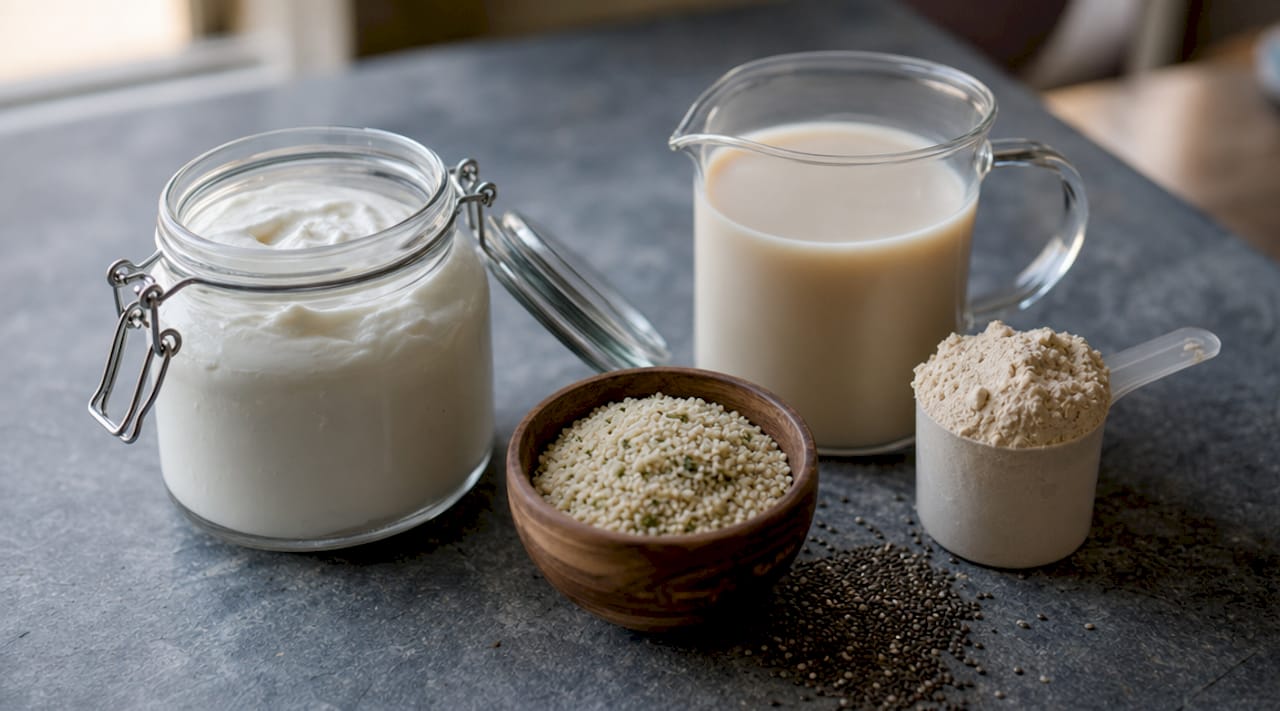
Dairy and protein powder options compared
| Protein source | Approx. protein per serving | Texture effect |
|---|---|---|
| Greek yogurt (150g) | 12–15g | Thick, creamy, slightly tangy |
| Cottage cheese (100g) | 11–12g | Smooth when blended, mild flavour |
| Whey or plant protein powder (1 scoop) | 20–25g | Significantly thickens the mixture |
| Collagen powder (1 scoop) | 9–10g | Minimal texture change, dissolves well |
Greek yogurt and cottage cheese are the most flavour-friendly options. A peanut butter chocolate recipe using soy milk and Greek-style yogurt delivers around 20 grams of protein per cup with a thick pudding consistency after eight hours of refrigeration. That figure climbs considerably once you add whole-food boosters.
Whole-food protein additions
Hemp hearts are the most underused ingredient in protein-packed oats. A 30-gram portion provides roughly 10 grams of complete protein, a mild nutty flavour, and no change to the liquid ratio. Chia seeds contribute around 5 grams of protein per 30 grams, but their real role is textural. Chia seeds gel when they absorb liquid, thickening the mixture into a pudding-like consistency that holds well for days. Natural peanut butter or a quality nut butter adds healthy fats, protein, and depth of flavour that makes the oats feel like a proper meal rather than a functional food.
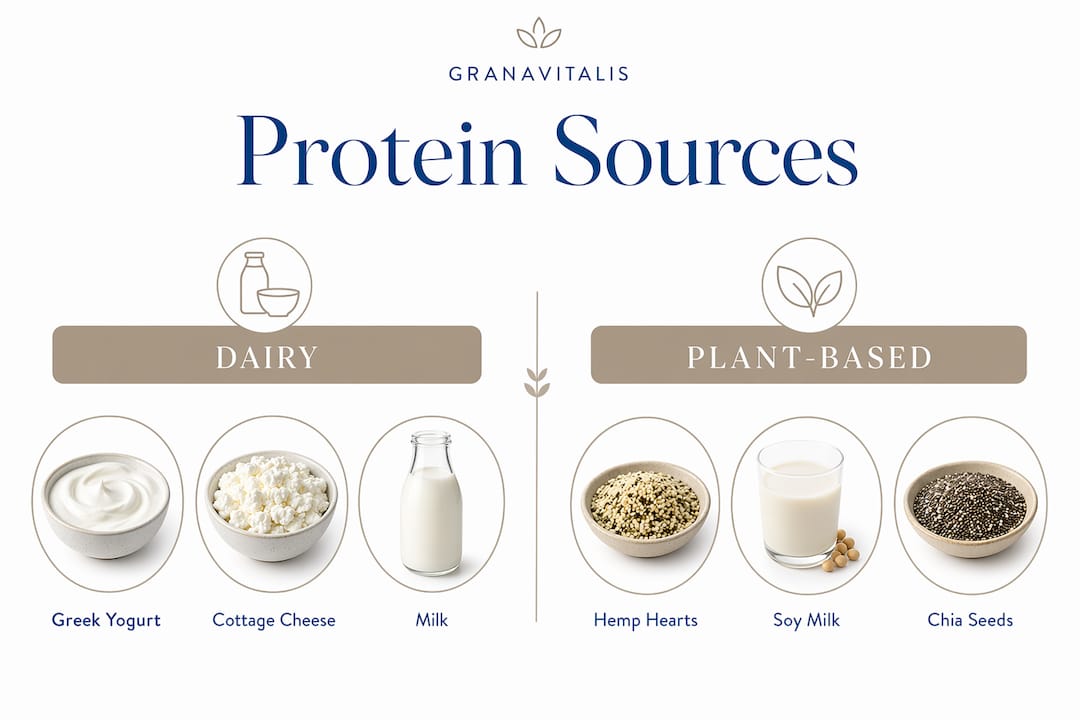
For plant-based drinkers, the choice of milk matters more than most people realise. Soy milk provides roughly 3.5 grams of protein per 100ml, compared to under 0.5 grams for almond milk. If you are building a plant-based protein oatmeal without dairy, soy milk is the only like-for-like swap that preserves your protein target.
Pro Tip: Add a small pinch of sea salt and half a teaspoon of vanilla extract to every batch. Salt suppresses bitterness from protein powder and vanilla rounds out the flavour of plain yogurt, making the oats taste far more considered without adding any complexity to prep.
How to prepare high protein overnight oats step by step
Getting the preparation right the first time saves you from the two most common complaints: clumpy powder and a texture that is either too stiff to eat or too thin to be satisfying. Follow this sequence and you will have consistent results from jar one.
- Measure your dry ingredients first. Add rolled oats (approximately 80g per serving), your protein powder if using, hemp hearts, and chia seeds directly into the jar or container. Stir the dry ingredients together thoroughly before adding anything wet.
- Mix protein powder into the dry oats before adding liquid. Mixing powder into dry oats first reduces clumping significantly. This is the single most important technique for anyone using protein powder, and it takes ten seconds.
- Add your wet ingredients. Pour in your milk of choice, spoon in Greek yogurt or cottage cheese, add nut butter, and stir well. Aim for a liquid ratio that just covers the oats. A rough guide is 200ml of liquid per 80g of oats, adjusted for the thickness of your yogurt.
- Sweeten and flavour. Add a teaspoon of honey, maple syrup, or mashed banana. Stir in vanilla extract and any spices such as cinnamon.
- Seal and refrigerate immediately. Transfer to the fridge within ten minutes of mixing. Refrigerate promptly for at least two hours, though overnight (six to eight hours) produces the best texture.
- Adjust texture in the morning. The mixture will have thickened considerably overnight. Adding a splash of milk in the morning restores your preferred consistency without affecting nutrition.
- Add toppings just before eating. Fresh fruit, granola, or chopped nuts go on at the last moment to preserve their texture and freshness.
For batch meal prep, prepare four to five jars in one session on a Sunday evening. If your recipe includes chia seeds, allow a minimum of six hours soaking for consistent pudding-like thickness across every jar throughout the week.
A batch of five jars takes roughly 20 minutes to prepare and gives you a complete, protein-rich breakfast for the entire working week. That is a meaningful return on a small investment of time.
Pro Tip: Label each jar with the date prepared. This removes any guesswork about freshness and keeps your meal prep organised without effort.
How do you fix common overnight oats problems?
Even a well-designed recipe can produce inconsistent results. These are the issues that come up most often and how to address each one.
- Protein powder clumps. The cause is almost always adding powder directly to liquid. Stir it into the dry oats first, then add your milk and yogurt. If clumps still form, whisk the liquid and powder together separately before combining with the oats.
- Oats too thick to eat. Protein powder thickens overnight oats significantly, and collagen powder adds to this effect. Stir in 30 to 50ml of cold milk in the morning until you reach the right consistency.
- Oats too thin or watery. You have used too much liquid or not enough chia seeds. Add an extra tablespoon of chia seeds the following batch, or reduce your milk by 20ml.
- Flavour tastes flat or chalky. Protein powder, particularly plant-based varieties, can leave a chalky aftertaste. Counter this with a pinch of salt, a teaspoon of vanilla, and a natural sweetener. A spoonful of nut butter also masks chalkiness effectively.
- Toppings have gone soggy. Fresh berries, granola, and seeds should always be added in the morning, not the night before. Anything with crunch loses it within a few hours of contact with liquid.
Pro Tip: If you find plain protein powder flavours uninspiring, use a flavoured variety such as vanilla or chocolate and reduce or eliminate added sweeteners. This simplifies the recipe and keeps the ingredient list short.
What are the food safety rules for overnight oats?
Food safety in overnight oats preparation is straightforward but non-negotiable. The primary risk comes from leaving oats at room temperature, which creates conditions for Bacillus cereus, a bacteria that produces heat-stable toxins in starchy foods. Refrigerating oats promptly after mixing, rather than leaving them on the counter overnight, eliminates this risk entirely.
Never leave prepared overnight oats at room temperature for more than two hours. Transfer to the refrigerator immediately after mixing and keep them there until you are ready to eat.
The table below summarises safe storage guidance for protein-packed oats:
| Storage condition | Safe duration |
|---|---|
| Refrigerated (below 4°C), no fresh fruit | Up to 5 days |
| Refrigerated (below 4°C), with fresh fruit | Up to 3 days |
| Room temperature | Not safe beyond 2 hours |
| Frozen | Up to 3 months (texture may change) |
Overnight oats last 3 to 5 days when refrigerated correctly, though adding fresh fruit reduces this to around three days. Use airtight glass jars or food-safe containers with secure lids. If you prefer warm oats, reheat in a microwave for 60 to 90 seconds, stirring halfway through, and add a splash of milk to restore creaminess. Always use pasteurised dairy products and wash any fresh fruit or toppings thoroughly before use.
Key takeaways
High protein overnight oats deliver 25 to 40 grams of protein per serving by combining Greek yogurt, hemp hearts, chia seeds, and protein powder with the right preparation technique.
| Point | Details |
|---|---|
| Layer your protein sources | Combining Greek yogurt, hemp hearts, and soy milk reaches 30g protein without powder. |
| Mix powder into dry oats first | Stirring protein powder into oats before adding liquid prevents clumping every time. |
| Soak for at least six hours with chia | Chia seeds need six or more hours to gel fully and create consistent pudding texture. |
| Refrigerate within ten minutes | Prompt refrigeration prevents bacterial growth and keeps oats safe for up to five days. |
| Adjust texture in the morning | A splash of cold milk restores preferred consistency after overnight thickening. |
Why I think most people overcomplicate this
The most common mistake I see is treating high protein overnight oats as a technical challenge rather than a simple stacking exercise. People spend time researching the perfect protein powder when the more satisfying solution is usually already in the fridge: Greek yogurt, a handful of hemp hearts, and soy milk will take you past 30 grams with better flavour than most powders can offer. I have made hundreds of jars at this point, and the batches I return to most are the ones with the fewest ingredients.
That said, protein powder has its place. If you are training hard and need 40 grams at breakfast without eating a large volume of food, a single scoop of a clean whey or plant protein combined with yogurt and oats is genuinely practical. The key is the dry-mix technique. Skip that step and you will be picking lumps out of your breakfast every morning.
What I find most underrated is the role of nut butter. A tablespoon of a quality raw pecan or hazelnut butter does three things at once: it adds protein and healthy fats, it rounds out the flavour of plain yogurt, and it creates a richness that makes the oats feel indulgent rather than functional. For anyone building a high-protein breakfast that they will actually sustain over months, that sensory satisfaction matters as much as the macros. Make the prep routine simple, keep the flavours interesting, and the habit looks after itself.
— Jarrod
Upgrade your oats with Granavitalis nut butters

Nut butters are one of the most effective ways to add protein, healthy fats, and genuine flavour to your overnight oats without complicating the recipe. Granavitalis sources premium, minimally processed nut and seed butters that bring both nutrition and character to every jar. The Raw Organic Pecan Butter by RAWGORILLA is a standout addition: rich, naturally sweet, and packed with healthy fats and protein that complement oats perfectly. If you want variety across your weekly batch prep, the RAWGORILLA nut and seed butter selection box gives you multiple flavours to rotate through, keeping your mornings interesting and your nutrition consistent. Explore the full range at Granavitalis and find the nut butter that earns a permanent place in your meal prep routine.
FAQ
How much protein can overnight oats realistically provide?
Over 30 grams of protein per serving is achievable without protein powder by combining oats, Greek yogurt, hemp hearts, chia seeds, and soy milk. Adding a scoop of protein powder pushes this to 40 grams or more.
Can I make high protein overnight oats without protein powder?
Yes. Combining Greek yogurt, hemp hearts, chia seeds, and soy milk delivers over 30 grams of protein per serving with no powder required, and the flavour is generally cleaner and less chalky.
How long do protein overnight oats keep in the fridge?
Refrigerated overnight oats last up to five days in an airtight container kept below 4°C. Adding fresh fruit reduces shelf life to around three days, so add fruit toppings on the morning of eating rather than during prep.
Why are my overnight oats too thick in the morning?
Protein powder and chia seeds both thicken the mixture significantly during refrigeration. Stir in 30 to 50ml of cold milk in the morning and mix well until you reach your preferred consistency.
Is it safe to prepare overnight oats the night before?
Overnight oats are safe when refrigerated promptly after mixing. The risk comes from leaving prepared oats at room temperature, which can allow bacterial growth. Transfer your jars to the fridge within ten minutes of mixing and consume within five days.