
How to build a 30g plant protein breakfast for energy
TL;DR:
- Most plant-based breakfasts lack sufficient protein, often delivering only 8 to 10 grams per serving.
- Achieving 30 grams reliably involves combining ancient grains, pulses, seeds, and optional protein powders thoughtfully.
- Building enjoyable, balanced bowls around a protein anchor supports energy, satiety, muscle repair, and consistent habits.
Most plant-based breakfasts quietly miss the mark on protein. A bowl of porridge with almond milk and a handful of berries might feel wholesome, but it rarely delivers more than 8 to 10 grams of protein — far short of the 30-gram target that many nutrition guides now recommend for sustained energy, muscle maintenance, and genuine morning satiety. If you prioritise clean eating and ancient grains, the challenge feels even sharper. This guide walks you through the exact strategy for hitting 30 grams reliably, using whole, plant-based ingredients that are widely available across the UK.
Table of Contents
- Why aim for 30 grams of protein at breakfast?
- Essential ingredients for a high-protein plant-based breakfast
- How to assemble a 30g protein plant-based breakfast (step-by-step)
- Avoiding common mistakes and side effects
- How to know your breakfast is really delivering 30 grams of protein
- Our perspective: the protein obsession misses a bigger point
- Fuel your mornings the Granavitalis way
- Frequently asked questions
Key Takeaways
| Point | Details |
|---|---|
| Combine protein sources | You need a mix of pulses, whole grains, and seeds to reach the 30g plant protein goal. |
| Build gradually | Increase both protein and fibre components stepwise to support good digestion and lasting energy. |
| Verify protein content | Always read labels and add up servings to confirm you are hitting your target, especially with new recipes. |
| Enjoy variety | Mixing different grains, legumes, and seeds keeps meals flavourful, satisfying and nutritionally balanced. |
Why aim for 30 grams of protein at breakfast?
The 30-gram breakfast protein target does not come from the NHS’s standard daily reference intake framework. It originates from sports nutrition and satiety research, particularly studies exploring how larger morning protein portions influence blood sugar stability, appetite hormones, and lean muscle repair across the day. For health-conscious individuals doing regular exercise or managing their weight through whole foods, the target has become a practical benchmark worth knowing.
Here is why substantial morning protein earns its place:
- Stable blood sugar: Protein slows glucose absorption, reducing the post-breakfast energy dip that derails focus by mid-morning.
- Extended satiety: High-protein breakfasts support consistent fullness by influencing appetite hormones such as ghrelin, meaning fewer impulse snack choices before lunch.
- Muscle repair and maintenance: Overnight, your body has been fasting. Delivering 25 to 30 grams of protein early helps trigger muscle protein synthesis, particularly after morning training.
- Reduced total daily calorie intake: Research consistently shows that people who eat more protein at breakfast consume fewer calories across the rest of the day without consciously restricting.
- Optimised recovery: For those doing morning or evening training, a protein-rich breakfast supports repair alongside adequate overnight sleep.
“Increasing breakfast protein is not essential for everyone. Whether it is right for you depends on your lifestyle, goals, and total daily intake,” notes the British Heart Foundation. This is worth keeping in mind: 30 grams is a useful target, not a universal obligation.
The key takeaway here is that 30 grams is a goal, not a golden rule. But for those of us building mornings around performance, energy, and clean nutrition, it is a genuinely meaningful number to aim for. If you are new to plant-based breakfast options, you may find the jump from 10 grams to 30 grams daunting. It is not — once you know your ingredients.
Essential ingredients for a high-protein plant-based breakfast
With the rationale clear, let us look at the clean ingredients you will need to step up your plant protein intake each morning. The most important concept here is the “protein anchor,” which is one primary ingredient that contributes at least 15 grams of protein on its own, around which you build complementary grains, seeds, and add-ins.
| Ingredient | Avg. serving | Protein per serving |
|---|---|---|
| Rolled oats (dry) | 80g | 10g |
| Quinoa (cooked) | 185g | 8g |
| Red lentils (cooked) | 100g | 9g |
| Chickpeas (tinned, drained) | 100g | 9g |
| Hemp seeds | 30g | 10g |
| Nut butter (almond or peanut) | 30g | 8g |
| Plain soy yoghurt | 150g | 8g |
| Clean pea protein powder | 30g | 22g |
Notice how no single whole-food ingredient alone hits 30 grams. Combining high-protein ancient grain ideas with pulses and seeds is what gets you there. As research confirms, ancient grains paired with pulses and optional protein powder is the most reliable route to high-protein plant breakfasts.
Key notes on ingredient quality:
- Pulses (lentils, chickpeas, beans) bring both protein and iron. Beans and lentils are among the most affordable and nutritious plant protein staples available in the UK.
- Always choose unsweetened plant yoghurts. Many flavoured soy or oat yoghurts contain 10 to 15 grams of added sugar per serving, which undercuts your clean eating goals.
- Check tinned pulses for added salt: opt for no-added-salt versions wherever possible.
- High-protein grains like quinoa and oats also provide dietary fibre, B vitamins, and sustained-release carbohydrates that complement your protein choices rather than competing with them.
Pro Tip: Build every breakfast around one clear protein anchor, whether that is soy yoghurt, a scoop of clean pea protein, or a generous portion of lentils. Then layer in your ancient grains, seeds, and nut butters for a bowl that covers both your protein target and your nutrient breadth in one go.
How to assemble a 30g protein plant-based breakfast (step-by-step)
Now you have the key ingredients, here is how to structure your breakfast from concept to bowl. The method is modular, meaning you can swap ingredients depending on what you have in the cupboard, your taste preferences, and the season.
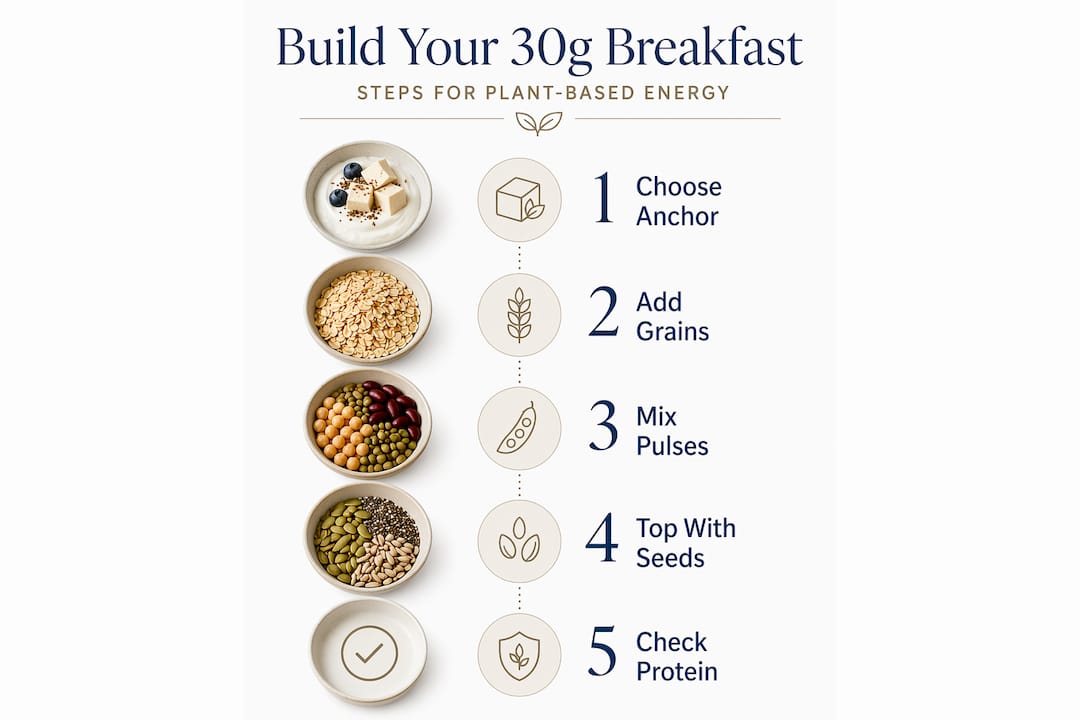
- Choose your protein anchor. Start with either a scoop of clean pea or hemp protein powder (20 to 25g protein), a generous serving of soy yoghurt (150g), or a large portion of cooked lentils or chickpeas (150g). This single decision carries most of the protein load.
- Add an ancient or whole grain base. Oats, quinoa, or amaranth provide the foundation of your bowl. Aim for 60 to 85 grams (dry weight) of oats, or 150 to 185 grams of cooked quinoa. These contribute between 8 and 12 grams of protein on their own while delivering complex carbohydrates for energy.
- Mix in pulses, seeds, or nuts. Hemp seeds (30g) add 10 grams of protein and essential omega fatty acids. A small handful of pumpkin seeds adds 4 to 5 grams. Almond butter or peanut butter (30g) contributes another 7 to 8 grams. These layers stack your total without inflating volume.
- Consider a protein powder top-up. If your combination falls short of 25 grams after step three, stir in a half scoop of clean protein powder. A quick ancient grain breakfast guide can help you plan this efficiently when you are short on time.
- Verify your total before serving. Add up the protein from each component using the nutrition label or a basic app. Tweak your nut butter or seed quantities to fine-tune without rebuilding the whole bowl.
Here is how real-world combinations compare:
| Breakfast combination | Protein without powder | Protein with 30g pea powder |
|---|---|---|
| Oats + soy yoghurt + hemp seeds | 28g | 50g |
| Quinoa + lentils + pumpkin seeds | 27g | 49g |
| Oats + chickpeas + almond butter | 27g | 49g |
| Quinoa + soy yoghurt + nut butter | 24g | 46g |
As these figures show, well-constructed ancient grain and pulse bowls can provide up to 40 grams of protein when assembled deliberately. The protein powder column simply shows what becomes possible if you want to push further. For additional structure around your week, simple meal planning tips can make batch-prepping quinoa or lentils the night before entirely practical.
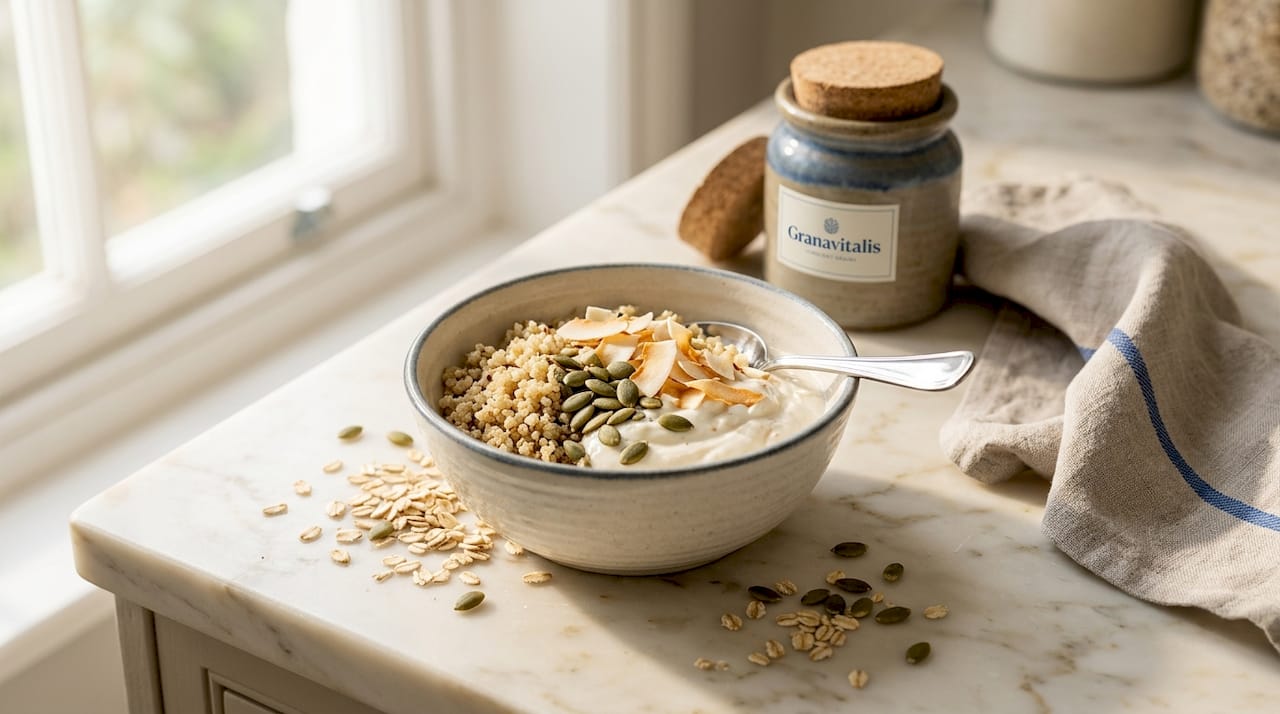
You also need to build a nutritious breakfast with ancient grains that you will actually enjoy eating at 7am. Taste and texture matter enormously for consistency.
Pro Tip: Mix textures deliberately. Creamy soy yoghurt or nut butter underneath crunchy toasted seeds and warm quinoa creates a genuinely satisfying bowl. Monotextured breakfasts, even nutritious ones, lead to boredom and drift back toward convenience options.
Avoiding common mistakes and side effects
After building your plan, it is crucial to sidestep the pitfalls that make plant protein breakfasts less enjoyable or, in some cases, physically uncomfortable. The most common errors are surprisingly easy to avoid once you know to watch for them.
Common mistakes to avoid:
- Adding too many pulses or high-fibre ingredients overnight. Jumping from a low-fibre breakfast to one packed with lentils, oats, and chickpeas in a single day can cause significant bloating and gas. Your gut microbiome needs time to adjust.
- Relying on grains alone. Even generous portions of oats or quinoa will not get you to 30 grams of protein independently. Without a protein anchor and supporting layers, grains deliver nutrition without the protein density you need.
- Taste fatigue from repetition. Eating an identical savoury quinoa bowl every morning for two weeks works until it does not. Rotate your combinations. A lentil and oat porridge on Monday, a chickpea and quinoa bowl on Wednesday, a soy yoghurt and grain parfait on Friday.
- Ignoring added sugars and sodium in convenience products. Flavoured protein powders, shop-bought grain pouches, and tinned legumes in sauce can all carry hidden sugars and salt. Always read labels before assuming a product supports clean eating.
- Using unflavoured protein powder without taste strategy. Plain pea protein has a distinctive earthy flavour. Blend it into porridge or mix with nut butter and a small amount of raw cacao to neutralise and enhance it.
“If you’re increasing the amount of fibre you eat, it’s important to increase it gradually, otherwise you might experience some unpleasant side effects. Start slowly and build up your intake of fibre-rich foods over a couple of weeks,” advises BBC Food’s guidance on fibre.
To practise the “start low, go slow” principle with plant protein: begin by adding one pulse or seed addition to your current breakfast, keep it there for a week, then add the next. Your digestion will adapt far more comfortably than it would if you went all-in immediately. For inspiration on balanced combinations without overwhelm, browse example high-protein breakfasts that layer ingredients thoughtfully.
How to know your breakfast is really delivering 30 grams of protein
Once you have assembled your bowl, you want confidence that it is genuinely meeting your protein target rather than just feeling nutritious. This is where deliberate verification makes the difference between consistency and guesswork.
- List every ingredient in your bowl with its weight. This takes about 90 seconds. You do not need to weigh every morning indefinitely, but doing it for two weeks builds accurate intuition.
- Check the nutrition label for protein per 100g. Most UK packaged foods carry clear nutrition panels. For whole grains and pulses, the values in the table above are reliable starting points.
- Add up the protein contribution from each ingredient. Basic arithmetic. Oats at 80g dry = roughly 10 grams; soy yoghurt at 150g = 8 grams; hemp seeds at 30g = 10 grams. That is 28 grams before any nut butter or powder.
- Adjust your quantities to close any gap. If you are at 26 grams, a tablespoon of extra almond butter or a half scoop of protein powder closes it. Small tweaks. No rebuilding.
Nutrition apps can speed this process, and smart kitchen scales with app connectivity are increasingly popular in UK kitchens. However, for most people, learning to read labels and estimate by eye is entirely sufficient. The key warning here: check tinned pulse labels carefully for added salt and sugar, as these affect both your health goals and the accuracy of your protein calculation.
Develop a small reference sheet on your phone with the standard protein values for your five or six regular ingredients. Within a fortnight of consistent breakfasts, you will instinctively know what 30 grams looks like in your bowl. Checking the top ancient grains for nutritional data can round out your reference library.
Our perspective: the protein obsession misses a bigger point
Here is something we have observed that most high-protein guides do not say: chasing 30 grams can inadvertently turn breakfast into a calculation rather than a ritual. And when eating becomes mechanical, people stop enjoying it, stop doing it consistently, and ultimately regress to ultra-processed convenience foods that are far more damaging than a 20-gram plant protein breakfast.
The real goal is not 30 grams as an isolated number. It is building a breakfast that you genuinely look forward to eating, that happens to deliver substantial protein through clean, whole, ancient ingredients. The number follows the habit, not the other way around.
At Granavitalis, we see this clearly. Our approach is to start with ingredients you love. Maybe that is warming spiced quinoa porridge with a drizzle of almond butter. Maybe it is a cold overnight oat bowl with hemp seeds and a scoop of vanilla pea protein. Then you verify the protein count and tweak it toward your goal. The bowl you will eat every morning is infinitely more valuable than the “optimal” bowl you abandon after a week.
The other uncomfortable truth: most people eating plant-based do not need to obsess about hitting 30 grams every single day. What they do need is a consistent average across their breakfasts and overall daily intake that supports their activity level and goals. Some mornings will be 25 grams. Some will be 35 grams. The pattern across the week matters far more than the single-day precision.
That said, knowing how to build a 30-gram breakfast is valuable precisely because it gives you the ceiling. Once you understand the mechanics — protein anchor, grain base, seed and nut layers — you can scale up or down without losing nutritional integrity. Knowledge is always the starting point.
Fuel your mornings the Granavitalis way
Building a 30-gram plant protein breakfast starts with the right ingredients, and that is exactly where Granavitalis comes in.

We source ancient grain flours, clean pea and hemp proteins, premium nut butters, and whole seeds with genuine purity standards at Granavitalis, so that every component of your breakfast bowl carries nutritional integrity from field to kitchen. Whether you are building a classic oat and hemp porridge, a savoury quinoa and lentil bowl, or experimenting with amaranth-based recipes, our ingredient range is designed to make 30 grams achievable without shortcuts. Explore the full collection and build your clean protein breakfast foundation with ingredients rooted in tradition and selected for real-world performance.
Frequently asked questions
Can you really get 30g protein at breakfast without meat or eggs?
Yes — plant-based bowls with ancient grains and pulses can provide up to 40 grams of protein when constructed with intentional layering of legumes, seeds, and grains.
What are good high-protein plant-based breakfast options in the UK?
Try oats with lentils, protein porridge with nut butter, or a quinoa and chickpea bowl. The British Heart Foundation recommends oats, pulses, and seeds as practical ways to boost breakfast protein content.
Is 30 grams of protein at breakfast suitable for everyone?
Not necessarily. Higher protein at breakfast is optional and context-dependent according to the British Heart Foundation, meaning your individual goals, activity level, and total daily intake should guide your target.
How do you prevent bloating when adding lots of plant protein and fibre?
Increase fibre-rich ingredients gradually over one to two weeks. BBC Food confirms gradual fibre increases prevent the digestive discomfort commonly associated with switching to higher-fibre plant protein breakfasts.