
Boost your mornings with healthy high-protein breakfast meats
TL;DR:
- High-protein breakfasts support satiety, energy stability, and muscle health using lean meats and grains.
- Choose whole, unprocessed meats like chicken, turkey, salmon, and pair with ancient grains for optimal nutrition.
- Rotating proteins and grains while preparing components in advance helps sustain a varied, balanced, and practical routine.
Bacon and sausages have long held court at the breakfast table, but they come with a cost most people quietly ignore: sky-high sodium, saturated fat, and a modest protein return that leaves you hungry by mid-morning. The good news is that building a genuinely energising, protein-rich breakfast does not require eating badly. By choosing whole, lean meats and pairing them with ancient grains, you can create morning meals that support sustained energy, muscle health, and real appetite control without the nutritional compromise.
Table of Contents
- Why protein matters at breakfast
- Choosing the healthiest breakfast meats
- Balancing meats with ancient grains for optimal nutrition
- Building a sustainable high-protein breakfast routine
- The real secret to a satiating, energising breakfast
- Upgrade your breakfast nutrition today
- Frequently asked questions
Key Takeaways
| Point | Details |
|---|---|
| Lean meats beat processed | Choosing whole, lean meats for breakfast boosts protein intake and reduces unhealthy fats and sodium. |
| Protein and grains work together | Pair lean meat with ancient grains like kamut or quinoa for complete protein and lasting energy. |
| 30g is the breakfast target | Aim for 30g protein at breakfast to promote satiety, muscle health, and appetite control. |
| Sustainable variety matters | Rotate your meats, grains, and even add plant-based proteins for an enjoyable, healthy breakfast routine. |
Why protein matters at breakfast
Protein is not just about building muscle. At breakfast, it plays a central role in how hungry you feel for the rest of the day. When you eat a protein-rich meal in the morning, your gut releases hormones including GLP-1 and PYY, both of which signal fullness to your brain. These are the same hormones targeted by some of the most talked-about appetite medications, yet food can trigger them naturally.
Research confirms that high-protein breakfasts containing around 30g of protein meaningfully increase GLP-1 and PYY levels compared to low-protein, high-carbohydrate alternatives. That is a significant shift in your body’s satiety response, achieved simply by rethinking what lands on your plate before 9am.
One important nuance: feeling fuller does not automatically mean eating fewer calories later in the day. As older adults and protein research highlights, satiety and total calorie intake are not always directly linked. Still, the benefit of reduced hunger and improved appetite regulation throughout the morning is real and meaningful, particularly for those managing weight or energy levels.
Here is why front-loading protein at breakfast works so well for lasting energy and satiety:
- Protein slows gastric emptying, meaning food stays with you longer
- It stabilises blood sugar better than refined carbohydrates
- It supports lean muscle maintenance, particularly important over 40
- Both animal and plant proteins trigger similar satiety hormone responses
- Aiming for 30g is achievable with a palm-sized portion of lean meat plus a grain side
The practical takeaway is straightforward. Protein at breakfast is one of the most evidence-backed nutrition habits you can build, and the source of that protein matters enormously.
Choosing the healthiest breakfast meats
Not all breakfast meats are created equally. Traditional options like streaky bacon, pork sausages, and processed deli slices are convenient, but they typically carry high saturated fat, significant sodium, and preservatives such as nitrates. A single rasher of streaky bacon might offer around 3g of protein but bring 130mg of sodium and 3g of saturated fat along with it. That trade-off adds up quickly across a week.
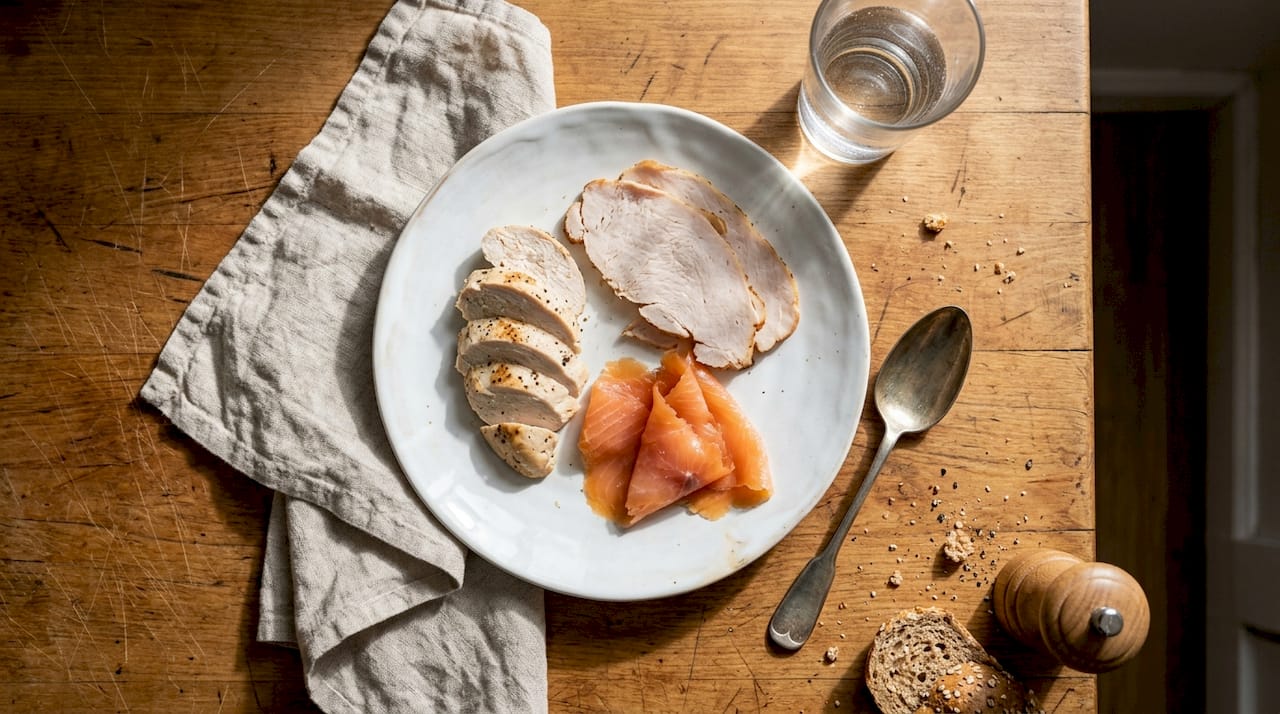
Whole, lean cuts deliver far more nutritional value per gram. Chicken breast, turkey, salmon, lean beef, and pork are among the top high-protein, lower-fat choices you can make at breakfast. Here is how they compare at a standard 100g serving:
| Meat | Protein | Calories | Total fat |
|---|---|---|---|
| Skinless chicken breast | 31g | 165 kcal | 3.6g |
| Turkey breast | 29g | 135 kcal | 1.0g |
| Smoked salmon | 20g | 117 kcal | 4.3g |
| Lean beef mince | 26g | 215 kcal | 11g |
| Lean pork loin | 22g | 143 kcal | 3.5g |
| Back bacon (unsmoked) | 17g | 185 kcal | 10g |
The difference is stark. Turkey breast and chicken offer exceptional protein per calorie, while smoked salmon adds omega-3 fatty acids that support brain function and inflammation management.
Pro Tip: Batch cook a tray of lean chicken thighs or turkey slices on Sunday. Slice and refrigerate them for quick, ready-to-use breakfast protein across the working week.
When shopping, look for meat labelled as unprocessed and without added sugars or preservatives. Pairing these lean options with something like egg and protein satiety research shows that eggs alongside lean meats further amplifies the satiety benefit, giving you genuine staying power until lunch.
The key principle is simple: choose whole over processed, and lean over fatty. Your breakfast protein should work for you, not against your cardiovascular health.
Balancing meats with ancient grains for optimal nutrition
Lean meats are excellent, but they are one piece of the breakfast puzzle. Adding ancient grains to your plate is what transforms a good breakfast into a genuinely complete meal. Grains contribute fibre, slow-release carbohydrates, additional protein, and a range of micronutrients that meats alone cannot provide.
Kamut (also known as Khorasan wheat) is one of the finest ancient grains for this purpose. Kamut offers around 6g protein per cooked cup and brings magnesium, zinc, and selenium alongside a satisfying, nutty flavour. Quinoa goes one step further by being a complete protein in its own right, containing all nine essential amino acids. Pair either with lean meat and you have a breakfast that covers protein quality, fibre, and sustained energy in a single bowl.
The glycaemic index benefit of ancient grains is also worth noting. Unlike white toast or processed cereals, these grains release glucose slowly into the bloodstream, preventing the mid-morning energy crash that many people accept as normal.
“Think of your breakfast bowl as a team effort. The meat provides dense, fast protein; the grain provides the slow-burning fuel and fibre that keeps everything working together.”
Here are two simple breakfast bowl combinations to get you started with protein grains and meat combos:
- Salmon and quinoa bowl: Flake smoked salmon over warm cooked quinoa, add sliced cucumber, a squeeze of lemon, and a drizzle of olive oil. Ready in ten minutes.
- Chicken and kamut bowl: Slice pre-cooked chicken breast over a base of kamut, add roasted peppers and a soft-boiled egg. Prepare kamut in bulk to save time.
- Lean beef and grain bowl: Brown lean mince with garlic and cumin, serve over a kamut and spinach base. A bold, savoury option inspired by Middle Eastern flavours.
- Turkey and quinoa scramble: Fold diced turkey into scrambled eggs with quinoa and spring onions for a high-protein, high-fibre morning scramble.
Pro Tip: Cook a large batch of quinoa or kamut at the start of the week and refrigerate it. Both reheat perfectly in two to three minutes and serve as an instant breakfast base for any meat and quinoa breakfast bowls you fancy.
For more inspiration on energising ancient grain recipes, there is a wealth of creative combinations that keep breakfast interesting across the week.
Building a sustainable high-protein breakfast routine
Knowing what to eat is only half the challenge. Making it happen consistently, especially on busy mornings, is where most high-protein intentions quietly fall apart. The solution is preparation, variety, and flexibility rather than rigid rules.
Preparing meat and grain components in advance is the single most effective habit you can build. Spending 30 minutes on a Sunday gives you a week of fast, nutritious breakfasts. Cooked grains and sliced lean meats refrigerate well for four to five days and can be paired with different vegetables, herbs, or sauces each morning to keep things interesting.
When it comes to protein variety, do not feel locked into meat every single day. Research shows that whey versus pea protein sources both support appetite control at breakfast, though whey provides higher postprandial leucine levels, which is important for muscle protein synthesis. Rotating between animal and plant proteins keeps your nutrient profile broad and your meals genuinely interesting.
Here are practical strategies for building a routine that actually sticks:
- Batch cook on weekends: Prepare two to three different grain bases and a selection of lean meats. Mix and match through the week.
- Keep it seasonal: Swap grains and vegetables with the seasons to maintain freshness and nutritional variety.
- Use international flavours: A kamut bowl with za’atar and turkey one day, a quinoa and salmon bowl with miso the next. Variety prevents boredom.
- Try meal prepping with grains to include plant-based options on days when you want a lighter or fully plant-based start.
- Build natural breakfast bowls with layered ingredients so every bowl feels like a fresh composition rather than a repeat meal.
Pro Tip: If mornings are genuinely rushed, pre-portion your grain and meat combinations into sealed containers the night before. Add fresh toppings in the morning for texture and brightness in under two minutes.
Sustainability comes from flexibility. A breakfast routine built on rotating proteins, grains, and flavours will outlast any rigid meal plan.
The real secret to a satiating, energising breakfast
Here is what most high-protein breakfast guides quietly miss: quantity alone will not save a poor-quality meal. We see people loading plates with processed bacon, low-grade sausages, or protein shakes built on long ingredient lists, all in the name of hitting a protein target. But the quality of that protein, the fibre alongside it, and the absence of excess sodium and saturated fat matter just as much as the gram count.
Protein works best for energy and satiety when it sits alongside fibre and slow carbohydrates. A 30g protein hit from smoked salmon over kamut is nutritionally worlds apart from the same protein delivered via processed meat on white toast, even if the numbers look similar on paper.
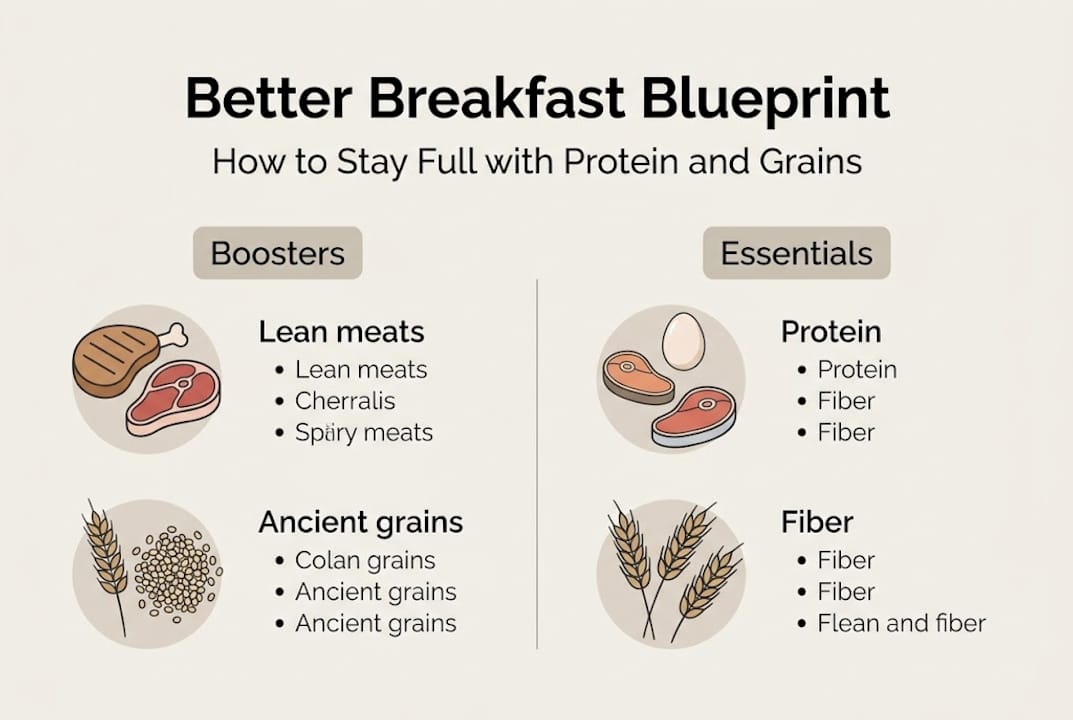
Flexible routines also consistently outperform rigid fads. Rotating your grains, lean meats, and occasional plant proteins keeps your gut microbiome diverse, your palate interested, and your commitment strong. Rigidity breeds boredom, and boredom ends routines.
The practical framework we stand behind at Granavitalis is straightforward: think quality, not just quantity. Choose whole over processed. Pair protein with fibre. And build for breakfast for energy and recovery that you can sustain for months, not just a fortnight.
Upgrade your breakfast nutrition today
Building a high-protein breakfast around lean meats and ancient grains is a powerful start. Adding the right extras can take it even further without adding complexity to your morning.
At Granavitalis, we have designed our range specifically to complement wholefood breakfasts like the ones described here. A spoonful of organic pecan butter stirred into your grain base adds healthy fats, flavour, and additional plant protein in seconds. Our full nut and seed butters selection gives you a variety of nutrient-dense additions to rotate across your breakfasts. And if you want to amplify the nutritional depth of every morning bowl, our superfood bundle is crafted to integrate effortlessly into your routine. Real nutrition, rooted in tradition, built for today.
Frequently asked questions
What are the healthiest high-protein meats for breakfast?
Skinless chicken breast, turkey, lean beef, salmon, and lean pork are the top choices, offering high protein per serving alongside lower levels of saturated fat compared with processed breakfast meats.
How much protein should I aim for at breakfast for satiety?
Aiming for around 30g of protein at breakfast significantly supports satiety by increasing appetite-regulating hormones like GLP-1 and PYY throughout the morning.
Can I combine meats and grains for a balanced breakfast?
Absolutely. Pairing lean meats with ancient grains such as kamut with protein sources or quinoa improves overall protein quality, adds fibre, and supplies a broader range of micronutrients in one meal.
Is plant-based protein as effective as animal protein for breakfast?
Both support appetite control similarly, but whey outperforms pea protein for postprandial leucine, which matters for muscle protein synthesis and recovery.
Which ancient grain is best for pairing with breakfast meats?
Kamut is outstanding, with higher protein per cup than regular wheat and a rich nutrient profile, though quinoa is equally excellent as a complete protein source.
Recommended
- Build a high-protein breakfast with ancient grains – Granavitalis
- High Protein Egg Breakfasts Deliver 30% More Satiety – Granavitalis
- Easy plant-based breakfasts for active mornings: a guide – Granavitalis
- Why eat high-protein breakfast for energy and recovery – Granavitalis
- Why Gourmet Meat Gifts Make The Perfect Luxury Surprise