
Natural protein benefits for modern UK diets
TL;DR:
- Most UK adults already consume more protein than guidelines suggest, but food quality matters more than quantity. Natural, minimally processed protein sources like meat, fish, eggs, pulses, and ancient grains support muscle recovery and overall health better than processed options. Spreading around 20 to 25g of protein across meals daily and combining plant and animal sources promotes optimal wellness and sustainable eating habits.
Most UK adults are already eating more protein than government guidelines recommend, yet the conversation about protein quality has never been more important. UK adults exceed protein needs (men averaging around 85g daily, women around 67g), but sheer quantity tells only half the story. The source, the processing level, and the variety of your protein choices shape everything from muscle recovery to gut health to long-term cardiovascular wellbeing. This guide cuts through the noise to show you how to build a protein strategy rooted in real, minimally processed foods and ancient grain wisdom.
Table of Contents
- Understanding natural protein and its essential roles
- How much protein do you really need?
- Plant vs animal natural proteins: Nutrition and health impact
- Ancient grains and diverse sources: Elevating your protein profile
- Common pitfalls and optimal approaches to protein in modern diets
- Why a mindful approach to natural protein is the real superpower
- Explore natural protein-rich options for better wellness
- Frequently asked questions
Key Takeaways
| Point | Details |
|---|---|
| Natural protein sources matter | Whole food proteins offer more health benefits than processed isolates and support diverse wellness needs. |
| Most exceed daily needs | UK adults typically surpass recommended protein intakes, but quality and distribution are what count. |
| Plant and ancient grains add value | Combining plant and ancient grain proteins improves nutritional balance and sustainability. |
| Moderation prevents pitfalls | Avoid excess or imbalanced protein; focus on variety, minimal processing, and spreading intake through all meals. |
| Consistency beats trends | A steady, mindful approach to real food protein is more effective than chasing supplements or fads. |
Understanding natural protein and its essential roles
Natural protein is simply protein that arrives in your body within a whole food matrix, surrounded by the fibre, fats, vitamins, and minerals that nature packaged alongside it. It is fundamentally different from ultra-processed protein isolates, which strip away most of that nutritional context in pursuit of a higher gram count on a label.
Natural proteins from whole foods like meat, fish, eggs, dairy, pulses, nuts, and ancient grains such as quinoa play a central role in modern UK diets by providing essential amino acids for muscle repair, growth, immune function, and overall wellness. Amino acids are the building blocks your body cannot manufacture on its own, and only a varied diet delivers all of them reliably.
Here is what natural protein actually does inside the body:
- Muscle repair and growth: Every workout, every walk, every physical demand on your body triggers micro-damage to muscle fibres. Protein supplies the amino acids needed to rebuild them stronger.
- Immune support: Antibodies, the proteins your immune system deploys against pathogens, are built from dietary amino acids. Chronic low intake weakens this defence.
- Satiety and weight management: Protein is the most satiating macronutrient, slowing digestion and reducing the hormonal signals that drive hunger between meals.
- Metabolic function: Enzymes, hormones like insulin, and transport molecules such as haemoglobin are all proteins. Your metabolism literally runs on them.
The range of natural sources is broad. Animal sources (meat, poultry, fish, eggs, dairy) are typically considered “complete” because they contain all nine essential amino acids in good proportions. Plant sources (pulses, nuts, seeds, ancient grains) vary in their amino acid profiles, which is precisely why variety matters. Exploring no meat protein sources is a practical starting point for anyone looking to broaden their intake beyond animal foods.
“The best protein strategy is not the one with the highest gram count. It is the one built from the widest variety of whole, minimally processed foods your lifestyle can sustain.”
How much protein do you really need?
The UK government recommendation for healthy adults sits at 0.75g of protein per kg of body weight per day. For a 75kg adult, that is roughly 56g daily. For adults over 65, the recommendation rises to 1.0 to 1.2g per kg to counteract sarcopenia, the age-related loss of muscle mass that accelerates from the mid-fifties onwards.
| Group | Recommended intake | Practical example (75kg adult) |
|---|---|---|
| Healthy adults (19 to 64) | 0.75g per kg | ~56g per day |
| Adults over 65 | 1.0 to 1.2g per kg | ~75 to 90g per day |
| Active individuals | 1.2 to 1.6g per kg | ~90 to 120g per day |
| Strength athletes | 1.6 to 2.0g per kg | ~120 to 150g per day |
The data from the National Diet and Nutrition Survey tells an interesting story. UK adults exceed protein needs on average, yet quality from whole natural sources is consistently prioritised over supplements by nutrition researchers. In other words, the population is not protein-deficient, but it may be protein-quality deficient, relying too heavily on processed meats, convenience foods, and powdered supplements rather than whole food sources.
Emerging research challenges whether the standard RDA is even sufficient for optimal muscle health across the lifespan. Exploring protein intake findings reveals that many nutrition scientists now argue the 0.75g figure represents a minimum for survival rather than a target for thriving. For anyone over 50, or anyone training regularly, aiming higher within whole food sources makes sound physiological sense.
Statistic to note: Spreading protein evenly across three meals of roughly 20 to 25g each produces significantly better muscle protein synthesis outcomes than consuming the same total amount in one or two large sittings.
Pro Tip: If you find it difficult to hit your protein targets across the day, anchor each meal around a whole food protein source first, whether that is eggs at breakfast, lentils at lunch, or a handful of mixed nuts and seeds as a mid-afternoon snack. Build the rest of the meal around that anchor.
A practical plant protein UK guide can help you map out plant-forward meals that hit these targets without relying on supplements at all.
Plant vs animal natural proteins: Nutrition and health impact
The debate between plant and animal protein is often framed as a binary choice, but the science points clearly towards a complementary approach. Both categories offer distinct nutritional advantages, and the healthiest diets in population studies tend to include meaningful amounts of both.

| Protein source | Protein per 100g | Saturated fat | Fibre | Key micronutrients |
|---|---|---|---|---|
| Chicken breast | 31g | Low | None | B12, zinc, selenium |
| Salmon | 25g | Moderate | None | Omega-3, vitamin D, B12 |
| Lentils (cooked) | 9g | Very low | High | Iron, folate, potassium |
| Quinoa (cooked) | 4g | Very low | Moderate | Magnesium, manganese, all 9 amino acids |
| Tofu | 8g | Low | Low | Calcium, iron, isoflavones |
| Greek yoghurt | 10g | Moderate | None | Calcium, B12, probiotics |
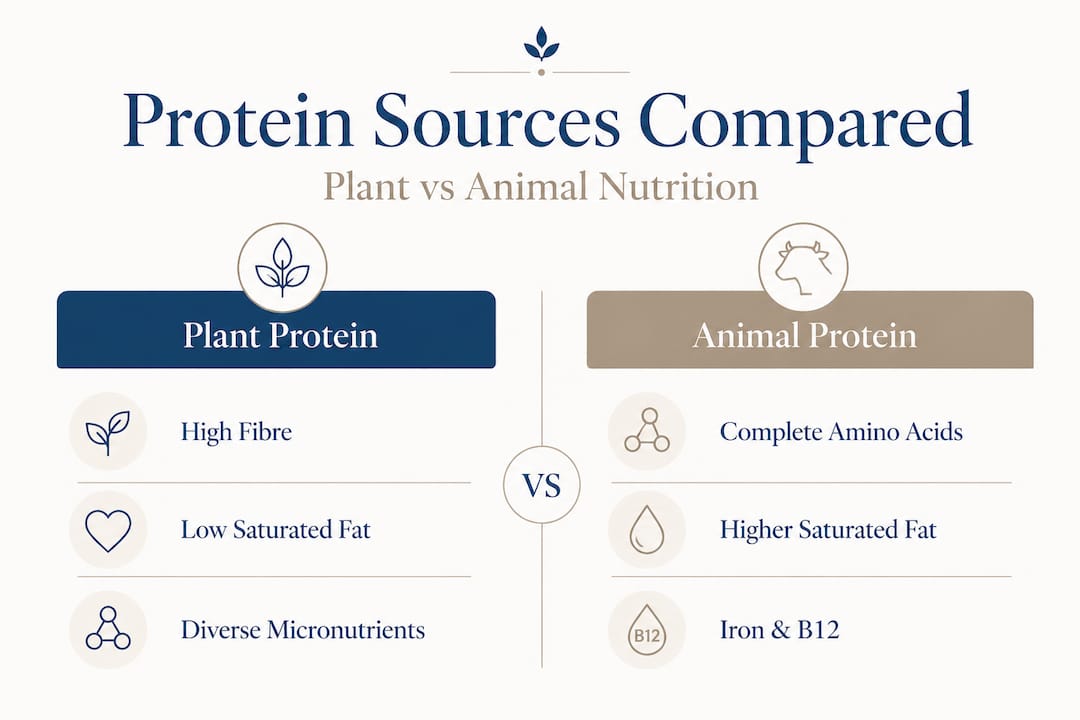
Plant-based natural proteins including pulses, soya, and quinoa offer fibre, lower saturated fat, and meaningful cholesterol benefits compared to animal sources, supporting long-term heart health. Variety across both categories ensures complete amino acid coverage without the need for supplementation.
Key advantages of plant protein sources worth knowing:
- Fibre content feeds beneficial gut bacteria, supporting the microbiome in ways that animal proteins cannot.
- Lower saturated fat in most plant sources reduces cardiovascular risk when they replace processed meats.
- Phytonutrients in legumes and grains offer anti-inflammatory benefits that isolated protein powders entirely lack.
- Sustainability is a genuine advantage: plant proteins carry a significantly lower environmental footprint per gram than most animal proteins.
The one genuine limitation of plant proteins is incomplete amino acid profiles in many individual sources. The solution is straightforward: combine grains with legumes. A bowl of rice and lentils, a hummus wrap on wholegrain bread, or a spelt and chickpea salad all deliver a full complement of essential amino acids. Understanding plant vs animal protein in more depth helps you make informed choices rather than defaulting to the nearest protein bar.
For practical inspiration, vegetable protein examples demonstrate how straightforward it is to build satisfying, protein-rich meals from whole plant foods available in any UK supermarket.
Ancient grains and diverse sources: Elevating your protein profile
Ancient grains have attracted considerable attention in recent years, and for good reason, though the excitement sometimes outpaces the evidence. Ancient grains are not inherently superior to modern grains in every respect, but they do add meaningful variety to the diet, and variety is one of the most powerful levers in nutritional health. The focus should always be on whole food forms rather than isolated or ultra-processed versions.
Here is what makes several ancient grains particularly valuable for protein diversity:
- Quinoa contains all nine essential amino acids, making it one of very few plant foods to qualify as a complete protein. It provides around 4g of protein per 100g cooked and works brilliantly as a base for salads, grain bowls, or porridge.
- Spelt offers around 15g of protein per 100g dry weight and has a rich, nutty flavour that works well in bread, pasta, and baked goods. It is not gluten-free but is often better tolerated than modern wheat by those with mild sensitivities.
- Amaranth rivals quinoa as a complete protein source and is genuinely gluten-free. Its slightly earthy flavour pairs well with roasted vegetables and legumes.
- Teff is rich in iron alongside its protein content, making it especially valuable for those on plant-forward diets where iron intake can be a concern.
- Freekeh is a roasted green wheat with a smoky flavour and a higher protein content than many modern grains, sitting at around 12g per 100g dry.
Natural proteins also reduce environmental impact compared to highly processed alternatives, and bioactive peptides found in minimally processed whole food proteins offer anti-inflammatory benefits that isolated protein products simply cannot replicate.
Practical meal ideas that combine ancient grains with other protein sources:
- Quinoa and black bean salad with pumpkin seeds and tahini dressing
- Spelt risotto with edamame and toasted hazelnuts
- Amaranth porridge topped with almond butter and hemp seeds
- Freekeh tabbouleh with grilled salmon and lemon
Pro Tip: When cooking ancient grains in bulk at the start of the week, store them in the fridge for up to four days. Having cooked quinoa or spelt ready to go makes it far easier to build a protein-balanced meal in under ten minutes on busy weeknights.
Explore vegan complete protein options built around ancient grains, or browse plant-based high protein meals for recipe inspiration. For a broader overview of what these grains actually are, ancient grain examples offers a thorough introduction.
Common pitfalls and optimal approaches to protein in modern diets
Understanding what to include in your diet is only half the picture. Knowing what to avoid is equally important, and there are several persistent myths and habits that undermine even well-intentioned protein strategies.
- Excess protein is not harmless. Consuming protein beyond 2g per kg bodyweight puts unnecessary strain on the kidneys and does not translate into additional muscle gains. The body simply cannot use unlimited protein for anabolism.
- Supplement over-reliance. Protein powders and bars are not inherently harmful, but they displace whole foods that deliver fibre, vitamins, minerals, and beneficial plant compounds alongside their protein content.
- Ultra-processed protein foods. Protein-enriched crisps, bars, and cereals often come packaged with high levels of sugar, salt, and artificial additives. The protein content rarely compensates for the nutritional downsides.
- Front-loading protein at dinner. Many UK adults eat a modest breakfast, a light lunch, and a large protein-heavy evening meal. This pattern is suboptimal for muscle protein synthesis throughout the day.
“Dietary balance consistently outperforms any single superfood approach. No amount of quinoa or whey protein compensates for a diet built on ultra-processed convenience foods the rest of the time.”
The current RDA may underestimate muscle health needs, with researchers suggesting that intakes above 1.0g per kg, distributed evenly at around 20 to 25g per meal, are optimal for maintaining muscle mass as we age. This is particularly relevant for adults over 50 who may assume their protein needs decrease with age, when in fact the opposite is true.
For a practical overview of how to structure your intake, a plant protein sources list tailored to UK diets provides a useful reference point.
Why a mindful approach to natural protein is the real superpower
Here is an uncomfortable truth the protein supplement industry would rather you did not dwell on: the obsession with hitting a specific gram target each day, often fuelled by marketing rather than science, distracts from the single most effective thing you can do for long-term nutritional health. That thing is consistency with varied, minimally processed, genuinely enjoyable food.
We have seen this pattern repeatedly. Someone switches from a balanced diet to a high-protein regime centred on shakes, bars, and chicken breast three times a day. Their short-term metrics may improve. But within months, the monotony sets in, dietary variety collapses, and the gut microbiome suffers from the loss of fibre-rich plant foods. The irony is that the obsession with protein quantity often degrades the overall diet quality.
What actually works over years and decades is far less dramatic. It is the person who eats lentil soup for lunch most days, snacks on a handful of walnuts, cooks with spelt flour, and occasionally has eggs or fish. They are not tracking macros to the gram. They are not buying the latest protein-fortified product. They are simply eating real food with reasonable variety and genuine pleasure.
The mindful approach also means recognising that protein needs shift. A 30-year-old training for a half marathon has different requirements from a 60-year-old focused on maintaining muscle and bone density. Neither of them is best served by a one-size-fits-all high-protein marketing message. Both are best served by understanding their individual needs and meeting them through whole food variety.
At Granavitalis, we believe the most powerful nutrition strategy is also the simplest: choose foods that have been nourishing people for generations, minimise processing, and build meals you actually look forward to eating. That consistency, sustained over time, is what produces genuine wellness outcomes.
Explore natural protein-rich options for better wellness
Putting this knowledge into daily practice is where real change happens, and having the right ingredients to hand makes all the difference.
At Granavitalis, we source foods that align with everything this guide has covered: minimally processed, nutrient-dense, and rooted in whole food tradition. Our pecan butter is a brilliant way to add healthy fats and plant protein to breakfast bowls, smoothies, or ancient grain porridge. For broader variety, the nut and seed butter box gives you a curated range of flavours and nutritional profiles to rotate through across the week. And for a simple, whole food protein and fat boost, our nibbed hazel nuts work beautifully scattered over salads, grain bowls, or yoghurt. Real food, real nutrition, every day.
Frequently asked questions
What are the best natural protein sources for a plant-based UK diet?
Top choices include pulses (lentils, chickpeas), tofu, tempeh, quinoa, nuts, and seeds, all of which provide balanced nutrition when thoughtfully combined. Plant-based proteins also offer fibre and heart-health benefits that animal sources do not.
Is it possible to get enough protein from food without supplements?
Absolutely. UK adults already exceed their daily protein needs on average through diet alone, making supplements unnecessary for most people eating a varied whole food diet.
Can you eat too much protein, and is it harmful?
Yes. Consistently consuming protein beyond 2g per kg of bodyweight may place unnecessary strain on the kidneys, so moderation and whole food sources remain the wisest approach.
Are ancient grains like quinoa necessary for a healthy protein intake?
They are not strictly necessary, but ancient grains add variety and a broader range of nutrients that support a well-rounded, balanced diet over time.
How should protein be distributed at meals to maximise muscle wellness?
Aim for around 20 to 25g of protein spread evenly across meals throughout the day. Research confirms that even meal distribution is significantly more effective for muscle protein synthesis than consuming the same total in one or two large sittings.