
Plant Based High Protein Meals: 30% More Complete Nutrition
Choosing effective plant based high protein meals with ancient grains confuses many health conscious adults. Quinoa bowls, amaranth porridge, and spelt salads appear everywhere, yet few understand which combinations truly deliver optimal nutrition for active lifestyles. This guide provides clear selection criteria, detailed grain profiles, practical recipes, and UK sourcing insights to help you confidently build meals that support strength, recovery, and sustained energy.
Table of Contents
- How to Choose High Protein Plant Based Meals with Ancient Grains
- Ancient Grains and Their Protein Profiles
- Combining Proteins for Complete Nutrition
- Pricing and Accessibility in the UK Market
- Meal Recommendations and Practical Recipes
- Summary Comparison and Situational Recommendations
- Discover Nutrient Dense Ancient Grain Blends at Granavitalis
- Frequently Asked Questions
Key Takeaways
| Point | Details |
|---|---|
| Selection Criteria | Evaluate meals by protein content, amino acid completeness, digestibility, cost, and preparation ease for sustainable nutrition. |
| Ancient Grain Benefits | Quinoa and amaranth provide complete proteins with all essential amino acids, ideal for muscle recovery. |
| Protein Complementation | Combining grains with legumes increases protein completeness by over 30%, enhancing muscle repair and satiety. |
| UK Market Pricing | Ancient grains cost £3.50 to £4 per 500g in UK supermarkets, requiring budget planning for regular consumption. |
| Practical Meal Solutions | Simple recipes and Granavitalis blends enable easy implementation of high protein plant meals for busy schedules. |
How to Choose High Protein Plant Based Meals with Ancient Grains
Selecting the right plant based meals requires understanding multiple nutrition and lifestyle factors. Effective meal selection relies on multiple factors including protein amount, amino acid completeness, digestibility, nutrient density, cost, and preparation ease. Many people focus solely on protein grams per serving while overlooking amino acid quality or digestive tolerance, which significantly impact results.
Protein content matters first. Aim for at least 20 grams per meal to support muscle maintenance and satiety for active adults. Amino acid completeness determines how effectively your body uses that protein for recovery and tissue repair. Digestibility affects nutrient absorption and comfort, especially important for individuals with sensitive digestion or food intolerances.
Nutrient density beyond protein adds value through fibre, minerals, and B vitamins that support energy metabolism. Cost and UK availability determine whether you can sustain these meals long term without breaking your budget. Preparation ease influences adherence, particularly for busy professionals balancing work, exercise, and meal prep.
Key evaluation criteria include:
- Protein per serving (target 20+ grams)
- Complete amino acid profile or complementary protein pairings
- Digestive tolerance and gluten sensitivity considerations
- Additional nutrients like iron, magnesium, zinc, and fibre
- Price per serving and local retailer availability
- Cooking time and meal prep suitability
Pro Tip: Plan your meals weekly based on seasonal availability and local market options to balance nutrition quality with cost effectiveness, ensuring consistent consumption without budget strain.
Ancient Grains and Their Protein Profiles
Ancient grains offer superior protein quality compared to modern refined grains. Quinoa provides around 14.1g protein per 100g cooked and is a complete protein containing all essential amino acids, making it exceptional for plant based diets. Amaranth similarly delivers complete protein with high lysine content, an amino acid often limited in plant sources.
Quinoa stands out for its balanced amino acid profile and quick cooking time of 15 minutes. Its mild, slightly nutty flavour works well in both savoury and sweet preparations. Amaranth provides slightly more protein than quinoa with robust earthy flavour, ideal for porridges and grain salads.
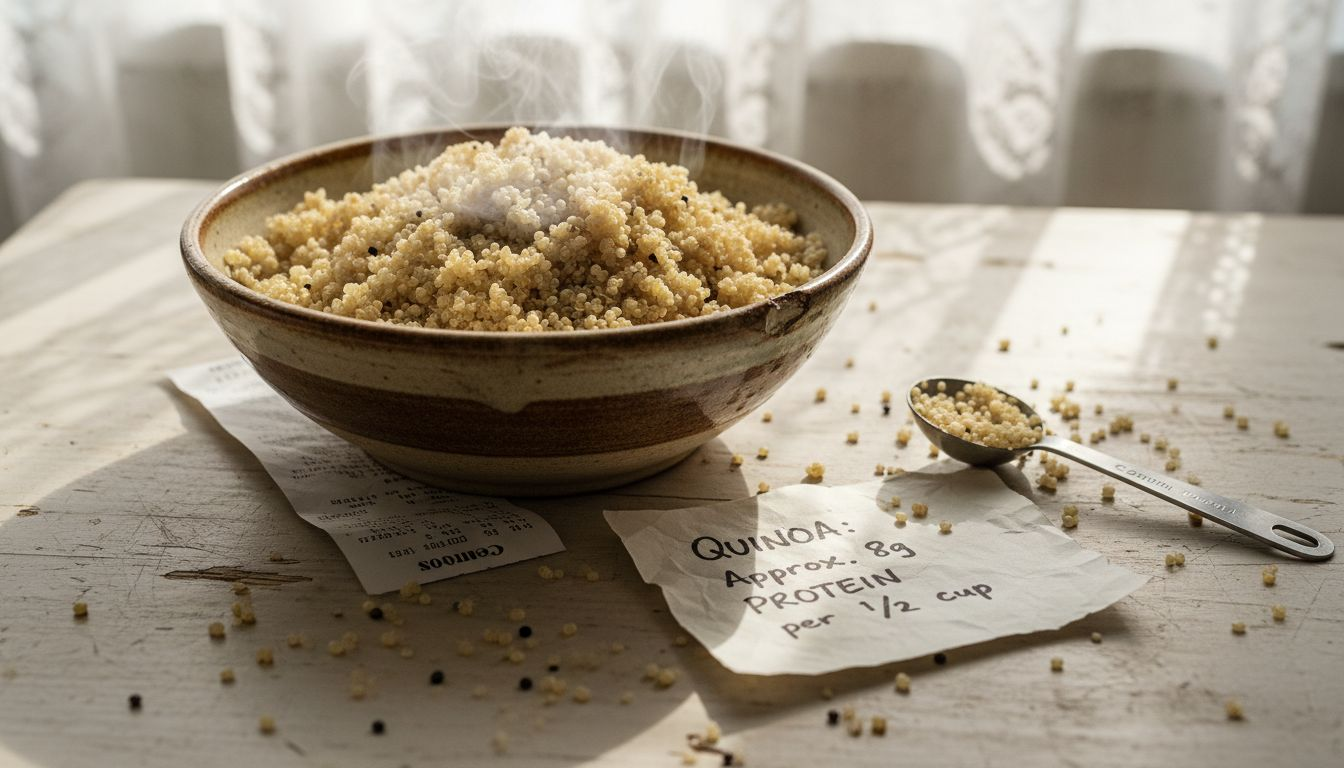
Spelt contains gluten but offers good protein density at approximately 5.5g per 100g cooked, with a pleasant nutty taste familiar to wheat eaters. Millet remains gluten free with moderate protein at 3.5g per 100g cooked, plus excellent magnesium and phosphorus content supporting bone health and energy production.
Each grain brings unique nutritional strengths:
- Quinoa: Complete protein, fast cooking, versatile flavour
- Amaranth: High lysine, complete protein, distinctive taste
- Spelt: Moderate gluten, good protein density, familiar texture
- Millet: Gluten free, high minerals, mild flavour
| Ancient Grain | Protein per 100g Cooked | Amino Acid Profile | Key Nutrients |
|---|---|---|---|
| Quinoa | 14.1g | Complete | Iron, magnesium, manganese |
| Amaranth | 13.6g | Complete | Lysine, calcium, iron |
| Spelt | 5.5g | Incomplete | B vitamins, zinc, copper |
| Millet | 3.5g | Incomplete | Magnesium, phosphorus, manganese |
Combining Proteins for Complete Nutrition
Protein complementation transforms good meals into exceptional ones. Combining ancient grains with legumes increases protein completeness by over 30%, significantly enhancing muscle repair and satiety. This synergy occurs because grains typically lack lysine while legumes lack methionine, and pairing them provides all essential amino acids in optimal ratios.
Quinoa paired with lentils creates a powerhouse combination delivering 25+ grams of complete protein per serving. Spelt combined with chickpeas offers familiar Mediterranean flavours while boosting amino acid quality. Amaranth mixed with black beans provides robust protein density ideal for post workout recovery meals.
Nuts and seeds add another dimension beyond basic grain and legume pairings. Hemp seeds contribute 10g protein per 30g serving with perfect omega fatty acid ratios. Pumpkin seeds deliver zinc and magnesium supporting immune function and muscle contraction. Almonds provide vitamin E and healthy fats that enhance nutrient absorption from the entire meal.
Effective protein combinations include:
- Quinoa bowls with lentils and tahini dressing
- Spelt pasta with chickpea tomato sauce and pine nuts
- Amaranth porridge with almond butter and hemp seeds
- Millet pilaf with black beans and pumpkin seeds
Pro Tip: Rotate your protein combinations weekly to ensure comprehensive nutrient intake and prevent flavour fatigue, supporting long term dietary adherence and optimal health outcomes.
“Plant based athletes achieve complete amino acid profiles through strategic grain and legume combinations, matching or exceeding muscle recovery rates of omnivorous diets when total protein intake meets requirements.”
Pricing and Accessibility in the UK Market
Budget planning determines sustainable consumption of ancient grains. UK supermarket prices for quinoa range around £3.50 to £4 per 500g, making meal planning with ancient grains feasible but requiring conscious budgeting. Amaranth costs slightly more at £4 to £5 per 500g due to lower demand and specialised sourcing.
Spelt and millet offer more affordable options at £2 to £3 per 500g, particularly when purchased from bulk bins or online retailers. Lentils provide exceptional value at £1 to £2 per 500g, making them ideal foundation proteins for budget conscious meal prep.
| Ingredient | Price per 500g | Protein per £1 | Best UK Retailers |
|---|---|---|---|
| Quinoa | £3.50 to £4.00 | 18g | Tesco, Sainsbury’s, Waitrose |
| Amaranth | £4.00 to £5.00 | 14g | Holland & Barrett, online specialists |
| Spelt | £2.00 to £3.00 | 9g | Whole Foods, Ocado, health stores |
| Millet | £2.00 to £3.00 | 6g | Asian grocery stores, bulk retailers |
| Lentils | £1.00 to £2.00 | 25g | All major supermarkets |
Regional availability varies across the UK. London and major cities offer extensive selection through Whole Foods, Planet Organic, and specialised health retailers. Rural areas may require online ordering from suppliers like UK grain specialists or Amazon for consistent access.
Cost saving strategies include:
- Purchase larger quantities from bulk bins or online wholesalers
- Prioritise affordable lentils and beans as protein foundations
- Buy store brand ancient grains rather than premium labels
- Shop ethnic grocery stores for millet and amaranth at lower prices
- Combine expensive complete protein grains with budget legumes
Balancing nutrition with budget ensures you can maintain these beneficial eating patterns long term without financial stress.
Meal Recommendations and Practical Recipes
Concrete meal examples make implementation simple. Granavitalis offers nutrient dense blends with ancient grains, nuts, and seeds that simplify high protein meal prep, providing convenient solutions for busy schedules. These practical recipes each deliver 20+ grams of complete protein.
Quinoa Buddha Bowl combines 150g cooked quinoa, 100g cooked lentils, 50g roasted chickpeas, tahini dressing, and mixed vegetables for approximately 28g protein per serving. This meal prep friendly option stores well for 4 days and reheats beautifully.
Amaranth Breakfast Porridge uses 50g dry amaranth cooked in plant milk, topped with 30g almond butter, 20g hemp seeds, and fresh berries for 22g protein. Preparation takes 25 minutes and provides sustained energy through morning training or work.
Spelt Pasta Power Lunch features 80g dry spelt pasta with homemade chickpea bolognese (150g chickpeas blended with tomatoes and herbs), nutritional yeast, and pine nuts for 24g protein. This high protein breakfast alternative works equally well for any meal.
Millet and Black Bean Burrito Bowl layers 100g cooked millet, 120g black beans, guacamole, salsa, and pumpkin seeds for 26g protein with satisfying Tex Mex flavours appealing to UK palates.
Simple preparation steps:
- Batch cook grains and legumes on Sunday for the week ahead
- Store cooked portions in glass containers for 4 to 5 days refrigerated
- Prepare sauces and dressings in advance for quick assembly
- Toast nuts and seeds in bulk for convenient toppings
- Mix and match components based on daily preferences and schedule
These 7 vegan high protein meals demonstrate how ancient grains integrate seamlessly into diverse cuisines. Granavitalis blends eliminate measuring and combining multiple ingredients, delivering complete nutrition in ready to use formats.
Flavour profiles suit British tastes through familiar Mediterranean, Asian, and comfort food influences. Textures range from creamy porridges to hearty grain salads, preventing monotony across your weekly meal rotation. Visit meal prep inspiration spaces for additional creative serving ideas.
Summary Comparison and Situational Recommendations
Choosing the optimal ancient grain depends on your specific health goals and lifestyle constraints. Different ancient grains suit different needs: quinoa for muscle recovery, millet for gluten sensitivity, and spelt for cost conscious diets. This comparison synthesises key decision factors.
| Ancient Grain | Best For | Protein Quality | Cost Rating | Digestibility | Preparation Time |
|---|---|---|---|---|---|
| Quinoa | Muscle recovery | Complete | Medium | Excellent | 15 minutes |
| Amaranth | Maximum protein | Complete | Medium High | Good | 25 minutes |
| Spelt | Budget meals | Incomplete | Low | Moderate (gluten) | 30 minutes |
| Millet | Gluten sensitivity | Incomplete | Low | Excellent | 20 minutes |
Situational recommendations:
- Post workout recovery: Choose quinoa or amaranth paired with lentils for complete amino acids supporting muscle repair
- Gluten sensitivity: Select millet or quinoa combined with beans and nuts for safe, nutritious options
- Budget constraints: Use spelt or millet as grain base with affordable lentils providing protein completeness
- Meal prep efficiency: Prioritise quinoa for quick cooking or batch cook amaranth and spelt on weekends
- Maximum protein density: Combine amaranth with black beans and hemp seeds for 30+ grams per serving
Remember that combining any ancient grain with complementary legumes significantly improves amino acid profiles. Even lower protein grains like millet become effective when paired with chickpeas or lentils, delivering complete nutrition at minimal cost.
Your personal tolerance and preferences matter most. Experiment with different grains to identify which ones you enjoy eating consistently, as adherence determines long term success more than marginal nutritional differences.
Discover Nutrient Dense Ancient Grain Blends at Granavitalis
Granavitalis simplifies high protein plant based eating through expertly crafted ancient grain blends. Our products combine quinoa, amaranth, premium nuts, seeds, and clean plant proteins in ready to use formats that eliminate measuring and preparation complexity.
Each blend delivers complete amino acid profiles, rich mineral content, and satisfying flavours that support your active lifestyle. Whether you need quick breakfast solutions, post workout recovery meals, or convenient lunch options, Granavitalis provides wholefood nutrition rooted in ancient wisdom and designed for modern performance.
Explore our understanding ancient grains guide for deeper nutritional insights, discover high protein no meat meal ideas for recipe inspiration, or visit Granavitalis to shop our complete range of nutrient dense blends. Fuel your strength, recovery, and vitality with foods unchanged by industrial processing and optimised for real life wellness.
Frequently Asked Questions
Are ancient grains like quinoa truly complete proteins?
Yes, quinoa and amaranth contain all nine essential amino acids in adequate ratios, qualifying as complete proteins. This rare quality among plant foods makes them exceptionally valuable for muscle maintenance and recovery without requiring complementary protein sources, though combining with legumes still enhances overall nutrition.
How can I combine plant proteins to maximise muscle recovery?
Pair ancient grains with legumes such as quinoa with lentils or spelt with chickpeas to achieve complete amino acid profiles. Add nuts or seeds like hemp, pumpkin, or almonds for additional protein density and healthy fats that support nutrient absorption and sustained energy through training and daily activities.
What are affordable ancient grain options in the UK?
Spelt and millet cost £2 to £3 per 500g at UK supermarkets and bulk retailers, making them budget friendly choices. Combine these with inexpensive lentils at £1 to £2 per 500g to create complete protein meals costing under £2 per serving while delivering excellent nutrition for active lifestyles.
Can gluten sensitive individuals safely eat spelt?
No, spelt contains gluten and is unsuitable for coeliac disease or gluten sensitivity. Choose naturally gluten free ancient grains like quinoa, amaranth, or millet instead. These alternatives provide equal or superior protein quality without triggering digestive discomfort or immune responses in sensitive individuals.
How to incorporate high protein plant meals into a busy lifestyle?
Batch cook grains and legumes on weekends, storing portions for 4 to 5 days. Use Granavitalis blends for instant preparation without measuring multiple ingredients. Prepare simple vegan high protein meals using pre cooked components, requiring only 10 minutes assembly for nutritious options that fit demanding schedules.
Recommended
- Low-Calorie Plant Protein: 20g Blends Fuel Muscle & Wellness – Granavitalis
- 7 Best Vegetarian Foods with High Protein Content Naturally – Granavitalis
- High Protein Egg Breakfasts Deliver 30% More Satiety – Granavitalis
- Top 10 Vegan Sources of Protein for Your Diet – Granavitalis
- AI Powered Fitness Motivation