
What is vegan complete protein? Ancient grain sources
Many people believe vegan diets inevitably fall short on complete proteins, yet this misconception ignores a wealth of plant-based wholefoods that deliver all nine essential amino acids. Complete proteins contain all essential amino acids your body cannot synthesise, and certain ancient grains, legumes, and seeds qualify as vegan complete protein sources. This guide explores how you can meet your protein needs through wholefood nutrition, focusing on ancient grains like quinoa, amaranth, and buckwheat alongside practical strategies for optimising plant-based protein quality in everyday meals.
Table of Contents
- Key takeaways
- What is a complete protein and why does it matter?
- Vegan sources of complete protein: ancient grains and wholefoods
- Protein quality and optimisation in vegan diets
- Practical vegan meal ideas for complete protein intake
- Explore wholefood nutrition with Granavitalis
- Frequently asked questions
Key Takeaways
| Point | Details |
|---|---|
| Vegan complete proteins | Complete proteins contain all nine essential amino acids and can come from vegan wholefoods such as quinoa amaranth buckwheat and soy products. |
| Ancient grains protein | Quinoa, amaranth and buckwheat provide substantial protein and help achieve a complete amino acid profile, with lysine often elevated. |
| Grains and legumes pairing | A variety of grains and legumes across meals enhances overall protein quality and supports adequate essential amino acid intake. |
| Protein scoring methods | PDCAAS and DIAAS are used to compare protein quality, but they do not capture the full dietary context. |
| Daily variety suffices | The body maintains a pool of free amino acids drawn from foods throughout the day, making strict meal by meal protein combining unnecessary for most people. |
What is a complete protein and why does it matter?
A complete protein contains all nine essential amino acids (histidine, isoleucine, leucine, lysine, methionine, phenylalanine, threonine, tryptophan, valine) in adequate amounts. Your body cannot manufacture these amino acids, so you must obtain them through diet. Understanding which foods deliver complete proteins is crucial for anyone following a vegan lifestyle, as it directly impacts muscle synthesis, immune function, and overall metabolic health.
The common myth that vegans cannot access complete proteins stems from outdated nutritional thinking. Many plant proteins do have limiting amino acids, meaning one or more essential amino acids appears in lower quantities compared to animal proteins. Grains typically contain less lysine, whilst legumes may be lower in methionine. This reality led to the belief that plant-based eaters must meticulously combine foods at every meal to achieve protein completeness.
Protein quality scoring methods like PDCAAS (Protein Digestibility-Corrected Amino Acid Score) and DIAAS (Digestible Indispensable Amino Acid Score) help quantify how well a protein source meets human nutritional needs. PDCAAS measures overall protein digestibility and amino acid content, capping scores at 1.0. DIAAS, the newer method, assesses digestibility of individual amino acids at the end of the small intestine, allowing scores above 100% and providing more precise quality measurements.
Plant proteins often score lower on these scales due to factors like fibre content and anti-nutritional compounds that reduce digestibility. Typical plant protein digestibility ranges from 74% to 87% in laboratory tests, compared to 90-95% for animal proteins. However, this doesn’t mean vegan diets fall short. Strategic food choices and understanding which plant sources qualify as complete proteins enable you to meet and exceed your protein requirements.
Key considerations for vegan protein completeness:
- Essential amino acids must come from dietary sources
- Limiting amino acids vary by plant type (lysine in grains, methionine in legumes)
- Protein quality scores help compare sources but don’t tell the whole story
- Digestibility factors influence how much protein your body actually absorbs
- Modern research challenges outdated combination requirements
“The body maintains a free amino acid pool that draws from foods consumed throughout the day, making strict meal-by-meal protein combining unnecessary for most people.”
Vegan sources of complete protein: ancient grains and wholefoods
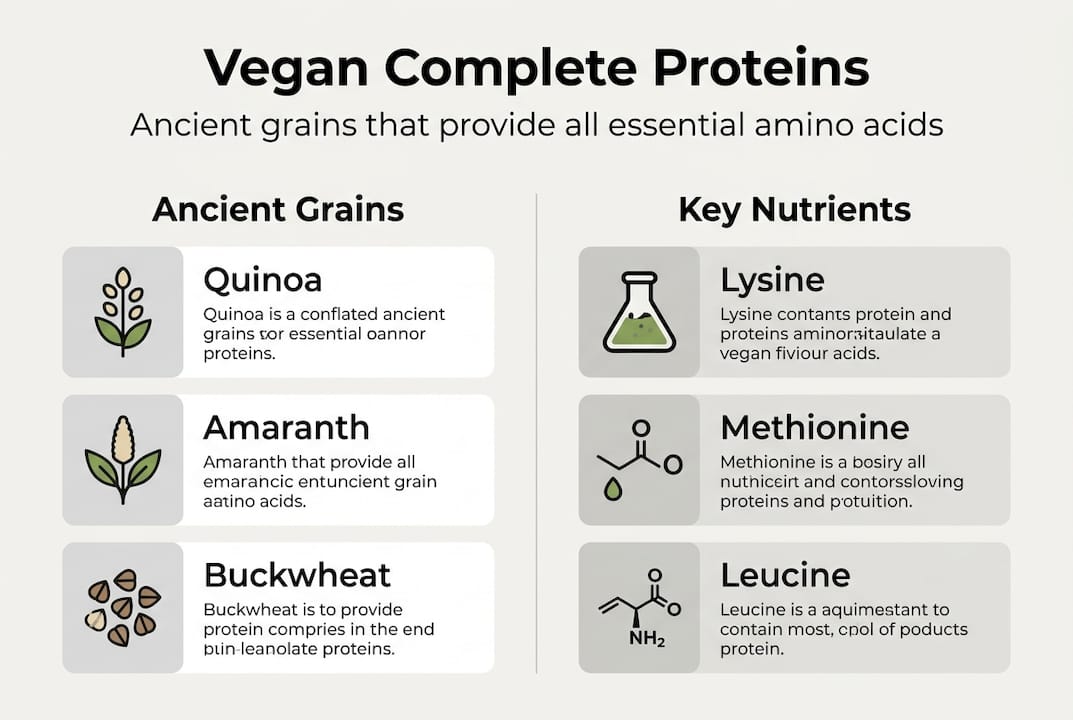
Vegan complete proteins include soy products (tofu, tempeh, edamame, miso), quinoa, amaranth, buckwheat, chia seeds, hemp seeds, nutritional yeast, and spirulina. These wholefoods deliver all nine essential amino acids, with ancient grains offering particularly impressive profiles for those seeking nutrient-dense, minimally processed options.
Quinoa stands out as a nutritional powerhouse, providing approximately 14 grammes of protein per 100 grammes cooked with a DIAAS score of 106%, exceeding the threshold for complete protein status. Its amino acid profile includes higher lysine content than most grains, addressing the typical limiting factor in cereal proteins. Amaranth delivers 13.6 grammes per cup cooked and similarly boasts elevated lysine levels, making it an excellent complement to grain-based meals.
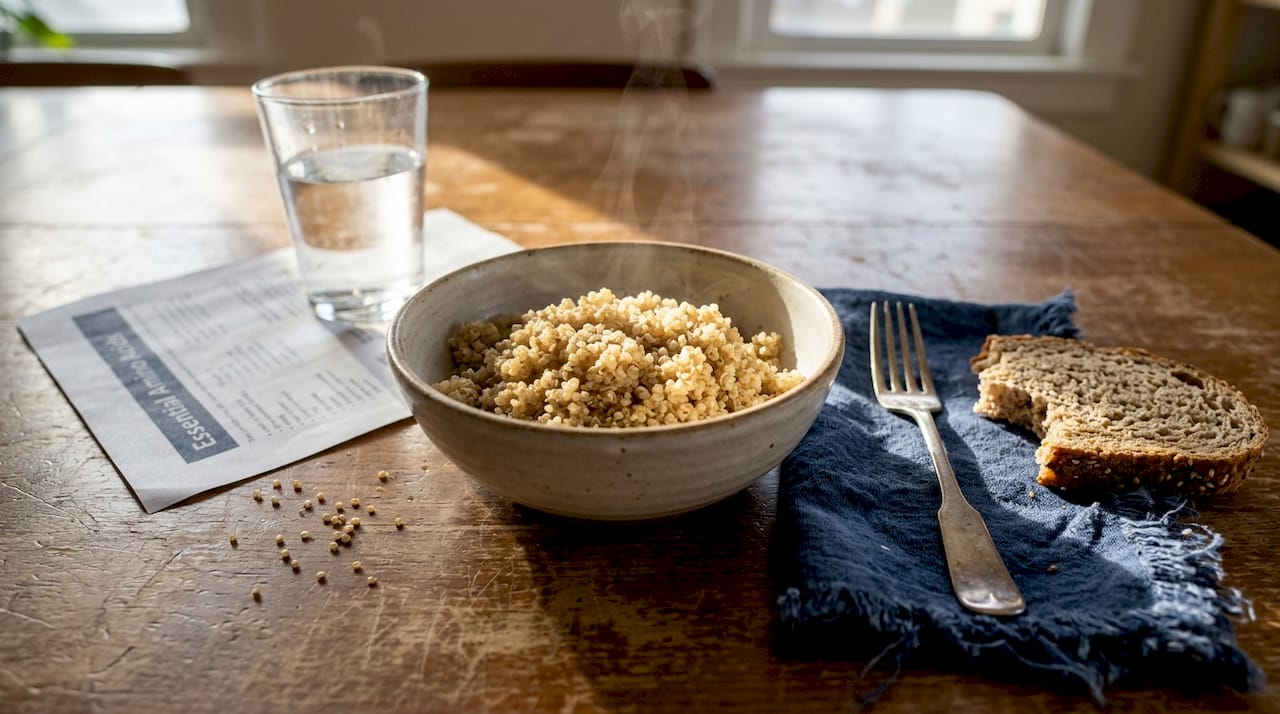
Buckwheat, despite its name, is not related to wheat and remains naturally gluten-free. It provides a well-balanced amino acid spectrum and contains all essential amino acids in meaningful quantities. These ancient grains qualify as vegan complete proteins from wholefoods, offering not just protein but also fibre, minerals, and phytonutrients that support overall health.
Protein content comparison of ancient grains:
| Ancient grain | Protein per 100g cooked | DIAAS score | Notable amino acids |
|---|---|---|---|
| Quinoa | 14g | 106% | High lysine, balanced profile |
| Amaranth | 13.6g (per cup) | ~95-100% | Exceptional lysine content |
| Buckwheat | 13.3g | ~90-95% | Well-balanced spectrum |
| Teff | 10g | ~85-90% | Good lysine levels |
The benefits of wholefood ancient grains extend beyond protein completeness. These grains retain their bran, germ, and endosperm, delivering more vitamins, minerals, and antioxidants than refined counterparts. Their complex carbohydrates provide sustained energy, whilst their fibre content supports digestive health and helps regulate blood sugar levels.
Pro Tip: Incorporate ancient grains into your weekly meal rotation by batch-cooking quinoa or amaranth on Sunday, then using them as bases for breakfast porridge, lunch bowls, and dinner sides throughout the week for convenient, nutrient-dense complete protein.
These grains complement other plant proteins beautifully. When you combine quinoa with black beans, or amaranth with lentils, you create meals with enhanced amino acid profiles that rival animal protein sources. The nutritional advantages of ancient grains make them ideal foundations for plant-based eating patterns focused on wholefood nutrition rather than processed alternatives.
Protein quality and optimisation in vegan diets
PDCAAS and DIAAS scoring systems provide frameworks for assessing protein quality, but understanding their implications helps you make informed dietary choices. PDCAAS multiplies a protein’s amino acid score by its digestibility percentage, capping results at 1.0 to prevent overvaluation. DIAAS improves on this by measuring digestibility of individual amino acids rather than crude protein, allowing scores above 100% and better reflecting true nutritional value.
Plant proteins often score lower due to limiting amino acids and digestibility factors ranging from 74% to 87% in laboratory conditions. This doesn’t mean plant proteins are inadequate, but rather that you may need slightly higher intake volumes to match the amino acid delivery of animal proteins. The presence of fibre, phytates, and tannins in plant foods can reduce protein absorption, though these compounds also offer significant health benefits.
Protein quality scores for common plant sources:
| Food source | PDCAAS score | DIAAS score | Limiting amino acid |
|---|---|---|---|
| Soy protein isolate | 1.00 | 100-115% | None significant |
| Quinoa | 0.87 | 106% | None |
| Pea protein | 0.89 | 82-90% | Methionine |
| Rice protein | 0.47 | 59% | Lysine |
| Wheat protein | 0.42 | 40% | Lysine |
| Lentils | 0.52 | 63% | Methionine |
Digestibility challenges arise from plant cell walls and anti-nutritional factors that bind to proteins and minerals. Cooking, soaking, sprouting, and fermenting plant foods can significantly improve digestibility by breaking down these compounds. Traditional food preparation methods have long addressed these issues, which is why cultures worldwide have developed techniques like soaking beans overnight or fermenting grains.
Lysine serves as the primary limiting amino acid in most grains, whilst legumes typically contain lower methionine levels. This complementary pattern explains why traditional diets worldwide pair grains with legumes: rice and beans, wheat and chickpeas, corn and black beans. These combinations weren’t accidents but evolved from practical nutritional wisdom.
Optimisation strategies for vegan protein quality:
- Consume diverse protein sources daily to ensure all amino acids appear in adequate amounts
- Include soy products regularly, as they offer complete protein with high digestibility
- Pair legumes with grains within meals to create complementary amino acid profiles
- Incorporate ancient grains for athletes and active individuals who need higher protein quality
- Consider protein timing around workouts to maximise muscle protein synthesis
- Use cooking methods that enhance digestibility, such as pressure cooking legumes
- Don’t fear slightly higher protein intake to compensate for lower digestibility factors
Pro Tip: Aim for meals containing 30-50% of protein from soy sources, 10-60% from legumes, and 10% from grains or nuts to achieve optimal amino acid profiles with PDCAAS scores approaching 1.0.
The myth of per-meal combination deserves clarification. Vegan diets meet protein needs via variety, with no requirement to combine proteins at every meal since your body pools amino acids over 24 hours. Your liver and bloodstream maintain a reserve of free amino acids drawn from throughout the day’s intake. However, combining complementary proteins within meals does optimise DIAAS scores and may benefit those with higher protein requirements or limited food access.
Practical vegan meal ideas for complete protein intake
Building meals with complete protein sources becomes straightforward once you understand the principles. Focus on incorporating soy products, legumes, ancient grains, nuts, and seeds in combinations that deliver both variety and complementary amino acid profiles. The goal isn’t perfection at every meal but rather consistent inclusion of high-quality plant proteins throughout your day.
Quinoa and lentil bowls exemplify practical complete protein meals, delivering approximately 25 grammes of protein per serving when combined. Cook one cup of quinoa (8g protein) and add one cup of cooked lentils (18g protein), then top with vegetables, tahini, and nutritional yeast for additional protein and flavour. This combination provides all essential amino acids in quantities that rival animal protein sources.
Top plant-based complete protein meal combinations:
- Amaranth porridge with hemp seeds, almond butter, and chia seeds (22g protein)
- Buckwheat noodles with edamame, sesame seeds, and miso broth (26g protein)
- Quinoa tabbouleh with chickpeas, pumpkin seeds, and lemon tahini dressing (24g protein)
- Tempeh stir-fry with brown rice, cashews, and broccoli (28g protein)
- Lentil and barley soup with nutritional yeast and sunflower seeds (20g protein)
- Tofu scramble with quinoa, black beans, and avocado (30g protein)
Vegan meals optimised for protein quality typically include 30-50% soy products, 10-60% legumes, and 10% grains or nuts to achieve PDCAAS scores of 1.0. Ancient grains enhance these combinations significantly, but pairing them with legumes improves completeness by approximately 30% compared to consuming either food alone.
The convenience and nutrient density of ancient grains make them ideal for meal preparation. Unlike some legumes that require lengthy cooking times, quinoa and buckwheat cook in 15-20 minutes. Amaranth takes slightly longer but can be prepared in larger batches and refrigerated for up to five days. These grains work equally well in savoury and sweet applications, from breakfast porridge to dinner grain bowls.
Pro Tip: Planning meals that incorporate varied protein sources throughout the day is simpler and more flexible than attempting to combine complementary proteins at every single meal, though strategic pairing does optimise protein quality.
Athletes and older adults face higher protein requirements due to increased muscle protein turnover and reduced protein synthesis efficiency. Active individuals may need 1.2-1.6 grammes per kilogramme of body weight daily, whilst older adults benefit from similar intakes to maintain muscle mass and function. For these populations, focusing on high-DIAAS sources like quinoa and lentils helps counter plant protein digestibility challenges.
Timing protein intake throughout the day, rather than concentrating it in one meal, supports optimal muscle protein synthesis. Aim for 20-30 grammes of high-quality protein at each main meal, with smaller amounts from snacks. This distribution pattern works particularly well for vegan diets, as it naturally encourages the variety needed to obtain all essential amino acids in adequate amounts.
Explore wholefood nutrition with Granavitalis
Your journey toward optimal plant-based nutrition deserves ingredients that honour both tradition and performance. Granavitalis offers premium organic pecan butter and thoughtfully curated selections like our organic nut and seed butter collection, each crafted to complement your wholefood protein sources with nutrient-dense fats and minerals.
These minimally processed wholefoods pair beautifully with ancient grains in breakfast bowls, post-workout smoothies, or afternoon snacks. Our immunity superfoods mix provides targeted nutrition to support your body’s daily demands, sourced with the same commitment to purity and transparency that defines everything we offer. Discover how real-food nutrition, rooted in heritage ingredients, fuels your modern wellness goals.
Frequently asked questions
What is the difference between complete and incomplete proteins?
Complete proteins provide all nine essential amino acids in adequate amounts for human nutrition, whilst incomplete proteins lack sufficient quantities of one or more essential amino acids. Most animal proteins are complete, but several plant sources also qualify, including soy products, quinoa, amaranth, and buckwheat. Incomplete proteins can be combined throughout the day to meet amino acid requirements, as your body maintains an amino acid pool that draws from all foods consumed over 24 hours.
Can vegans get enough protein without combining foods at every meal?
Yes, vegans meet protein needs through daily variety without combining proteins at every meal, since the body pools amino acids over 24 hours. Your liver maintains a reserve of free amino acids from throughout the day’s intake, making strict meal-by-meal combinations unnecessary. However, pairing complementary proteins within meals does optimise protein quality scores and may benefit athletes or those with higher requirements.
Which ancient grains are best sources of complete vegan protein?
Quinoa, amaranth, and buckwheat are excellent complete vegan protein sources from wholefoods. Quinoa provides 14g protein per 100g cooked with a DIAAS score of 106%, whilst amaranth delivers 13.6g per cup with exceptional lysine content. Buckwheat offers a well-balanced amino acid spectrum with approximately 13.3g protein per 100g cooked. These ancient grains contribute significantly to protein intake whilst providing fibre, minerals, and sustained energy.
How can active or older vegans ensure sufficient protein intake?
Active and older adults need 1.2-1.6g protein per kilogramme of body weight, focusing on high-DIAAS sources like quinoa and lentils to counter plant digestibility challenges. Distribute protein throughout the day with 20-30g at each main meal to optimise muscle protein synthesis. Combine ancient grains with legumes for superior amino acid availability, and consider slightly higher total protein intake to compensate for the 74-87% digestibility of plant proteins compared to animal sources.
Recommended
- Plant Based High Protein Meals: 30% More Complete Nutrition – Granavitalis
- Top 10 Vegan Sources of Protein for Your Diet – Granavitalis
- What are sources of complete protein: essential guide 2026 – Granavitalis
- Best complete vegan protein powder for wellness in 2026 – Granavitalis
- Veganske Kosttilskud & Meget Mere – Vitaminone.dk