
What is phytonutrient density? Your guide to eating well
TL;DR:
- Focusing on phytonutrient density emphasizes the importance of plant-based compounds in food, not just calorie counts. Consuming a higher proportion of phytochemical-rich plants reduces inflammation, supports gut health, and lowers chronic disease risk. Enhancing your diet with colorful fruits, vegetables, legumes, herbs, and whole grains can significantly improve health outcomes beyond traditional calorie tracking.
Calorie counting has dominated nutrition advice for decades, yet two diets with identical calorie totals can produce dramatically different health outcomes. The reason comes down to what is phytonutrient density: a measure of how much of your daily food intake comes from whole plant foods packed with protective chemical compounds. Understanding phytonutrient density shifts your focus from energy arithmetic to genuine diet quality, and that shift can change how you age, recover, and feel every single day. This guide covers the science, the practical application, and why this concept deserves a central place in how you think about food.
Table of Contents
- What is phytonutrient density and how is it measured
- Why phytonutrient density matters for your health
- Differentiating phytonutrient density from nutrient and calorie density
- Practical ways to increase your phytonutrient density
- Rethinking nutrition: why phytonutrient density matters more than calorie counting
- Explore Granavitalis superfoods to boost your phytonutrient intake
- Frequently asked questions
Key Takeaways
| Point | Details |
|---|---|
| Definition | Phytonutrient density measures how many of your daily calories come from plant foods rich in beneficial compounds. |
| Health benefits | Diets high in phytonutrient density reduce oxidative stress, inflammation, and improve bone health. |
| Distinct concept | Phytonutrient density is different from calorie or nutrient density, focusing on unique plant bioactives. |
| Practical tips | Eating 5+ servings of colourful plants daily boosts your phytonutrient intake effectively. |
| Whole foods over supplements | Whole plant foods offer complex nutrient synergy that supplements cannot match. |
What is phytonutrient density and how is it measured
Phytonutrient density describes the proportion of your calories that come from plant foods known to be rich in phytochemicals. These are bioactive compounds produced by plants, including polyphenols, flavonoids, carotenoids, glucosinolates, and alkaloids, that have measurable effects on human health beyond basic vitamins and minerals.
The most useful tool for measuring this is the Phytonutrient Index (PI). The Phytonutrient Index measures the percentage of total calories coming from phytonutrient-dense whole plant foods. The formula is straightforward: (calories from phytonutrient-dense foods divided by total daily calories) multiplied by 100. A score of 60 means 60% of your calories come from qualifying plant foods.
What actually qualifies? Phytonutrient-dense foods include fruits, vegetables, legumes, whole grains, nuts, seeds, and herbs, with scores ranging from 0 to 100. Potatoes are the notable vegetable exclusion because they score poorly on phytochemical diversity relative to their calorie load.
Foods that contribute to your Phytonutrient Index score:
- Berries, citrus fruits, apples, and stone fruits
- Leafy greens, cruciferous vegetables, and alliums (onions, garlic, leeks)
- Legumes including lentils, chickpeas, and black beans
- Whole grains such as oats, spelt, and amaranth
- Nuts and seeds, including walnuts, chia, and flaxseed
- Fresh and dried herbs and spices
Foods that score zero:
- Processed snacks, refined cereals, and white bread
- Meat, poultry, fish, and dairy products
- Cooking oils, butter, and refined sugars
- Alcohol and most processed beverages
This binary is not a judgement on animal foods. It simply reflects that the PI is designed to measure phytochemical contribution, not overall nutritional completeness. Understanding what makes a food a true nutrient powerhouse requires looking at several frameworks together, and the PI is one of the most telling. You can also explore the nutrient-dense foods meaning wellness guide for a complementary view.
Why phytonutrient density matters for your health
Understanding how phytonutrient density is measured helps explain why it significantly impacts your health outcomes. The mechanism is not about a single superfood or miracle compound. It is about the combined effect of hundreds of plant chemicals working together in your body simultaneously.
Phytonutrients act as antioxidants, anti-inflammatory agents, and hormone modulators. They influence gene expression, support gut microbiome diversity, and protect cells from damage caused by environmental stressors and metabolic processes. No single vitamin or mineral replicates this range of activity.
The research behind these effects is growing rapidly. Higher Phytochemical Index scores are associated with reduced oxidative stress and improved bone mineral density in adults, which matters enormously for anyone thinking about long-term physical resilience.
“Consuming more phytonutrient-dense plant foods is associated with lower risk of chronic diseases due to anti-inflammatory and antioxidant effects.” Plant Based Health Professionals UK
This is particularly relevant for cardiovascular health, type 2 diabetes risk, and cognitive decline. These are not distant concerns for older adults only. Inflammatory processes underlying these conditions begin years, sometimes decades, before symptoms appear.
Key phytonutrient benefits supported by current research:
- Reduced systemic inflammation linked to lower heart disease risk
- Improved gut microbiome composition through prebiotic plant compounds
- Stronger antioxidant defences protecting DNA and cell membranes
- Better blood sugar regulation through polyphenol activity in the gut
- Potential protection against certain cancers via phytochemical signalling pathways
The plant protein benefits discussion often focuses on macronutrients alone, but the phytonutrient benefits carried alongside plant protein are arguably just as significant for long-term health.
Differentiating phytonutrient density from nutrient and calorie density

With the importance of phytonutrient density clear, it is vital to distinguish it from related nutrition concepts to avoid confusion. These terms are often used interchangeably in popular media, which creates real misunderstanding about what makes a food genuinely valuable.
Nutrient density refers to the amount of vitamins, minerals, and health-promoting compounds per calorie, distinct from energy density. Energy density simply describes how many calories are packed into a given weight of food. Phytonutrient density is narrower still: it focuses specifically on plant-based bioactive compounds, many of which are not captured in standard nutritional databases at all.
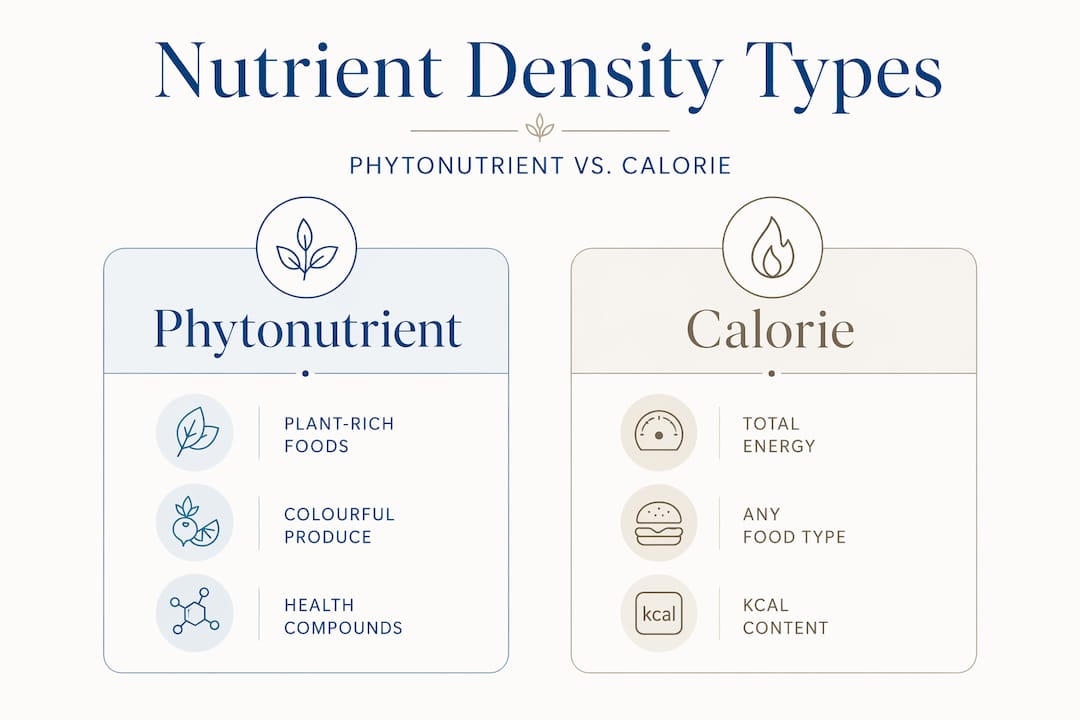
Comparing key nutrition concepts:
| Concept | What it measures | Unit | Example |
|---|---|---|---|
| Energy density | Calories per 100g of food | kcal/100g | Almonds: 580 kcal/100g |
| Nutrient density | Vitamins and minerals per calorie | Nutrients per kcal | Spinach: very high |
| Phytonutrient density | % of calories from phytochemical-rich plants | PI score (0 to 100) | Blueberries: very high |
The confusion arises most often with foods like nuts. Walnuts are genuinely nutrient-dense, providing omega-3 fatty acids, magnesium, and vitamin E. They also contribute positively to your Phytonutrient Index. However, their calorie density is high, so eating them in large quantities raises total calorie intake significantly without proportionally boosting your PI score. Balancing them with lower-calorie leafy greens gives you the best of all three metrics.
Why these distinctions matter in practice:
- A diet high in lean animal protein can be nutrient-dense but score zero on the Phytonutrient Index
- White rice is low in energy density compared to nuts but also scores zero for phytonutrient density
- Kale is simultaneously high in nutrient density and phytonutrient density while being low in energy density
- Avocado is energy-dense, moderately nutrient-dense, and contributes phytonutrients including lutein and beta-sitosterol
For a fuller picture of how these layers interact, the nutrient-dense foods explained and most nutrient-dense foods guide resources are genuinely worth your time.
Practical ways to increase your phytonutrient density
Now that you understand the science, here are practical steps to improve your diet’s phytonutrient density every single day. The good news is that even modest changes create measurable improvements.
- Start with colour diversity at every meal. Aim for at least three different colours of fruits or vegetables per day. Red (tomatoes, raspberries), orange (carrots, sweet potato), purple (aubergine, blueberries), and dark green (broccoli, kale) each signal distinct families of phytochemicals.
- Add legumes to two meals daily. Lentils in soup, chickpeas on a salad, or black beans in a wrap are easy entries. They dramatically raise your PI score while adding fibre and plant protein.
- Replace refined grains with whole and ancient grains. Swapping white bread for spelt or oat-based bread, or using amaranth in porridge, adds phytochemicals alongside the fibre. Explore nutritious ancient grains for specific options.
- Use herbs and spices generously. Turmeric, parsley, rosemary, and oregano are among the most phytonutrient-dense foods by weight. Adding a tablespoon of fresh herbs to a meal costs almost no calories but meaningfully raises your PI score.
- Be intentional about breakfast. It is the easiest meal to make phytonutrient-dense. Overnight oats with berries, seeds, and a handful of chopped nuts set your PI score positively from the start of the day. Check these nutrient-dense breakfast ideas for structured inspiration.
Replacing just 20% of calories with berries or cruciferous vegetables can significantly increase your Phytonutrient Index and improve health outcomes. That is not a radical diet overhaul. It is one meal decision per day.
Five or more colourful plant servings daily, as recommended by the World Cancer Research Fund, remains an achievable and well-evidenced target for optimal wellness.
Beyond produce, mushroom nutrition is worth noting. Mushrooms sit in a unique category, containing beta-glucans and other bioactive compounds that support immune function, making them a strong addition to any phytonutrient-focused diet.
Pro Tip: Blend a tablespoon of ground flaxseed and a teaspoon of turmeric into your morning smoothie or porridge. Both are among the most concentrated phytonutrient sources available, require no preparation, and add negligible calories relative to their phytochemical contribution.
Rethinking nutrition: why phytonutrient density matters more than calorie counting
Here is what frustrates us about mainstream diet culture: it has spent 50 years teaching people to manage a number on a label while almost completely ignoring the biological complexity of what that food actually does once it is inside you.
Calorie counting is not wrong. It is just incomplete to the point of being misleading for anyone focused on genuine long-term health rather than short-term weight change. The Phytonutrient Index outperforms tracking single nutrients because phytonutrients work synergistically, providing protective effects that isolated measures entirely miss.
Think about what that means practically. Two people eating 2,000 calories daily can have PI scores of 15 and 75. The person at 75 is not eating less; they are eating differently. Their meals are reducing inflammation, supporting microbiome diversity, and protecting cellular function in ways the person at 15 is not benefiting from, regardless of whether both maintain the same body weight.
Supplements cannot bridge this gap. The biological activity of phytonutrients depends on the matrix of fibre, co-factors, and companion compounds present in whole foods. You cannot bottle the interaction between quercetin, fibre, and the gut bacteria that transform it into active metabolites. Whole foods are the only delivery system that works.
The shift we advocate is simple. Track your PI score for one week. Aim for 50% of calories from qualifying plant foods. See what that requires you to add, not remove. This additive approach is far more sustainable than restriction and dramatically improves the nutrient-dense impact of your overall diet.
Explore Granavitalis superfoods to boost your phytonutrient intake
To support your journey towards a more phytonutrient-rich diet, consider these trusted Granavitalis superfood options. Every product we source is selected specifically because it contributes meaningful phytochemical diversity, not just macronutrients.

Our immune booster superfood bundle combines carefully selected ingredients known for their high phytonutrient content, giving you a straightforward way to raise your PI score without restructuring every meal. For concentrated colour and phytochemical variety, the superfoods mix with acai, chia, and acerola delivers polyphenols, vitamin C, and omega-3s in one spoonful. And for a phytonutrient-dense snack that genuinely satisfies, our raw organic pecan butter provides flavonoids and ellagic acid alongside healthy fats. Real food, real compounds, real difference.
Frequently asked questions
What exactly are phytonutrients?
Phytonutrients are natural compounds found in plants that deliver health benefits beyond basic nutrition. Phytochemicals encompass polyphenols, alkaloids, terpenoids, flavonoids, saponins, and steroids acting as bioactive agents in plant-based foods, each with distinct effects on human physiology.
How do I know if a food is high in phytonutrient density?
Look for whole plant foods with vivid colour and minimal processing. Phytonutrient-dense foods include fruits, vegetables, legumes, whole grains, nuts, seeds, and herbs, all of which score higher on the Phytonutrient Index, while processed and animal foods score zero.
Can supplements replace phytonutrient-rich foods in the diet?
No. No supplement replicates the 300-plus compounds present in a single apple; whole foods remain the only reliable source of the full phytonutrient spectrum your body benefits from.
Is phytonutrient density important at all life stages?
Yes, though specific priorities shift with age and circumstance. Pregnant women need 86% higher folate density and lactating women need 70% higher vitamin A density from phytonutrient-rich foods, illustrating how phytonutrient needs intensify at particular life stages.