
Nutrient Dense Foods: Fuel for Modern Well-Being
More British adults are discovering that choosing nutrient-dense foods can make a real difference when juggling work, exercise, and daily demands. With nearly one third of British people prioritising health and energy through their diet, understanding the true power of nutrient-rich choices matters more than ever. This guide sheds light on what nutrient density really means, highlighting smart food strategies and ancient grains that fit perfectly into a fast-paced British lifestyle.
Table of Contents
- Nutrient Density Defined and Demystified
- Types of Nutrient Dense Foods Today
- How Nutrient Density Supports Energy and Recovery
- Common Missteps: Misreading Food Labels
- Choosing and Using Nutrient Dense Foods Daily
Key Takeaways
| Point | Details |
|---|---|
| Understanding Nutrient Density | Focus on foods that offer high levels of essential nutrients relative to their calorie content for optimal health. |
| Incorporating Diverse Foods | Include a variety of nutrient-dense foods such as vegetables, fruits, lean proteins, and whole grains in your daily diet. |
| Maximising Recovery and Energy | Prioritise a balanced intake of protein, complex carbohydrates, and healthy fats for efficient energy use and recovery. |
| Smart Food Labeling Awareness | Learn to read food labels carefully, paying attention to portion sizes and ingredient lists to make informed choices. |
Nutrient Density Defined and Demystified
Nutrient density represents a crucial nutritional concept defining food quality beyond simple caloric content. At its core, nutrient density describes foods that deliver substantial quantities of essential nutrients relative to their energy value. When we examine nutrient-rich foods, we look at their concentration of vitamins, minerals, proteins, and beneficial compounds per serving.
Understanding nutrient density requires recognising how different foods contribute to our body’s nutritional requirements. Nutrient requirements vary significantly based on individual factors like age, gender, physical activity levels, and overall health status. The principle centres on selecting foods that provide maximum nutritional benefit with minimal energy investment - essentially getting the most nutritional ‘bang for your caloric buck’.
In practical terms, nutrient-dense foods include vegetables, fruits, lean proteins, whole grains, and minimally processed ingredients that pack substantial nutritional value. These foods deliver critical micronutrients like vitamins A, C, D, various B vitamins, minerals such as iron, zinc, and magnesium, alongside essential macronutrients like protein and healthy fats. The goal is choosing foods that support optimal bodily function, boost energy levels, and contribute to long-term health and wellness.
Pro tip: Aim to fill half your plate with colourful vegetables and fruits to naturally increase your meal’s nutrient density and nutritional variety.
Types of Nutrient Dense Foods Today
Modern nutrition recognises several categories of nutrient-dense foods that provide exceptional health benefits. Wholesome dietary choices encompass a wide range of ingredients delivering critical nutrients essential for optimal bodily function. These foods go beyond simple sustenance, offering concentrated nutritional profiles that support energy, recovery, and long-term wellness.

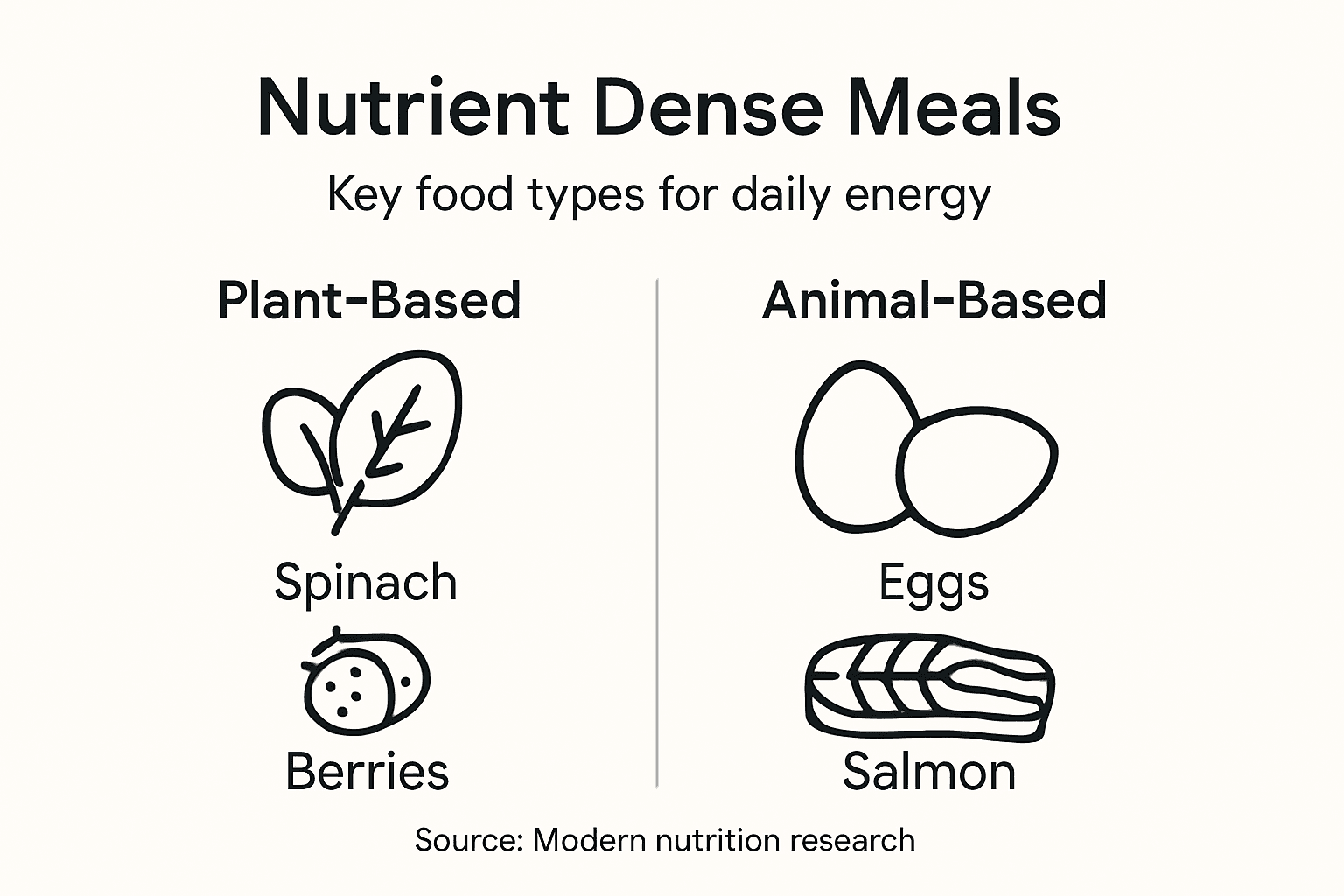
Plant-based nutrient powerhouses include leafy green vegetables like spinach and kale, which deliver high quantities of vitamins A, C, and K, alongside minerals such as iron and calcium. Legumes like lentils, chickpeas, and beans offer remarkable protein content combined with complex carbohydrates and fibre. Nuts and seeds represent another exceptional category, providing healthy fats, protein, and crucial micronutrients like magnesium and zinc.
Animal-based nutrient-dense foods include eggs, fatty fish like salmon, lean meats, and Greek yoghurt. These protein-rich options deliver complete amino acid profiles, vitamin B12, omega-3 fatty acids, and essential minerals. Whole grains such as quinoa, amaranth, and buckwheat further complement these nutritional sources, offering sustained energy and additional micronutrients that support metabolic processes.
Pro tip: Rotate your nutrient-dense food choices weekly to ensure a diverse range of vitamins, minerals, and beneficial compounds in your diet.
Here is a comparison of plant-based and animal-based nutrient-dense foods for reference:
| Category | Examples | Key Nutrients | Health Benefits |
|---|---|---|---|
| Plant-based | Spinach, chickpeas | Vitamins A, C, K; iron | Improved immunity, better digestion |
| Animal-based | Salmon, eggs | Vitamin B12, omega-3 | Muscle repair, brain development |
How Nutrient Density Supports Energy and Recovery
Nutrient-dense foods play a critical role in supporting sustained energy and efficient physiological recovery. Energy metabolism fundamentally depends on the precise nutritional inputs we provide our bodies, with each macronutrient and micronutrient contributing to complex metabolic processes that regulate performance and healing.
Protein-rich foods are particularly crucial for muscle recovery, providing essential amino acids that repair tissue damage and support cellular regeneration. Complex carbohydrates from whole grains and vegetables offer sustained energy release, preventing dramatic blood sugar fluctuations and maintaining consistent metabolic function. Healthy fats, especially omega-3 fatty acids found in fish and nuts, contribute to reduced inflammation and enhanced cellular repair mechanisms, further supporting the body’s natural recovery processes.
The strategic combination of nutrient-dense foods enables more efficient energy utilisation. By selecting ingredients with high nutritional value and low energy density, individuals can optimise their dietary intake to support physical performance, mental clarity, and long-term wellness. Micronutrients such as magnesium, B-vitamins, and iron play pivotal roles in energy production, oxygen transportation, and mitochondrial function, directly influencing our body’s capacity to generate and sustain energy throughout demanding daily activities.
Pro tip: Consume a balanced mix of protein, complex carbohydrates, and healthy fats within 30 minutes after intense physical activity to maximise nutrient absorption and recovery.
Here is a summary of nutrient density’s role in energy and recovery:
| Nutrient Type | Main Benefit | Example Food | Physiological Role |
|---|---|---|---|
| Protein | Tissue repair and recovery | Lean meat, lentils | Muscle regeneration |
| Complex carbohydrate | Sustained energy release | Quinoa, sweet potato | Stable blood sugar levels |
| Healthy fats | Reduced inflammation | Salmon, walnuts | Enhanced cellular repair |
Common Missteps: Misreading Food Labels
Food label comprehension requires strategic attention to detail, as many consumers inadvertently misinterpret nutritional information. Understanding the nuanced language of packaging can mean the difference between making informed dietary choices and falling prey to misleading marketing tactics that obscure true nutritional value.
One of the most prevalent errors involves misunderstanding portion sizes and nutritional content. Many individuals mistakenly read calorie information without considering the serving size, which can lead to significant miscalculations about actual nutritional intake. Phrases like ‘low-fat’ or ‘reduced-fat’ can be particularly deceptive, often masking high sugar or salt content that undermines the perceived health benefits of a product.
The ingredient list provides crucial insights that many consumers overlook. Ingredients are listed in descending order by weight, meaning the first few items represent the primary components of the food. Hidden sugars can appear under multiple names like sucrose, corn syrup, or maltodextrin, while sodium might be disguised as salt, sodium chloride, or various preservative compounds. Learning to decode these subtle linguistic tricks empowers consumers to make more transparent nutritional choices that align with their health goals.
Pro tip: Always scan the ingredient list from top to bottom and check the per 100g nutritional values to get a true comparison between different food products.
Choosing and Using Nutrient Dense Foods Daily
Creating a sustainable approach to nutrition requires strategic daily dietary planning, focusing on consistent nutrient-rich choices that support long-term wellness. Integrating nutrient-dense foods is not about restrictive eating, but about making informed selections that nourish the body and provide sustained energy throughout challenging daily routines.
A practical framework involves diversifying food sources across key nutritional categories. This means incorporating a rainbow of vegetables and fruits, selecting whole grains with high fibre content, choosing lean proteins from diverse sources like legumes, fish, and poultry, and including moderate amounts of healthy fats from nuts, seeds, and plant-based oils. The goal is building meals that offer a comprehensive nutritional profile, ensuring each bite delivers maximum health benefits.
Meal preparation becomes crucial in maintaining nutrient density. Techniques like batch cooking, smart ingredient storage, and thoughtful meal planning can transform nutritional goals from theoretical concepts into realistic daily practices. Consider preparing versatile base ingredients like quinoa, roasted vegetables, and lean protein sources that can be quickly assembled into multiple meals, reducing decision fatigue while maintaining nutritional integrity. Understanding portion sizes, cooking methods that preserve nutrient content, and balancing macronutrients are essential skills in transforming dietary intentions into consistent, health-supporting behaviours.
Pro tip: Prepare a weekly meal plan that includes at least three different coloured vegetables in each main meal to naturally increase nutrient diversity and absorption.
Elevate Your Nutrition with Granavitalis: Where Tradition Fuels Modern Energy
The article highlights the challenge many face in finding truly nutrient-dense foods that support sustained energy, recovery and overall well-being. If you seek to avoid common missteps like confusing food labels or settling for foods low in real nutritional value you understand the need for authentic, transparent, and nutrient-packed ingredients. Granavitalis solves this by offering ancient grains, premium nuts, and clean plant-proteins that align perfectly with the article’s focus on maximising nutrient density for smart energy and balanced recovery.
Our products honour the principle of purity and performance championed in the article. Every ingredient is rooted in tradition yet crafted for today’s active lifestyle. With Granavitalis, you get food that genuinely supports muscle repair, sustained energy release and reduced inflammation without compromises. Discover options that empower your daily wellness routine with clean, wholefood vitality.

Take control of your nutrition now by exploring our range at Granavitalis. Experience how ancient grains and thoughtfully sourced wholefoods transform your meals into a foundation for strength, clarity and long-term health. Visit Granavitalis today and join the way of nutrition that delivers on real-life goals with transparency and purpose.
Frequently Asked Questions
What are nutrient-dense foods?
Nutrient-dense foods are those that provide a significant amount of essential nutrients—such as vitamins, minerals, proteins, and beneficial compounds—relative to their energy value. This means they offer more nutrition per calorie, supporting optimal health and bodily function.
How can I incorporate more nutrient-dense foods into my daily diet?
You can increase nutrient density by filling half your plate with a variety of colourful vegetables and fruits, choosing whole grains, and selecting lean proteins from plants or animals. Meal prep and planning help in maintaining consistent nutrient-rich choices throughout the week.
What are examples of plant-based and animal-based nutrient-dense foods?
Examples of plant-based nutrient-dense foods include leafy greens like spinach and kale, legumes like lentils and chickpeas, and nuts like almonds and walnuts. Animal-based options include eggs, fatty fish like salmon, and lean meats such as chicken and turkey.
Why is understanding food labels important when choosing nutrient-dense foods?
Reading food labels carefully helps prevent misconceptions about nutritional content, such as portion sizes and hidden ingredients. This knowledge empowers you to make better food choices, ensuring you’re selecting foods that genuinely support your health and fitness goals.