
Nutrient Dense Foods: Real Strength for Modern Living
Choosing what to eat often feels complicated, especially when busy schedules and endless options compete for your attention. For those aiming to support long-term wellbeing, understanding the power of nutrient-dense foods can transform your daily meals. From ancient grains packed with natural goodness to vibrant plant proteins, this guide offers clear, practical insights to help you nourish your body with foods that truly matter.
Table of Contents
- Nutrient Dense Foods Defined And Debunked
- Ancient Grains And Wholefood Principles
- Spotlight Ingredients: Nuts, Seeds, And Plant Proteins
- Benefits For Strength, Recovery, And Focus
- Avoiding Nutrient Traps And Common Pitfalls
Key Takeaways
| Point | Details |
|---|---|
| Nutrient Density Importance | Focus on foods that provide high nutrients relative to calories to maximise health benefits. |
| Ancient Grains Advantage | Incorporating ancient grains enhances nutritional intake and supports metabolic health. |
| Plant-Based Proteins | Embrace a variety of plant-based proteins to ensure balanced nutrition and support overall wellness. |
| Avoid Nutritional Pitfalls | Be aware of hidden sugars and processed foods to prevent nutrient deficiencies and improve dietary choices. |
Nutrient Dense Foods Defined and Debunked
Understanding nutrient density is crucial for making informed dietary choices. At its core, nutrient density measures the quantity of essential nutrients a food provides relative to its caloric content. Nutrient density evaluates food quality by comparing nutritional value against energy provided, helping individuals maximise their nutritional intake.
Nutrient-dense foods are characterised by several key attributes:
- High concentration of vitamins and minerals
- Low caloric content relative to nutritional value
- Generous amounts of protein and fiber
- Minimal processing and natural composition
- Typically plant-based or lean protein sources
When examining nutrient-dense foods, it’s essential to understand they differ dramatically from empty calorie options. While sugary snacks and processed foods offer little nutritional benefit, nutrient-dense alternatives like leafy greens, lean proteins, and whole grains provide substantial health advantages. Low-calorie, nutrient-rich foods support overall health by supplying essential nutrients without excessive energy intake.

Here is a comparison of nutrient-dense foods and empty calorie foods to clarify their health impacts:
| Attribute | Nutrient-Dense Foods | Empty Calorie Foods |
|---|---|---|
| Main Nutrients | Vitamins, minerals, protein | Mainly sugars and fats |
| Caloric Content | Low to moderate | Often very high |
| Typical Examples | Leafy greens, lentils, nuts | Fizzy drinks, sweets, crisps |
| Health Outcome | Supports wellbeing, energy | Increases disease risk |
Unlike traditional dietary approaches that focus solely on calorie counting, nutrient density provides a more nuanced perspective on nutrition. It encourages consuming foods that offer maximum nutritional value per bite, supporting metabolic function, sustained energy, and long-term wellness.
Pro tip: Start incorporating nutrient-dense foods by replacing one processed snack daily with a whole food option like nuts, seeds, or fresh vegetables.
Ancient Grains and Wholefood Principles
Ancient grains represent a nutritional cornerstone that connects modern wellness with traditional food heritage. Whole grains provide essential nutrients by retaining all three critical seed components: bran, germ, and endosperm, ensuring maximum nutritional integrity.
These remarkable food sources offer numerous health benefits:
- Naturally high in protein and fiber
- Rich in essential vitamins and minerals
- Minimally processed and genetically unmodified
- Lower glycaemic index compared to refined grains
- Support cardiovascular and metabolic health
- Provide sustained energy release
Unlike modern, heavily processed grains, ancient varieties like quinoa, amaranth, spelt, and buckwheat have remained largely unchanged over centuries. Ancient grains demonstrate superior nutritional profiles with higher concentrations of nutrients that support long-term wellness. These grains represent more than just food—they’re a connection to our agricultural heritage and a testament to nutritional wisdom passed through generations.
By prioritising whole and ancient grains, individuals can make strategic dietary choices that support metabolic function, reduce chronic disease risks, and enhance overall nutritional intake. The key lies in diversity, variety, and understanding the profound nutritional potential of these unmodified, nutrient-dense food sources.
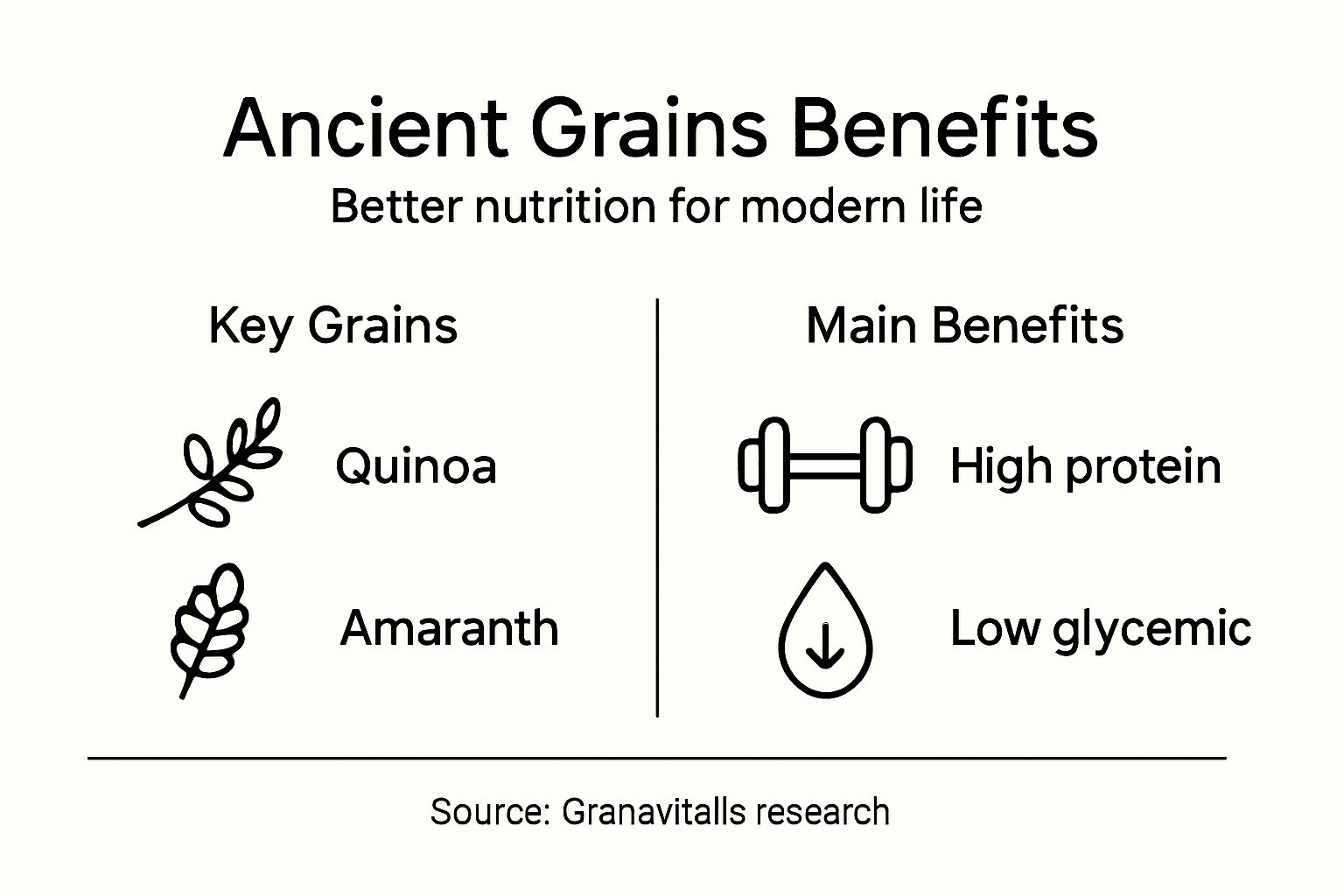
Consider these ancient grains and their unique nutritional benefits:
| Grain | Key Nutrient | Glycaemic Impact | Special Advantage |
|---|---|---|---|
| Quinoa | High-quality protein | Low | Complete amino acid profile |
| Amaranth | Magnesium | Low | Naturally gluten-free |
| Spelt | Fibre | Moderate | Supports digestive health |
| Buckwheat | Antioxidants | Low | May lower cholesterol |
Pro tip: Gradually introduce ancient grains into your diet by replacing one refined grain serving weekly with a nutrient-rich alternative like quinoa or amaranth.
Spotlight Ingredients: Nuts, Seeds, and Plant Proteins
Plant-based proteins represent a nutritional powerhouse that goes far beyond simple dietary requirements. Plant protein sources provide essential nutrients through a diverse array of beans, lentils, nuts, seeds, and soya products that deliver comprehensive nutritional profiles.
The remarkable benefits of these nutrient-dense ingredients include:
- Complete amino acid profiles
- High fiber content
- Rich in essential minerals and vitamins
- Low environmental impact
- Sustainable protein sources
- Supporting cardiovascular health
- Promoting metabolic balance
Nuts and seeds stand out as particularly powerful nutritional allies. Nutrient-dense nuts offer significant health benefits with just a 30-gram portion providing substantial nutritional value. These compact food sources are packed with healthy unsaturated fats, plant-based proteins, vitamins, and minerals that support overall wellness and metabolic function.
By embracing a diverse range of plant proteins, individuals can create balanced nutritional strategies that support long-term health, muscle maintenance, and sustained energy levels. The key lies in variety, understanding nutritional profiles, and making strategic dietary choices that prioritise whole, unprocessed protein sources.
Pro tip: Experiment with different plant protein sources by incorporating a new nut, seed, or legume into your diet each week to maximise nutritional diversity.
Benefits for Strength, Recovery, and Focus
Nutritional rehabilitation represents a comprehensive approach to supporting physical and mental performance. Nutrition plays a critical role in recovery by providing essential nutrients that help rebuild strength, enhance immune function, and restore overall wellness.
Key benefits of strategic nutritional support include:
- Accelerated muscle repair and regeneration
- Enhanced metabolic function
- Improved cognitive clarity
- Reduced inflammation
- Balanced energy levels
- Stronger immune response
- Faster physical recovery
Strength training offers profound health advantages by targeting multiple physiological systems simultaneously. Regular exercise not only builds muscular strength but also helps manage blood sugar, reduce cardiovascular risks, and support long-term metabolic health. The interconnected nature of physical activity and nutrition creates a powerful synergy for optimal performance and wellness.
By understanding the intricate relationship between nutrient intake and physical recovery, individuals can develop personalised strategies that support strength development, mental focus, and overall resilience. The goal is creating a holistic approach that integrates nutritional science with targeted physical training.
Pro tip: Create a weekly meal plan that intentionally pairs protein-rich foods with complex carbohydrates to maximise recovery and sustained energy levels.
Avoiding Nutrient Traps and Common Pitfalls
Nutritional awareness is crucial in navigating the complex landscape of modern dietary choices. UK diet surveys reveal significant nutrient challenges with widespread deficiencies and hidden nutritional traps that can undermine long-term health.
Common nutrient traps to be mindful of include:
- Ultra-processed foods masquerading as healthy options
- Hidden sugars in seemingly nutritious products
- Micronutrient deficiencies despite adequate calorie intake
- Overconsumption of empty calories
- Reliance on convenience foods
- Insufficient dietary fiber intake
- Unbalanced macronutrient consumption
Modern diets frequently fail to provide essential micronutrients despite individuals consuming seemingly adequate amounts of food. This nutritional paradox occurs because many contemporary food choices prioritise convenience and taste over genuine nutritional value, leading to a significant gap between calorie consumption and true nutritional intake.
By developing a critical approach to food selection, individuals can systematically avoid these nutritional pitfalls. This involves understanding food labels, prioritising whole and minimally processed ingredients, and creating meals that deliberately incorporate diverse, nutrient-dense food sources.
Pro tip: Implement a weekly food audit by tracking your meals and identifying potential nutrient gaps, then strategically replace low-value foods with whole, nutrient-rich alternatives.
Unlock Real Strength with Nutrient-Dense, Wholefood Nutrition
The challenge of navigating modern diets filled with hidden sugars and nutrient traps demands a clear solution that prioritises purity and performance. If you seek to build strength, support recovery, and fuel your mind with the highest quality nutrition, embracing nutrient-dense foods is essential. The article highlights the importance of choosing foods rich in vitamins, minerals, and plant proteins to avoid empty calories and promote lasting wellbeing.
At Granavitalis, we offer a unique approach rooted in the power of ancient grains, premium nuts, seeds, and clean plant proteins carefully sourced to honour tradition and deliver real health benefits. Purity, performance, and purpose guide every product to help you overcome dietary pitfalls and craft meals that sustain energy, focus, and resilience.
Start transforming your nutrition today by exploring our range of wholesome ingredients designed to meet your goals. Discover how simple, transparent ingredients can fuel your modern lifestyle without compromise by visiting Granavitalis and unlocking the full potential of real-food strength.

Elevate your daily nutrition now with nutrient-rich wholefoods from Granavitalis. Visit Granavitalis to begin your journey towards mindful eating and sustained vitality.
Frequently Asked Questions
What are nutrient-dense foods?
Nutrient-dense foods are those that provide a high amount of essential nutrients such as vitamins, minerals, protein, and fiber relative to their caloric content. They include items like leafy greens, lean proteins, and whole grains, which offer substantial health benefits compared to empty calorie options.
How can I incorporate more nutrient-dense foods into my diet?
You can start by replacing one processed snack each day with a whole food option, such as nuts, seeds, or fresh vegetables. Gradually introduce more nutrient-rich options like ancient grains and plant-based proteins into your meals.
What is the difference between nutrient-dense foods and empty calorie foods?
Nutrient-dense foods are rich in essential nutrients and typically low in calories, supporting overall health and wellbeing. In contrast, empty calorie foods, like sugary snacks and processed items, provide little nutritional value and often contribute to weight gain without offering health benefits.
Why are ancient grains considered a better choice than modern grains?
Ancient grains, such as quinoa, amaranth, and spelt, maintain their nutritional integrity by keeping all parts of the seed, unlike modern refined grains. They are typically higher in protein, fibre, and essential vitamins and minerals, contributing to cardiovascular and metabolic health.