
Energy-dense foods: a smart guide to healthy choices
TL;DR:
- Not all high-calorie foods are unhealthy; many nuts, seeds, and grains are nutrient-dense.
- Energy density measures calories per 100g, influenced by fat content and water levels.
- Choosing wholefood, nutrient-rich energy-dense options supports health and active lifestyles.
Energy-dense foods have a reputation problem. Most people hear “high-calorie” and immediately think of crisps, pastries, and fast food. Yet not all high-energy foods are unhealthy: some of the most calorie-rich foods on the planet, including nuts, seeds, and ancient grains, are also among the most nourishing. The real issue is not energy density itself but the quality of the food delivering that energy. This guide cuts through the confusion, explains what energy density actually means, shows you which high-energy foods genuinely support your health, and gives you practical tools to make smarter choices every day.
Table of Contents
- What does energy density mean?
- Examples of common energy-dense foods
- Are all energy-dense foods bad for you?
- Energy-dense foods for fitness and well-being
- How to balance energy-dense foods in your diet
- Why most diets get energy density wrong
- Wholefood energy-dense options for your wellness
- Frequently asked questions
Key Takeaways
| Point | Details |
|---|---|
| Energy density definition | Energy-dense foods pack more calories per gram, usually from fat or low water content. |
| Healthy vs unhealthy choices | Not all energy-dense foods are unhealthy—some like nuts, seeds, and grains offer vital nutrients. |
| Fitness and satiety | Smart energy-dense choices help fuel active lifestyles and keep you fuller for longer. |
| Portion control matters | Enjoy energy-dense wholefoods in moderation and pair with fibre-rich options for best results. |
What does energy density mean?
Energy density is simply the number of calories a food contains per 100g of its weight. The higher the calorie count per 100g, the more energy-dense that food is. This figure matters because it shapes how much food you can physically eat within a given calorie intake, and it directly influences satiety, portion size, and overall diet quality.
The reason some foods pack far more energy than others comes down to macronutrient composition. Fat provides 9 kcal per gram, more than double the 4 kcal per gram supplied by both protein and carbohydrate. Water content is equally important: foods with high water content, such as vegetables and fruit, are naturally low in energy density because water adds weight without adding calories.
Foods are broadly classified into four energy density categories. The cut-offs used in food labelling and EU nutritional frameworks are as follows:
| Category | Energy density | Typical examples |
|---|---|---|
| Very low | Below 60 kcal/100g | Leafy greens, cucumber, broth |
| Low | 60 to 150 kcal/100g | Fruit, legumes, low-fat yoghurt |
| Medium | 150 to 400 kcal/100g | Bread, pasta, lean meat |
| High | Above 400 kcal/100g | Nuts, oils, cheese, chocolate |
Key energy density benchmarks to remember:
- Very low energy density: below 60 kcal/100g
- Low energy density: 60 to 150 kcal/100g
- Medium energy density: 150 to 400 kcal/100g
- High energy density: above 400 kcal/100g
Understanding the difference between nutrient dense and energy dense foods is essential here. A food can be energy-dense and still be rich in vitamins, minerals, fibre, and protein. Equally, a food can be energy-dense and nutritionally hollow. That distinction is what separates a handful of walnuts from a bag of cheese puffs. Learning to read energy density in context, alongside nutrient content, is one of the most practical skills in modern nutrition. Explore how nutrient-dense foods differ from energy-dense ones to build a clearer picture of your daily intake.
Examples of common energy-dense foods
With a clear understanding of energy density, let us examine what these foods actually look like and how their calorie content compares. Oils, nuts, seeds, and chocolate consistently top the energy-dense food lists, but the nutritional story behind each is very different.
| Food | Energy (kcal/100g) | Type |
|---|---|---|
| Olive oil | 884 | Wholefood fat |
| Macadamia nuts | 718 | Wholefood |
| Pumpkin seeds | 559 | Wholefood |
| Dark chocolate (85%) | 598 | Minimally processed |
| Butter croissant | 406 | Ultra-processed |
| Salted crisps | 536 | Ultra-processed |
| White chocolate | 539 | Ultra-processed |
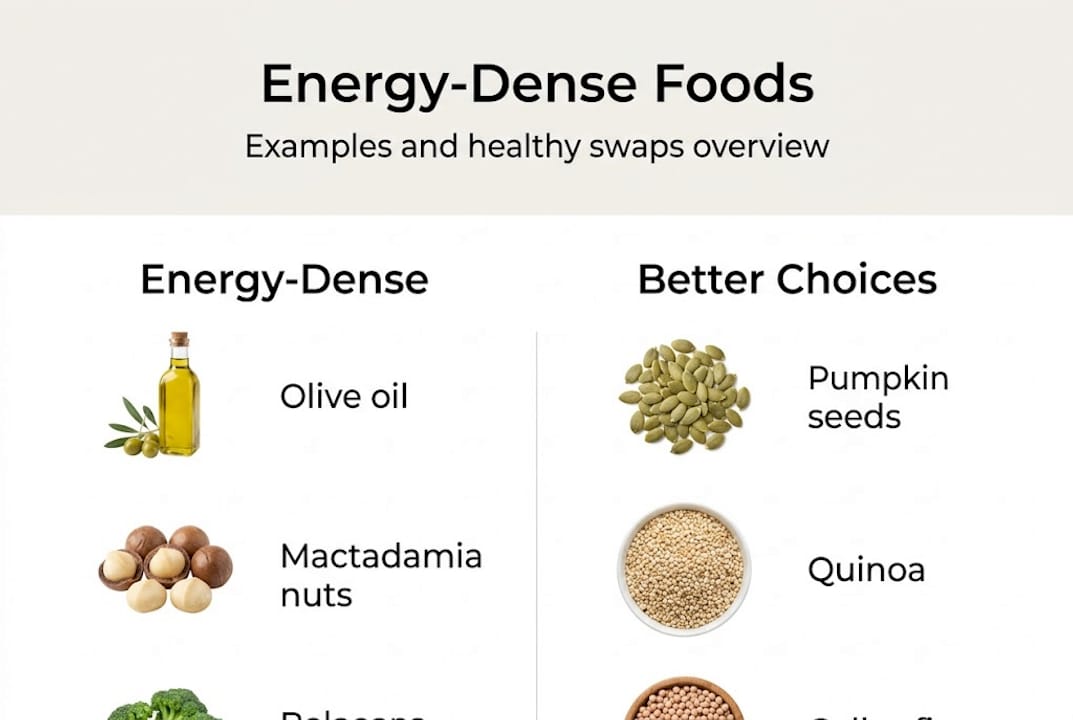
The contrast is stark. Olive oil and macadamia nuts sit at the very top of the calorie scale, yet they deliver monounsaturated fats, polyphenols, and essential micronutrients. A butter croissant, at a comparatively modest 406 kcal/100g, offers refined flour, saturated fat, and very little nutritional return.
The healthiest energy-dense choices within each category include:
- Oils: extra virgin olive oil, cold-pressed flaxseed oil
- Nuts: walnuts, almonds, macadamia nuts, hazelnuts
- Seeds: pumpkin seeds, sunflower seeds, chia seeds, hemp seeds
- Minimally processed: dark chocolate above 70% cocoa, tahini, natural nut butters
This is also where plant-based nutrition shines. Many seeds and legumes serve as both energy-dense and protein-rich foods. If you are building a plant-forward diet, reviewing top vegan protein sources alongside energy density data helps you identify foods that do double duty: fuelling your body and feeding your muscles simultaneously.
Are all energy-dense foods bad for you?
Now that key examples are identified, it is vital to clear up whether these foods should be embraced or avoided. The short answer: it depends entirely on the food itself, not its calorie count.
Some energy-dense foods are what nutritionists call EDNP, meaning energy-dense, nutrient-poor. Think refined pastries, fried snacks, and sugary confectionery. These foods deliver calories with minimal nutritional return. But some energy-dense foods are rich in protein, fibre, and micronutrients, and these are a completely different category.
“The distinction between energy-dense, nutrient-poor foods and energy-dense, nutrient-rich wholefoods is one of the most important in modern dietary science. Treating them identically is a fundamental error.”
Nuts and seeds are actively promoted in EU dietary guidelines, not restricted. Almonds, walnuts, chia seeds, and quinoa all fall into the high or medium energy density bracket, yet all are associated with improved cardiovascular health, better satiety, and stronger micronutrient intake.
Nutrient-rich, energy-dense wholefoods to prioritise:
- Almonds: rich in vitamin E, magnesium, and monounsaturated fat
- Walnuts: high in omega-3 fatty acids and antioxidants
- Chia seeds: excellent source of fibre, calcium, and plant-based omega-3
- Quinoa: complete protein with all nine essential amino acids
- Hemp seeds: balanced omega-3 to omega-6 ratio with digestible protein
For those building plant-based protein blends or navigating the plant vs animal protein debate, these foods are foundational. A nutrient-dense food guide can help you map out which high-energy options genuinely earn their place in your diet.
Pro Tip: When eating energy-dense wholefoods, pair them with high-fibre, high-protein companions such as legumes or whole grains. This combination slows digestion, sustains fullness, and prevents overconsumption without requiring rigid calorie counting.
Energy-dense foods for fitness and well-being
Knowing the difference between healthy and unhealthy energy-dense foods, it is useful to focus on their practical role in an active, balanced lifestyle. For athletes, regular exercisers, or anyone with elevated caloric needs, energy-dense wholefoods are not optional extras but essential tools.

Protein and fibre from grains and seeds produce greater fullness per calorie, making them smarter choices than processed snacks that deliver energy without satiety. Meanwhile, energy-dense, nutrient-rich foods actively support active lifestyles in ways that low-calorie diets simply cannot replicate for those training regularly.
Practical ways to add energy-dense wholefoods to your daily routine:
- Morning porridge boost: stir in two tablespoons of hemp or chia seeds for extra protein and omega-3 without changing the texture dramatically.
- Pre-workout fuel: a small handful of mixed nuts thirty minutes before training provides sustained energy from healthy fats and protein.
- Post-workout recovery: blend pumpkin seeds or a quality seed mix into a smoothie alongside plant protein for muscle repair support.
- Midday salad upgrade: scatter toasted pumpkin or sunflower seeds over salads to add crunch, calories, and micronutrients.
- Ancient grain base: swap refined rice or pasta for quinoa, amaranth, or spelt to increase protein, fibre, and mineral content per meal.
The amino acids for performance found in seeds and ancient grains are particularly valuable for plant-forward athletes. And for those exploring meat-free protein options, seeds and whole grains are among the most calorie-efficient and nutrient-complete choices available.
Pro Tip: Choose ancient grains and seeds over ultra-processed snack bars, even those marketed as “energy” products. Real foods deliver complex carbohydrates, fibre, and micronutrients that sustain performance across hours, not just minutes.
How to balance energy-dense foods in your diet
With the benefits and risks in mind, here is how to ensure smart, balanced intake of energy-dense foods within a modern European diet. The goal is not restriction but intelligent integration.
European dietary data shows that energy-dense, nutrient-poor foods should be limited to 4 to 6% of total energy intake, yet most European eating patterns still exceed targets for red meat and added sugar. Shifting towards wholefood energy-dense options is both practical and aligned with current nutritional science.
Research also demonstrates that low energy-dense diets can reduce daily intake by over 1,000 kcal without requiring calorie counting, simply by increasing the proportion of water-rich, fibre-rich foods alongside controlled portions of energy-dense wholefoods.
Strategies for including energy-dense foods wisely:
- Control portions visually: one handful of nuts, one tablespoon of oil, two tablespoons of seeds per meal is a reliable guide without weighing everything.
- Anchor meals with low-energy-density foods: fill half your plate with vegetables, salad, or legumes before adding energy-dense components.
- Read labels for both energy and nutrients: a food high in kcal but also high in fibre, protein, and micronutrients is a very different proposition from one that is just high in kcal.
- Prioritise wholefoods over processed alternatives: choose whole almonds over almond-flavoured snacks, real seeds over seed-flavoured crackers.
- Spread energy-dense foods across meals: rather than concentrating them in one sitting, distribute nuts, seeds, and oils across breakfast, lunch, and dinner for steadier energy and satiety.
For those building a plant-forward diet, vegetarian high-protein foods that are also energy-dense offer an efficient way to meet both calorie and nutrient targets without relying on large food volumes.
Why most diets get energy density wrong
Most mainstream diet advice treats calorie density as a simple proxy for food quality. High calories in equals bad food. Low calories in equals good food. This is a reductive framework that does real harm, particularly to active individuals and those following plant-based eating patterns.
When you blanket-ban high-energy foods, you risk eliminating some of the most nutrient-complete options in existence. Walnuts, hemp seeds, tahini, and spelt flour are all energy-dense. They are also extraordinarily rich in the fats, minerals, and phytonutrients that modern diets consistently lack. Removing them in favour of low-calorie processed alternatives is not a nutritional upgrade.
At Granavitalis, we see this play out repeatedly. People arrive having cut out nuts and seeds to reduce calories, only to find their energy, recovery, and micronutrient status have all declined. The fix is rarely eating less of these foods. It is understanding nutrient density impact and using that knowledge to make context-aware choices rather than calorie-blind ones.
Quality, satiety, and portion awareness will always outperform simple calorie restriction when it comes to long-term well-being. The most effective approach is not a lower-calorie diet but a smarter one, built on wholefoods that earn every kilojoule they deliver.
Wholefood energy-dense options for your wellness
Understanding energy density is one thing. Putting it into practice every day is another. If this guide has shifted how you think about high-energy wholefoods, the next step is making them a consistent, enjoyable part of your routine.

At Granavitalis, we have curated a range of premium, minimally processed energy-dense wholefoods designed for exactly this purpose. Our premium pumpkin seeds deliver protein, zinc, and magnesium in every handful. The Omega Seed Mix brings together five nutritious seeds for a balanced, convenient daily addition to any meal. And our Nibbed Hazel Nuts offer a ready-to-use, flavour-rich source of healthy fats and vitamin E. Each product is rooted in the same wholefood philosophy: purity, performance, and genuine nutritional purpose.
Frequently asked questions
What determines if a food is energy-dense?
A food is energy-dense if it provides many calories per 100g, typically due to high fat content or low water content. Energy density is measured as kilocalories per 100g of food weight.
Are energy-dense foods always unhealthy?
No. Many energy-dense wholefoods such as nuts, seeds, and whole grains are simultaneously calorie-rich and packed with essential nutrients, making them beneficial rather than harmful.
How can I include energy-dense foods in a balanced diet?
Portion control, a wholefood focus, and combining energy-dense foods with low-energy options is the most effective approach. Limit nutrient-poor, high-energy choices and build meals around quality wholefoods instead.
Why are nuts and seeds recommended for fitness?
Nuts and seeds deliver protein, healthy fats, and key micronutrients in a compact, convenient form. Their nutrient profile makes them particularly well-suited to active individuals who need both energy and recovery support.