
The role of traditional nutrition in modern wellness
TL;DR:
- Traditional nutrition emphasizes food pairing, preparation methods, and cultural relevance to optimize health and nutrient absorption. It supports metabolic health, community resilience, and ecological sustainability, exemplified by the Milpa system. Integrating traditional principles into modern lifestyles enhances health outcomes and environmental impact.
Traditional nutrition is defined as culturally rooted dietary practice that combines specific food pairings, preparation techniques, and agricultural systems to optimise how the body absorbs and uses nutrients. The role of traditional nutrition goes far beyond preserving heritage. It is a scientifically validated framework for metabolic health, chronic disease prevention, and long-term vitality. The Milpa food system, a Mesoamerican polyculture of maize, beans, and squash, stands as one of the most studied examples of this approach. Research published in 2026 confirms that traditional diets offer a salutogenic model that aligns human metabolic needs with ecological resilience. For anyone aged 25–65 looking to build genuine wellness, the evidence is clear: the past holds answers that modern nutrition science is only now catching up to.
How does traditional nutrition optimise nutrient bioavailability?
Traditional nutrition operates on a principle called nutritional architecture. This means the health value of a diet comes from how foods interact with each other, not from any single ingredient in isolation. The Milpa system illustrates this perfectly. Maize provides energy and certain amino acids, while beans supply the complementary amino acids that maize lacks. Together, they form a complete protein through food combination that neither food achieves alone.
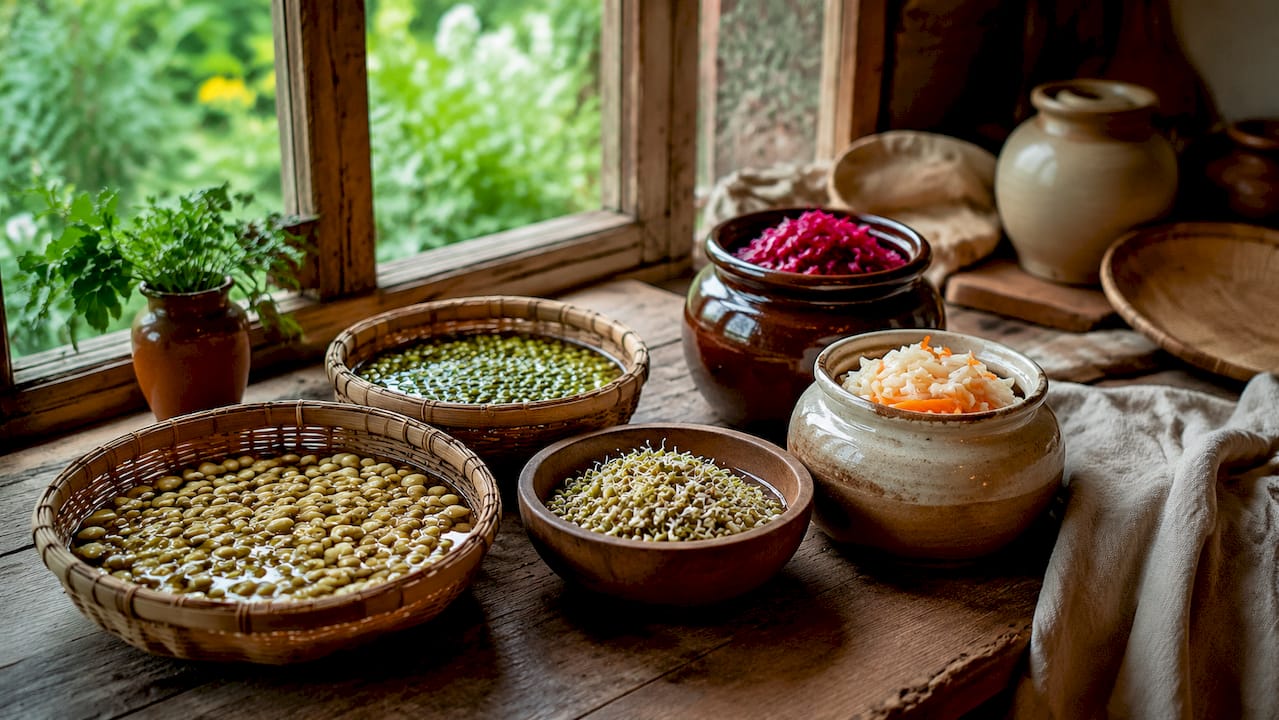
The preparation techniques used in traditional food systems are equally important. Fermentation, soaking, and germination are not just ancient habits. They are functional processes that increase mineral absorption and reduce antinutrients, making nutrients more available to the body than they would be in raw or industrially processed equivalents. Soaking legumes overnight, for example, breaks down phytic acid, which otherwise binds to iron and zinc and prevents absorption.
The Milpa diet delivers 77.22% iron adequacy and 69.72% fibre adequacy from whole foods alone. Those figures reflect what a well-structured traditional diet can achieve without supplementation for key micronutrients. Energy and protein adequacy are lower at 42.35% and 32.38% respectively, which signals where modern additions or adjustments may be needed.
A common misconception is that traditional diets are nutritionally incomplete because they do not track macros or follow modern dietary guidelines. The reality is that dietary success depends on meal composition and the food matrix, not isolated nutrient counts. Traditional diets were built around this principle long before nutrition science had the language to describe it.
Pro Tip: When adopting traditional food preparation methods, start with soaking your grains and legumes for 8–12 hours before cooking. This single step can meaningfully improve mineral absorption without changing your recipes.
Key mechanisms that traditional food systems use to enhance bioavailability include:
- Fermentation: Breaks down antinutrients and increases B-vitamin content in grains and legumes
- Germination: Activates enzymes that improve protein digestibility and vitamin availability
- Soaking: Reduces phytic acid and tannins that block mineral absorption
- Food pairing: Combines complementary amino acid profiles to create complete proteins
- Low glycaemic combinations: Pairs complex carbohydrates with fibre and protein to regulate blood sugar
Do culturally tailored nutrition interventions deliver better health outcomes?
The evidence on this is unambiguous. 100% of successful nutrition interventions for chronic conditions incorporate cultural adaptations, and 81% are specifically tailored to linguistic and societal norms. That figure is not a coincidence. It reflects the fact that dietary behaviour is inseparable from cultural identity, family structure, and community practice.
The importance of traditional diets in chronic disease management is particularly well documented in the context of diabetes and metabolic syndrome. When interventions are designed around familiar foods and cooking methods rather than generic guidelines, adherence improves and outcomes follow. A person who has eaten a particular grain or legume their entire life does not need to be persuaded of its value. They need guidance on how to prepare and portion it well.
Indigenous Food and Nutrition Knowledge and Practice, known as IFNKP, represents one of the most sophisticated examples of this principle. IFNKP is a living, dynamic system that sustains community health through accumulated generational knowledge about local foods, seasonal eating, and preparation methods. It is not a static archive. It evolves with communities. The threat it faces comes from urbanisation and policy gaps that fail to recognise or protect it.
The four factors that determine whether a culturally tailored nutrition intervention succeeds are:
- Cultural food alignment: Interventions built around foods the community already eats and values
- Linguistic accessibility: Materials and guidance delivered in the participant’s first language
- Community involvement: Local knowledge holders and community leaders included in programme design
- Policy support: Institutional recognition of traditional food systems as legitimate health resources
“Traditional nutrition is not a relic of the past. It is a living, evolving practice with significant public health implications, requiring policy support for preservation and effectiveness.” — IFNKP as an Active Framework for Community Health
The impact of cultural nutrition on health outcomes extends beyond individual behaviour change. Communities that maintain strong connections to traditional food practices show greater resilience to food insecurity and chronic disease. The challenge for public health systems is to stop treating traditional diets as obstacles to modern nutrition advice and start treating them as assets.
How do traditional food systems support sustainability and planetary health?
The Milpa agricultural system does not just feed people well. It regenerates the soil, conserves water, and supports biodiversity simultaneously. Maize provides structure, beans fix nitrogen in the soil, and squash shades the ground to retain moisture. This is ecological design built into a food system over thousands of years. Modern monoculture agriculture cannot replicate these benefits at scale.
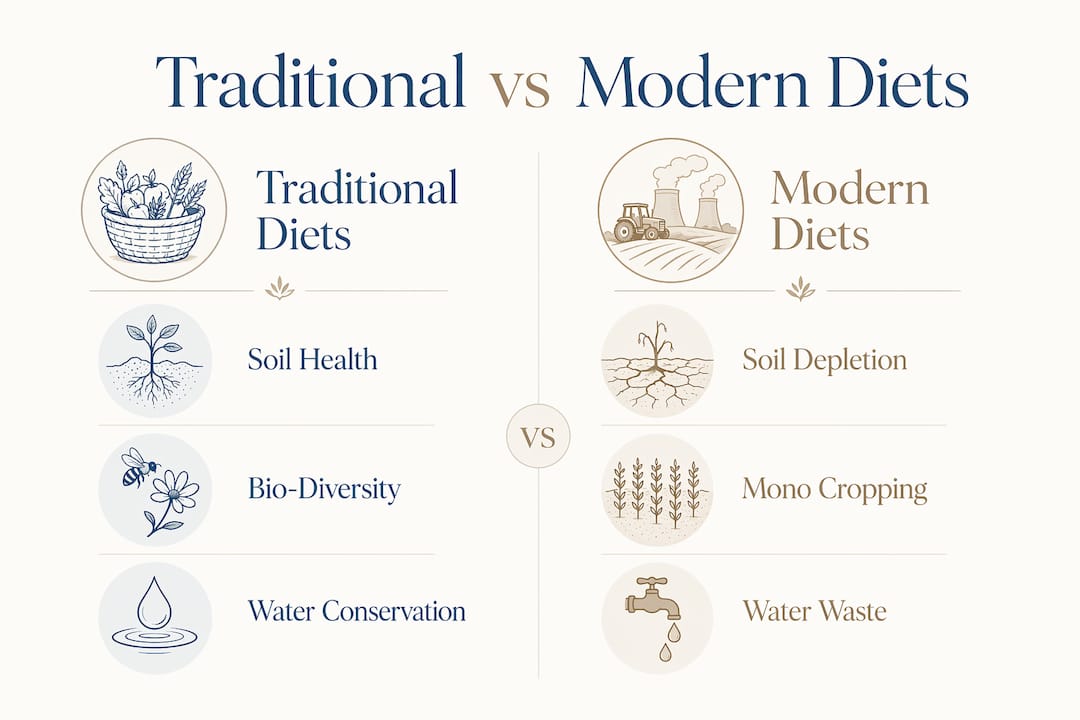
Research confirms that prioritising cultural food practices in 25% of a population triggers positive ripple effects across food security and community health. That threshold matters because it shows that widespread adoption is not required to generate meaningful change. A committed minority can shift food culture. You can explore the broader context of this in Granavitalis’s guide to sustainable nutrition in 2026.
| Metric | Traditional Diets (e.g. Milpa) | Modern Industrial Diets |
|---|---|---|
| Soil health | Regenerative through polyculture | Depleted by monoculture |
| Biodiversity | High, multiple species per plot | Low, single-crop focus |
| Nutrient density | High in micronutrients and fibre | Variable, often micronutrient-poor |
| Food processing | Minimal, fermentation-based | Heavy, additive-dependent |
| Carbon footprint | Lower, plant-centred | Higher, livestock and transport-heavy |
| Community resilience | Strengthened through food sovereignty | Weakened by supply chain dependency |
The benefits of traditional food systems extend to cultural identity and economic sustainability. Milpa foods contribute both nutritional value and cultural identity to communities in Oaxaca and across Mesoamerica. When a food system disappears, it takes with it a community’s self-sufficiency, its ecological knowledge, and its health outcomes.
Pro Tip: You do not need to adopt an entire traditional food system to benefit from its principles. Start by sourcing one or two heritage grains or legumes, such as emmer wheat, teff, or black beans, and build meals around them using traditional preparation methods.
How can you integrate traditional nutrition into a modern lifestyle?
Personalisation is the starting point. Generic dietary advice consistently underperforms compared to approaches that account for ethnicity, metabolic history, and cultural food preferences. South Asian populations provide a clear example. 64.1% of energy in Indian diabetic diets comes from carbohydrates, often refined ones. A culturally informed approach does not eliminate carbohydrates. It redirects the focus toward traditional whole-grain sources and adjusts portion structures to reduce cardiometabolic risk without abandoning familiar foods.
The shift in mindset required here is from nutrient tracking to dietary structure. Traditional nutrition teaches that what you eat alongside a food matters as much as the food itself. Pairing a high-starch food with fibre, healthy fat, and protein changes its glycaemic impact entirely. This is not a modern discovery. It is the logic embedded in every traditional meal structure, from the Japanese ichiju-sansai format to the Indian thali.
Practical ways to bring traditional nutrition principles into your daily routine:
- Anchor meals around whole grains: Teff, amaranth, spelt, and einkorn wheat are traditional grains with documented health benefits and strong nutrient profiles
- Use legumes as your primary protein source: Lentils, chickpeas, and black beans provide vegetable protein for balanced diets alongside fibre and resistant starch
- Ferment or soak before cooking: Apply these preparation methods to grains and legumes to improve bioavailability
- Build complementary plates: Combine grains with legumes at the same meal to create complete amino acid profiles
- Reduce ultra-processed substitutes: Replace processed snacks with nuts, seeds, and dried fruits that align with traditional food patterns
Pro Tip: If you are new to traditional grains, swap one portion of your weekly rice or pasta for teff or amaranth. Both cook quickly, carry strong mineral profiles, and work well in both savoury and sweet preparations.
The plant-based diet principles that many health-conscious individuals already follow overlap significantly with traditional nutrition. The difference is that traditional nutrition adds the dimension of preparation method and food pairing, which plant-based frameworks often overlook.
Key takeaways
Traditional nutrition delivers measurable health benefits through dietary structure, cultural alignment, and preparation techniques rather than isolated nutrient supplementation.
| Point | Details |
|---|---|
| Nutritional architecture matters | Pair complementary foods like grains and legumes to form complete proteins and improve nutrient absorption. |
| Preparation techniques are functional | Fermentation, soaking, and germination measurably increase mineral bioavailability and reduce antinutrients. |
| Cultural tailoring drives results | All successful chronic disease nutrition interventions incorporate cultural food adaptations. |
| Sustainability is built in | Traditional polyculture systems like Milpa regenerate soil and support biodiversity alongside human health. |
| Personalisation beats generic advice | Ethnicity and metabolic history must inform how traditional dietary principles are applied individually. |
Why i think we have been asking the wrong questions about diet
The nutrition conversation has spent decades asking “which nutrient?” when it should have been asking “which food system?” I have watched the wellness space cycle through low-fat, low-carb, high-protein, and ketogenic phases, each one promising to isolate the single variable that explains health. Traditional nutrition does the opposite. It refuses to separate the nutrient from the meal, the meal from the culture, or the culture from the land.
What strikes me most about the 2026 research on the Milpa diet and IFNKP is not the specific numbers. It is the confirmation that communities who maintained traditional food practices did not need modern nutrition science to be healthy. They had already solved the problem through accumulated knowledge, passed down through generations of observation and adaptation.
The uncomfortable truth is that generic dietary advice, however well-intentioned, often performs worse than culturally specific guidance because it strips away the context that makes food meaningful and effective. A South Asian patient told to reduce carbohydrates without reference to which carbohydrates, how they are prepared, or what replaces them is being given incomplete information.
My view is that the most productive direction for nutrition in 2026 is not a new superfood or a new macro ratio. It is the integration of traditional food knowledge with modern metabolic science. The role of meal variety in traditional systems is one piece of that puzzle that deserves far more attention than it currently receives.
— Jarrod
Granavitalis: where traditional nutrition meets modern vitality
Granavitalis was built on exactly the principles this article describes: minimal processing, whole-food integrity, and ingredients rooted in tradition. If you are ready to put these ideas into practice, the Organic Nut & Seed Butter Selection Box is a strong starting point. It delivers the kind of nutrient-dense, minimally processed fats and proteins that traditional food systems have always prioritised.

For immune support grounded in whole-food nutrition, the Immune Booster Superfood Bundle brings together botanicals and superfoods that align with traditional nutrition principles. Granavitalis sources each ingredient with the same logic that made traditional diets effective: real food, thoughtfully prepared, with nothing unnecessary added.
FAQ
What is the role of traditional nutrition in health?
Traditional nutrition provides a culturally grounded dietary framework that optimises nutrient bioavailability through food pairing and preparation techniques such as fermentation and soaking. It supports metabolic health, chronic disease prevention, and community resilience.
How does traditional nutrition affect metabolic health?
Traditional diets improve metabolic health by combining complementary foods that regulate blood sugar, provide complete proteins, and deliver high fibre content. The Milpa system, for example, achieves 69.72% fibre adequacy and a low glycaemic load through its food combinations.
Why are culturally tailored diets more effective?
Research shows that 100% of successful nutrition interventions for chronic conditions include cultural adaptations. Diets aligned with a person’s cultural food practices improve adherence and produce better long-term health outcomes than generic guidelines.
Can traditional nutrition principles work in a modern lifestyle?
Yes. Practical steps include anchoring meals around heritage grains, using legumes as a primary protein source, and applying fermentation or soaking before cooking. These methods integrate directly into contemporary meal planning without requiring a complete dietary overhaul.
What is the milpa diet and why does it matter?
The Milpa diet is a Mesoamerican food system based on maize, beans, and squash that delivers complementary amino acids, high fibre, and strong iron content. It is recognised in 2026 research as a model of nutritional and ecological sustainability.