

Healthy breakfast meal prep: your weekly guide
TL;DR:
- Preparing healthy, protein-rich breakfasts in advance can streamline mornings and improve energy levels. Proper cooling, strategic storage, and versatile recipes ensure nutritious meals stay fresh and delicious throughout the week. Consistent meal prep habits support sustained health and simplify busy daily routines.
Busy mornings have a way of pushing breakfast to the bottom of the priority list. You grab something quick, skip it entirely, or reach for whatever requires zero thought. The problem is that choice sets the tone for your entire day. Solid healthy breakfast meal prep changes that equation completely. Instead of deciding what to eat at 7am when you are already running late, you reach into the fridge and pull out something genuinely nourishing. High protein, fibre-rich, and built around real ingredients. This guide covers everything from what to stock, how to store it, and exactly which recipes to start with this weekend.
Table of Contents
- Key takeaways
- What goes into healthy breakfast meal prep
- Storage and prep essentials
- Breakfast meal prep ideas and recipes
- Common challenges and how to solve them
- Building breakfast prep into your wellness routine
- My honest take on breakfast prep
- Fuel your prep with Granavitalis
- FAQ
Key takeaways
| Point | Details |
|---|---|
| Protein target matters | Aim for approximately 24g of protein per breakfast to support blood sugar balance and sustained energy. |
| Cool before you store | Always cool baked egg dishes to room temperature before refrigerating to prevent soggy textures. |
| Batch cook strategically | Dedicate one session per week to prep multiple breakfasts at once for grab-and-go convenience. |
| Mix your protein sources | Combining dairy and plant proteins delivers better satiety and a more complete amino acid profile. |
| Storage times vary | Egg dishes keep up to 5 days in the fridge; granola stays crunchy for up to 1 week airtight. |
What goes into healthy breakfast meal prep
Before you batch cook anything, it helps to understand what your breakfast actually needs to do. A well-built morning meal should sustain your energy for several hours, keep hunger at bay, and avoid the blood sugar spike-and-crash that leaves you raiding the biscuit tin by 10am.
The anchor is protein. Protein at breakfast supports muscle repair, steadies blood sugar, and keeps you full and focused throughout the morning. Dietitians recommend targeting around 24g protein per serving to hit that satiety and blood sugar threshold. That might sound specific, but it is easier to reach than you think once your ingredients are lined up correctly.
Fibre is the second pillar. Most adults fall well short of the recommended 25 to 38g daily, and breakfast is a straightforward place to close that gap. Oats, seeds, legumes, and vegetables all contribute meaningfully. Healthy fats round out the picture by slowing digestion and helping you absorb fat-soluble vitamins from the vegetables in your meal.
The versatile pantry essentials for breakfast meal prep:
- Eggs and egg whites (complete protein, endlessly flexible)
- Cottage cheese (high protein, blends into both sweet and savoury dishes)
- Rolled oats or ancient grain flakes (fibre, slow-release carbohydrates)
- Quinoa (one of the few plant foods containing all essential amino acids)
- Nuts and seeds (healthy fats, protein, texture)
- Legumes such as chickpeas or lentils (fibre and plant protein)
- Leafy greens like spinach (micronutrients, virtually zero prep)
- Natural nut butters (healthy fats, flavour, satiety)
Combining proteins from different sources, such as eggs paired with quinoa or cottage cheese with nuts, creates a more complete amino acid profile than any single source alone. You can learn more about this approach in Granavitalis’s guide to ancient grain protein combinations.
Pro Tip: Add a tablespoon of ground flaxseed or chia seeds to any overnight oats or batter recipe. You gain roughly 3 to 4g of fibre per tablespoon with no change in flavour.
Storage and prep essentials
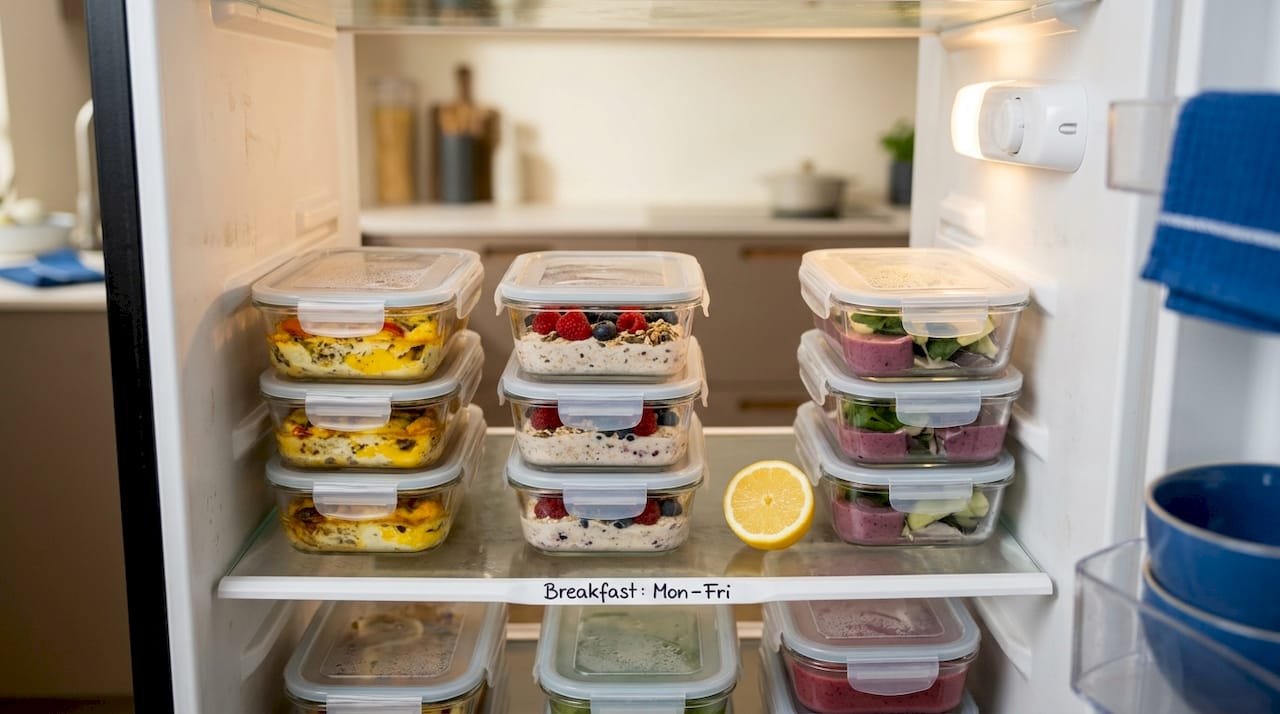
Good meal prep lives or dies on your containers and your cooling habits. Neither is complicated, but skipping the basics is exactly how you end up with a fridge full of soggy egg dishes that you do not want to eat.
Containers and equipment
| Tool or container | Best used for | Shelf life guidance |
|---|---|---|
| Glass containers with lids | Baked egg dishes, casseroles | Up to 5 days refrigerated |
| Airtight glass jars (500ml) | Overnight oats, chia puddings | Up to 5 days refrigerated |
| Airtight tin or glass jar | Homemade granola, nut mixes | Up to 1 week at room temperature |
| Silicone freezer bags or moulds | Smoothie packs, frozen egg muffins | Up to 3 months frozen |
| Leak-proof lunchbox with dividers | Mixed breakfasts with separate elements | Day of use |
When researching the best breakfast meal prep containers, glass consistently outperforms plastic for food that you will reheat. It does not absorb odours, handles the microwave safely, and the seal quality tends to be better.
Cooling and refrigeration
Cooling food fully before sealing containers is one of the most overlooked steps in breakfast prep. Placing hot food directly into a sealed container traps steam, which converts to moisture on the food surface. That moisture is what makes baked eggs rubbery and granola sticky. Give everything 30 to 45 minutes at room temperature before lidding and refrigerating.
Egg dishes reheat safely in 35 to 45 seconds on high in the microwave and stay fresh for up to 5 days refrigerated. Granola follows different rules. Stored airtight at room temperature after a 45-minute cooling period, it maintains crunchiness for up to a week.
Freezing and thawing
Batch cooking and freezing individual portions is one of the most effective strategies for maintaining access to nutritious breakfasts during a packed week. Egg muffins, smoothie packs, and protein pancakes all freeze well. When you are ready to use them, the safest thawing method is overnight in the fridge. If you are in a hurry, a 60-second microwave burst from frozen works for egg-based items without turning them rubbery.
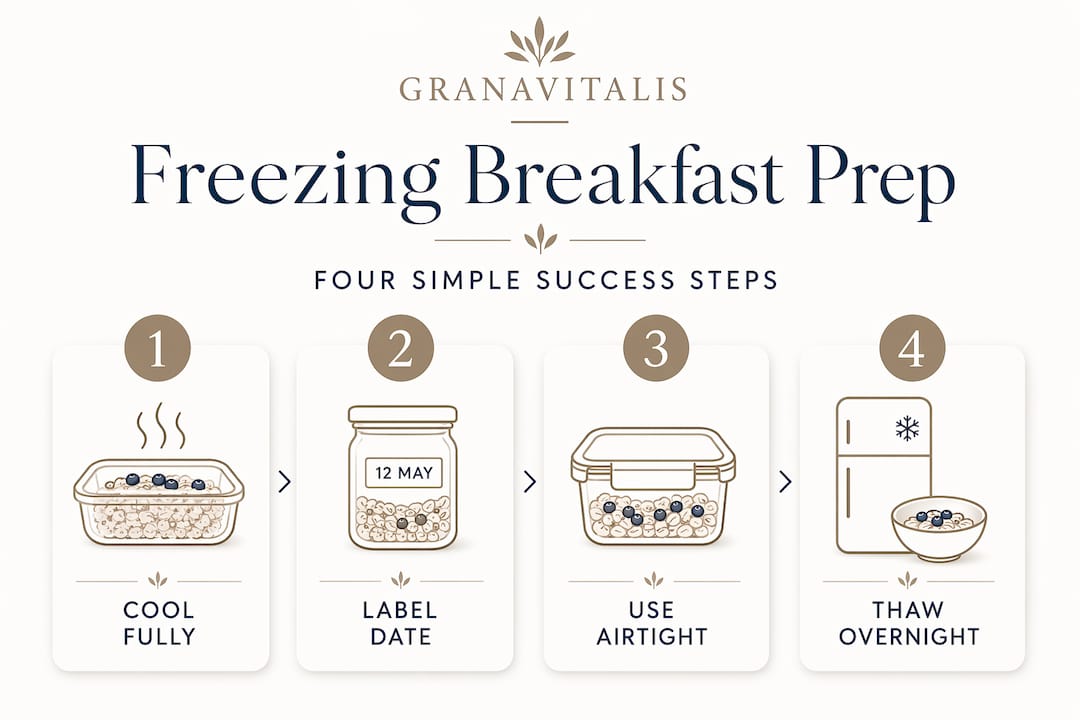
Pro Tip: Label every container with the prep date. It takes five seconds and saves you from the guessing game mid-week.
Breakfast meal prep ideas and recipes
Here are four practical, nutritious breakfast recipes that work well in batches. Each one covers protein, fibre, and healthy fat in a single dish.
Baked egg casserole with vegetables
This is one of the most satisfying make ahead breakfast options for the week. It suits five to six portions from a single bake.
- Preheat your oven to 180°C.
- Whisk 10 eggs with 150g of cottage cheese until smooth. The cottage cheese creates a noticeably fluffier texture and adds a protein boost without any discernible flavour change.
- Fold in diced pepper, courgette, onion, and a generous handful of spinach.
- Season with salt, pepper, smoked paprika, and dried herbs.
- Pour into a greased baking dish and bake for 30 to 35 minutes until fully set.
- Cool completely before cutting into portions and refrigerating in individual glass containers.
Prep time: 15 minutes. Cook time: 35 minutes. Each portion delivers approximately 22 to 25g of protein.
Overnight oats with protein powder
One of the most popular meal prep ideas for breakfast because it requires zero cooking.
- Add 80g of rolled oats to a 500ml jar.
- Stir in 30g of your chosen protein powder and one tablespoon of chia seeds.
- Pour over 250ml of milk or plant-based alternative.
- Add one tablespoon of natural nut butter for healthy fat and flavour.
- Stir well, seal, and refrigerate overnight.
- Top with fresh berries in the morning.
Prep time: 5 minutes per jar. Stores up to 4 days refrigerated.
High protein granola
A batch of homemade high-protein granola gives you a flexible topping for yoghurt, a crunchy snack, or a quick bowl with milk.
- Combine 300g of rolled oats with 80g of mixed seeds and 60g of chopped nuts.
- Mix in 60ml of melted coconut oil, three tablespoons of honey or maple syrup, and 40g of pea or rice protein powder.
- Spread evenly on a lined baking tray.
- Bake at 160°C for 25 minutes, stirring halfway through.
- Leave to cool for a full 45 minutes before storing in an airtight container.
Smoothie packs with hidden greens
Incorporating greens into smoothies is a simple way to increase vegetable intake without altering taste. Prepare packs in advance and store them in the freezer.
- Portion one large handful of spinach per bag.
- Add 80g of frozen mixed berries, half a banana, and one tablespoon of ground flaxseed.
- Seal and freeze. In the morning, empty a bag into a blender, add your milk of choice and a scoop of protein powder, and blend for 60 seconds.
Prep time per batch of 5 packs: 15 minutes.
Common challenges and how to solve them
Even experienced meal preppers hit the same walls. These are the most common ones, and the fixes that actually work.
Soggy egg dishes. This almost always comes down to not cooling the dish fully before sealing. Steam trapped inside the container settles on the food surface and softens the texture. The fix is simple: leave the dish uncovered until fully cooled, then refrigerate.
Granola losing its crunch. If your granola goes soft within a day or two, the container is not airtight or you stored it while still warm. Every minute you leave it cooling on the tray matters.
Rubbery reheated eggs. Microwaves overcook eggs quickly. Reheat in short 20-second intervals and stop as soon as the centre is hot. Alternatively, reheat egg dishes in the oven at 150°C for 10 minutes to restore a more natural texture.
Flavour fatigue. Eating the same meal five mornings in a row eventually becomes a chore regardless of how good it tastes on day one. The solution is to prep two or three different breakfasts each week rather than one large batch of a single recipe.
Ingredient swaps to keep things fresh:
- Swap spinach for kale or rocket for a different flavour profile
- Replace oats with buckwheat flakes or quinoa puffs for variety
- Rotate your protein powder flavours across weeks
- Alternate nut butters (almond, cashew, pecan) for different taste and fat profiles
Pro Tip: Keep a small selection of dried herbs, za’atar, or nutritional yeast on your prep station. A pinch of something different before reheating makes a familiar dish feel new.
Building breakfast prep into your wellness routine
The practical side of how to meal prep breakfast is only half the picture. The other half is making it stick as a habit rather than a one-off effort.
Start with a single designated prep session each week, ideally on a Sunday. One to two hours covers enough food for the entire week without the session feeling like a burden. As it becomes routine, the time investment drops because you stop second-guessing what to make.
A few strategies that make the habit sustainable:
- Plan your breakfasts at the same time you plan your weekly shop to avoid mid-week gaps
- Keep your prep station organised with containers, labels, and frequently used ingredients within easy reach
- Prep in a way that suits your schedule, not an idealised version of it. Two prep days a week beats one day you skip entirely
- Incorporate plant-based options to diversify nutrition sources and reduce reliance on animal proteins where that suits your goals
- When time is short, start with just overnight oats. Five minutes of prep the night before counts
Balancing convenience with nutrition does not require perfection. A prepped breakfast that is 80% ideal and ready to eat is worth far more than a perfect recipe you did not have time to make. The goal is a morning where your nutrition decisions were already made.
My honest take on breakfast prep
I spent a long time treating breakfast as an afterthought. Either something grabbed on the way out or skipped and compensated for with too much coffee. What shifted things for me was recognising that the problem was not motivation. It was the absence of a decision already made.
The first week I properly prepped breakfasts ahead, nothing felt dramatic. I just had a jar of overnight oats in the fridge and some egg muffins ready to go. But those two things removed a decision from the most cognitively overloaded part of my day, and that mattered more than I expected.
What I have learned after doing this consistently is that variety is what keeps it going. Not exotic recipes. Just rotating two or three options rather than making one thing in bulk. Maximising breakfast protein matters, yes, but so does looking forward to what is in the fridge. The moment breakfast starts feeling like medicine, the habit collapses.
The barrier I hear most often is time. My honest response is that the prep takes less time than the average person spends deciding what to have each morning across a full week. The investment front-loads the effort so the rest of the week runs on autopilot. Give it two weeks before deciding it is not for you.
— Jarrod
Fuel your prep with Granavitalis

Building a solid healthy breakfast meal prep routine becomes significantly easier when your ingredients are already working hard. Granavitalis stocks the kinds of products that slot directly into the recipes above. The raw organic pecan butter from RAWGORILLA delivers healthy fats and a rich, natural flavour that elevates overnight oats, smoothies, or simply spread on seeded toast alongside eggs. For a low-carb breakfast bowl that needs no prep at all, the organic chocolate chip muesli from Raw Gorilla pairs with Greek yoghurt and seeds in under two minutes. Every Granavitalis product is selected for purity and nutritional integrity. No shortcuts.
FAQ
How many days ahead can I prep breakfast?
Most egg-based dishes and overnight oats stay fresh for up to 5 days when stored correctly in sealed glass containers in the fridge. Granola and dry mixes keep for up to a week at room temperature.
What is the best protein target for a prepped breakfast?
Aim for approximately 24g of protein per serving to support blood sugar stability and sustained energy throughout the morning.
Can I freeze prepped breakfasts?
Yes. Egg muffins, smoothie packs, and protein pancakes all freeze well for up to three months. Thaw overnight in the fridge or reheat directly from frozen in short microwave intervals to avoid rubbery textures.
How do I stop meal-prepped breakfasts from going soggy?
Cool baked dishes fully at room temperature before sealing containers. Trapped steam is the main cause of soggy textures in refrigerated egg dishes and baked goods.
What containers work best for breakfast meal prep?
Glass containers with airtight lids perform best for reheatable dishes. Airtight glass jars are ideal for overnight oats and chia puddings. Silicone freezer bags or moulds work well for items destined for the freezer.