
Build a high-protein breakfast with ancient grains
TL;DR:
- Protein at breakfast enhances satiety, blood sugar stability, and muscle support.
- Ancient grains like quinoa, oats, amaranth, and buckwheat provide high protein, especially when combined with seeds and nuts.
- Preparing and layering ingredients the night before encourages consistency and helps reach daily protein goals.
Most UK breakfasts look healthy on the surface. Toast, cereal, a bowl of porridge. But many of these staples deliver far less protein than your body actually needs first thing in the morning. The result? An energy dip by mid-morning and hunger that creeps back before lunch. The good news is that swapping or supplementing with plant-based ingredients and ancient grains can shift your breakfast from merely filling to genuinely nourishing. This guide walks you through exactly why protein matters at breakfast, which ingredients to reach for, and how to build a practical, delicious bowl using grains that have fuelled people for thousands of years.
Table of Contents
- Why protein matters in your breakfast
- Ingredients and tools for a protein-rich morning
- Step-by-step: create an example high-protein breakfast
- Troubleshooting and customising your breakfast
- What most people miss about high-protein breakfasts
- Take your plant-based protein breakfast further with Granavitalis
- Frequently asked questions
Key Takeaways
| Point | Details |
|---|---|
| Protein is key at breakfast | A high-protein breakfast supports fullness, energy, and better nutrition balance. |
| Ancient grains boost plant protein | Grains like quinoa and amaranth offer more protein than typical cereals and are gluten-free. |
| Combine multiple plant proteins | Mixing grains, nuts, and seeds ensures you get all essential amino acids in a vegan breakfast. |
| Measure to avoid excess | Keeping an eye on portion sizes helps manage calories while maximising protein. |
Why protein matters in your breakfast
Breakfast sets the nutritional tone for your entire day. When you start with a carbohydrate-heavy meal and little protein, your blood sugar spikes and then drops, leaving you tired and reaching for snacks well before lunch. Protein changes that equation entirely.
Protein supports satiety and better morning energy levels, which means you stay focused longer and eat less overall throughout the day. It also plays a central role in muscle maintenance and repair, which matters whether you train regularly or simply want to stay strong and active as you age.
Plant-based protein sources deserve particular attention here. Beans, lentils, nuts, and seeds are not just protein carriers. They also bring fibre, healthy fats, and micronutrients that animal proteins often lack. This combination supports gut health, heart health, and sustained energy in ways that a rasher of bacon simply cannot match.
Ancient grains are where things get especially interesting. Unlike refined grains, which have been stripped of their outer layers and much of their nutritional value, ancient grains retain their full nutrient profile. The breakfast grain benefits of options like quinoa are particularly notable because quinoa is one of the very few plant foods that qualifies as a complete protein. That means it contains all nine essential amino acids, the building blocks your body cannot produce on its own.
Here is why protein at breakfast matters so much:
- Satiety: Protein digests more slowly than carbohydrates, keeping hunger at bay for longer
- Muscle support: Your body uses amino acids throughout the day, so an early supply matters
- Blood sugar stability: Protein blunts the glucose spike that follows a carb-heavy meal
- Mental clarity: Steady energy from protein supports focus and concentration through the morning
- Metabolic support: Protein has a higher thermic effect, meaning your body burns more calories digesting it
UK dietary guidance increasingly reflects this understanding. Including a meaningful source of protein at every meal, including breakfast, is now widely recommended by registered dietitians and health organisations alike. Aiming for at least 15 to 20 grams of protein at breakfast is a practical and achievable target for most adults.
Ingredients and tools for a protein-rich morning
Now that you know why protein is essential, let us gather the simple, nutritious ingredients that set the foundation for a high-protein breakfast.
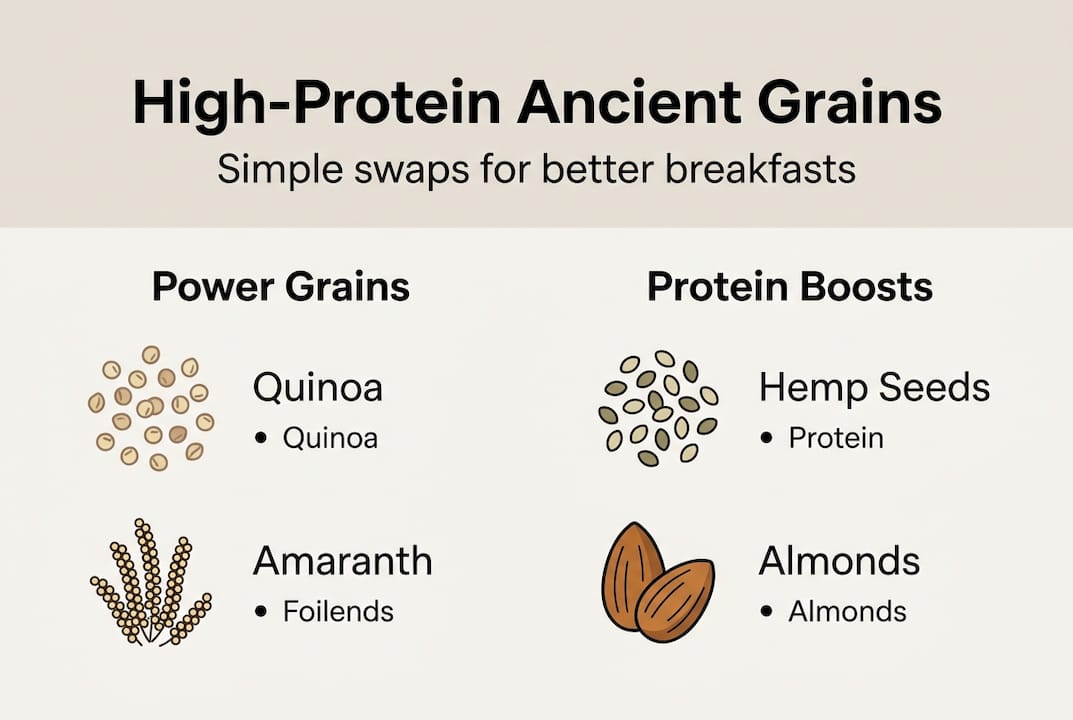
Ancient grains are your starting point. Quinoa delivers 7 to 13g protein per serving and stands out as a complete plant protein, making it exceptional for vegan and plant-focused diets. Amaranth and buckwheat are close runners-up, both offering more protein than standard wheat or white rice. And do not overlook oats. Oats provide 12g protein per cooked cup, making them one of the most practical and accessible breakfast grains for energy in any UK kitchen.
Beyond grains, these plant protein boosters make a real difference:
- Chia seeds: Around 5g protein per 30g serving, plus omega-3 fatty acids
- Hemp seeds: A complete protein with roughly 10g per 30g serving
- Mixed nuts: Almonds and cashews average 6g protein per 30g
- Nut butters: Almond or peanut butter adds 7 to 8g per two tablespoons
- Legumes: Cooked chickpeas or black beans contribute 7 to 9g per half cup
- Plant milk: Soy milk provides around 7g protein per 250ml serving
For tools, you do not need anything fancy. A medium saucepan, a set of measuring cups, a food scale, and a couple of good serving bowls will cover most recipes. A rice cooker or slow cooker is worth considering if you want to batch-cook grains at the weekend for the week ahead.

| Grain | Protein per serving | Gluten-free? |
|---|---|---|
| Quinoa (cooked, 185g) | 8g | Yes |
| Oats (cooked, 240ml) | 12g | Oat-specific |
| Amaranth (cooked, 185g) | 9g | Yes |
| Buckwheat (cooked, 168g) | 6g | Yes |
For a broader look at healthier grain choices, mixing two or more of these grains in a single bowl is a straightforward way to broaden your amino acid profile and keep things interesting.
Pro Tip: Soak quinoa or oats overnight in cold water. This reduces phytic acid, a compound that can limit mineral absorption, and cuts your morning cooking time significantly.
Step-by-step: create an example high-protein breakfast
With your ingredients on hand, follow this clear process to craft a power-packed breakfast in your own kitchen.
This recipe builds a quinoa breakfast bowl with nuts, seeds, and fruit. It is straightforward, adaptable, and genuinely satisfying.
- Cook or soak your grain. Rinse 80g of dry quinoa thoroughly, then cook in 160ml of water or plant milk for 12 to 15 minutes until the liquid is absorbed. For a creamier result, use soy milk instead of water. If you soaked the quinoa overnight, cooking time drops to around 8 minutes.
- Add your protein boosters. Stir in one tablespoon of chia seeds and one tablespoon of hemp seeds while the quinoa is still warm. This helps them absorb some moisture and blend into the texture naturally.
- Pour in your plant milk. Add 100ml of soy milk to loosen the mixture and create a porridge-like consistency. Stir well and allow to warm through for two minutes.
- Top with nuts and nut butter. Scatter 20g of mixed almonds and cashews over the bowl, then drizzle one tablespoon of almond butter across the top. This single step adds roughly 10g of protein on its own.
- Finish with fruit. Add a handful of fresh or frozen berries. Blueberries, raspberries, or sliced banana all work well and add natural sweetness without refined sugar.
A quinoa breakfast bowl provides 9g protein per serving as a base, and when you mix grains, nuts, and seeds together, the total can comfortably reach 20g or more. For a high-protein porridge how-to using oats as your base, the same method applies with oats replacing quinoa.
| Add-in | Quantity | Protein added |
|---|---|---|
| Hemp seeds | 1 tbsp (10g) | 3g |
| Chia seeds | 1 tbsp (12g) | 2g |
| Almond butter | 1 tbsp (16g) | 4g |
| Mixed nuts | 20g | 5g |
| Soy milk | 100ml | 3g |
For more inspiration on easy ancient grain breakfasts or an egg-free plant protein breakfast, these approaches scale beautifully to suit any preference.
Pro Tip: Prepare a double or triple batch of cooked quinoa on Sunday and refrigerate it. Each morning, simply reheat a portion and add your toppings. Breakfast goes from 20 minutes to five.
Troubleshooting and customising your breakfast
Having mastered a basic high-protein breakfast, fine-tune your routine by avoiding simple mistakes and making swaps for any special dietary needs.
The most common complaint about grain-based breakfasts is that they taste bland. The fix is simple. Add half a teaspoon of cinnamon and a few drops of vanilla extract to your grain while it cooks. These two ingredients transform the flavour profile without adding sugar or significant calories. A pinch of sea salt also lifts the overall taste more than most people expect.
For those following a gluten-free diet, the choice of grain matters. Quinoa and amaranth are gluten-free and higher in protein than refined grains, though portion sizes still matter for calorie control. Standard oats are technically gluten-free but are often processed in facilities that handle wheat, so look specifically for certified gluten-free oats if this is a concern for you.
If you need a nut-free version, seeds are your best ally:
- Sunflower seeds: 6g protein per 30g
- Pumpkin seeds: 9g protein per 30g
- Flaxseeds: 5g protein per 30g, plus excellent omega-3 content
- Cooked legumes: Chickpeas or lentils stirred into a savoury grain bowl add 8 to 10g protein per half cup
For a savoury take, try a warm buckwheat bowl with cooked lentils, a spoonful of tahini, and roasted cherry tomatoes. It sounds unconventional for breakfast, but it is deeply satisfying and protein-dense.
“Soak or cook grains low and slow for easier digestion and better nutrient absorption. This small step makes a measurable difference to how your body processes the meal.”
For a wider look at top ancient grains and how to rotate them through your week, variety is the key to keeping this habit sustainable. Eating the same bowl every day leads to boredom, and boredom leads to reverting to toast. Rotate between quinoa, oats, amaranth, and buckwheat to keep things fresh. As a preparation tip, soak or cook grains low and slow to maximise digestibility and nutrient uptake.
What most people miss about high-protein breakfasts
Here is the part most articles skip. Switching from white toast to quinoa is a meaningful step, but it is rarely enough on its own. Many people make the switch to ancient grains and still end up with a breakfast that delivers only 6 to 8 grams of protein. That is better than before, but it falls well short of the 15 to 20 grams that actually moves the needle on satiety and muscle support.
The real shift happens when you treat the grain as a base rather than the whole meal. Quinoa is not a complete breakfast by itself. It becomes one when you layer in nuts, seeds, a spoonful of nut butter, and a plant-based milk. Each of those additions brings its own amino acids and compounds that work together in a way no single ingredient can replicate.
The practical habit that makes this stick is preparation. Lay out your seeds, nuts, and nut butter the night before. Have your quick protein breakfast guide bookmarked for reference. When the morning is rushed, you will default to whatever is already in front of you. Make the high-protein option the easy option, and the habit builds itself. Knowing exactly what is in your bowl, and being able to adjust it to your goals, is what separates a lasting routine from a short-lived experiment.
Take your plant-based protein breakfast further with Granavitalis
Building a genuinely protein-rich breakfast is straightforward once you have the right ingredients to hand. The challenge is sourcing them consistently and knowing they meet the quality standard your body deserves.

At Granavitalis, we make that part simple. Our raw pecan butter is an instant, flavour-rich protein boost that works beautifully stirred into a warm grain bowl. For even more variety, our nut and seed butter selection gives you a curated range of plant-protein options to rotate through your morning routine. Everything is sourced with purity and performance in mind, delivered to your door so that high-protein mornings stay simple and sustainable. Explore the full range at Granavitalis and find what fits your breakfast best.
Frequently asked questions
How much protein should a healthy breakfast contain?
Aim for 15 to 20g of protein at breakfast for optimal fullness and muscle support throughout the morning. Protein supports satiety and sustained energy, making this a worthwhile daily target.
What are the best ancient grains for a high-protein, vegan breakfast?
Quinoa, amaranth, and buckwheat are excellent choices. Quinoa, amaranth, and buckwheat all provide more protein than refined grains and are naturally suitable for gluten-free diets.
Can you make a protein breakfast without eggs or dairy?
Absolutely. Combining ancient grains with nuts, seeds, and legumes gives you a complete plant protein profile without any animal products.
How do I avoid making breakfast too high in calories when boosting protein?
Measure your add-ins, particularly nuts and nut butters, as they are calorie-dense. Portion sizes matter even with protein-rich ingredients, so a food scale is a useful morning tool.