
High-protein breakfast ideas with ancient grains and plants
TL;DR:
- Ancient grains and plant-based ingredients can create high-protein, nutritious breakfasts rivaling traditional options.
- Combining grains, pulses, seeds, and plant proteins effectively ensures complete amino acid profiles.
- Quick, customizable options like overnight oats and quinoa bowls make plant-based, high-protein breakfasts practical and satisfying.
Finding a genuinely nourishing breakfast that delivers serious protein without defaulting to bacon, eggs, or processed shakes is a real challenge for many health-conscious people in the UK. The good news is that ancient grains and plant-based ingredients are quietly capable of building breakfast for energy and recovery that rivals anything on a traditional full English. When you understand how to combine the right ingredients, mornings become a genuine nutritional advantage rather than an afterthought.
Table of Contents
- How to choose protein for your breakfast: Criteria and foundations
- Top high-protein breakfast options featuring ancient grains and plants
- Comparing high-protein breakfast choices
- Customising your high-protein breakfast: Tips for variety and satisfaction
- The overlooked detail: Ancient grains and plant-based proteins really can transform breakfast
- Discover high-protein essentials for your pantry
- Frequently asked questions
Key Takeaways
| Point | Details |
|---|---|
| Ancient grains excel | Quinoa and chia can provide complete protein, beating oats alone for plant-based breakfasts. |
| Mix and match strategy | Combine grains, seeds, nut butters, and protein powders to raise breakfast protein above 15g per serving. |
| Plant protein works | Plant-forward recipes can easily rival or surpass eggs for protein when built intentionally. |
| Customise for your needs | Breakfasts can be quickly adapted for busy schedules, plant-based, or blended diets using batch prep and strategic add-ins. |
How to choose protein for your breakfast: Criteria and foundations
Not all protein is created equal, and this matters most at breakfast when you are setting the tone for blood sugar, energy, and appetite for the rest of the day. Before reaching for any ingredient, it helps to know what you are actually aiming for.
Here is a practical checklist to guide your choices:
- Target at least 15 to 25 grams of protein per meal. This range is where high-protein breakfast ideas from the British Heart Foundation sit, with eggs, beans, and Greek yoghurt all recommended as solid foundations alongside plant-based ingredients.
- Prioritise complete proteins wherever possible. A complete protein contains all nine essential amino acids. The BHF highlights soya and quinoa as complete proteins, making them especially powerful for plant-forward eaters. Pulses offer excellent fibre alongside their protein, though they are incomplete on their own.
- Watch out for sodium and saturated fat. Processed protein foods such as sausages, protein bars, and certain flavoured yoghurts often carry hidden salt and fat loads that undermine the health benefits. Read labels carefully.
- Make simple, high-impact swaps. Brewing porridge with semi-skimmed milk instead of water adds roughly 4 grams of protein per serving with almost no extra effort. Swapping a plain toast breakfast for a beans-on-toast option can more than double your morning protein intake.
- Layer your sources. A single grain rarely delivers enough on its own. Combining oats with a spoonful of nut butter and a scoop of yoghurt creates a far richer amino acid profile than any ingredient in isolation.
“Pulses such as lentils, chickpeas, and kidney beans are brilliant plant-based protein sources. Pair them with a grain like quinoa and you have a complete protein meal without any animal products.” — British Heart Foundation
Pro Tip: Combine a grain with a pulse at breakfast. Try a warm quinoa bowl with cannellini beans and a drizzle of tahini. This combination covers all essential amino acids in a single bowl, which is exactly what the high fibre, high protein breakfast guide recommends for sustained morning performance.
Understanding these foundations makes every other decision easier. You stop guessing and start building meals with intention.
Top high-protein breakfast options featuring ancient grains and plants
With priorities in mind, here are the tastiest and most effective ways to put these principles into action.
Protein porridge is the most accessible starting point for most people. When you prepare oats using milk rather than water, then stir in a scoop of protein powder, a generous dollop of Greek-style yoghurt, and a tablespoon of nut butter or mixed seeds, you can reach around 25 grams of protein per serving. That is a serious nutritional achievement from a bowl of porridge. Oats provide slow-releasing carbohydrates alongside beta-glucan, a soluble fibre that supports gut health and cholesterol management. The addition of seeds such as flaxseed, hemp, or pumpkin seeds contributes further protein and beneficial fats.
Protein overnight oats are a brilliant option for busy mornings. Combine rolled oats with a scoop of protein powder, a tablespoon of chia seeds, a spoonful of almond butter, and a generous portion of Greek yoghurt, then leave it in the fridge overnight. The result delivers approximately 17 grams of protein and 7 grams of fibre per serving, all assembled in five minutes the evening before. Chia seeds are a particular standout here, as they absorb liquid to create a creamy, pudding-like texture while contributing omega-3 fatty acids and a meaningful protein boost.
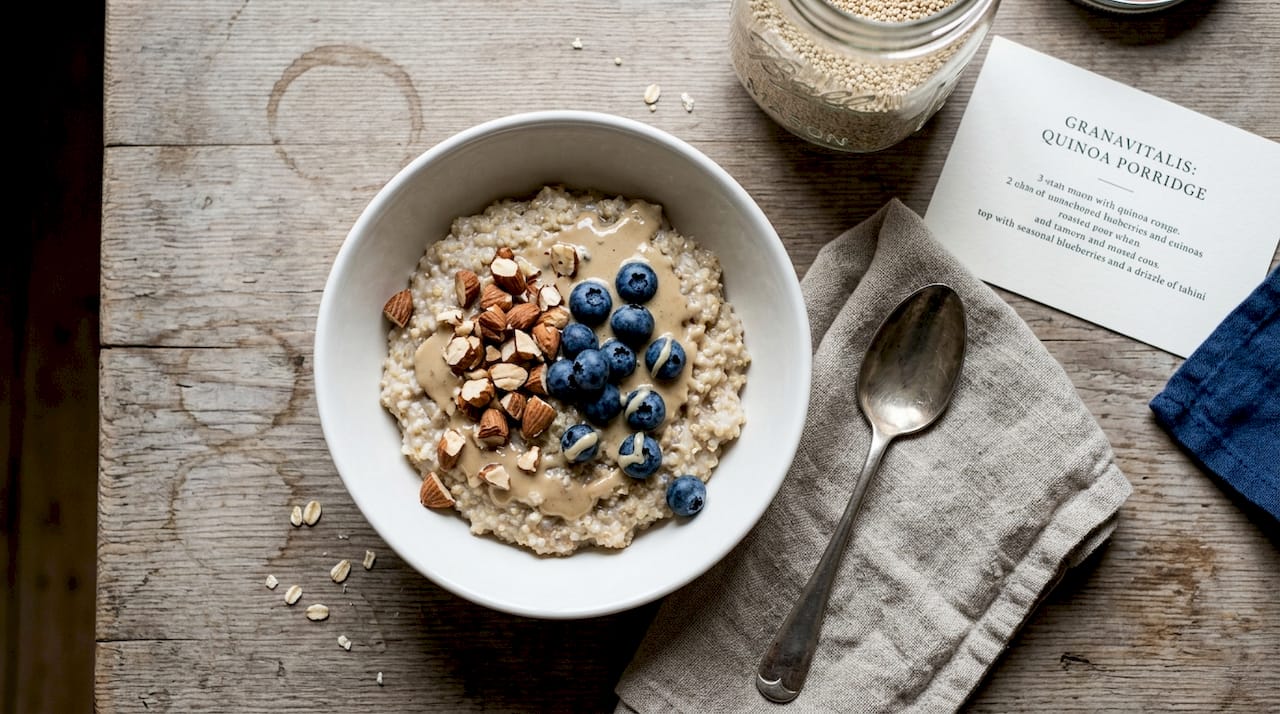
Quinoa porridge takes the ancient grain concept further. Quinoa cooks in fifteen minutes, has a mild, slightly nutty flavour, and unlike oats, it is a complete protein source containing all essential amino acids. Top it with berries, a drizzle of honey, and crushed walnuts for a genuinely satisfying bowl that feels indulgent but performs like a recovery meal. Quinoa porridge also works brilliantly for those avoiding gluten, making it one of the most inclusive high-protein breakfasts available.
Crunchy banana granola demonstrates that even a grab-and-go format can deliver meaningful protein. A well-constructed granola combining quinoa, sunflower seeds, pumpkin seeds, oats, and nuts provides around 8 grams of protein per serving. Pair it with a high-protein plant-based yoghurt and you easily push past 15 grams. Granola is also highly batchable, meaning you can prepare a large jar on a Sunday and fuel the whole week.
Here is a quick comparison of protein and fibre content across these options:
- Protein porridge: 25g protein, approx. 5g fibre, dairy-inclusive, highly customisable
- Protein overnight oats: 17g protein, 7g fibre, easily made vegan, excellent texture
- Quinoa porridge: 10 to 14g protein (before toppings), complete amino profile, gluten-free
- Crunchy banana granola: 8g protein per serving, scales up with yoghurt, ancient grain base
Pro Tip: Keep a jar of high-protein porridge grains such as a quinoa and oat blend pre-mixed in your cupboard. On busy mornings, you only need to add milk and your protein topping of choice. You remove the decision-making entirely, which is often what makes the difference between a solid breakfast and skipping it.
The variety here is genuinely exciting. These are not compromise meals. They are breakfasts that taste good, perform well, and connect you to ingredients with centuries of nutritional heritage behind them. Explore more inspiration in our guide to ancient grains for breakfasts.
Comparing high-protein breakfast choices
To help you find the best fit, let us stack these options side by side.
| Breakfast option | Protein (g) | Fibre (g) | Approx. calories | Plant-based | Ancient grain base |
|---|---|---|---|---|---|
| Protein porridge | 25 | 5 | 400 | Optional | Oats |
| Protein overnight oats | 17 | 7 | 370 | Yes (adaptable) | Oats + chia |
| Quinoa porridge | 12 | 4 | 320 | Yes | Quinoa |
| Crunchy banana granola | 8 | 3 | 280 | Yes | Quinoa + oats |
| Eggs on wholegrain toast | 20 | 4 | 360 | No | Wholegrain wheat |
| Greek yoghurt with seeds | 18 | 3 | 280 | No | Seeds |
These nutrition details give you a solid reference point for meal planning across the week. A few patterns emerge immediately. First, plant-based options are genuinely competitive. Protein overnight oats outperform Greek yoghurt with seeds on fibre and come close on protein. Second, adding ancient grains like quinoa to any base raises the nutritional ceiling considerably. Third, the calorie-to-protein ratio across all plant-based options is favourable for those managing weight.
“Targeting 15 to 25 grams of protein at breakfast helps maintain steady energy, reduce mid-morning hunger, and supports muscle maintenance, particularly important as we age.” — Nutrition guidance aligned with UK expert recommendations
For those tracking macros alongside weight management goals, a visit to our breakfasts for weight loss guide will give you further context on how these numbers translate into real-life results. The short version: higher protein at breakfast consistently reduces overall daily calorie intake by curbing appetite effectively.
Customising your high-protein breakfast: Tips for variety and satisfaction
Armed with comparison data, you can now adapt breakfasts for your taste, dietary needs, and schedule.
Variety is what keeps a nutritional approach sustainable over months and years. Here are the most effective ways to customise your morning protein:
- Rotate your grain base. Swap oats for quinoa, millet, or even buckwheat across the week. Each grain brings a different flavour and a slightly different nutrient profile. Buckwheat, for example, is particularly high in magnesium and also gluten-free.
- Use nut butters strategically. A tablespoon of almond butter adds roughly 3 to 4 grams of protein and a good hit of healthy fats. Peanut butter provides slightly more protein per serving. Tahini (sesame seed paste) adds an earthy depth and works especially well in savoury grain bowls.
- Layer your protein sources. The BHF confirms that mixing oats, seeds, and nut butters alongside protein powder raises protein levels significantly without requiring expensive specialist ingredients. This layering approach is the single most effective strategy for hitting 20-plus grams without meat or excessive dairy.
- Add a plant protein powder. A good-quality pea or hemp protein powder dissolves easily into porridge, overnight oats, or smoothies. Look for powders with minimal additives and a clean ingredient list.
- Go savoury when you need a change. A quinoa bowl with edamame, avocado, toasted pumpkin seeds, and a drizzle of tamari is an outstanding savoury high-protein breakfast. It takes the same time to assemble as granola but offers a completely different flavour experience.
Pro Tip: Batch-cook a large pot of quinoa on Sunday evening and portion it into containers. Each morning, simply reheat with plant milk, add your toppings, and breakfast is done in under two minutes. This single habit removes the main barrier most people face with plant-based protein breakfasts, which is perceived prep time. For additional inspiration on streamlining your morning routine, the easy plant-based breakfasts guide is full of practical, time-saving strategies.
The truth is that personalising your breakfast around ancient grains and plant proteins is far less complicated than most people assume. Once you have a base grain, a protein layer, and a flavour finish, the formula works every time.
The overlooked detail: Ancient grains and plant-based proteins really can transform breakfast
Let us zoom out and consider what the science and practical experience are really telling us about optimal breakfast proteins.
British breakfast culture has long centred on eggs, bacon, and dairy as the default protein sources. These are perfectly valid choices, but the framing tends to shut down curiosity about equally effective alternatives. The reality is that combining ancient grains and plant-based proteins meets complete protein needs with impressive reliability, particularly when soya and quinoa are involved.
What tends to get overlooked is the cumulative effect of protein layering. Most people think about single ingredients rather than total protein architecture. A quinoa base might give you 10 grams of protein. Add a spoonful of hemp seeds and you are at 13 grams. Stir in a tablespoon of almond butter and you are at 17 grams. Drop in a scoop of pea protein and you are comfortably at 25 grams, with better fibre, more diverse micronutrients, and a lower environmental footprint than a meat-based equivalent. That is not a compromise breakfast. That is an optimised one.
The other point worth making is speed. The perception that plant-based, ancient grain breakfasts require more time is largely a myth created by unfamiliarity. Overnight oats take five minutes the night before. Batch-cooked quinoa reheats in ninety seconds. Granola lives in a jar. The real friction is simply learning a few new habits, and the payoff in protein for lasting energy and satiety throughout the day is considerable.
We believe the UK’s breakfast habits are shifting, and the movement is being led by people who want their food to mean something, to be rooted in real ingredients with real history, and to perform at the highest level. Ancient grains are not a trend. They are a return to something that was always there.
Discover high-protein essentials for your pantry
Ready to bring these breakfasts to life? The right pantry staples make all the difference between a brilliant morning and a mediocre one.

At Granavitalis, we select every ingredient with exactly this kind of breakfast in mind. Our range of premium nut butters delivers flavour and protein without unnecessary additives. Our plant-based protein powders are sourced for clean performance, blending smoothly into porridge and overnight oats without that chalky aftertaste. We also stock carefully chosen seed blends and ancient grain flours that make it simple to add nutritional depth to any recipe above. Whether you are building your first high-protein grain bowl or refining a routine you have followed for years, explore the Granavitalis shop to find ingredients that genuinely earn their place in your pantry. Purity, performance, and purpose in every product.
Frequently asked questions
How much protein should breakfast ideally provide?
Aim for 15 to 25 grams of protein at breakfast to support sustained energy and fullness throughout the morning, as recommended by UK nutrition experts.
What are some quick plant-based protein boosts for breakfast?
Adding plant protein powder, nut butter, or chia seeds to your bowl are the fastest ways to raise protein levels; the BHF highlights all three as effective plant-based protein add-ins with no cooking required.
Are ancient grains better than regular oats for breakfast protein?
Quinoa offers a complete amino acid profile, meaning it delivers more balanced plant-based protein than oats alone, though combining oats with seeds or legumes brings them close.
Can high-protein breakfasts suit vegan diets?
Absolutely. By combining ancient grains, pulses, soya and quinoa, seeds, and nuts, a vegan breakfast can provide complete and ample protein without any animal products.