
High-protein breakfast for weight loss: A practical UK guide
TL;DR:
- High-protein breakfasts increase satiety and reduce mid-morning cravings.
- Aim for 25 to 35 grams of protein to support weight loss efforts.
- Combining protein with fiber-rich foods promotes sustained fullness and digestive health.
You eat breakfast, yet by 10:30am your stomach is already growling and the biscuit tin is calling your name. Sound familiar? Mid-morning hunger is one of the most common reasons people stall on their weight loss journey, and the fix is often simpler than a complete diet overhaul. High-protein breakfasts promote greater satiety and suppress appetite compared to low-protein or high-carb options, making healthier choices throughout the day significantly easier. This guide walks you through the science, the right amounts, the best UK foods, and the common mistakes to avoid so your mornings actually work for you.
Table of Contents
- Why high-protein breakfasts support weight loss
- How much protein do you need at breakfast?
- Building your high-protein breakfast: Best foods and combinations
- Common mistakes and troubleshooting your high-protein breakfast
- What most miss about high-protein breakfasts and weight loss
- Take the next step with nutritious, high-protein choices
- Frequently asked questions
Key Takeaways
| Point | Details |
|---|---|
| Optimal protein target | Aim for 25-35g of protein at breakfast to maximise satiety and support weight loss. |
| Protein plus fibre | Combine protein with fibre-rich foods like oats, beans, or berries for better gut health and fullness. |
| Varied food sources | Include both plant and animal proteins—beans, eggs, yoghurt, high-protein granola—for best results. |
| Avoid common pitfalls | Limit processed meats and balance calories to ensure effective, sustainable weight loss. |
Why high-protein breakfasts support weight loss
With the goal of curbing hunger and supporting your weight journey, let’s understand the science behind high-protein breakfasts.
When you eat protein, your gut releases hormones called GLP-1 and PYY. These signal your brain that you are full. At the same time, ghrelin (the hormone that makes you feel hungry) drops more sharply after a protein-rich meal than after a carbohydrate-heavy one. The result is a longer stretch of genuine satisfaction before your next meal.
Mechanisms include greater GLP-1 and PYY secretion, reduced ghrelin, a higher thermic effect, and slower gastric emptying. That last point matters more than people realise. Slower gastric emptying means food physically stays in your stomach longer, which keeps the fullness signal active well into the morning.
Protein also has a higher thermic effect than carbohydrates or fat. Your body burns roughly 20 to 30 percent of the calories in protein just to digest it, compared to around 5 to 10 percent for carbohydrates. That is free energy expenditure built into every meal. Learning more about protein for lasting energy can help you use this to your advantage.
It is worth being honest here: protein alone does not melt fat. Weight loss still requires an overall calorie deficit. What protein does is make that deficit far easier to maintain by reducing the urge to snack. A randomised weight loss trial found that breakfast composition significantly impacts appetite control throughout the day, with higher-protein meals producing the strongest effect.
Here is a quick summary of the practical benefits that make high-protein breakfasts worth prioritising:
- Fewer mid-morning cravings and less impulsive snacking
- Better adherence to a calorie-controlled eating plan
- Preserved lean muscle mass during weight loss
- More stable blood sugar compared to high-sugar cereals
- Improved mood and focus through the morning
The benefits of high-protein breakfasts extend well beyond the scales, supporting recovery, energy, and mental clarity too.
| Breakfast type | Satiety effect | Thermic effect | Muscle preservation |
|---|---|---|---|
| High-protein | High | High (20-30%) | Strong |
| High-carbohydrate | Moderate | Low (5-10%) | Weak |
| High-fat | Moderate | Low (0-3%) | Moderate |
Key insight: A high-protein breakfast does not replace a calorie deficit. It makes achieving one considerably less miserable.
How much protein do you need at breakfast?
Having covered why protein helps, the next step is knowing how much you actually need to eat for results.
Aim for 25 to 35g of protein at breakfast for optimal satiety and weight loss support, with 30g appearing to be the most effective threshold for most adults. Below 20g and the appetite-suppressing benefits begin to diminish noticeably.
For older adults (over 60), the picture is slightly different. Muscle protein synthesis becomes less efficient with age, so slightly higher intakes, closer to 35 to 40g, may be beneficial for preserving lean mass. The NHS protein guidelines recommend 0.75g of protein per kilogram of body weight per day as a general baseline, but active adults aiming for weight loss often benefit from more.
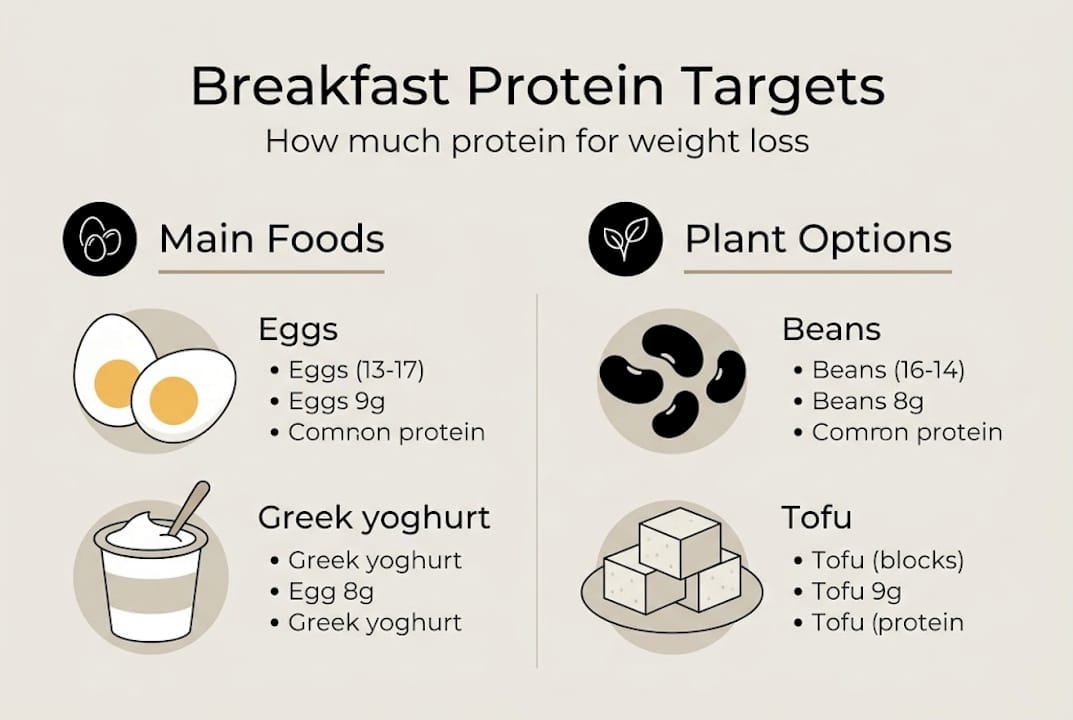
NHS and BHF sources recommend eggs, Greek yoghurt, and beans as healthy protein sources, while advising caution with processed meats like bacon and sausages due to their saturated fat and salt content.
| Breakfast option | Approximate protein (g) |
|---|---|
| 3 scrambled eggs | 18-20g |
| 200g Greek yoghurt | 17-20g |
| 150g cottage cheese | 17-19g |
| 2 slices high-protein toast + nut butter | 12-15g |
| 200g baked beans on toast | 14-16g |
| Vegan protein shake (1 scoop) | 20-25g |
Pro Tip: Track your protein intake for just the first week using a free app or simply reading food labels. Most people are surprised to find they are hitting only 10 to 15g at breakfast. Knowing your baseline is the fastest way to close the gap.
Here are some easy, practical ways to reach your 25 to 35g target without overhauling your entire morning:
- Add a generous scoop of cottage cheese alongside your eggs
- Swap standard yoghurt for full-fat Greek yoghurt
- Stir a tablespoon of hemp or chia seeds into porridge
- Choose a high-protein granola or bread over standard varieties
- Explore no meat protein sources like lentils, edamame, or quark
Building your high-protein breakfast: Best foods and combinations
Now that you know your target, here is how to get there with everyday UK foods, whether you eat animal products or plant-based.
Animal-based protein options are the most concentrated sources. Eggs are the obvious starting point: versatile, affordable, and packed with complete protein. Greek yoghurt and quark are both excellent, with quark offering a milder flavour and slightly higher protein per gram. Cottage cheese is underrated. Smoked salmon or tinned mackerel on rye bread is a genuinely satisfying option that many overlook.

Plant-based options are equally effective. Plant and animal proteins are equivalent for satiety and hormone response, so you do not need to eat eggs to get results. Baked beans, lentil-based dishes, tofu scrambles, and high-protein breads all contribute meaningfully. Nut butters add both protein and healthy fats, and seeds like hemp and pumpkin are surprisingly protein-dense.
Beans, Greek yoghurt, eggs, and cottage cheese are all recommended by UK health sources as the foundation of a nutritious morning meal. Exploring plant-based protein breakfasts gives you even more variety to keep things interesting.
Here are five balanced breakfast combinations that hit the 25 to 35g protein target:
- Scrambled eggs with smoked salmon: 3 eggs plus 80g smoked salmon on rye bread delivers around 35g protein.
- Greek yoghurt parfait: 200g Greek yoghurt, 2 tablespoons hemp seeds, and a handful of mixed nuts reaches roughly 28g.
- Tofu scramble with beans: 150g firm tofu plus half a tin of baked beans gives approximately 27g protein.
- Cottage cheese bowl: 150g cottage cheese with pumpkin seeds and a boiled egg hits around 30g.
- High-protein porridge: Oats cooked with a scoop of vegan protein powder, topped with almond butter, delivers 25 to 30g.
Pro Tip: Hybrid breakfasts combining both protein and fibre-rich foods support gut health and sustained satiety better than protein alone. Check out this protein and fibre food list for easy pairing ideas.
A quick note on processed meats: bacon and sausages do contain protein, but the high salt, saturated fat, and preservative content makes them a poor daily choice. Reserve them for the occasional weekend treat rather than a weekday staple.
Common mistakes and troubleshooting your high-protein breakfast
Even with the best planning, common traps can hinder results. Let us tackle these and keep you on track.
The most widespread mistake is reaching for processed meats as the primary protein source. Bacon sandwiches and sausage rolls do provide some protein, but they also bring excess sodium and saturated fat that work against cardiovascular health over time. Variety is your friend here.
Another frequent error is skipping fibre entirely in the pursuit of pure protein. Protein gives acute appetite control, while fibre brings long-term gut and metabolic benefits. Hybrid meals combining both work best for overall health. Explore fibre and protein for gut health to see how simple this pairing can be.
Here is how to balance protein with fibre-rich foods effectively:
- Add oats, berries, or flaxseed to yoghurt-based breakfasts
- Choose wholegrain or seeded bread over white varieties
- Include a portion of beans or lentils at least three mornings per week
- Explore fibre-rich breakfast foods and foods high in fibre and protein for practical ideas
Remember: Protein improves appetite control, but overall calorie intake determines weight loss. Feeling full is a tool, not a guarantee.
Pro Tip: Prep your breakfast ingredients the night before. Portion out your yoghurt, boil your eggs, or soak your oats. Morning shortcuts are where good intentions collapse.
To tell whether your breakfast is working, use a simple fullness scale from one to ten. If you are below five by 11am, your breakfast needs more protein or fibre. If you are experiencing digestive discomfort, you may be increasing protein too quickly. Slow and steady changes give your gut time to adapt.
What most miss about high-protein breakfasts and weight loss
With the practical framework covered, here is a realistic perspective on what truly delivers sustainable change.
Most articles about high-protein breakfasts make it sound like swapping your cereal for eggs is a transformation in itself. It is not. The honest truth is that the breakfast is only as powerful as the habits surrounding it. We have seen people hit 35g of protein every morning and still plateau because their lunch and dinner were unstructured, their sleep was poor, or they were chronically stressed.
Chasing numbers, counting grams obsessively, and optimising macros without addressing enjoyment is a fast route to burnout. The breakfast that works best is the one you actually want to eat tomorrow morning. Consistency beats perfection, every single time.
What genuinely moves the needle is combining protein with fibre, as the fibre and protein insights show, building a meal you enjoy, and repeating it without resentment. Hybrid meals that include both macronutrients outperform strict high-protein-only approaches for energy, digestion, and mood across the day. Start simple, stay consistent, and adjust as you learn what your body responds to.
Take the next step with nutritious, high-protein choices
You are equipped with all the know-how. Here are options to make high-protein breakfasts effortless and genuinely delicious.
Building a 30g protein breakfast does not have to be complicated or expensive. A scoop of our vegan protein powder stirred into porridge or blended into a smoothie gets you most of the way there in under two minutes. Pair it with a tablespoon from our nut and seed butter selection box for added healthy fats, flavour, and staying power.
At Granavitalis, every product is chosen to support real mornings: clean ingredients, no shortcuts, and nutrition rooted in wholefood tradition. Browse our range to find the combinations that suit your taste and your goals. The best breakfast is the one you look forward to making.
Frequently asked questions
Can I eat a high-protein breakfast every day?
Yes, daily high-protein breakfasts are safe and effective for weight loss and satiety in UK adults. Meta-analyses confirm beneficial effects of high-protein diets consumed consistently over time.
What if I don’t eat eggs or dairy?
You can still reach 25 to 35g of protein using beans, lentils, tofu, high-protein breads, or vegan protein powders. Plant-based proteins are equally effective for satiety and weight loss support.
Will a high-protein breakfast slow my metabolism if I skip carbs?
Not necessarily, but including fibre-rich carbohydrates like oats or beans is best for gut health and sustained energy. Hybrid protein and fibre breakfasts support both fullness and digestive wellbeing.
How soon will I see results from changing my breakfast?
You may notice reduced hunger within a few days, but visible weight loss typically takes several weeks of consistent habits. Appetite suppression occurs quickly, while body composition changes follow gradually.
Should I still count calories if I eat high-protein breakfasts?
Yes, a calorie deficit remains necessary for weight loss. Protein makes that deficit easier to maintain by keeping you fuller for longer, but overall intake still determines whether you lose weight.