
Plant-based protein for weight loss: effective UK strategies
Most people assume animal protein is the gold standard for losing weight and holding onto muscle. The reality is more interesting. Plant-based interventions consistently produce average body weight reductions of 3 to 5%, largely because plant proteins are lower in energy density, higher in fibre, and naturally support reduced calorie intake without leaving you hungry. This article walks you through the science, the best food sources available in the UK, and a practical framework for building a plant-based eating routine that actually works.
Table of Contents
- Understanding the science: how plant-based protein aids weight loss
- Plant-based vs animal protein: what the research reveals
- Top sources of plant-based protein for weight loss
- Building your plant-based weight loss plan: practical strategies
- Real-world recipes and meal ideas for weight loss success
- Discover high-protein nut and seed essentials for your routine
- Frequently asked questions
Key Takeaways
| Point | Details |
|---|---|
| Plant protein boosts satiety | Fibre-rich plant proteins help you feel full and reduce calorie intake naturally. |
| Diverse sources protect muscle | Mixing different plant proteins preserves strength and muscle while losing weight. |
| Whole foods over supplements | Prioritise whole food protein sources and supplement only when needed for nutrients like B12. |
| Meal planning enhances adherence | Simple meal formulas and snacks make it easy to stick with a plant-based plan long-term. |
Understanding the science: how plant-based protein aids weight loss
Plant proteins work differently from what most people expect. They are not just a lower-calorie swap. They actively change how full you feel, how much you eat, and how your body processes energy throughout the day.
Harvard Health explains that plant-based proteins support weight loss through lower energy density, high fibre content that promotes satiety, and reduced overall calorie intake, all while keeping protein intake adequate. That combination is genuinely powerful. You eat less without feeling deprived.
“Meta-analysis data confirms that plant-based diets reduce BMI significantly across diverse populations, with consistent results in both short and long-term interventions.”
Here is why the fibre piece matters so much. Fibre slows digestion, stabilises blood sugar, and keeps hunger hormones in check for longer after a meal. Most plant proteins come packaged with fibre naturally. Animal proteins do not.
Key mechanisms behind plant protein and weight loss:
- Lower energy density means more food volume for fewer calories
- Soluble fibre feeds gut bacteria and reduces appetite hormones
- Plant proteins are digested more slowly, extending the satiety window
- Whole food plant sources come with vitamins and minerals that support metabolism
For a deeper look at choosing the right options, our low-calorie plant protein guide breaks down the best picks by calorie and protein content.
Statistic to note: Randomised controlled trials show plant-based diet participants lose an average of 3 to 5% of body weight compared to control groups, without calorie counting.
Plant-based vs animal protein: what the research reveals
This is where it gets nuanced. Animal protein does have one measurable advantage: a slightly higher thermic effect. Research shows that animal protein produces greater energy expenditure and carbohydrate oxidation after meals compared to plant protein. In plain terms, your body burns a few more calories digesting a chicken breast than it does digesting lentils.
But here is the counterpoint. That thermic advantage is modest, and it does not offset the broader metabolic benefits of a plant-rich diet. Plant-based diets reduce BMI significantly in meta-analyses, and the fibre and satiety effects tend to produce greater overall calorie reduction across a full day.
| Factor | Plant-based protein | Animal protein |
|---|---|---|
| Calorie density | Lower | Higher |
| Fibre content | High | None |
| Thermic effect | Moderate | Slightly higher |
| Satiety duration | Long (fibre-driven) | Moderate |
| Heart health | Positive association | Mixed, depending on source |
| Environmental impact | Lower | Higher |
| Weight loss outcomes | Strong evidence | Moderate evidence |
The most practical approach for many people is a flexitarian model, where plant proteins form the foundation and animal proteins appear occasionally. This approach captures the heart health benefits of plant-forward eating while allowing flexibility.
Pro Tip: You do not need to go fully vegan to see results. Replacing just two or three animal protein meals per week with legumes, tofu, or seeds can meaningfully shift your calorie balance and improve satiety. Browse our top vegan protein sources and low carb vegan protein options for practical starting points.
Top sources of plant-based protein for weight loss
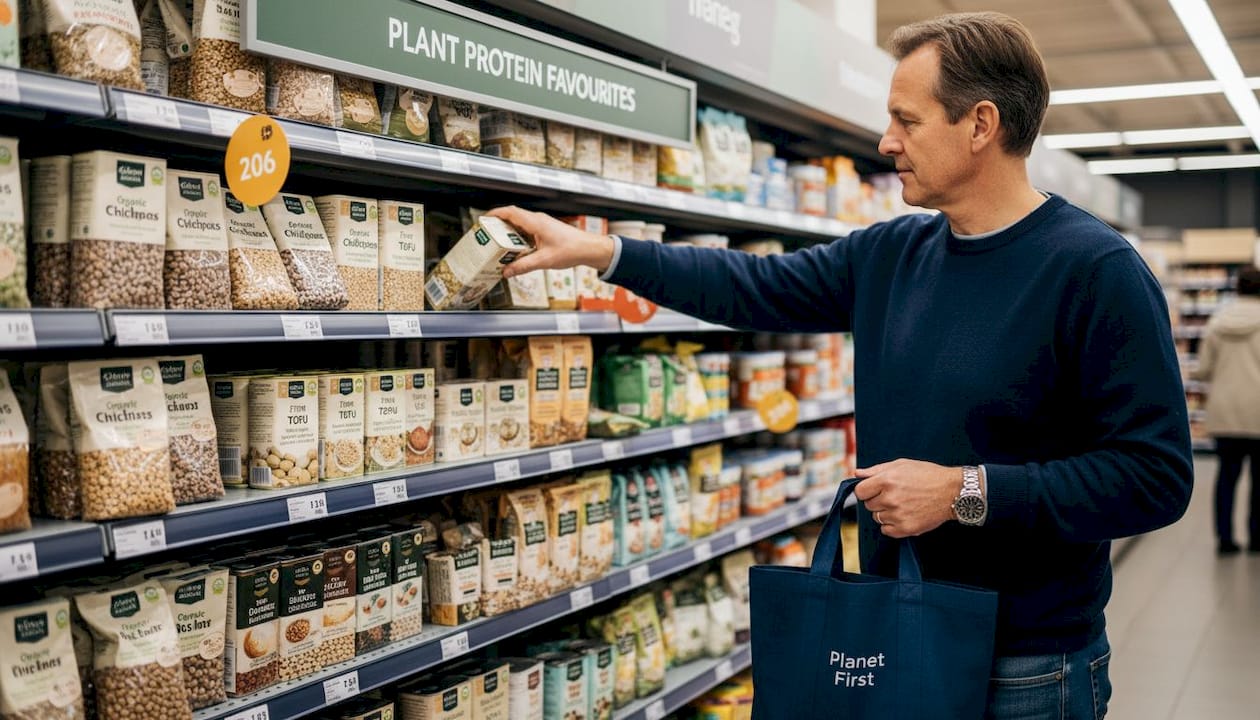
Variety is not just a nice idea here. BBC Food guidance confirms that for adults seeking adequate plant protein, combining legumes, soy, grains, nuts, and seeds is essential to cover all amino acids and micronutrients. No single source does it all.
| Food | Protein per 100g | Calories per 100g | Fibre per 100g | Best use |
|---|---|---|---|---|
| Tempeh | 19g | 193kcal | 4.5g | Stir-fries, grain bowls |
| Edamame | 11g | 122kcal | 5g | Snacks, salads |
| Red lentils | 9g (cooked) | 116kcal | 4g | Soups, dals |
| Firm tofu | 8g | 76kcal | 0.3g | Scrambles, curries |
| Hemp seeds | 32g | 553kcal | 4g | Smoothies, porridge |
| Black beans | 8.9g (cooked) | 132kcal | 8.7g | Wraps, stews |
| Pumpkin seeds | 19g | 446kcal | 6g | Salad toppings, snacks |
| Quinoa | 4.4g (cooked) | 120kcal | 2.8g | Base grain, salads |
| Chickpeas | 8.9g (cooked) | 164kcal | 7.6g | Roasted snacks, hummus |
| Almond butter | 21g | 614kcal | 7g | Smoothies, toast |
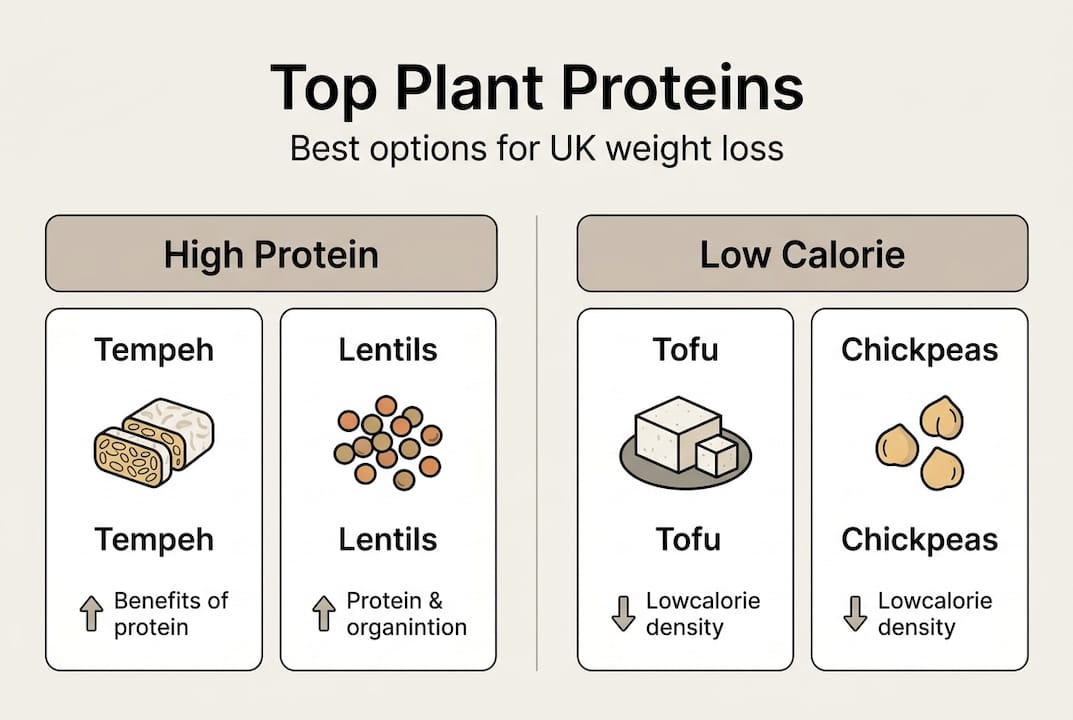
Note: Hemp seeds and nut butters are calorie-dense, so portion size matters. A tablespoon goes a long way.
Tips for choosing high-protein, low-calorie plant foods:
- Prioritise legumes as your daily protein base; they are cheap, filling, and fibre-rich
- Use seeds as toppings rather than main portions to manage calorie density
- Choose whole soy foods (tofu, tempeh, edamame) over processed soy products
- Rotate your grains: quinoa, buckwheat, and amaranth all offer more protein than white rice
- Read labels on plant-based meat alternatives; many are high in sodium and low in fibre
For planning a plant-based diet that covers all your nutritional bases, Harvard’s guidance is a solid reference. You should also consider supplementing with B12 and monitoring iron, particularly if you are not eating fortified foods regularly. Our guides on why proteins matter and the role of protein in vegan diets cover these gaps in detail.
For building muscle alongside weight loss, our protein for muscle gain guide is worth reading alongside this one.
Building your plant-based weight loss plan: practical strategies
Knowing which foods to eat is one thing. Structuring your day so those foods actually land on your plate is another. Here is a simple formula that works.
A protein-rich plant-based day, step by step:
- Breakfast: Start with a protein anchor. Overnight oats with hemp seeds and almond butter, or a tofu scramble with spinach and nutritional yeast.
- Mid-morning: A small handful of pumpkin seeds or a tablespoon of nut butter on an oatcake keeps energy steady.
- Lunch: Build around legumes. A lentil and roasted vegetable bowl, a chickpea wrap, or a black bean salad with quinoa.
- Afternoon: Edamame, a small portion of hummus with vegetable sticks, or a protein-rich smoothie.
- Dinner: Tempeh stir-fry, a hearty bean stew, or a tofu and vegetable curry with brown rice.
- Hydration: Water supports weight loss by reducing appetite and supporting metabolism. Aim for 1.5 to 2 litres daily.
Pro Tip: Your daily protein target for weight loss and muscle preservation sits at 0.75 to 1g per kilogram of body weight. For a 70kg adult, that is roughly 53 to 70g of protein per day. Spread it across meals rather than loading it all at dinner.
Whole-food plant diets naturally create a calorie deficit without strict tracking, because fibre and water content add volume without adding calories. Research also confirms that muscle mass and strength are preserved on plant-based diets when protein intake is adequate, so you do not need to choose between losing fat and keeping muscle.
Common pitfalls to avoid:
- Relying too heavily on refined carbohydrates like white bread, pasta, and crackers
- Not rotating protein sources, which risks amino acid gaps
- Skipping breakfast, which tends to increase hunger and poor choices later
- Underestimating calorie-dense foods like nut butters and seeds
- Forgetting B12 and iron, especially if you are fully plant-based
Our plant-based high protein diet and vegetarian high protein meals guides offer structured meal ideas to keep variety high and effort low.
Real-world recipes and meal ideas for weight loss success
Principles are useful. Actual meal ideas are better. Here are seven practical options that are high in plant protein, satisfying, and genuinely easy to prepare.
Whole-food plant eating works best when meals feel enjoyable rather than restrictive. These ideas are designed to fit into a busy UK lifestyle.
Meal and snack ideas with approximate protein content:
- Overnight oats with hemp seeds and almond butter (approx. 18g protein): Prep the night before, grab in the morning. Add a banana for natural sweetness.
- Red lentil and spinach soup (approx. 14g protein per bowl): Batch-cook on Sunday and portion into containers for the week.
- Tempeh and roasted vegetable grain bowl (approx. 25g protein): Use quinoa as the base, add tahini dressing for flavour and extra protein.
- Chickpea and sweet potato curry (approx. 16g protein): A crowd-pleaser that freezes well. Serve with brown rice or flatbread.
- Edamame and avocado smash on rye toast (approx. 12g protein): Quick lunch or snack. Add chilli flakes and lemon juice.
- Black bean and roasted pepper wrap (approx. 15g protein): Use a wholegrain wrap, add shredded cabbage for crunch and extra fibre.
- Avocado detox smoothie with plant protein powder (approx. 20g protein): Blend with spinach, hemp seeds, and oat milk for a post-workout recovery option.
Smart batch-cooking tips:
- Cook a large pot of lentils or beans at the start of the week and use across multiple meals
- Roast a tray of mixed vegetables and store in the fridge for quick bowl assembly
- Make a double portion of any curry or stew and freeze half for a no-effort meal later
For more inspiration, our vegan protein essentials guide covers the building blocks you need in your kitchen at all times.
Discover high-protein nut and seed essentials for your routine
Building a plant-based weight loss routine is far easier when your kitchen staples are doing real nutritional work. Nut and seed butters are one of the most versatile, protein-rich additions you can make to breakfasts, smoothies, and snacks.
At Granavitalis, we source premium, minimally processed options that fit naturally into the meal ideas above. Our raw organic pecan butter is rich in healthy fats and protein, perfect stirred into porridge or spread on oatcakes. If you want to explore a range of options, the nut and seed butter selection box lets you try several varieties and find what works best for your routine. For adding texture and protein to salads and grain bowls, our nibbed hazel nuts are a simple, satisfying topping. Real food, real nutrition, no shortcuts.
Frequently asked questions
How much plant-based protein do I need daily for weight loss?
Aim for 0.75 to 1g of protein per kilogram of body weight daily. As BBC Food guidance confirms, variety across legumes, soy, grains, and nuts is essential to cover all amino acids.
Can I lose weight and keep muscle on a plant-based diet?
Yes. Research confirms there is no significant difference in upper or lower body strength between plant-based and omnivorous diets when protein intake is adequate.
Should I use protein supplements or focus on whole foods?
Whole foods should come first. Harvard Health advises that whole-food plant diets naturally create a calorie deficit, with supplements useful only when dietary gaps remain.
Do I need to worry about any nutrient deficiencies?
B12, iron, and omega-3 are the main ones to monitor. Harvard’s plant-based eating guidance recommends prioritising fortified foods and considering targeted supplements if intake from food is consistently low.