

High fibre high protein breakfast: energy and gut health
Many believe you must choose either fibre or protein for breakfast to meet health goals. Research shows that combining both nutrients delivers superior benefits for appetite control and digestive wellness. This guide explains how to balance high fibre and high protein using wholefoods rooted in tradition, helping you build breakfasts that sustain energy, support gut microbiota, and align with UK nutritional guidelines. You will discover practical ingredient choices, evidence-backed meal ideas, and simple strategies to meet the recommended 30g daily fibre intake whilst optimising protein for lasting fullness.
Table of Contents
- Key takeaways
- Understanding the benefits of high fibre and high protein at breakfast
- Choosing wholefood ingredients for balanced high fibre high protein breakfasts
- Comparing breakfast options: protein-focused, fibre-focused, and hybrid meals
- Practical high fibre high protein breakfast ideas for UK health-conscious eaters
- Explore nutrient-rich products to enhance your breakfasts
- FAQ
Key Takeaways
| Point | Details |
|---|---|
| Protein and fibre synergy | Combining high protein with high fibre at breakfast delivers greater satiety and gut health benefits than consuming either nutrient on its own. |
| Aim 30g fibre daily | UK adults should target about 30g of fibre each day by combining wholegrains, pulses and protein sources. |
| Gradual fibre increase | Introduce fibre gradually to minimise digestive discomfort as you raise daily intake. |
| Hybrid breakfasts balance satiety | Choosing traditional wholefoods that pair protein and fibre supports both immediate fullness and longer term digestive wellness. |
Understanding the benefits of high fibre and high protein at breakfast
Protein-rich breakfasts reduce hunger by suppressing ghrelin, the hormone that signals appetite. Studies confirm that protein curbs appetite whilst fibre delivers stronger gut microbiome benefits, producing short-chain fatty acids that support immune function and metabolic health. Combining both nutrients creates a synergistic effect that helps with weight management and improves blood glucose control throughout the morning.
Fibre feeds beneficial bacteria in your digestive system, promoting microbial diversity linked to reduced inflammation and better nutrient absorption. Soluble fibre from oats and seeds slows digestion, whilst insoluble fibre from wholegrains aids regularity. Protein provides amino acids for muscle repair and neurotransmitter production, supporting mental clarity alongside physical energy. Together, these nutrients create a foundation for sustained vitality that processed breakfast options cannot match.
UK adults consume an average of 20g fibre daily, falling short of the recommended 30g needed for optimal health outcomes. Increasing intake through wholefood breakfasts offers a practical solution without requiring dramatic dietary overhauls. Typical ingredients include:
- Oats and wholemeal bread for soluble and insoluble fibre
- Greek yoghurt and eggs for complete protein profiles
- Seeds, nuts, and nut butters for healthy fats and minerals
- Berries and pulses for antioxidants and resistant starch
“Hybrid breakfasts combining protein and fibre offer balanced advantages for appetite control and gut function, supporting both immediate satiety and long-term digestive wellness.”
This approach aligns with evidence showing that neither nutrient alone delivers the full spectrum of benefits. Maximising breakfast protein enhances fullness, yet without adequate fibre, you miss crucial microbiome support. Conversely, fibre-only meals may leave you hungry within hours, undermining energy stability. The solution lies in thoughtful ingredient pairing that honours traditional wholefood wisdom whilst meeting modern nutritional science.
Choosing wholefood ingredients for balanced high fibre high protein breakfasts
Selecting nutrient-dense ingredients forms the cornerstone of effective breakfast planning. Wholegrains provide the fibre base: oats deliver beta-glucan for cholesterol management, wholemeal bread supplies B vitamins alongside insoluble fibre, and bran cereals concentrate fibre content for those needing higher intakes. Each option brings distinct textures and flavours that prevent breakfast monotony whilst supporting digestive health.
High-protein sources complement these grains beautifully. Eggs offer complete amino acid profiles with minimal preparation time. Greek yoghurt provides probiotics alongside protein, supporting gut bacteria directly. Beans and lentils add plant-based protein plus resistant starch, feeding beneficial microbes. Nuts and seeds contribute protein, healthy fats, and minerals like magnesium and zinc that support energy metabolism. Foods high in fibre and protein naturally overlap in traditional diets, making balanced breakfasts both achievable and delicious.

Combining these ingredients requires attention to taste, texture, and nutritional balance. Creamy yoghurt offsets crunchy seeds. Sweet berries contrast earthy pulses. Savoury eggs pair with wholegrain toast. NHS guidance recommends combining wholegrains, pulses, eggs, and yoghurt to meet fibre and protein targets without relying on supplements or processed foods. This wholefood approach ensures you receive vitamins, minerals, and phytonutrients that isolated nutrients cannot provide.
Steps to build a balanced breakfast bowl:
- Start with a wholegrain base like oats or quinoa (5-8g fibre)
- Add a protein source such as Greek yoghurt or boiled eggs (15-20g protein)
- Include seeds or nuts for texture and healthy fats (2-3g fibre, 5-8g protein)
- Top with berries or sliced fruit for antioxidants (2-4g fibre)
- Finish with a drizzle of nut butter for richness (1-2g fibre, 3-4g protein)
Pro Tip: Increase fibre gradually over 7-10 days to allow your digestive system to adapt. Sudden jumps can cause bloating and discomfort. Drink at least 2 litres of water daily to help fibre move through your system smoothly.
This methodical approach transforms breakfast from a rushed afterthought into a strategic meal supporting your health goals. Fibre-rich breakfast foods provide the foundation, whilst protein additions create staying power that carries you through demanding mornings without energy crashes or mid-morning hunger pangs.
Comparing breakfast options: protein-focused, fibre-focused, and hybrid meals
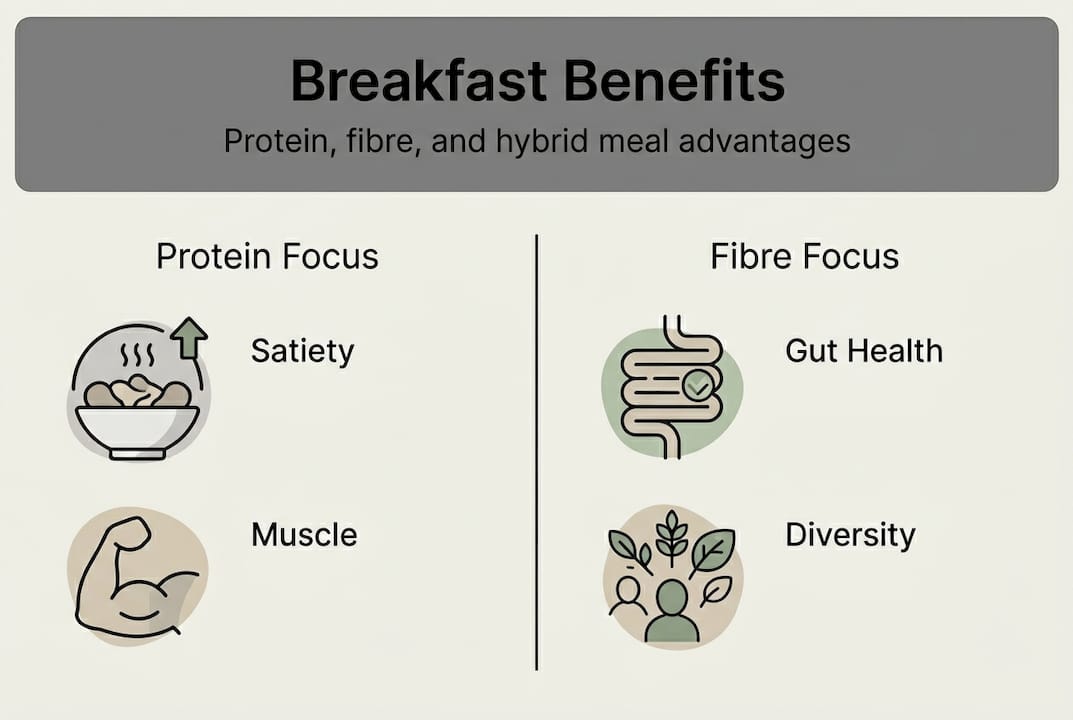
Different breakfast approaches deliver distinct benefits depending on your priorities. Understanding these trade-offs helps you select meals aligned with immediate needs and long-term wellness objectives. The table below contrasts three common breakfast types across key health markers.
| Breakfast type | Satiety duration | Gut microbiome benefit | Preparation ease | Example |
|---|---|---|---|---|
| Protein-focused | 3-4 hours | Moderate | Quick | Scrambled eggs with cheese |
| Fibre-focused | 2-3 hours | High | Moderate | Porridge with berries |
| Hybrid | 4-5 hours | High | Moderate | Eggs with beans on wholemeal toast |
Protein-focused breakfasts excel at short-term appetite suppression. Research shows that eggs suppress ghrelin more effectively than oatmeal without harming cholesterol ratios, making them ideal for weight management phases. However, without adequate fibre, these meals miss opportunities to feed beneficial gut bacteria and support digestive regularity. They work well for rushed mornings when preparation time is limited.
Fibre-focused breakfasts prioritise gut health and microbiome diversity. Porridge, bran cereals, and fruit-based meals deliver substantial fibre but may leave you hungry sooner due to lower protein content. They suit individuals with digestive concerns or those specifically working to increase fibre intake. The trade-off is reduced satiety, potentially leading to mid-morning snacking that undermines calorie control.
Hybrid meals combine the strengths of both approaches. High protein egg breakfasts paired with wholegrain toast and beans deliver sustained fullness whilst supporting gut bacteria. This balance proves particularly effective for active individuals, those managing weight, and anyone seeking optimal energy stability throughout the morning. The modest increase in preparation time pays dividends in nutritional completeness.
Pro Tip: Adjust portion sizes based on your activity level and goals. Athletes may need 35-40g protein per breakfast, whilst sedentary individuals can thrive on 25-30g. Similarly, increase fibre gradually if you are transitioning from low-fibre processed breakfasts to wholefood options.
Practical factors matter too. Protein-focused meals often require cooking, whilst fibre-focused options like overnight oats need advance preparation. Hybrid breakfasts balance convenience with nutrition, making them sustainable for daily routines. Consider batch-cooking components like boiled eggs or preparing overnight oats in bulk to streamline busy mornings without sacrificing nutritional quality.
Practical high fibre high protein breakfast ideas for UK health-conscious eaters
Concrete examples transform nutritional theory into daily practice. The breakfasts below demonstrate how to achieve 30g protein and 10+g fibre per serving using accessible wholefood ingredients rooted in traditional eating patterns. Each option balances taste, texture, and nutritional density.
| Breakfast | Protein (g) | Fibre (g) | Key ingredients |
|---|---|---|---|
| Greek yoghurt bowl | 32 | 12 | 200g Greek yoghurt, 40g oats, 20g chia seeds, 100g berries, 15g almonds |
| Eggs and beans | 28 | 11 | 2 eggs, 150g baked beans, 2 slices wholemeal toast, 10g seeds |
| Lentil breakfast salad | 26 | 14 | 120g cooked lentils, 1 egg, 50g spinach, 20g pumpkin seeds, wholegrain crackers |
| Protein porridge | 30 | 10 | 50g oats, 30g protein powder, 15g flaxseed, 100g berries, 10g nut butter |
These breakfasts illustrate key principles for balanced nutrition. The Greek yoghurt bowl combines creamy protein with crunchy seeds and chewy oats, creating textural variety that enhances satisfaction. Eggs and beans represent a classic British pairing that delivers complete nutrition with minimal fuss. The lentil salad offers a savoury alternative for those who prefer non-traditional breakfast formats. Protein porridge suits individuals who want familiar comfort food upgraded with modern nutritional science.
Preparation tips for busy mornings:
- Prepare overnight oats the evening before by combining oats, yoghurt, seeds, and liquid in a jar
- Batch-cook boiled eggs and store in the fridge for up to 5 days
- Pre-portion nuts, seeds, and dried fruit into small containers for grab-and-go additions
- Keep canned beans and wholegrain bread stocked for quick assembly breakfasts
- Freeze individual portions of cooked lentils or quinoa for instant wholefood bases
Pro Tip: Source organic nut butters and seeds from trusted suppliers to maximise nutrient density whilst avoiding additives. Raw options preserve heat-sensitive vitamins and enzymes that processing destroys.
These strategies make nutrient-dense breakfasts achievable even during hectic weekday mornings. The key is establishing simple systems that reduce decision fatigue whilst maintaining nutritional standards. Once you have core ingredients prepared, assembling balanced meals takes less than five minutes.
Variation prevents boredom and ensures nutritional diversity. Rotate between sweet and savoury options throughout the week. Experiment with different wholegrains like quinoa, amaranth, or buckwheat. Try various protein sources including cottage cheese, smoked fish, or plant-based alternatives. Making nutrient-rich breakfast bowls becomes intuitive once you understand the basic formula: wholegrains plus protein plus healthy fats plus produce equals complete nutrition.
Explore nutrient-rich products to enhance your breakfasts
Elevating your wholefood breakfasts starts with quality ingredients that deliver concentrated nutrition without additives or processing shortcuts. Granavitalis offers organic nut butters and seed butters that transform simple porridge or toast into nutrient powerhouses. Raw organic pecan butter provides healthy fats, minerals, and rich flavour that complements both sweet and savoury breakfast bowls.

For variety and comprehensive nutrition, the organic nut seed butter selection box lets you rotate between different flavour profiles throughout the week, preventing breakfast monotony whilst ensuring diverse micronutrient intake. These minimally processed butters preserve the natural vitality of nuts and seeds, supporting your body with ingredients unchanged by industrial methods.
Specialty flours from the all flours collection enable homemade pancakes, muffins, and porridge bases using ancient grains that honour traditional nutrition. Whether you need gluten-free options or simply want to explore heritage grains, these flours integrate seamlessly into breakfast routines, bringing wholefood integrity to every meal you prepare.
FAQ
What is a high fibre high protein breakfast?
A high fibre high protein breakfast provides approximately 30g protein and 10g or more fibre per serving using wholefood ingredients. Common components include oats, Greek yoghurt, eggs, beans, nuts, seeds, and wholegrain bread. This combination supports sustained fullness by slowing digestion whilst feeding beneficial gut bacteria that produce short-chain fatty acids for metabolic health. Such breakfasts align with UK nutritional guidelines recommending 30g daily fibre intake alongside adequate protein for muscle maintenance and appetite control.
How can I increase fibre in my breakfast without discomfort?
Increase fibre intake gradually over 7-14 days, adding 3-5g per day to allow your digestive system to adapt. Drink at least 2 litres of water daily to help fibre move smoothly through your intestines. Combine fibre-rich foods with protein sources like yoghurt or eggs to slow digestion and reduce bloating. Start with soluble fibre from oats or chia seeds before adding more insoluble fibre from bran or wholegrain bread, as soluble fibre tends to cause less initial discomfort.
Are plant proteins as effective as animal proteins for satiety?
Both plant and animal proteins reduce appetite effectively when consumed at approximately 30g per meal. The key factor is total protein quantity rather than source. Plant proteins from beans, lentils, nuts, and seeds offer additional fibre and phytonutrients that animal proteins lack. Animal proteins provide complete amino acid profiles more compactly. Your choice depends on dietary preferences, ethical considerations, and desire for nutritional diversity, with both options supporting satiety and weight management goals equally well.
What are simple high fibre high protein breakfast ideas for busy mornings?
Overnight oats prepared with Greek yoghurt, chia seeds, and berries require no morning effort and deliver 25-30g protein with 10-12g fibre. Boiled eggs kept in the fridge pair instantly with wholemeal toast and baked beans for 28g protein and 11g fibre. Nut butter spread on wholegrain crackers alongside an apple and a protein shake provides portable nutrition with minimal preparation. These options take under five minutes to assemble whilst meeting nutritional targets for sustained energy and digestive health throughout your morning.