
Plant-based breakfast options for protein and energy
Most plant-based breakfasts look great on Instagram but fall short where it counts: protein. A slice of toast with avocado or a bowl of fruit is a pleasant start, but it rarely keeps you going past 10am. The gap between a breakfast that looks nutritious and one that genuinely fuels your body is wider than most people realise. Ancient grains, seeds, and nuts close that gap fast. They bring complete proteins, slow-release carbohydrates, and a stack of micronutrients that modern processed cereals simply cannot match. If you want sustained energy, better focus, and real satiety from your morning meal, this guide is for you.
Table of Contents
- What makes a great plant-based breakfast?
- Top 5 high-protein plant-based breakfast options
- How do these options compare for nutrition and satiety?
- Choosing the right breakfast for your needs
- Our perspective: Why variety and prep matter more than chasing a single ‘superfood’
- Try quality ancient grain breakfasts with Granavitalis
- Frequently asked questions
Key Takeaways
| Point | Details |
|---|---|
| Complete protein matters | Combining sources like ancient grains, nuts, and seeds gives you all the amino acids your body needs. |
| Ancient grains boost nutrition | Options like quinoa and buckwheat deliver more protein and minerals than common breakfast cereals. |
| Satiety for energy | Aiming for 20–30g plant protein at breakfast keeps you fuller and energised for longer. |
| Prep smart for variety | Batch prep, soaking, and using nut butters make it easy to enjoy healthy breakfasts daily. |
What makes a great plant-based breakfast?
Not all plant-based breakfasts are built equally. A bowl of cornflakes with oat milk is technically plant-based, but it delivers very little protein and spikes blood sugar quickly. A genuinely superior plant-based breakfast does three things well: it provides adequate protein, sustains energy through slow-release carbohydrates, and delivers key micronutrients like iron, calcium, and magnesium.
Ancient grains sit at the heart of this approach. Quinoa, buckwheat, and kamut are grains that have remained largely unchanged by industrial breeding. Quinoa is one of the few plant foods that contains all nine essential amino acids, making it a complete protein. Buckwheat, despite its name, is entirely gluten-free and rich in lysine, an amino acid often missing from wheat-based diets. Kamut offers roughly 30% more protein than modern wheat and a buttery flavour that works beautifully in porridge.
Protein quality matters as much as quantity. Most British adults miss protein at breakfast, and relying on a single grain rarely solves the problem. Vegan meals with 3+ protein sources achieve a complete amino acid profile and better mineral absorption. That means combining grains with seeds, nuts, or legumes in the same bowl.
Here is what to look for when building your ideal plant-based breakfast:
- Protein: Aim for at least 20g per serving using a mix of sources
- Fibre: 6g or more to support digestion and slow glucose release
- Healthy fats: From seeds, nut butters, or whole nuts for brain function
- Iron and calcium: Especially important on a fully plant-based diet
- Minimal added sugar: Sweetness from fruit or a small amount of maple syrup
Understanding high protein breakfast benefits goes beyond muscle building. Protein at breakfast regulates appetite hormones, reduces mid-morning cravings, and supports steady mood and focus throughout the day.
Pro Tip: Soak quinoa or buckwheat overnight to reduce phytic acid, a natural compound that can block mineral absorption. A quick rinse and soak makes these grains easier to digest and faster to cook in the morning.
Top 5 high-protein plant-based breakfast options
Here are five breakfasts that genuinely deliver on protein, flavour, and nutritional balance.
-
Quinoa and chia seed porridge. This is a powerhouse combination. Quinoa and chia seed porridge provides complete amino acids alongside omega-3 fatty acids from the chia. Cook quinoa in plant milk, stir in soaked chia seeds, and top with berries. Prep time is around 15 minutes, or overnight if you prefer a cold version.
-
High-protein vegan oatmeal with ancient grains. Oats alone give you around 5g protein per serving. Add pea protein powder and a spoonful of buckwheat, and that figure jumps dramatically. High protein vegan oatmeal using ancient grains and pea protein delivers over 22g protein per serving, making it one of the most efficient plant-based breakfasts available.
-
Fruit and nut quinoa breakfast bowl. A gluten-free, nut-rich breakfast bowl built on cooked quinoa, cashew cream, and seasonal fruit. It is naturally sweet, satisfying, and easy to batch-cook on a Sunday for the week ahead.
-
Crunchy banana granola. Oats, ancient grains, and seeds baked with mashed banana create a naturally sweetened granola that works as a topper for yoghurt or eaten with plant milk. It stores well and is a brilliant grab-and-go option.
-
Buckwheat and almond butter smoothie bowl. Blend soaked buckwheat groats with frozen banana, plant milk, and a generous spoonful of almond butter. Top with hemp seeds and pumpkin seeds. This option is fast, cold, and particularly good in summer.
“Choosing ancient grains over refined cereals at breakfast is one of the most straightforward upgrades you can make to your plant-based diet. The protein, fibre, and mineral content are simply in a different league.” — Granavitalis nutrition team
For more ideas on high protein breakfast without eggs, or if you want to explore quick protein breakfast ancient grains for busy mornings, there are plenty of practical options that take under ten minutes.
Pro Tip: Batch-cook a large pot of quinoa or buckwheat on Sunday. Portion it into containers and refrigerate. Each morning, reheat a portion and add your toppings. You cut active prep time to under three minutes.
How do these options compare for nutrition and satiety?
Let’s put these breakfasts side by side so you can see exactly what each one offers.
| Breakfast option | Protein (g) | Calories | Fibre (g) | Key nutrients |
|---|---|---|---|---|
| Quinoa and chia porridge | 18 | 380 | 9 | Omega-3, iron, calcium |
| High-protein vegan oatmeal | 22+ | 420 | 8 | Pea protein, B vitamins |
| Fruit and nut quinoa bowl | 16 | 400 | 7 | Magnesium, zinc, healthy fats |
| Crunchy banana granola | 12 | 350 | 6 | Potassium, manganese, fibre |
| Buckwheat smoothie bowl | 14 | 360 | 7 | Magnesium, antioxidants |
Satiety is where plant-based breakfasts often surprise people. 30g plant protein at breakfast triggers the same satiety hormones as animal protein, suppressing appetite effectively through to lunch. This is a significant finding because it challenges the common assumption that you need eggs or dairy to feel genuinely full.
For fitness goals, the high-protein vegan oatmeal wins on raw protein numbers. For weight management, the quinoa and chia porridge offers the best combination of protein and fibre to keep hunger at bay. For pure energy, the fruit and nut quinoa bowl provides a broad range of micronutrients that support sustained output.
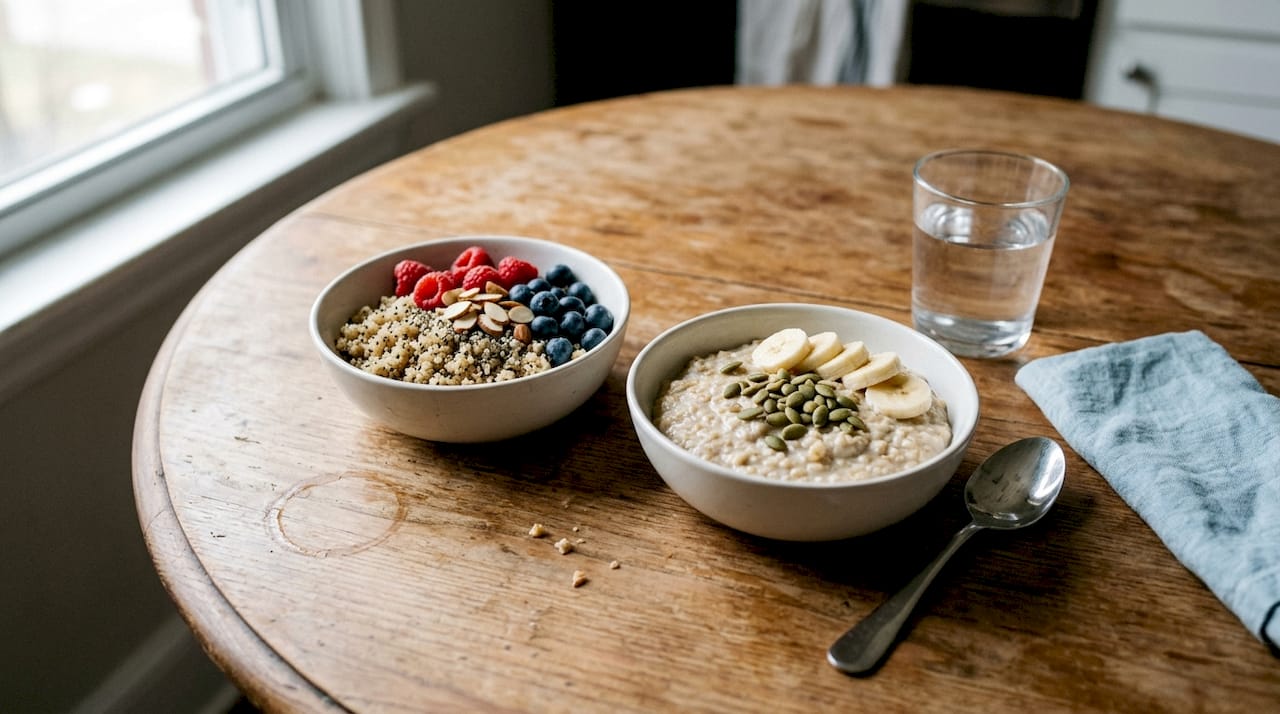
Exploring high protein porridge grains in more detail reveals how small changes to your grain base can shift the nutritional profile considerably. If you want a full breakdown of easy high protein breakfast ancient grains, the combinations are more varied than most people expect.
Choosing the right breakfast for your needs
Nutrition data is useful, but the best breakfast is the one you will actually eat consistently. Here is how to match these options to your specific goals.
- Gluten-free diet: The fruit and nut quinoa bowl and buckwheat smoothie bowl are both naturally gluten-free. Quinoa suits gluten-free diets and delivers complete amino acids for muscle health, making it an especially strong choice.
- Muscle building or post-workout recovery: Go for the high-protein vegan oatmeal. It is the only option here that consistently breaks the 20g protein barrier without supplementation.
- Weight management: Quinoa and chia porridge. The combination of protein and soluble fibre slows digestion and keeps you satisfied longer.
- Grab-and-go mornings: Crunchy banana granola stored in a jar with plant milk. Minimal prep, portable, and genuinely filling.
- Focused, sustained energy: The buckwheat smoothie bowl. Buckwheat has a low glycaemic index, meaning it releases energy slowly without the mid-morning slump.
Breakfasts combining 3+ protein sources deliver the best nutrition and satiety outcomes. Think of your bowl as a formula: one ancient grain base, one seed or nut source, and one protein booster such as pea protein or hemp powder.
Personalising your toppings is where the real fun begins. A spoonful of organic pecan butter adds healthy fats and a rich flavour. Pumpkin seeds bring zinc and magnesium. Freeze-dried berries add antioxidants without the prep.
Pro Tip: If mornings are rushed, try a fast high protein breakfast approach: soak your grains the night before, prep your toppings in small containers, and assemble in under two minutes when you wake up.
Our perspective: Why variety and prep matter more than chasing a single ‘superfood’
There is a pattern we notice repeatedly in UK wellness culture: someone discovers quinoa, or chia seeds, or hemp protein, and for a few weeks it appears in every meal. Then enthusiasm fades, the ingredient sits at the back of the cupboard, and breakfast reverts to toast.
The uncomfortable truth is that no single ingredient transforms your health. What does work is variety, consistency, and meals you genuinely enjoy eating. Prioritising variety in vegan breakfasts delivers more balanced nutrition than any one protein source alone. Rotating between quinoa, buckwheat, and oats across the week gives your body a broader range of amino acids, minerals, and phytonutrients than any single grain can provide.
Meal prep matters more than most nutrition advice acknowledges. A breakfast you can assemble in three minutes is one you will eat. A breakfast that requires 25 minutes of active cooking is one you will skip when life gets busy. Building easy nutritious breakfasts with ancient grains into your weekly routine is a habit, not a performance. Keep it simple, keep it varied, and trust that consistency beats perfection every time.
Try quality ancient grain breakfasts with Granavitalis
Inspired to power up your mornings? The ingredients make all the difference, and sourcing quality matters.
At Granavitalis, we have built our range around the same principles in this article: ancient grains, premium nuts and seeds, and clean plant proteins that genuinely perform. Our organic pecan butter is a brilliant protein-rich topping for any of the breakfasts above, and our nut and seed butter selection box is the perfect way to experiment with flavours and find your favourites. Browse the full Granavitalis shop and discover how straightforward it is to build a breakfast routine rooted in real nutrition.
Frequently asked questions
What is the highest protein plant-based breakfast?
Combining oatmeal with ancient grains and pea protein can offer over 22g protein per serving, making it one of the most effective high-protein vegan breakfast options available.
Which ancient grains are best for breakfast?
Quinoa, buckwheat, and kamut are the top choices. Quinoa and ancient grains provide high protein and quinoa is naturally suited to gluten-free diets, giving it an edge over wheat-based alternatives.
How can I make my plant-based breakfast more filling?
Mix three or more protein sources such as grains, nuts, and seeds in one bowl. 30g plant protein at breakfast matches animal protein for triggering satiety hormones, keeping hunger at bay until lunch.
Is it easy to get enough protein at breakfast on a vegan diet?
Yes, absolutely. By combining grains, seeds, nuts, and a plant protein powder, you can easily reach 20 to 30g protein per serving. Combining multiple plant sources yields a complete amino acid profile without any animal products.
Recommended
- Maximise breakfast protein for lasting energy and satiety – Granavitalis
- High fibre high protein breakfast: energy and gut health – Granavitalis
- Grain free breakfast ideas for energy and vitality in 2026 – Granavitalis
- Why eat high-protein breakfast for energy and recovery – Granavitalis
- Rezepte für ein gesundes und leckeres Frühstück – FITTASTE