
How to Make a High Protein Breakfast Without Eggs
Busy mornings often leave little time for experimenting with new breakfast ideas, especially when you want a nutritious, high-protein start without eggs. Choosing plant-based options packed with ancient grains and quality proteins can boost your energy and help support heart and digestive health. Discover how ancient grains and plant proteins come together to create balanced breakfasts that are both delicious and supportive of your wellness goals.
Table of Contents
- Step 1: Select Ancient Grains And Plant Proteins
- Step 2: Prepare Nutrient-Dense Bases And Add-Ins
- Step 3: Combine Ingredients For Balanced Texture And Flavour
- Step 4: Enhance With Mindful Toppings And Botanicals
- Step 5: Verify Protein Content And Enjoy With Purpose
Quick Summary
| Essential Insight | Detailed Explanation |
|---|---|
| 1. Choose diverse ancient grains | Opt for grains like quinoa and buckwheat for their complete proteins and unique health benefits, making breakfasts more nutritious. |
| 2. Combine plant proteins intelligently | Mix different plant protein sources to enhance amino acid profiles, improving overall protein quality in your breakfast. |
| 3. Layer toppings for nutrition | Use a variety of toppings such as seeds, spices, and berries to boost nutritional density and flavour in your meals. |
| 4. Track protein content meticulously | Weigh and calculate the protein content of your breakfast to ensure you meet your daily nutritional needs effectively. |
| 5. Experiment with textures and flavours | Create a satisfying meal experience by balancing creamy, crunchy, and aromatic elements in your breakfast dishes. |
Step 1: Select ancient grains and plant proteins
Creating a high-protein breakfast without eggs requires strategic selection of nutrient-dense ancient grains and powerful plant proteins. Understanding how to combine these ingredients will transform your morning meal into a nutritional powerhouse that supports sustained energy and overall wellness.
Ancient grains offer remarkable nutritional benefits that make them ideal protein alternatives. Wholegrains like spelt, buckwheat, and quinoa provide essential nutrients including fibre, vitamins, and minerals while supporting heart health and blood sugar regulation. These grains aren’t just nutritious - they’re delicious alternatives that bring complexity and depth to your breakfast.
When selecting plant proteins, consider these top options:
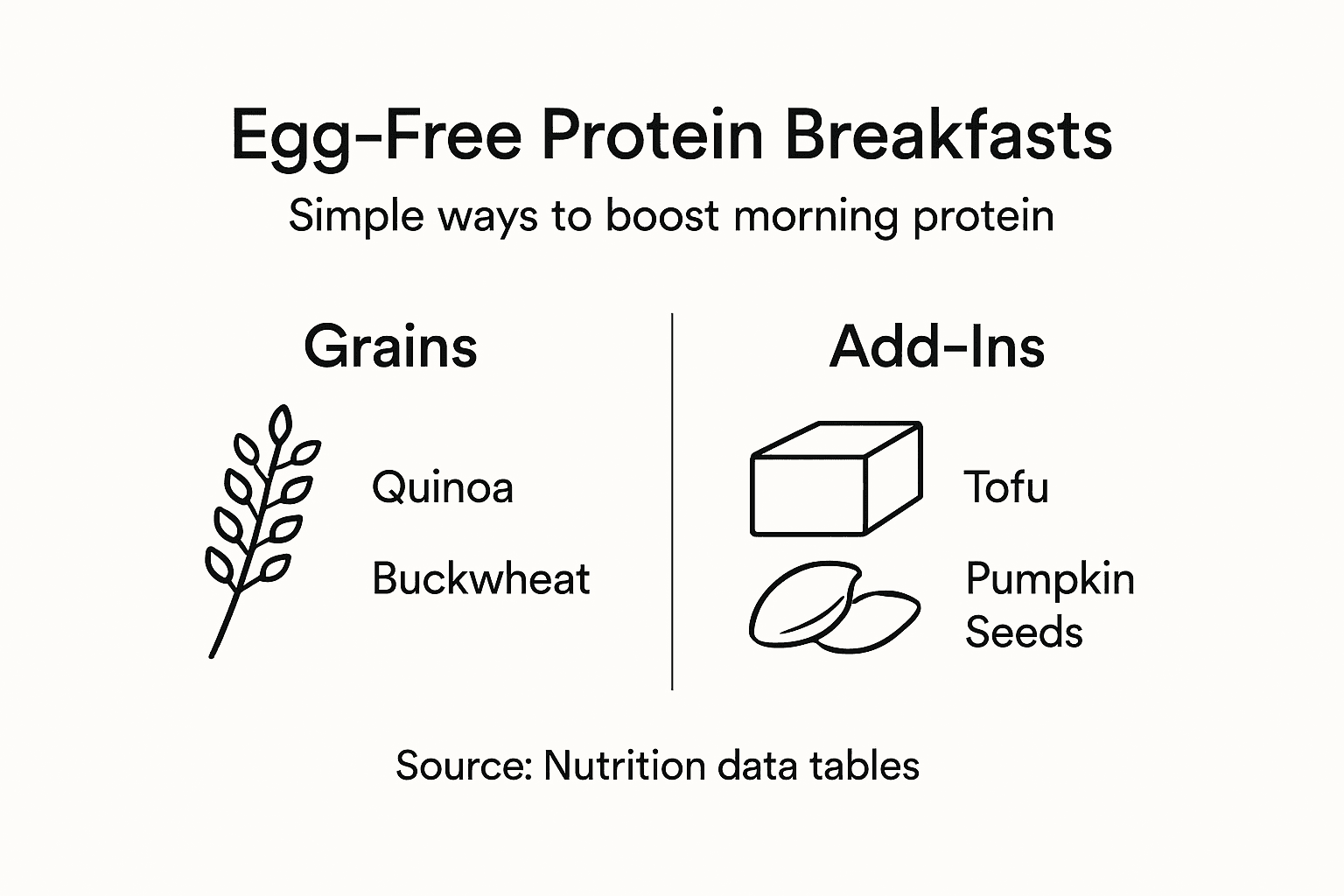
- Quinoa: A complete protein containing all nine essential amino acids
- Amaranth: High-protein grain with excellent mineral content
- Buckwheat: Protein-rich option with cardiovascular benefits
- Chia seeds: Packed with protein, omega-3 fatty acids, and fibre
- Hemp seeds: Offers balanced protein profile and essential nutrients
These ingredients work synergistically to create balanced, protein-rich breakfast options that support your nutritional goals. By choosing ancient cereals with unique health properties, you’re investing in both flavour and function.
Here’s a summary of key plant-based breakfast ingredients and their main nutritional advantages:
| Ingredient | Protein Quality | Unique Benefit |
|---|---|---|
| Quinoa | Complete amino acids | Supports muscle health |
| Buckwheat | Rich in lysine | Aids heart wellness |
| Chia seeds | High omega-3 fatty acids | Boosts satiety |
| Tofu | Contains isoflavones | Supports bone strength |
| Lentils | Good fibre source | Regulates digestion |
Pro tip: Combine multiple protein sources to create a more complete amino acid profile and enhance overall nutritional value.
Step 2: Prepare nutrient-dense bases and add-ins
Crafting a high-protein breakfast without eggs requires thoughtful selection and preparation of plant-based ingredients that deliver robust nutritional value. By understanding how to combine nutrient-dense bases with strategic add-ins, you can transform simple ingredients into a satisfying morning meal.
Plant proteins from beans, lentils, and soy products provide an excellent foundation for egg-free breakfasts. These ingredients not only deliver substantial protein but also offer essential micronutrients and fibre. Consider these versatile base options:
- Tofu scramble with turmeric and herbs
- Chia seed pudding with plant milk
- Overnight oats with protein powder
- Lentil porridge with warming spices
- Quinoa breakfast bowl with roasted nuts
To enhance your base, incorporate powerful add-ins that boost protein and nutritional complexity:
- Nuts and seeds: Almonds, pumpkin seeds, hemp seeds
- Protein powders: Pea, hemp, or brown rice protein
- Legume sprouts: Mung bean or chickpea sprouts
- Nutritional yeast: Adds cheesy flavour and B-vitamins
- Nut butters: Almond, cashew, or tahini
Combining diverse plant proteins ensures a complete amino acid profile, maximising nutritional benefits.
Pro tip: Experiment with different protein combinations to discover your perfect personalised breakfast mixture.
Step 3: Combine ingredients for balanced texture and flavour
Crafting a satisfying high-protein breakfast is an art of balancing textures, flavours, and nutritional profiles. Strategic ingredient combinations can transform simple plant-based ingredients into a delightful morning meal that tantalises your taste buds and nourishes your body.
To create a harmonious breakfast experience, consider these key principles of texture and flavour pairing:
- Creamy foundations: Use chia seeds, silken tofu, or plant yoghurts
- Crunchy elements: Add toasted nuts, seeds, or granola
- Soft components: Incorporate mashed fruits or cooked legumes
- Aromatic boosters: Sprinkle herbs, spices, or citrus zest
- Umami undertones: Include nutritional yeast or miso paste
Mixing complementary ingredients ensures a multisensory eating experience. Try combining:
- Smooth chia pudding with crunchy almonds
- Soft tofu scramble with crispy roasted seeds
- Creamy quinoa porridge with fresh berry compote
- Lentil base topped with herb-infused nut crumble
Varied textures and flavour profiles transform a simple breakfast into a culinary adventure.
Pro tip: Experiment with temperature contrasts by serving warm bases with cool toppings to elevate your breakfast experience.

Step 4: Enhance with mindful toppings and botanicals
Transforming a basic protein breakfast into a vibrant, nutritious experience requires thoughtful selection of toppings and botanical accents. Strategic botanical additions can elevate both flavour and health benefits of your morning meal, turning a simple dish into a culinary masterpiece.
Consider these powerful botanical and topping combinations that deliver exceptional nutritional punch:
- Warming spices: Cinnamon, turmeric, ginger
- Antioxidant boosters: Dried berries, goji, acai powder
- Omega-rich seeds: Chia, flaxseed, hemp hearts
- Crunchy elements: Toasted coconut flakes, pumpkin seeds
- Herbal enhancers: Fresh mint, basil, thyme
Each topping offers unique benefits beyond simple flavour:
- Cinnamon reduces inflammation
- Chia seeds provide sustained energy
- Goji berries support immune function
- Hemp hearts deliver complete protein
- Turmeric offers powerful antioxidant properties
Mindful toppings transform nutrition from mundane to extraordinary.
Pro tip: Layer your toppings from lightest to heaviest to create visual appeal and ensure even distribution of flavours.
Step 5: Verify protein content and enjoy with purpose
Ensuring your high-protein breakfast delivers optimal nutrition requires mindful tracking and understanding of your dietary protein sources. Monitoring protein content helps support muscle health and sustained energy through strategic ingredient selection and portion awareness.
To accurately verify your protein intake, consider these protein-tracking strategies:
- Weigh ingredients: Use kitchen scales for precision
- Reference nutritional charts: Understand protein density per ingredient
- Calculate total protein: Add up protein from all breakfast components
- Consider protein quality: Aim for complete amino acid profiles
- Track serving sizes: Understand recommended daily protein requirements
Typical protein content for plant-based ingredients includes:
The following table compares common protein tracking strategies and their advantages:
| Method | Description | Main Benefit |
|---|---|---|
| Weighing ingredients | Use kitchen scales | Accurate protein measurement |
| Nutritional charts | Consult trusted food references | Quick look-up of values |
| Calculating total intake | Add all protein sources | Ensures sufficient intake |
| Portion awareness | Adjust servings to personal needs | Supports balanced nutrition |
- Cooked lentils: 7.6g per 100g
- Tofu: 8.1g per 100g
- Almonds: 21.2g per 100g
- Chia seeds: 16.5g per 100g
- Quinoa: 4.4g per 100g
Mindful eating transforms nutrition from mere sustenance to purposeful nourishment.
Pro tip: Create a weekly protein tracking log to understand your nutritional patterns and adjust ingredients accordingly.
Elevate Your High-Protein Breakfasts with Granavitalis
Struggling to create rich, egg-free breakfasts that deliver complete protein and vibrant nutrition? This article highlights the challenge of combining ancient grains and plant-based proteins to build balanced meals packed with energy and wellbeing. If your goal is to enjoy breakfast options that provide sustained fuel, support muscle health, and awaken your taste buds through mindful ingredient pairing, Granavitalis offers the perfect solution.
Discover our range of Vegan Protein Powders – Granavitalis designed to complement ancient grains and boost your morning meals naturally.

Visit Granavitalis today to explore thoughtfully sourced nutrients that honour heritage ingredients with clean performance. Take the step towards purposeful breakfasts crafted for strength, recovery and lasting vitality. Your journey to real-food empowerment starts here.
Frequently Asked Questions
How can I combine ancient grains and plant proteins for a high-protein breakfast?
To combine ancient grains and plant proteins, start by selecting grains like quinoa or buckwheat and pairing them with protein-rich ingredients such as lentils or chia seeds. Mix these components to create a balanced breakfast that provides substantial protein and essential nutrients.
What are some examples of nutrient-dense bases for egg-free breakfasts?
Nutrient-dense bases for egg-free breakfasts include tofu scramble, chia seed pudding, overnight oats, and lentil porridge. Choose one of these bases to kickstart your morning with a protein-rich meal.
How can I enhance the texture and flavour of my high-protein breakfast?
To enhance texture and flavour, incorporate creamy foundations like chia seeds, crunchy elements like nuts, and aromatic boosters such as herbs and spices. Experiment with combinations like a smooth chia pudding topped with crunchy almonds to create an enjoyable breakfast experience.
What mindful toppings can I add to increase the nutritional value of my breakfast?
To increase nutritional value, consider toppings like warming spices (cinnamon, turmeric), omega-rich seeds (chia, flaxseed), and antioxidant boosters (dried berries, acai powder). Layer these toppings from lightest to heaviest for both health benefits and visual appeal.
How can I accurately verify the protein content of my breakfast?
Accurately verify protein content by weighing your ingredients and consulting nutritional charts for each component. Calculate the total protein by adding up the protein content from all ingredients, aiming for a balanced intake to meet your dietary goals.
What are some common protein tracking strategies I can use?
Common protein tracking strategies include weighing ingredients for precision, referencing nutritional charts for quick value look-ups, and calculating total protein intake from all components of your breakfast. Implementing these strategies will help ensure sufficient protein consumption in your daily diet.
Recommended
- High Protein Breakfast: Complete Guide to Lasting Energy – Granavitalis
- Fast High Protein Breakfast: Quick, Nutritious Steps for You – Granavitalis
- Cheap High Protein Breakfast: Easy Vegan UK Guide – Granavitalis
- Master High Protein Gluten Free Breakfasts for Active Days – Granavitalis
- High Protein Breakfast,Healthiest Ideas 4 Powerful Mornings