
Healthy breakfasts: 20 ideas for every morning
The best healthy breakfasts combine a slow-release carbohydrate, a protein source, fibre or fruit and veg, and a small amount of healthy fat. That four-part formula, aligned with the Eatwell Guide, is the fastest way to pick something that keeps you full, steady, and focused until lunch.
Six options you can reach for right now:
- Porridge with berries and low-fat yoghurt (5 min) — slow-release oats, protein, fibre
- Overnight oats (0 min in the morning) — prep the night before, grab and go
- Scrambled eggs on wholegrain toast with grilled tomato (8 min) — protein-rich, fibre-boosted
- Greek-style yoghurt with seeds and fruit (2 min) — calcium, protein, healthy fats
- Beans on wholemeal toast (5 min) — plant protein, fibre, complex carbs
- High-protein smoothie (3 min) — blend oats, plant protein, banana and milk; keep to 150ml if using fruit juice
Pro Tip: Thaw frozen berries in the fridge the night before so they are ready to top porridge or yoghurt without any extra effort in the morning — a small habit that makes a nutritious breakfast far more likely to happen.
Key takeaways
The most reliable healthy breakfast follows one formula: a slow-release carbohydrate base, a protein source, fibre from fruit or veg, and a small amount of healthy fat, kept to roughly 400 kcal per meal.
| Point | Details |
|---|---|
| The core formula | Combine slow-release carbs + protein + fibre/produce + healthy fat at every breakfast. |
| Juice and smoothie limit | Keep fruit juice and smoothies to a combined 150ml per day per NHS Eatwell guidance. |
| Avoid processed meats | Swap sausages and bacon for eggs, beans or an extra portion of veg to cut saturated fat. |
| Batch prep reduces friction | Overnight oats, baked oats and egg muffins take minutes to prep and last 3 days in the fridge. |
| Granavitalis pantry staples | Pecan butter and seed blends slot directly into the base-protein-topping formula for easy variety. |
Table of Contents
- Healthy breakfasts you can make in under 10 minutes
- Warm weekend breakfasts worth the extra time
- High-protein breakfasts that actually keep you full
- Plant-based breakfast ideas that hit the same formula
- Make-ahead breakfasts that cut morning effort
- What actually makes a breakfast healthy?
- How to build a nutrient-dense breakfast in three steps
- Budget-friendly healthy breakfasts
- Seasonal and locally available UK ingredients for breakfasts
- Why variety matters more than the perfect breakfast
- Granavitalis makes the formula easier to follow
- Sources
Healthy breakfasts you can make in under 10 minutes
Busy mornings are where good intentions collapse. These options are genuinely fast, no specialist equipment needed.
No-cook (under 3 minutes)
- Yoghurt bowl (2 min): 150g Greek-style yoghurt, a handful of oats, berries, a teaspoon of nut butter. Protein from yoghurt, slow-release carbs from oats.
- Nut-butter banana toast (2 min): two slices of seeded wholegrain bread, a tablespoon of almond or pecan butter, half a banana. Healthy fats, potassium, fibre.
- Overnight oats (0 min): rolled oats soaked in milk or plant milk overnight with chia seeds and fruit. Prep takes 3 minutes the night before.
Quick-cook (5–7 minutes)
- Porridge (5 min): 40g rolled oats, 250ml semi-skimmed or oat milk, topped with defrosted berries. The NHS porridge recipe gives 8.4g protein and 3.7g fibre per serving.
- Smashed avocado on seeded toast (5 min): half an avocado, lemon juice, chilli flakes, two slices of wholegrain toast. Monounsaturated fats, fibre, B vitamins.
- Egg and spinach wrap (7 min): one egg scrambled with a handful of spinach, rolled in a small wholegrain wrap. Protein, iron, slow-release carbs.
Microwave-friendly (under 5 minutes)
- Mug omelette (3 min): two eggs, a splash of milk, diced pepper and mushroom, whisked and microwaved in a large mug for 90 seconds. Budget-friendly and child-friendly.
- Microwave porridge (2 min): 40g oats, 300ml milk, 2 minutes on high, stir halfway. Top with a teaspoon of honey and seeds.
Simple smoothie (3 min): blend 150ml oat milk, half a banana, a tablespoon of oats, a handful of spinach and a scoop of plant protein. If you add fruit juice, keep the total juice portion to 150ml across the day per Eatwell Guide guidance.
Warm weekend breakfasts worth the extra time
A cooked breakfast is not automatically unhealthy. The British Heart Foundation is clear: cooking method and ingredient choice set the health profile, not the format itself. Grill or poach rather than fry, and skip the processed meats.
Healthier full English (20 min): two poached eggs, grilled lean back bacon (one rasher), grilled tomatoes, sautéed mushrooms, baked beans, one slice of wholegrain toast. Roughly 400–450 kcal, high protein, lower saturated fat than a traditional fry-up. The British Dietetic Association advises avoiding sausages and processed meats, so swap them for an extra egg or a portion of beans.
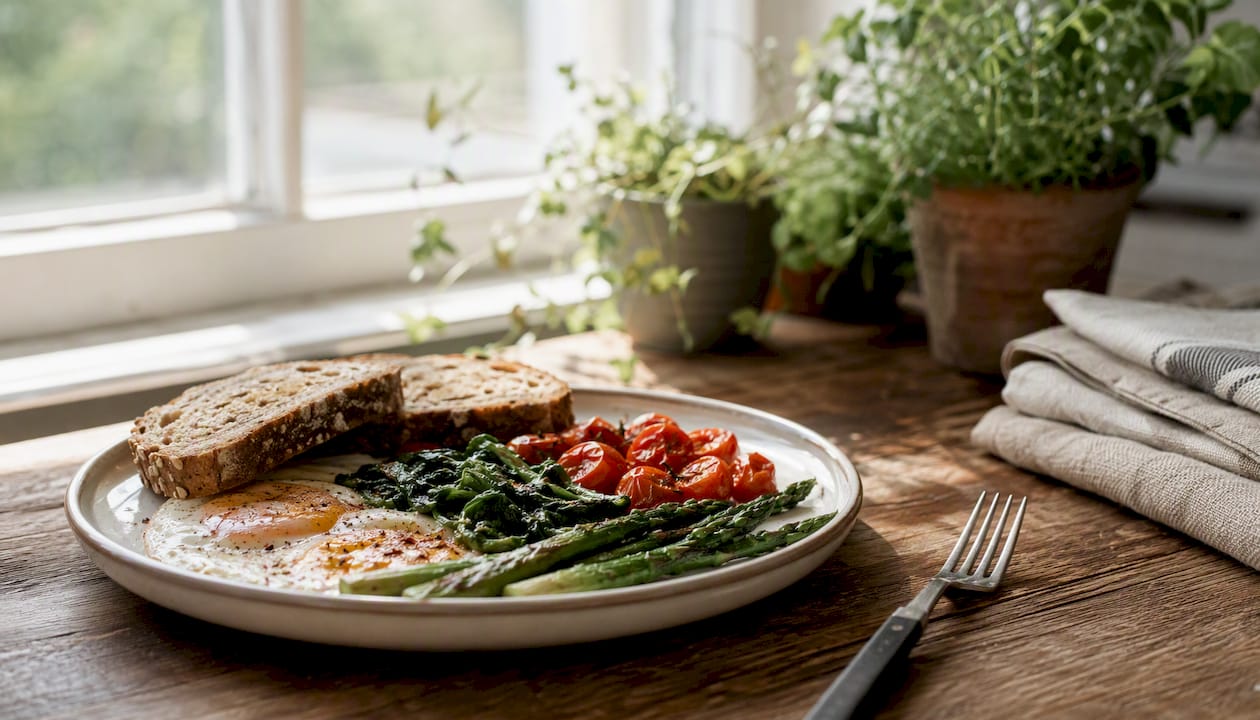
Baked oats (25 min): 80g oats, one egg, 150ml milk, mashed banana, a teaspoon of cinnamon, baked at 180°C for 20 minutes. Slice into portions and refrigerate for the week.
Savoury frittata (20 min): four eggs, diced courgette, cherry tomatoes, feta, baked in a small ovenproof pan. High protein, good for sharing.
Wholegrain pancakes (15 min): 100g wholegrain or spelt flour, one egg, 150ml milk, cooked in a dry non-stick pan. Top with Greek yoghurt and fresh berries rather than syrup.
Pro Tip: For scrambled eggs, pull the pan off the heat while the eggs are still slightly runny. Residual heat finishes cooking over 60–120 seconds and prevents the rubbery texture that puts people off — a tip straight from the NHS scrambled egg recipe.
Seasonal produce makes a real difference here. Ripe tomatoes in summer, mushrooms in autumn, and blood oranges in winter all lift a cooked breakfast without adding processed ingredients. Pairing with seasonal UK produce keeps costs down and flavour up.
High-protein breakfasts that actually keep you full
Protein slows gastric emptying, which means hunger signals arrive later. A breakfast with 20–30g of protein tends to carry most people comfortably to lunch without a mid-morning slump. Here are six practical options with approximate protein ranges:
- Eggs + beans + wholegrain toast: two eggs plus half a tin of baked beans on two slices of wholegrain toast — roughly 25–30g protein
- Greek-style yoghurt with seed blend and pecan butter: 200g yoghurt, a tablespoon of mixed seeds, a teaspoon of nut butter — roughly 20–22g protein
- Tofu scramble with wholegrain flatbread: 150g firm tofu, turmeric, nutritional yeast, one flatbread — roughly 18–22g protein; see high-protein plant builds for portioning detail
- Cottage cheese and fruit: 200g low-fat cottage cheese, sliced strawberries or peach, a sprinkle of oats — roughly 22–25g protein
- Protein porridge: 50g oats, 250ml milk, one scoop of plant protein powder, topped with seeds — roughly 25–28g protein
- Smoked salmon and scrambled eggs on rye: two eggs, 50g smoked salmon, one slice of rye bread — roughly 28–32g protein
Pro Tip: A tablespoon of hemp seeds stirred into porridge or yoghurt adds roughly 5g of complete plant protein with almost no change to flavour or texture. It is one of the easiest protein boosts you can make without buying a separate supplement.
Plant-based breakfast ideas that hit the same formula
Plant-first breakfasts can meet the slow-release carb + protein + fibre formula just as well as animal-based ones, provided you choose your sources deliberately.
- Overnight chia oats: 40g oats, 2 tbsp chia seeds, 250ml oat milk, a tablespoon of almond butter. Soak overnight. Protein from chia and nut butter, omega-3s, slow-release carbs.
- Savoury porridge with beans and roasted veg: cook oats in vegetable stock, top with cannellini beans, roasted cherry tomatoes and a drizzle of olive oil. Surprisingly filling.
- Tofu scramble: crumble firm tofu into a pan with turmeric, garlic, spinach and nutritional yeast. Serve on wholegrain toast. For egg-free builds, see high-protein breakfast without eggs.
- Tempeh breakfast burrito: sliced tempeh, black beans, salsa and avocado in a wholegrain wrap. Fermented tempeh adds gut-friendly bacteria alongside protein.
- Nut-and-seed granola with fortified plant milk: homemade granola (oats, mixed nuts, seeds, a little maple syrup) with 200ml fortified oat or soya milk. Fortified milks provide calcium and B12 to match dairy.
- Smoothie bowl: blend frozen banana, spinach, plant protein and oat milk to a thick consistency; top with seeds, granola and fresh fruit. Keep any juice addition to 150ml.
- Flax-egg pancakes: replace one egg with one tablespoon of ground flaxseed mixed with three tablespoons of water. Works in most pancake recipes and adds omega-3 fatty acids.
For dairy swaps: oat milk is the closest in texture for porridge; soya milk has the highest protein content among plant milks; rice milk suits nut-free households. A guide to plant-based active mornings covers portioning in more detail.
Make-ahead breakfasts that cut morning effort
Batch prep removes the decision entirely. These five formats store well and reheat safely.
- Overnight oats jars: combine 40g oats, 200ml milk, 1 tbsp chia seeds and fruit in a jar. Keeps for 3 days in the fridge. Grab and go.
- Baked oats (batch): double the recipe above, bake in a tray, slice into six portions, wrap individually and freeze. Reheat from frozen at 180°C for 12–15 minutes or microwave for 2 minutes.
- Freezer breakfast burritos: scramble eggs with black beans, peppers and cheese, roll in wholegrain wraps, wrap in foil and freeze. Reheat in the oven (20 min from frozen) or microwave (3 min). Consume within 1 month.
- Batch egg muffins: whisk six eggs with diced veg and cheese, pour into a silicone muffin tray, bake at 180°C for 18–20 minutes. Keeps 3 days in the fridge. Two muffins make a portion.
- Homemade granola: toss 300g oats with 3 tbsp mixed seeds, 2 tbsp coconut oil and 2 tbsp maple syrup; bake at 160°C for 25 minutes, stirring once. Stores in an airtight jar for up to 3 weeks.
A few storage rules worth keeping:
- Cool cooked items fully before refrigerating or freezing
- Label with the date; discard egg-based items after 3 days in the fridge
- Portion into single servings before freezing so you only defrost what you need
- Thaw frozen berries overnight in the fridge so they are ready to top porridge or yoghurt without extra steps
What actually makes a breakfast healthy?
The core formula is simple: slow-release carbohydrate + protein + fibre + a small amount of healthy fat + at least one portion of fruit or veg. Government guidance frames the Eatwell Guide as proportions across the whole day, with breakfast contributing roughly 1.7 MJ (approximately 400 kcal) for a typical adult.
| Reference point | Value | Source |
|---|---|---|
| Typical breakfast energy guide | ~400 kcal / 1.7 MJ | UK Government Eatwell guidance |
| Fruit juice / smoothie daily limit | 150ml (counts as one of your 5-a-day) | NHS Eatwell Guide |
| Daily fruit and veg target | 5 portions | NHS / Eatwell Guide |
What to avoid or swap:
- Processed meats (sausages, bacon, salami): high in saturated fat and salt; the British Dietetic Association recommends whole, unprocessed alternatives
- Sugary cereals and cereal bars: compare per 100g rather than per serving, as BBC Food research shows people typically pour significantly more than the suggested serving size
- High-added-sugar yoghurts should be limited; plain varieties with added fruit are preferable.
- Fruit juice beyond 150ml: the free-sugar content rises quickly past that point
Portion adjustments by group:
- Children (5–11): smaller portions, same formula; a child’s portion of porridge is roughly 30g oats
- Active adults: increase the protein and carbohydrate portions; a 30g protein target is reasonable before or after training
- Those reducing calories: keep protein high (it preserves satiety), reduce added fats and choose lower-sugar fruit
How to build a nutrient-dense breakfast in three steps
A repeatable build removes the guesswork. The formula: base + protein + topping.
Step 1 — Base (slow-release carbs): wholegrain oats, seeded wholegrain bread, ancient grain flour pancakes, or a wholegrain wrap.
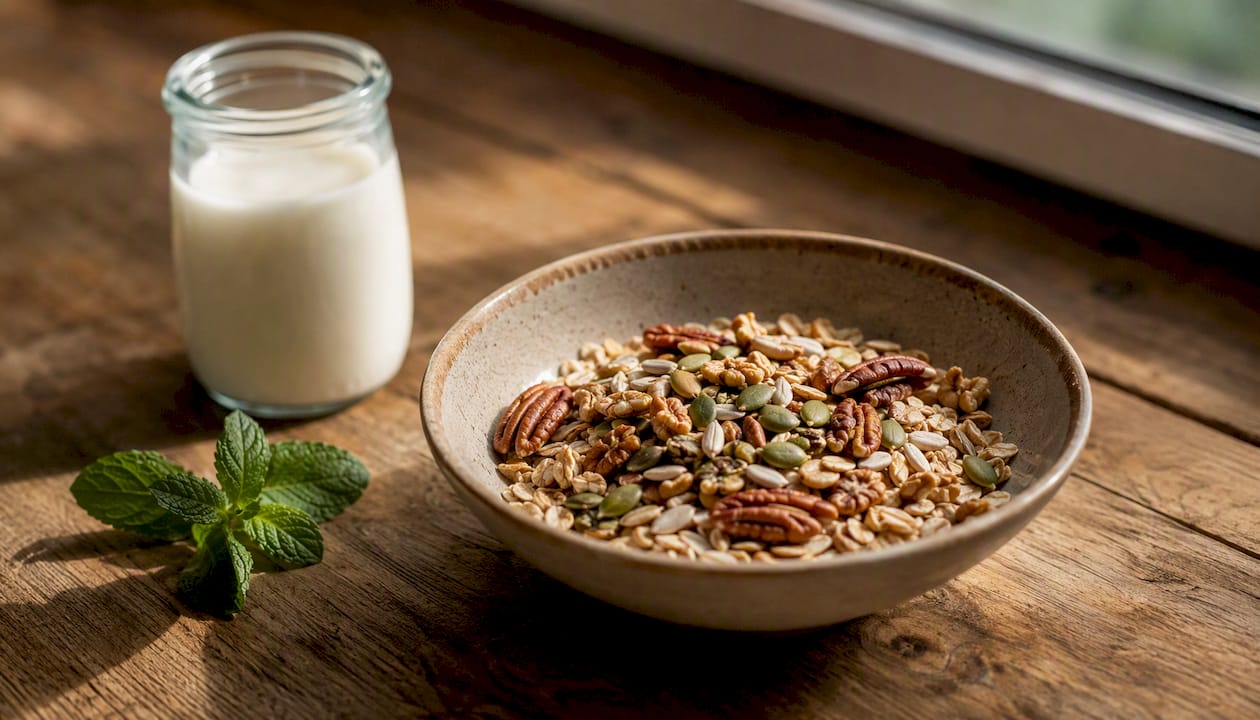
Step 2 — Protein: eggs, Greek-style yoghurt, legumes, tofu, cottage cheese, or a plant protein powder.
Step 3 — Topping (fibre + healthy fat): fresh or frozen fruit, roasted veg, mixed seeds, or a nut butter.
Four example builds:
- Quick porridge: 40g Granavitalis ancient grain porridge mix + 250ml oat milk + a tablespoon of pecan butter + defrosted blueberries
- Savoury toast stack: two slices of seeded wholegrain bread + two poached eggs + sliced avocado + cherry tomatoes
- Protein smoothie bowl: frozen banana + oat milk + one scoop plant protein, blended thick, topped with seeds and granola
- Make-ahead baked oats: wholegrain oat base baked with egg and banana, portioned and frozen
Rotating your toppings across the week matters more than most people realise. BBC Food’s reporting on gut health notes that variety in breakfast ingredients supports a more diverse gut microbiome than repeating a single dish daily. Swap between seed types (pumpkin, sunflower, hemp, flax), alternate your fruit, and try different grain bases across the week. For seed-based topping ideas, Wild Foodz has practical meal suggestions worth bookmarking.
Pro Tip: If you have a nut allergy in the household, sunflower seed butter is a direct swap for nut butter in almost every recipe and carries a similar fat and protein profile.
Budget-friendly healthy breakfasts
Eating well at breakfast does not require expensive ingredients. Oats are consistently one of the cheapest per-serving foods in UK supermarkets, and a 1kg bag covers roughly 25 portions. Eggs, tinned beans, frozen spinach and frozen berries are all under £2 per pack and cover multiple meals.
The most cost-effective approach is to build around a base of oats or wholegrain bread, add eggs or tinned legumes for protein, and use frozen fruit rather than fresh. A cheap high-protein vegan breakfast guide covers specific UK supermarket options and portion costs in detail.
Homemade granola costs a fraction of branded versions and takes 30 minutes once a fortnight. Batch egg muffins work out at roughly 30–40p per muffin depending on your veg choices. Overnight oats in a jar cost less than most packaged cereal when you factor in the protein content per serving.
Seasonal and locally available UK ingredients for breakfasts
Eating with the seasons in the UK keeps costs lower and flavour higher. A few worth knowing by season:
Spring (March–May): rhubarb (stew with a little honey and spoon over porridge), asparagus (pairs well with a frittata), spring onions.
Summer (June–August): strawberries, raspberries, blueberries and cherries are all at their cheapest and best. Use fresh on yoghurt bowls or blend into smoothies.
Autumn (September–November): apples and pears from UK orchards, blackberries (often free from hedgerows), pumpkin and squash for savoury frittatas.
Winter (December–February): blood oranges, clementines, leeks, kale and cavolo nero. Kale wilted into a mug omelette or egg muffin adds iron and vitamin C.
Buying from a local market or farm shop often means produce picked within 24–48 hours, which preserves more water-soluble vitamins than supermarket supply chains allow for. It also tends to be cheaper at the end of the market day.
Why variety matters more than the perfect breakfast
The idea that you should find one healthy breakfast and repeat it daily is one of the more persistent myths in nutrition. BBC Food’s reporting makes the case clearly: variety in breakfast ingredients supports a more diverse gut microbiome, and diversity is what drives the real long-term benefit, not any single dish.
Timing is more flexible than most people assume. Skipping breakfast is not automatically harmful for adults who are not hungry in the morning, provided the rest of the day’s eating is balanced. A small, protein-led breakfast is often more useful than a large one eaten in a rush. The Eatwell Guide frames these as proportions across the day, not rigid per-meal rules.
Where the conventional wisdom does get it right: processed meats and high-sugar cereals are genuinely worth avoiding, not because of a single meal but because they tend to crowd out better options over time. The practical goal is not perfection at 7 AM. It is building a short repertoire of breakfasts you actually enjoy, that take less than 10 minutes on most days, and that rotate enough to keep your gut microbiome interested.
If you have a specific health condition, are managing weight under medical supervision, or are adapting breakfast for a child with allergies, a registered dietitian can give you a plan tailored to your situation. The British Dietetic Association’s healthy breakfast resource is a good starting point for finding evidence-based guidance.
Granavitalis makes the formula easier to follow

The three-step build (base + protein + topping) works best when your pantry already has the right ingredients. Granavitalis sources ancient grain flours, premium nut butters and seed blends specifically for this kind of everyday, wholefood eating.
A spoonful of raw organic pecan butter stirred into porridge or spread on seeded toast adds healthy fats and a natural richness that makes the meal genuinely satisfying. The nut and seed butter selection box lets you rotate between almond, pecan and other varieties across the week, which is exactly the kind of ingredient variety that supports microbiome diversity. Both ship across the UK. Browse the range at Granavitalis and pick the pantry pairing that fits your morning routine.
Sources
- The eatwell guide | NHS
- Healthy breakfast | British Dietetic Association
- Are we getting breakfast all wrong? | BBC Food
- A quick guide to government healthy eating update | GOV.UK
This article is general information, not a substitute for advice from a qualified doctor. Consult a qualified healthcare professional about your own circumstances before acting on anything here.