
Cheap High Protein Breakfast: Easy Vegan UK Guide
Surprisingly, more than half of British adults struggle to find affordable high-protein vegan options for breakfast that do not compromise nutrition or taste. For many health-conscious individuals in the UK, balancing protein intake with a clean eating lifestyle can seem both costly and confusing. This guide uncovers smart, accessible ways to power your morning using plant-based staples, ancient grains, and savoury recipes that fit both your values and your budget.
Table of Contents
- Step 1: Gather Affordable Plant-Based Protein Sources
- Step 2: Select Ancient Grains, Nuts, and Seeds for Variety
- Step 3: Prepare Ingredients for Optimal Flavour and Nutrition
- Step 4: Create Quick High Protein Breakfast Recipes
- Step 5: Verify Nutritional Balance and Cost-Effectiveness
Quick Summary
| Key Message | Explanation |
|---|---|
| 1. Focus on affordable legumes | Dried beans, lentils, and chickpeas are economical and protein-rich staples to include in your pantry. |
| 2. Incorporate ancient grains and seeds | Quinoa, amaranth, chia, and pumpkin seeds provide diverse nutrition and high protein for breakfast. |
| 3. Use effective preparation techniques | Properly marinate and cook ingredients to enhance flavours, nutrition, and food safety. |
| 4. Create quick, nutrient-dense recipes | Prepare recipes like tofu scramble and overnight oats to save time while ensuring protein intake. |
| 5. Assess nutritional balance and costs | Track ingredient costs and nutritional profiles to maintain a healthy, budget-friendly breakfast plan. |
Step 1: Gather affordable plant-based protein sources
Building a budget-friendly vegan protein pantry requires strategic selection of nutrient-dense ingredients that pack protein without draining your wallet. Your mission is to discover cost-effective plant-based protein sources that will transform your morning meals while keeping expenses low.
Start by focusing on staple legumes like dried beans, lentils, and chickpeas which offer exceptional protein content at minimal prices. UK governmental research highlights these plant proteins as sustainable and economically attractive alternatives for supporting dietary requirements. Bulk purchasing from local markets or online wholesalers can dramatically reduce your costs consider buying 1kg bags of dried pulses which typically cost under £2 and provide weeks of protein-rich meals.
Expand your protein repertoire with affordable grains like oats, quinoa, and brown rice. These versatile ingredients not only provide protein but also offer complex carbohydrates for sustained energy. [Exploring diverse plant-based protein sources can help you create varied and nutritious breakfast options]. Frozen edamame, tinned black beans, and value-brand tofu are additional budget-friendly protein sources that can be quickly incorporated into morning meals.
Practical advice: Stock your pantry with a rotating selection of affordable protein sources and buy in bulk during sales to maximise savings while maintaining nutritional diversity.
Here is a comparison of common affordable vegan breakfast protein sources by typical cost and nutritional value:
| Source | Typical Cost (per 1kg) | Protein Content (per 100g) | Bonus Nutrition |
|---|---|---|---|
| Dried Lentils | £1.70 | 9g | High in iron and fibre |
| Rolled Oats | £1.20 | 10g | Slow-release carbohydrates |
| Tinned Chickpeas | £0.55 (400g tin) | 7g | Good folate source |
| Value-brand Tofu | £1.30 (400g block) | 13g | Contains calcium |
| Frozen Edamame | £2.00 | 12g | Rich in vitamin K |
Step 2: Select ancient grains, nuts, and seeds for variety
Unlocking the protein potential of your vegan breakfast means exploring a world of nutrient-dense ancient grains, nuts, and seeds that bring both flavour and nutritional power. Your goal is to create a diverse protein palette that keeps meals interesting and your body well-nourished.

Ancient grains represent a nutritional powerhouse with remarkable protein profiles, offering proteins packed with essential amino acids and additional health benefits. Quinoa, amaranth, and teff stand out as complete protein sources that can transform your morning meals. These grains are not just protein sources but nutritional superstars quinoa provides all nine essential amino acids, while amaranth offers impressive mineral content. [Exploring methods to incorporate ancient grains naturally can help you diversify your breakfast strategy].
When selecting nuts and seeds, prioritise options like almonds, chia seeds, hemp seeds, and pumpkin seeds. These compact protein sources deliver healthy fats, minerals, and sustained energy. Aim to mix raw and toasted varieties to add textural interest sprinkle chia seeds over porridge, blend hemp seeds into smoothies, or create overnight oats with a generous handful of chopped nuts.
Practical advice: Rotate your grain, nut, and seed selections weekly to ensure nutritional variety and prevent flavour fatigue.
This summary presents key ancient grains, nuts, and seeds for breakfast diversity and their notable benefits:
| Ingredient | Protein (per 30g) | Unique Benefit | Versatile Use |
|---|---|---|---|
| Quinoa | 4g | Complete protein | Porridge or breakfast bowls |
| Amaranth | 4g | High in minerals | Hot cereal, muesli |
| Chia Seeds | 5g | Rich in Omega-3 | Puddings, oat toppings |
| Almonds | 6g | Vitamin E, healthy fats | Overnight oats, smoothies |
| Pumpkin Seeds | 8g | High in magnesium | Toasted over porridge |
Step 3: Prepare ingredients for optimal flavour and nutrition
Preparing plant-based breakfast ingredients requires thoughtful techniques that maximise flavour, nutrition, and food safety. Your mission is to transform raw ingredients into delicious protein-rich morning meals that tantalise your taste buds and nourish your body.
National Occupational Standards highlight crucial preparation techniques for plant-based ingredients, emphasising the importance of proper defrosting, marinating, and cooking methods. For tofu and legumes, press and drain thoroughly to remove excess moisture this helps achieve a firmer texture and allows marinades to penetrate more effectively. Consider creating flavour bases with tamari, nutritional yeast, smoked paprika, or herbs to infuse your ingredients with depth and complexity. [Learn how to add more protein to porridge naturally to enhance your morning meal].
Pay close attention to storage and cross-contamination prevention. Use separate chopping boards for plant-based ingredients, wash equipment thoroughly between uses, and store proteins like nuts, seeds, and plant milks in cool dark spaces. Toasting nuts and seeds before use can unlock deeper flavours and enhance nutritional bioavailability simply dry roast in a pan for 3 to 5 minutes until they release a gentle aroma.
Practical advice: Invest in airtight glass containers and label them with purchase dates to track ingredient freshness and prevent food waste.
Step 4: Create quick high protein breakfast recipes
Mastering rapid protein-packed vegan breakfasts means transforming simple ingredients into nutritious morning meals that fuel your day without consuming hours in the kitchen. Your goal is crafting delicious recipes that deliver maximum nutrition in minimal time.
Quick plant-based breakfast recipes offer an impressive range of protein-dense options delivering between 8 to 19 grams of protein per serving. Start with foundational recipes like tofu scramble whisk firm tofu with turmeric, nutritional yeast, and black salt for an eggy flavour profile that takes less than 10 minutes to prepare. Chickpea frittata muffins offer another speedy solution blend chickpea flour with vegetables and spices, then bake in muffin tins for grab-and-go protein hits. [Discover protein-rich breakfast strategies for the UK to diversify your morning nutrition].
Overnight preparation can be a game changer for busy mornings. Chia seed puddings blended with plant milk and protein powder create a creamy breakfast that sets while you sleep. Peanut butter overnight oats mixed with hemp seeds provide sustained energy simply combine rolled oats, plant milk, chia seeds, and a generous spoonful of peanut butter in a jar before bedtime. For maximum convenience, batch prepare these recipes during the weekend to streamline your weekday mornings.
Practical advice: Invest in clear glass containers with tight lids to store multiple breakfast portions this saves time and keeps ingredients fresh for quick morning assembly.
Step 5: Verify nutritional balance and cost-effectiveness
Evaluating the nutritional integrity and financial sustainability of your vegan breakfast strategy requires careful analysis and strategic planning. Your objective is to create protein-rich meals that nourish your body without straining your wallet.
Balanced vegan breakfast planning emphasises combining protein sources with fibre and healthy fats to ensure comprehensive nutrition. Calculate your protein requirements by aiming for approximately 0.8 grams per kilogram of body weight this helps prevent overconsumption while maintaining muscle health. Compare ingredient costs per serving dried legumes and bulk purchased nuts typically offer better value than pre-packaged alternatives. [Explore nutrient-dense food strategies to maximise your nutritional return on investment].
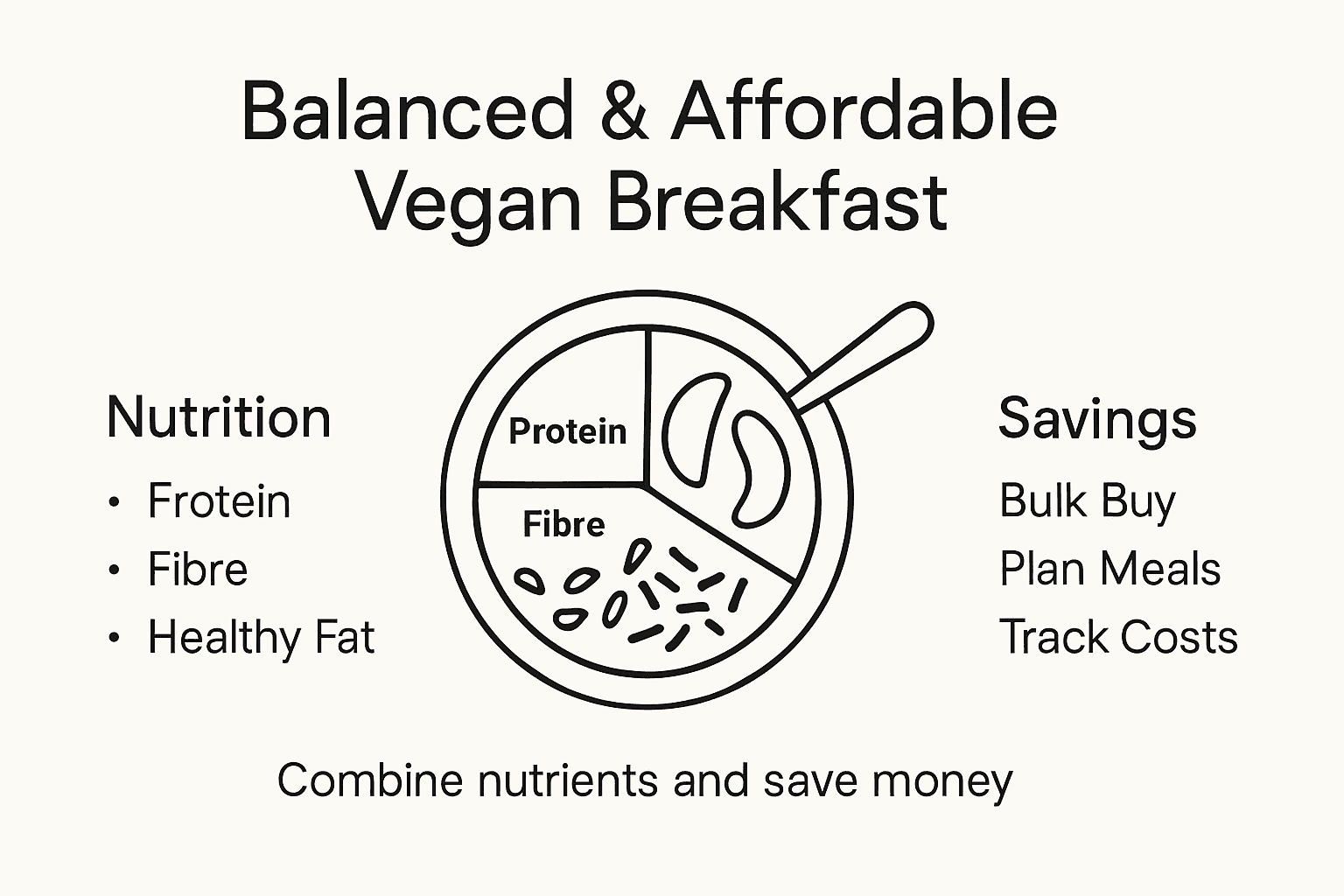
Use online nutrition calculators to track macronutrient profiles and identify potential dietary gaps. Consider supplementing with fortified plant milks or adding nutritional yeast to boost protein and vitamin B12 intake. Purchase ingredients during supermarket promotions and opt for seasonal produce to reduce expenses. Creating a weekly meal plan can help you streamline shopping and minimise food waste preventing unnecessary spending while maintaining nutritional diversity.
Practical advice: Maintain a simple spreadsheet tracking ingredient costs and nutritional values to help you make informed dietary decisions that balance health and budget.
Elevate Your Cheap High Protein Vegan Breakfasts with Granavitalis
Finding affordable vegan protein sources that deliver both nutrition and flavour can be a real challenge. The article highlights key pain points such as building a budget-friendly pantry, achieving nutritional balance, and adding variety using ancient grains, nuts, and seeds. You want protein-packed meals that are quick to prepare yet rooted in wholesome tradition. At Granavitalis, we understand these goals and help you fuel your mornings with high-quality, plant-based options that honour both heritage and modern needs.
Discover our range of Vegan Protein Powders – Granavitalis crafted from clean, transparent ingredients to complement your efforts in creating diverse and nutritious breakfasts. Whether you need a protein boost for overnight oats or a pure base for smoothies, our powders deliver purity and performance for real-life nutrition.
Take control of your breakfast routine by choosing authentic wholefoods designed for your well-being. Visit Granavitalis to explore our selections and start building a budget-conscious, protein-rich morning habit today. Your journey towards strength and smart energy begins here.
Frequently Asked Questions
What are some affordable plant-based protein sources for breakfast?
An excellent choice for affordable plant-based protein sources includes dried beans, lentils, and chickpeas, which provide high protein content at low prices. Consider buying in bulk to reduce costs and ensure a steady supply of these essentials for your breakfasts.
How can I incorporate ancient grains into my vegan breakfast?
You can easily incorporate ancient grains into your breakfast by using quinoa, amaranth, or teff as a base for porridge or bowls. Aim to rotate these grains weekly to keep your meals diverse and interesting.
What simple high-protein vegan breakfast recipes can I try?
Try making a tofu scramble by whisking firm tofu with spices like turmeric and nutritional yeast for an eggs-like flavour. Alternatively, prep overnight oats with chia seeds and your favourite plant milk for a quick grab-and-go option.
How do I ensure a balanced nutrition in my vegan breakfast?
To ensure balanced nutrition, combine protein sources with fibre and healthy fats. Aim for around 0.8 grams of protein per kilogram of your body weight, and plan your meals to meet your nutritional needs efficiently.
What is the best way to prepare plant-based protein ingredients?
Properly prepare plant-based proteins by pressing and draining tofu and legumes to enhance texture and flavour. Use marinades and flavour bases, and remember to store your ingredients correctly to maintain freshness and safety.