
Bakers: How gluten and vital wheat gluten shape baking and diet
Gluten is the stretchy protein network that forms when wheat flour is mixed with liquid; it’s built from two proteins, glutenin and gliadin, that only bind together once flour gets wet. Wheat flour naturally contains the raw material for that network, while vital wheat gluten is the concentrated powdered form of the same protein, extracted and dried down to roughly 80% pure. Anyone with coeliac disease needs to avoid it entirely, but for most people it’s simply the reason bread has chew and cake doesn’t.
TL;DR:
- Gluten forms when wheat proteins glutenin and gliadin hydrate, are kneaded, and then develop into a stretchy network that traps gas during baking.
- Wheat flour’s protein content varies from 7% in cake flour to over 13% in bread flour, affecting gluten strength and dough elasticity.
- Overworking gluten in bread produces a light loaf, but over-kneading cake batter can make it tough and chewy, while underdeveloped gluten causes dense bread.
- Vital wheat gluten is an 80% protein powder used to boost dough strength or make seitan, typically added at 1-2% of total flour weight.
- People with coeliac disease or wheat allergy should avoid gluten entirely, while gluten sensitivity lacks clear diagnostic markers and varies widely among individuals.
Table of Contents
- What is gluten wheat flour made of at the protein level?
- How does wheat flour differ from other flours?
- How does gluten shape the finished bake?
- What is vital wheat gluten and how do bakers use it?
- Who actually needs to avoid gluten?
- Which gluten-free substitutes actually work?
- Our take on the gluten confusion
- Where to find cleaner ingredients for your own baking
- Sources
What is gluten wheat flour made of at the protein level?
Gluten isn’t a single ingredient you can point to on a packet. It’s what happens when two separate proteins, glutenin and gliadin, meet water and get physically worked together. Neither protein does much on its own. Glutenin supplies elasticity, the “snap back” quality that lets dough hold its shape after you stretch it. Gliadin supplies extensibility, the stretch that lets dough spread thin without tearing. Together they form a stretchy, interconnected web, according to the biology reference material on gluten and coeliac disease.
The formation process happens in three stages:
- Hydration: water molecules reach the glutenin and gliadin proteins sitting dormant in the flour and start to unravel them.
- Mixing or kneading: mechanical force pushes the unravelled proteins into contact with each other, forcing them to link into strands.
- Development: repeated folding and stretching aligns those strands into a continuous sheet, strong enough to trap gas bubbles from yeast or steam.
This is why flour sitting in a bag isn’t gluten. Gluten only exists as a cohesive network after hydration and mechanical work, which is a distinction worth holding onto, because it explains a lot of what follows. Wheat, along with barley and rye, contains the proteins capable of forming this network; oats, rice, and maize don’t have the same glutenin-gliadin combination, so they can’t build the same structure no matter how hard you knead them.
How does wheat flour differ from other flours?
Not all flours behave the same way once water hits them, and the difference comes down to what proteins they’re carrying. Wheat, barley, and rye all contain gluten-forming proteins. Foods made from these grains, bread, pasta, cereals, pizza bases, cakes, biscuits, and many sauces or soups thickened with flour, will contain gluten as a result, according to guidance from Coeliac UK.
One labelling quirk trips people up: when a recipe or packet simply says “flour” with no qualifier, it almost always means wheat flour. Gluten-free alternatives are labelled explicitly because they’re the exception, not the rule.
Wheat flours themselves aren’t identical either. Protein content varies by type, and that percentage predicts how much gluten potential the flour has:
- Cake flour: roughly 7 to 9% protein, chosen deliberately for a soft, tender crumb.
- All-purpose flour: typically 10 to 12% protein, a middle ground for general baking.
- Bread flour: around 12 to 13% or higher, which is why it produces the chewy, structured loaves bakers want, a point echoed in King Arthur Baking’s beginner’s guide to gluten.
How does gluten shape the finished bake?
The gluten network does one job above all others: it traps gas. Whether that gas comes from yeast fermentation or steam released during baking, the elastic web stretches around each bubble instead of letting it escape, which is what gives bread its open crumb and cake its light lift when gluten is used sparingly. Overdevelop it in the wrong context, and you get a tough, rubbery cake. Underdevelop it in bread, and the loaf collapses into a dense brick.
Bakers control gluten development through a handful of practical levers:
- Choose the right flour for the job. Bread flour for bread, cake flour for cake, plain flour for something in between.
- Adjust hydration. Wetter doughs let proteins move and link more freely, which is part of why no-knead breads still develop strong gluten over a long rest.
- Mix or knead deliberately. More mechanical work builds more structure, up to a point.
- Give the dough time to ferment. Fermentation relaxes gluten strands, making dough easier to shape without tearing.
- Shape with care and use steam in the oven, since steam delays crust formation long enough for the dough to expand fully.
Pro Tip: If your loaf comes out dense, the usual culprits are under-kneading, cold ingredients slowing yeast, or flour with too little protein for the recipe. If a cake turns out tough and chewy instead of tender, you’ve likely overmixed it once the flour went in, overdeveloping gluten you didn’t want.
What is vital wheat gluten and how do bakers use it?
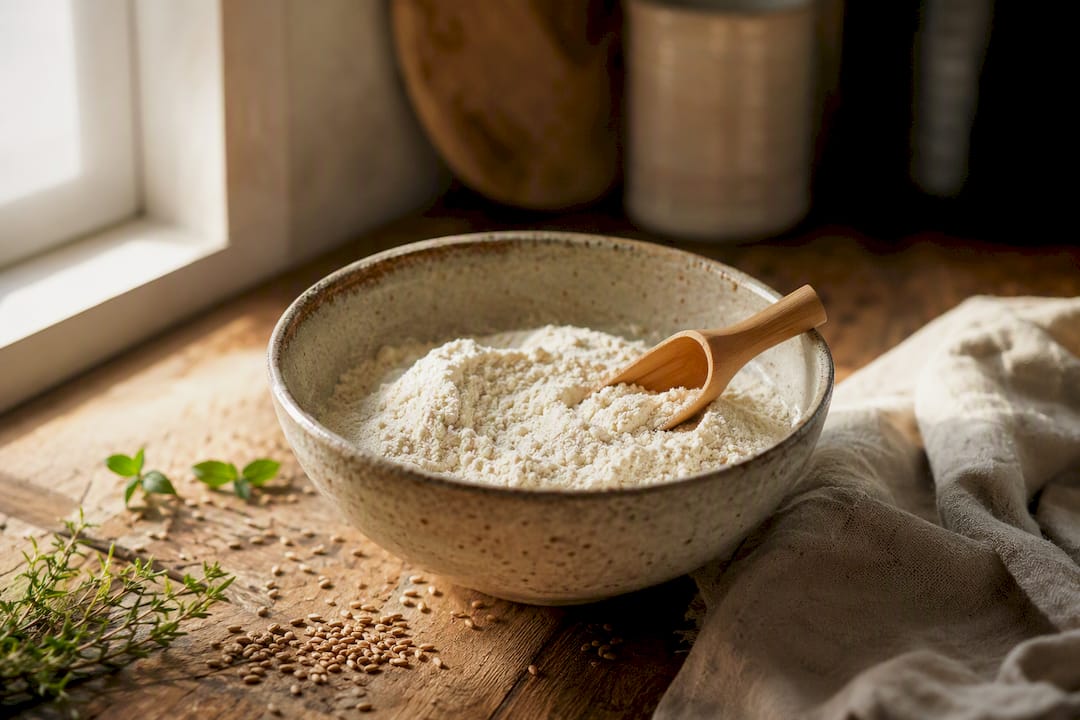
Vital wheat gluten is what you get when the gluten proteins are washed out of wheat flour, separated from the starch, and dried into a fine, high-protein powder. Manufacturers rinse dough repeatedly with water until the starch dissolves away, leaving behind a concentrated mass of glutenin and gliadin that’s then dried and milled, as described in ChainBaker’s breakdown of vital wheat gluten.
That concentration is the whole point.
Vital wheat gluten typically runs around 80% protein by weight, compared with roughly 10 to 13% in standard bread flour, making it one of the most concentrated plant protein sources you’ll find in a domestic kitchen.
Bakers reach for it in two main situations: strengthening weak or low-protein flours, and making seitan, the wheat-protein meat substitute built almost entirely from hydrated gluten. A few handling points matter here:
- Dosage stays small. Around 1 to 2% of total flour weight is the usual range, adding roughly 1% extra protein to the dough per 1.5g added per 100g of flour, per the ChainBaker figures above.
- Mix it into the dry flour first, never straight into water, or it clumps into rubbery lumps that won’t disperse.
- Watch the heat. Processing temperatures above roughly 55°C can start to denature the protein and strip its elasticity, according to the American Society of Baking’s technical notes on vital wheat gluten.
Bakers sometimes call it “strength insurance”, added specifically to guarantee consistent loaf volume when flour batches vary.
Who actually needs to avoid gluten?
Three distinct conditions get lumped together in casual conversation, and separating them matters for anyone making dietary decisions. Coeliac disease is an autoimmune condition where gluten triggers the immune system to attack the small intestine, requiring strict, lifelong avoidance. Wheat allergy is a different mechanism entirely, an allergic reaction to wheat proteins that isn’t necessarily tied to gluten specifically. Non-coeliac gluten sensitivity sits in a grey area, causing symptoms without the same immune or allergic markers, and the British Dietetic Association is clear that all three need a proper clinical diagnosis, not guesswork.
Coeliac disease affects roughly 1% of the UK population, yet diagnosis is often delayed by years, according to research on diagnostic delays in coeliac disease.
That gap matters for two reasons. People living with undiagnosed symptoms go without answers far longer than they should, and people without any gluten-related condition sometimes restrict gluten unnecessarily, cutting out wholegrain wheat products that carry fibre and micronutrients they’d otherwise get from their diet.
- If you suspect coeliac disease or wheat allergy, get tested before cutting gluten. Removing it beforehand can mask the result.
- If you’ve had testing and it’s clear, restricting gluten offers no established general health benefit.
- If you’re managing a confirmed condition, a UK guide to grain choices for coeliacs can help with safer swaps.
Speak to a doctor or registered dietitian before making major changes. Self-diagnosis in this area routinely gets it wrong.
Which gluten-free substitutes actually work?
Replacing gluten in a recipe means replacing a structural protein, not just swapping one powder for another. Rice flour bakes light and neutral but crumbles without help. Buckwheat, despite the name, contains no wheat or gluten at all, and brings a dense, earthy character. Tapioca starch adds chew and elasticity to blends. Potato starch keeps crumb soft and moist. None of them link into a gluten-style network alone, which is why gluten-free wheat alternatives usually combine several flours rather than relying on one.
Structure has to come from somewhere else:
- Xanthan gum, around 0.25 to 1% of flour weight, mimics gluten’s binding effect.
- Psyllium husk absorbs water and adds gel-like stretch, useful in bread-style bakes.
- Egg provides protein structure and binding in cakes and batters.
- Chia or flax, soaked into a gel, works as a milder binder in denser bakes.
Expect a different texture, not a worse one. Gluten-free loaves are typically denser with a tighter crumb, and choosing the right gluten-free grain for the job goes a long way toward closing that gap.
Our take on the gluten confusion
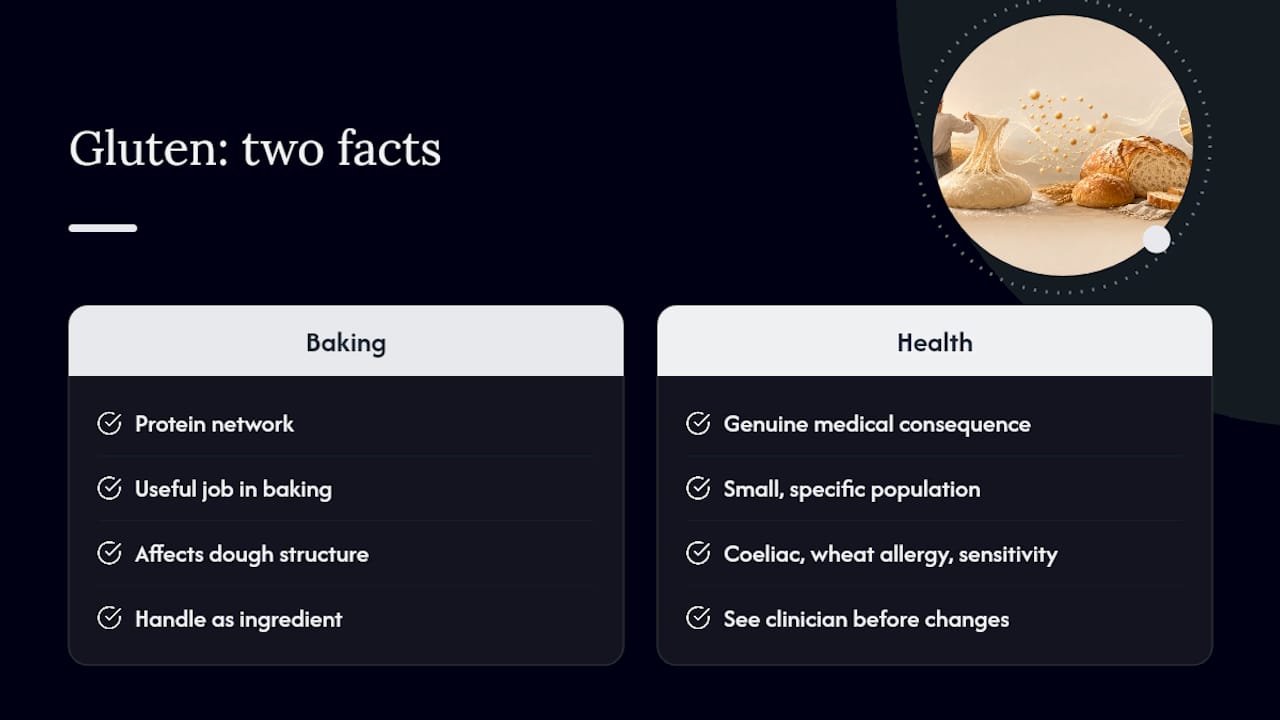
Most of the noise around gluten comes from treating it as a single, simple thing to be either avoided or embraced. It’s neither. It’s a protein network with a genuinely useful job in baking, and a genuinely serious medical consequence for a small, specific slice of the population. Granavitalis exists because we think those two facts deserve to be handled separately rather than blurred together into blanket advice.
Our grain-content breakdown and plant protein sourcing guide go further into the specifics covered here. None of this replaces a proper diagnosis, though. If you suspect coeliac disease, wheat allergy, or gluten sensitivity, see a clinician before changing your diet.
— Jarrod
Where to find cleaner ingredients for your own baking
Granavitalis built its range on the idea that ingredient quality should be visible on the label, not buried under it. If gluten and wheat flour have you rethinking what goes into your kitchen, whether that’s cutting back, building strength into weak flours, or just eating more thoughtfully, the practical next step is choosing ingredients that don’t ask you to guess.

For readers exploring plant-based protein alongside their baking, our organic nut and seed butter selection offers a straightforward way to add clean protein to breakfasts, batters, and snacks without relying on wheat-based ingredients at all. If you’re leaning further into the health side of this conversation rather than the baking side, the Immune Booster Superfood Bundle pairs well with a diet that’s shifting toward more wholefood, less processed staples. Anyone experimenting with high-protein doughs at home might also find inspiration in how savoury recipes handle concentrated plant protein, a useful reference point beyond baking alone. Browse the range and pick the product that matches where your own kitchen is headed.
This article is general information, not a substitute for advice from a qualified doctor. Consult a qualified healthcare professional about your own circumstances before acting on anything here.
Sources
- Gluten and celiac disease (LibreTexts)
- Delays in coeliac disease diagnosis (PubMed)
- What is gluten? (Coeliac UK)