

Why flour quality matters for health and baking
TL;DR:
- Flour varies significantly in nutrition and baking performance, with whole grain options offering more fiber, minerals, and nutrients than refined white flour. The quality, protein content, and freshness of flour directly influence bread structure, texture, and flavor, making choosing the right type essential for optimal results and health benefits. Proper storage protects flour’s nutritional value and prevents rancidity, ensuring consistency and quality in baking outcomes.
Flour sits in almost every kitchen, yet most people treat it like a commodity. One bag of plain white flour feels the same as another. But the difference between a refined, industrially processed flour and a high-quality wholegrain or ancient grain flour is not just a matter of taste. It reaches into your blood sugar, your gut health, the rise of your bread, and the crumb of your cake. Understanding why flour quality matters is one of the most practical things you can do for both your nutrition and your results in the kitchen. This guide unpacks all of it.
Table of Contents
- Key takeaways
- Why flour quality matters more than you think
- How flour affects baking: protein, texture, and performance
- Choosing the right flour for your recipe and health goals
- Storing flour to protect quality and freshness
- My honest take on flour quality
- Explore Granavitalis flours and wholefood essentials
- FAQ
Key takeaways
| Point | Details |
|---|---|
| Nutrition varies dramatically | Whole grain flour contains roughly four times the fibre of refined flour, plus minerals and vitamins that refining removes permanently. |
| Protein content shapes texture | Higher protein flours build stronger gluten networks, giving bread its chew and structure, while low-protein flours produce tender cakes. |
| Flour is “fit for purpose” | There is no universally superior flour. The best choice depends on your recipe, nutritional goals, and baking conditions. |
| Moisture changes everything | Flour absorbs or releases moisture with the seasons, meaning your hydration levels need adjusting by 2 to 3% depending on climate. |
| Freshness and sourcing matter | Batch inconsistency from low-quality suppliers forces improvisation and reduces the reliability of your results every time you bake. |
Why flour quality matters more than you think
Most people reach for flour without reading the label. The assumption is that flour is simply ground wheat, and one version is much like another. The reality is far more layered. Whole grain flour retains the bran, germ, and endosperm, meaning you get fibre, B vitamins, vitamin E, magnesium, and dozens of phytonutrients in every spoonful. Refined white flour strips away the bran and germ entirely, leaving mostly starch.
The numbers tell a stark story. Whole wheat contains ~10.7g fibre per 100g versus just 2.7g in refined flour, and magnesium levels drop from around 126mg per 100g to a mere 22mg after processing. Enriched flour adds back only five synthetic nutrients, which barely scratches the surface of what processing removes. Fibre, healthy fats, vitamin E, and hundreds of phytonutrients simply disappear, and enrichment never fully restores them.
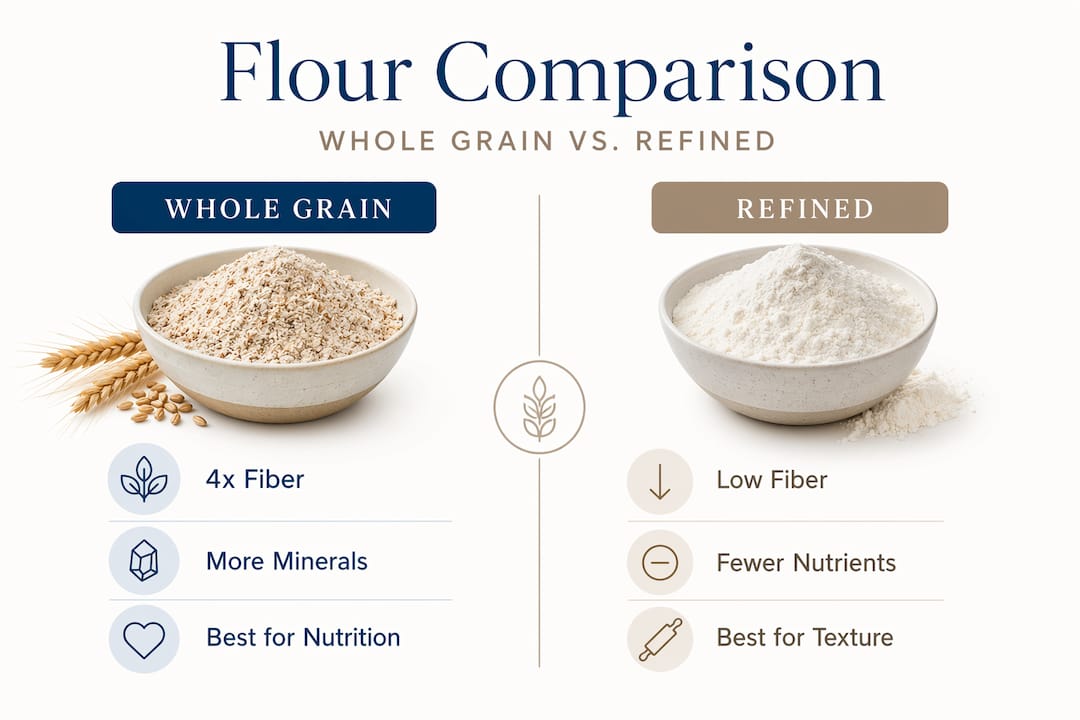
The health consequences of eating predominantly refined flour are well documented. High refined grain intake is linked to elevated blood pressure and increased cardiovascular mortality, according to the PURE study. On the other side of the ledger, research shows that whole grain consumption reduces body weight by around 2.0kg over 12 weeks in adults with obesity, alongside meaningful improvements in glucose metabolism and lipid profiles. That is a significant outcome from a dietary change as simple as choosing a different flour.
The key nutrients lost during milling include:
- Dietary fibre (which regulates blood sugar and supports gut health)
- Magnesium and zinc (critical for hundreds of enzymatic processes)
- Vitamin E (a fat-soluble antioxidant destroyed by heat and processing)
- B vitamins beyond the five added back by enrichment
- Phytonutrients including lignans, phenolic acids, and carotenoids
How flour affects baking: protein, texture, and performance
The importance of flour quality shows up immediately when you start baking seriously. Flour is not a passive ingredient. Its protein content determines how gluten develops, and gluten is what gives dough its elasticity, structure, and the ability to trap gas during fermentation. Bread flour typically contains 12 to 14% protein. Cake or pastry flour sits at 7 to 9%. Using the wrong one for your recipe produces results that no technique can fully compensate for.
Baking with whole grain flours produces denser, heavier products because bran particles physically cut through gluten strands, reducing their strength and cohesion. Refined flour, with no bran interference, builds a more uniform crumb and greater volume. Neither outcome is inherently better. They simply serve different purposes, and knowing this allows you to make deliberate choices rather than guessing why your loaf did not rise.
Professional bakers understand this intimately. Consistent flour quality stabilises results, reducing the batch-to-batch variability that forces improvisation mid-production. When a bakery receives an inconsistent bag of flour with unusual protein levels or moisture content, the entire dough behaves differently. Rise times shift. Crust colour changes. Crumb structure becomes unpredictable. This is why the impact of flour on texture is measured professionally using instruments like the Mixolab, benchmarked against an average of approximately 20 samples to define an ideal flour profile.
Signs that your flour quality is affecting your baking:
- Bread that collapses after rising well during proofing
- Cookies that spread too thin and lack structure
- Cakes that feel dense and gummy rather than light
- Pastry dough that tears rather than rolling cleanly
- Bread with an unexpectedly pale or dark crust despite correct oven temperature
Pro Tip: If your bread consistently turns out denser than expected when using wholegrain flour, try replacing 20% of the wholegrain with a high-quality white flour first. This gives gluten enough room to develop while you adjust your hydration and technique gradually.
Bread nutritional quality also outlasts initial appearance as a consumer priority. Studies show that after 24 hours, people rate nutritional attributes above how the bread looks. Quality flour pays dividends both in the oven and on the plate.
Choosing the right flour for your recipe and health goals
Flour quality in recipes is not one-size-fits-all. The importance of flour quality shifts depending on what you are making and what you want from it nutritionally. Here is how the most common flour types compare:
| Flour type | Protein content | Nutritional profile | Best used for |
|---|---|---|---|
| White enriched flour | 10-12% | Low fibre, minimal minerals | Quick breads, pastries, cakes |
| Whole wheat flour | 13-14% | High fibre, rich in minerals | Hearty loaves, muffins, flatbreads |
| Spelt flour | 12-13% | Moderate fibre, higher solubility | Biscuits, lighter loaves, pancakes |
| Einkorn flour | 14-18% | Dense nutrition, high protein | Artisan breads, pasta, crackers |
| Oat flour | 6-8% | High beta-glucan, gluten-free | Blended baked goods, porridge bakes |
Ancient grain flours like einkorn and emmer deserve particular attention. These grains have not undergone the industrial hybridisation that has shaped modern wheat, meaning their nutrient profiles remain closer to what human diets included for millennia. You can explore ancient grain varieties and understand how they differ from modern alternatives in terms of both nutrition and baking behaviour.
Practical tips for choosing the right flour:
- Match protein percentage to your recipe. High-protein flour for chewy bread, low-protein for delicate sponge.
- Check the milling date rather than just the best-before date. Older flour loses volatile flavour compounds even before spoiling.
- Look for stone-ground or cold-milled labels. These processes generate less heat, preserving more fragile nutrients.
- Buy from suppliers with transparent sourcing. A brand that names its grain origin is a brand that cares about consistency.
- Consider wheat-free options like oat, buckwheat, or teff if you are working with dietary restrictions or want to diversify your nutrient intake.
Pro Tip: When switching from white flour to wholegrain in an existing recipe, do not simply do a one-for-one swap. Whole grain absorbs significantly more liquid. Add an extra 15 to 20ml of water per 200g of flour and rest the dough for 10 minutes before assessing whether more is needed.
Storing flour to protect quality and freshness
Even the finest flour in the world will deteriorate if stored poorly. Flour is hygroscopic, meaning it readily exchanges moisture with its environment. In humid conditions, flour absorbs water from the air. In dry conditions, it loses moisture. Flour can lose up to 3.9% of its mass in dry climates, which has a measurable effect on how dough behaves. Adjusting recipe water by 2 to 3% based on your local climate is not fussy baking. It is good craft.
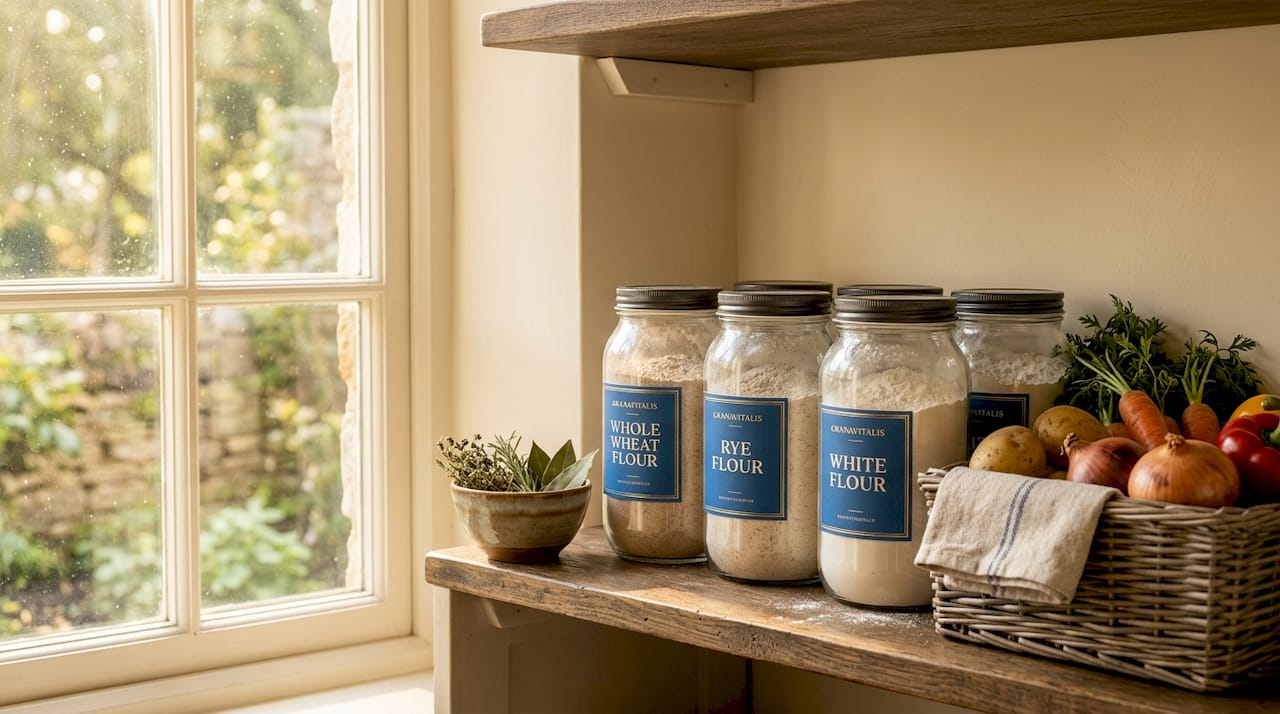
Whole grain flours are more vulnerable than refined flours because the germ contains natural oils that go rancid. A bag of wholemeal flour left in a warm cupboard near the oven will turn bitter within a few weeks. Refined white flour is more stable because processing has already removed the oils.
How to store flour for maximum freshness:
- Transfer flour to an airtight container immediately after opening. Paper bags let moisture in and allow aromas to escape.
- Store whole grain flours in the fridge or freezer if you will not use them within four to six weeks. Cold temperatures halt rancidity significantly.
- Keep all flour away from direct light, heat sources, and strong-smelling foods. Flour absorbs surrounding odours.
- Label containers with the milling or purchase date. Flour that looks and smells fine can still have degraded nutrients from extended storage.
- In summer or humid climates, always measure flour by weight rather than volume. Absorbed moisture adds mass and throws off cup measurements entirely.
A food safety-conscious approach to storage is not just about avoiding illness. It is about preserving the nutritional investment you made by choosing quality flour in the first place. Buying premium ancient grain flour and then storing it incorrectly is a waste of both money and nutrition.
My honest take on flour quality
I spent years treating flour as background noise in my kitchen. One bag was as good as another. Then I started baking bread seriously, and the variability became impossible to ignore. Loaves from the same recipe behaved differently depending on which flour I used, even within the same brand across different batches.
What changed my perspective permanently was switching to an einkorn flour from a small-batch mill. The dough felt different from the first mix. Denser, more alive somehow. The bread had a nutty depth that supermarket white flour never produced. More importantly, I noticed I felt genuinely satisfied after eating a slice rather than wanting three more within the hour. That is the blood sugar difference playing out in real life.
I have seen people dismiss flour choice as unnecessary obsession. My view is the opposite. Once you realise that flour quality is fundamentally about fit for purpose rather than some abstract notion of goodness, it becomes practical rather than precious. You are not chasing perfection. You are simply choosing flour that suits what you are making and what your body needs.
The mistake most people make is ignoring flour and obsessing over technique. Good technique with poor flour still produces poor results. Good flour forgives a great deal of imperfect technique. That lesson, learned through genuinely disappointing loaves, is one I would not trade.
— Jarrod
Explore Granavitalis flours and wholefood essentials
At Granavitalis, flour is not an afterthought. The range includes organic wholegrain, ancient grain, and heritage variety flours sourced from growers who have not compromised on milling integrity. Every product reflects the same commitment: minimal processing, maximum nutritional value, real traceability.

Beyond flour, Granavitalis offers nutrient-dense companions for your kitchen. Whether you are building a morning bake or a post-workout plate, the Immune Booster Superfood Bundle brings together ingredients that work alongside quality flour to support your whole diet. For those who like to add clean protein and healthy fats to baked goods, Kick Ass Vegan Protein integrates naturally into bread, pancakes, and energy bars without compromising texture or taste.
FAQ
What is the nutritional difference between whole grain and refined flour?
Whole grain flour retains the bran and germ, delivering roughly four times the fibre and significantly higher mineral content than refined flour. Enriched flour replaces only five nutrients from the many removed during processing.
How does flour protein content affect baking results?
Higher protein flour produces stronger gluten, giving bread more chew, structure, and rise. Lower protein flour develops weaker gluten, which is desirable for tender cakes and pastries where a tight crumb would feel tough.
Why does flour behave differently depending on the season?
Flour is hygroscopic and absorbs or releases moisture with ambient humidity. Seasonal moisture shifts mean the same flour can require 2 to 3% more or less water in your recipe between winter and summer.
Is whole grain flour always the healthier choice?
Whole grain flour offers a stronger nutritional profile for everyday eating, particularly for blood sugar regulation and fibre intake. For specific baking applications where texture is the priority, blending whole grain with a quality white flour often produces better results without losing all the nutritional benefit.
How can I tell if flour has gone off before using it?
Rancid flour smells faintly of paint, nail varnish remover, or stale oil. Whole grain flours are more prone to this because of the natural oils in the germ. Any flour with an odd odour or a greyish tinge should be discarded, as both flavour and nutritional quality will have degraded.