
Gluten-free wheat explained: facts, myths, and safer options
TL;DR:
- All wheat naturally contains gluten proteins gliadin and glutenin.
- Ancient grains like spelt and einkorn still contain gluten and are unsafe for coeliac individuals.
- Truly gluten-free grains include rice, buckwheat, millet, quinoa, and sorghum.
The phrase ‘gluten-free wheat’ sounds like exactly what millions of people across Europe have been searching for. Type it into any search engine and you will find a sea of hopeful results, conflicting advice, and products that blur the line between science and marketing. The reality is more straightforward and more useful than the noise suggests. All wheat contains gluten. That is not a technicality; it is biology. But the story does not end there. Ancient grains, emerging research, and genuinely gluten-free alternatives all have a role to play in how you build a nutrition plan that actually works for your body.
Table of Contents
- Why wheat naturally contains gluten
- Ancient grains and modern wheat: Are any naturally gluten-free?
- New science: Low-immunogenic wheat and gene-edited varieties
- What counts as gluten-free: Legally and in real life
- What most people get wrong about gluten-free wheat
- Explore healthy alternatives and ancient grain options
- Frequently asked questions
Key Takeaways
| Point | Details |
|---|---|
| No natural gluten-free wheat | All wheat varieties contain gluten and none are naturally gluten-free. |
| Ancient grains still contain gluten | Grains like spelt and einkorn may differ in protein structure but are unsafe for coeliacs. |
| Innovative wheat research is ongoing | New wheat types may reduce immune triggers but are not yet proven safe for gluten-free diets. |
| Alternative grains are the safest | For truly gluten-free eating, choose grains like rice, buckwheat, and quinoa. |
Why wheat naturally contains gluten
Gluten is not an additive. It is not something introduced during processing or milling. It is a family of proteins that forms naturally inside wheat grains as they develop. Two specific proteins, gliadin and glutenin, combine when flour meets water to create the elastic network we call gluten. That network is what gives bread its chew, dough its stretch, and pasta its structure.
For most people, these proteins pass through the digestive system without incident. For those with coeliac disease, however, gliadin triggers an immune response that damages the lining of the small intestine. Even tiny amounts can cause harm. For people with non-coeliac gluten sensitivity, symptoms like bloating, fatigue, and brain fog can appear without the same intestinal damage.
Here is what every wheat shopper needs to understand:
- Wheat includes hundreds of varieties: common bread wheat, durum wheat used in pasta, club wheat, and more
- Every single one contains gluten proteins as part of its fundamental seed structure
- Milling, soaking, sprouting, or fermenting wheat reduces but does not eliminate these proteins
- Wheat gluten basics are the same across all wheat species
As celiac.org confirms, traditional wheat contains gliadins and glutenins that trigger coeliac disease, and no naturally gluten-free wheat exists. This is not opinion; it is the consensus position of every major coeliac health authority in the world.
There is no naturally gluten-free wheat. All wheat species contain gliadin and glutenin proteins that, by definition, make them sources of gluten. For those with coeliac disease or gluten sensitivity, wheat in any form carries risk.
The practical implication for shoppers is direct. If a product is made with wheat flour and labelled ‘gluten-free’, something does not add up. Verified gluten-free baked goods are made with alternative flours entirely. Understanding this distinction, as phys.org notes, about celiac-triggering proteins in traditional wheat, is the first step towards genuinely safe food choices.
Ancient grains and modern wheat: Are any naturally gluten-free?
Einkorn, emmer, spelt, and Kamut are ancient wheat varieties that have been cultivated for thousands of years, long before industrial hybridisation changed the landscape of grain farming. They are nutritionally rich, often easier to digest, and carry a certain romantic appeal. But are they safe for people avoiding gluten?
The short answer is no. Not for coeliac disease.
| Grain | Gluten present? | Safe for coeliac disease? | Notes |
|---|---|---|---|
| Modern bread wheat | Yes | No | High gliadin content |
| Spelt | Yes | No | Different structure, still harmful |
| Einkorn | Yes | No | Lower ATIs, still not safe |
| Emmer | Yes | No | Ancient variety, gluten confirmed |
| Kamut | Yes | No | Marketed as digestible, not coeliac-safe |
| Rice | No | Yes | Standard gluten-free substitute |
| Buckwheat | No | Yes | Despite the name, not related to wheat |
| Millet | No | Yes | Nutritious and versatile |
As BeyondCeliac.org confirms, ancient wheat varieties contain gluten with a different structural profile, including lower ratios of certain immune-activating compounds called ATIs (amylase-trypsin inhibitors), but they remain unsafe for anyone with coeliac disease.
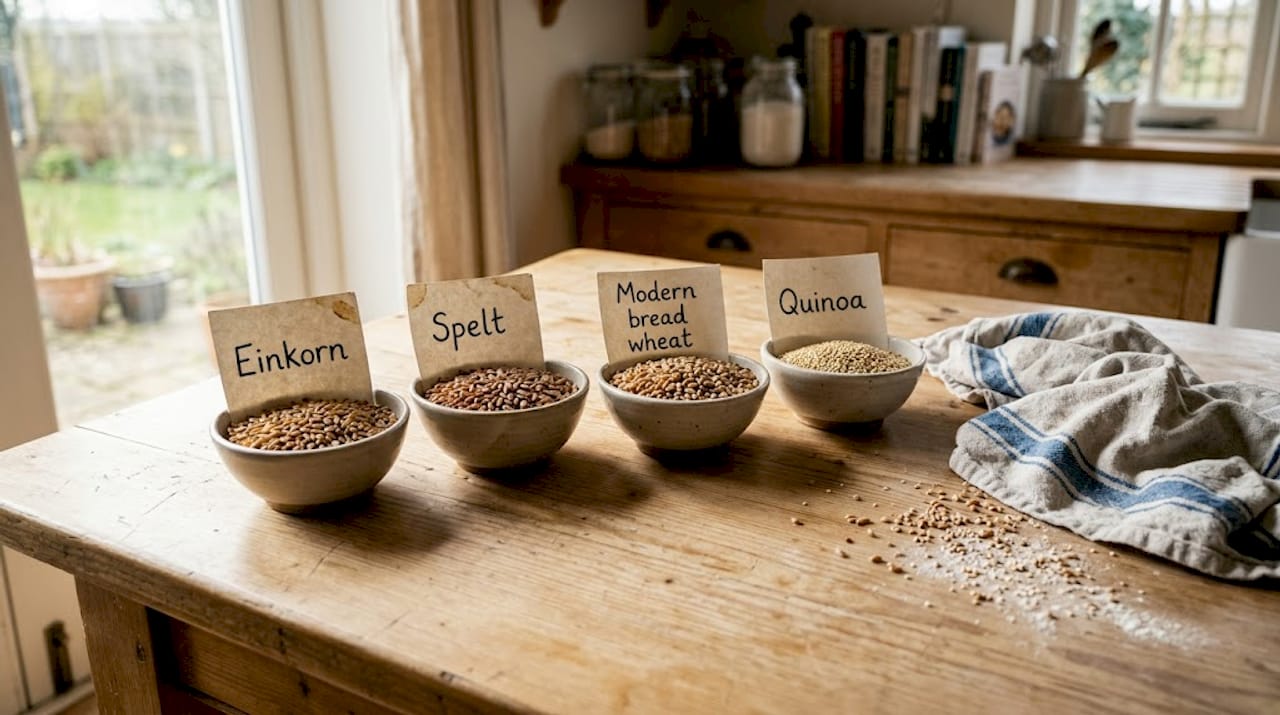
For those with non-coeliac gluten sensitivity, the picture is more nuanced. Some people report tolerating einkorn or spelt bread better than modern wheat. Variable tolerance to ancient wheats has been shown in empirical trials for non-coeliac sensitivity, though results differ significantly between individuals. The digestibility of ancient grains is a legitimate area of ongoing study.
Pro Tip: If you have non-coeliac gluten sensitivity and are curious about ancient grain tolerance, only ever trial ancient wheats under the guidance of a registered dietitian. Self-experimenting without a health professional involved can obscure what is actually happening in your gut.
Grains that are genuinely free of gluten include:
- Rice (white, brown, and wild varieties)
- Buckwheat (unrelated to wheat despite its name)
- Millet (a highly digestible, protein-rich option)
- Quinoa (technically a seed, but used as a grain)
- Sorghum (gaining popularity in gluten-free baking)
- Amaranth (nutrient-dense and naturally gluten-free)
To understand the ancient grain gluten myths that often mislead shoppers, it helps to separate genuine digestibility research from coeliac safety claims. They are very different conversations.
New science: Low-immunogenic wheat and gene-edited varieties
This is where the story gets genuinely fascinating. If no naturally gluten-free wheat exists, could we engineer one? Researchers around the world are working on exactly that.
At the University of California, Davis, scientists have developed non-GMO wheat lines that delete specific alpha-gliadin genes. Alpha-gliadins are the proteins most responsible for triggering the immune response in coeliac disease. By selectively removing them, these new wheat lines significantly reduce the presence of harmful coeliac epitopes, which are the specific protein fragments that set off the immune cascade.
Here is what the data shows so far:
| Wheat variety | Alpha-gliadin reduction | Bread quality maintained? | Coeliac-safe? |
|---|---|---|---|
| Standard wheat | Baseline | Yes | No |
| Delta-gli-D2 deletion line | Significant reduction | Yes (improved alveograph scores) | Not confirmed |
| UC Davis low-immunogenic lines | Up to 70% fewer harmful epitopes | Comparable bread volume | Still under research |
According to UC Davis research, these low-immunogenic wheat lines reduce celiac-triggering proteins whilst maintaining practical breadmaking quality, measured through alveograph performance and bread volume. That is a genuinely promising combination.
However, caution is essential. No commercial gluten-free wheat currently exists, and ongoing research has not yet proven these varieties safe for people with coeliac disease. Reducing immunogenic proteins is not the same as eliminating them. Until long-term clinical trials are complete, these are research tools, not food products.
Pro Tip: When you encounter news about ‘safer wheat’ or ‘low-gluten wheat’ in health media, look for whether the research involved actual coeliac patients in controlled trials. Laboratory epitope reduction is very different from clinical safety confirmation.
For now, the innovations in wheat varieties emerging from plant science are exciting, but the standard for safe eating remains the use of actual gluten-free flours sourced from non-wheat grains.
What counts as gluten-free: Legally and in real life
In both the UK and EU, the legal threshold for a product to carry a ‘gluten-free’ label is fewer than 20 parts per million (ppm) of gluten. That figure was not chosen arbitrarily; it represents the level at which the majority of people with coeliac disease can consume a product without measurable intestinal damage.
Here is how to read a gluten-free foods label correctly:
- Look for the crossed grain symbol. This is the internationally recognised certification mark for products tested below 20 ppm.
- Check the ingredient list, not just the front label. ‘Gluten-free’ claims on the front do not always mean the product is made in a dedicated facility.
- Watch for ‘may contain wheat’ disclaimers. These indicate shared production lines where cross-contamination is possible.
- Distinguish between ‘wheat-free’ and ‘gluten-free’. Wheat-free products may still contain barley or rye, both of which contain gluten.
- Prioritise single-ingredient foods. Rice, buckwheat flour, and millet are naturally gluten-free without requiring certification.
As MDPI Foods research confirms, no gluten-free wheat currently exists on the market, and gluten-free products use true alternative grains as their base. This makes label literacy your most important skill as a gluten-free shopper.
The bottom line for shoppers: Gluten-free does not mean low-wheat or ancient wheat. It means no wheat, no barley, no rye, and a verified absence of cross-contamination down to 20 ppm or below.
If you are building a healthy baking flours rotation at home, you have more options than ever. Rice flour, buckwheat flour, millet flour, sorghum flour, and teff flour are all genuinely gluten-free and bring diverse nutritional profiles to your kitchen. Understanding foods that are actually gluten-free means your choices become more confident and more varied.
What most people get wrong about gluten-free wheat
Here is the uncomfortable truth we have observed again and again: the search for ‘gluten-free wheat’ is often a search for permission. Permission to keep eating familiar foods, familiar textures, familiar tastes, without the consequences that gluten brings for sensitive individuals. That instinct is completely understandable. It is also, in practical terms, a distraction.
Chasing ancient wheat varieties as a workaround, or waiting for gene-edited wheat to arrive in shops, keeps attention focused on a single ingredient rather than on the richness of what is already available. The cost of modern grains is not just financial; it is nutritional diversity sacrificed for convenience.
Wholegrain diversity is where the real gains are. Rice, buckwheat, millet, amaranth, and quinoa each bring a different nutrient fingerprint, a different flavour profile, and a different role in your diet. Learning to cook with them is not a compromise; it is an upgrade. Label literacy, meanwhile, protects you from the marketing grey areas that blur the line between ‘digestible for some’ and ‘safe for coeliac disease’. Those are very different claims, and conflating them has real health consequences.
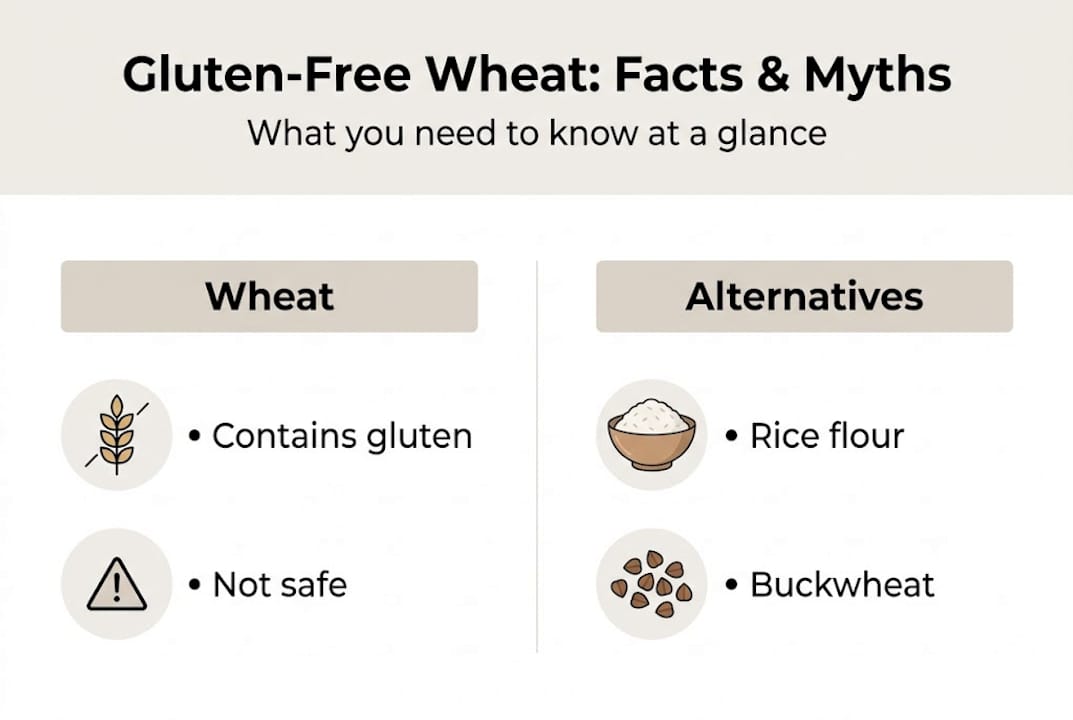
Our perspective at Granavitalis is simple: ancient grains are worth celebrating for what they genuinely are, not for what we wish they were. Spelt is not a gluten-free alternative. Einkorn is not a safe substitute for someone with coeliac disease. But buckwheat, millet, and teff? Those are ingredients with genuine nutritional power and a genuinely gluten-free profile.
Explore healthy alternatives and ancient grain options
If this article has clarified one thing, let it be this: the best path forward is not a workaround, it is a wider table.

At Granavitalis, we have built our range around foods that honour both tradition and the science of real nutrition. For those building a gluten-free lifestyle, our nut and seed butter selection is a brilliant starting point for nutrient-dense, wheat-free eating that does not sacrifice flavour. Our raw organic pecan butter is a clean, simple example of food that does exactly what it says on the label. And if you are ready to explore healthy grains and discover what a genuinely diverse, ancient-grain-rooted diet feels like, we are here for that journey with you.
Frequently asked questions
Can any wheat be completely gluten-free?
No natural wheat is truly gluten-free. As celiac.org confirms, all wheat contains gluten proteins, and while new research may reduce immunogenic components, it cannot yet eliminate them entirely.
Is spelt or einkorn wheat safe for people with coeliac disease?
No. Despite their different protein structures, ancient grains like spelt and einkorn still contain gluten and are not safe for anyone with coeliac disease.
What grains are naturally gluten-free?
Naturally gluten-free grains include rice, buckwheat, millet, quinoa, and sorghum. These are the standard alternative grains used in certified gluten-free products.
Are ‘gluten-free wheat’ foods available in shops?
No. As confirmed by ongoing wheat research, no commercial gluten-free wheat grain exists, and all shop-bought gluten-free foods rely on alternative grain sources rather than wheat.