

Understanding gluten sensitivity: symptoms, causes and diet tips
TL;DR:
- Gluten sensitivity, also known as non-coeliac gluten or wheat sensitivity, causes diverse symptoms without intestinal damage or specific biomarkers.
- Diagnosis requires exclusion of coeliac disease and wheat allergy, followed by controlled dietary challenges under medical supervision.
- Proper management involves a balanced, nutrient-rich gluten-free diet and professional guidance to avoid nutritional deficiencies.
Gluten sensitivity sits in a peculiar space: too real to dismiss, yet too poorly understood to define cleanly. Many people cut out gluten based on a hunch and feel better, whilst others chase a diagnosis for months without a clear answer. The science is still catching up, and the public conversation is caught somewhere between genuine clinical need and wellness trend. What follows is an evidence-based guide to what gluten sensitivity actually is, how it differs from coeliac disease, what we know about its causes, and what practical steps you can take to feel better and eat well.
Table of Contents
- What is gluten sensitivity?
- Common symptoms and real-life impact
- What causes gluten sensitivity? Exploring the science and controversy
- How is gluten sensitivity diagnosed?
- Managing gluten sensitivity: diet and lifestyle tips
- Why gluten sensitivity is more than a trend: one expert’s take
- Explore gluten-free options for a healthier you
- Frequently asked questions
Key Takeaways
| Point | Details |
|---|---|
| Diagnosis by exclusion | Gluten sensitivity is diagnosed after ruling out coeliac disease and wheat allergy and requires careful symptom tracking. |
| Symptoms vary widely | Symptoms can affect digestion, mood, and energy and may overlap with other conditions like IBS. |
| Controversy in causes | Science is still debating the exact cause, with gluten, wheat components, and psychological factors all in play. |
| Diet requires planning | A gluten-free diet can improve symptoms but should be balanced to avoid nutrient gaps. |
| Seek professional support | Consult a health professional for accurate diagnosis and ongoing management of gluten sensitivity. |
What is gluten sensitivity?
The term “gluten sensitivity” gets used loosely, which is part of why so much confusion surrounds it. Clinically, the condition is known as non-coeliac gluten sensitivity (NCGS) or, more precisely, non-coeliac wheat sensitivity (NCWS), because wheat contains other components beyond gluten that may trigger symptoms. Gluten sensitivity is characterised by symptoms triggered by gluten or wheat ingestion in individuals without coeliac disease or wheat allergy. That last part matters enormously.
It is not coeliac disease. It is not a wheat allergy. Those are separate, well-characterised conditions with distinct mechanisms and measurable markers. Coeliac disease is an autoimmune condition causing damage to the small intestine’s lining. A wheat allergy triggers an IgE-mediated immune response. NCGS, by contrast, involves neither. Unlike coeliac disease, NCGS does not cause small intestine damage, villous atrophy, or positive coeliac-specific antibodies. The body reacts, but in ways science has not yet fully mapped.
| Feature | NCGS/NCWS | Coeliac disease | Wheat allergy |
|---|---|---|---|
| Immune mechanism | Unclear, possibly innate | Adaptive immune (autoimmune) | IgE-mediated |
| Intestinal damage | None | Yes (villous atrophy) | None |
| Blood biomarkers | None confirmed | Anti-tTG, EMA antibodies | IgE to wheat |
| Genetic link | Weak | HLA-DQ2/DQ8 (strong) | Variable |
| Diagnosis method | Exclusion + challenge | Biopsy + blood tests | Skin prick/blood test |
| Typical onset | Hours to days | Variable | Minutes to hours |
Diagnosis, therefore, happens by exclusion. A clinician rules out coeliac disease and wheat allergy first. Only then can NCGS be considered. Before reading more about gluten-free wheat facts, it helps to understand that this diagnostic gap means many people go years without clarity, testing diets on their own without proper oversight.
Key fact: Estimates suggest NCGS may affect between 0.5% and 13% of the general population, though the range is wide precisely because no reliable biomarker exists. Prevalence figures vary depending on whether self-report or clinical criteria are used.
Common symptoms and real-life impact
Knowing what gluten sensitivity is, let us explore how it actually affects people’s bodies and routines. The symptom picture is broad, which is part of what makes NCGS so difficult to pin down. Symptoms are not exclusive to the gut.
Common symptoms associated with NCGS include:
- Bloating and abdominal distension
- Abdominal pain and cramping
- Diarrhoea or constipation (or both alternating)
- Fatigue, sometimes severe
- Brain fog and difficulty concentrating
- Headaches and migraines
- Joint and muscle pain
- Mood changes, including low mood and irritability
- Skin issues such as rashes or eczema flares
- Numbness or tingling in the extremities
These symptoms, including bloating, fatigue and brain fog, can appear across the digestive and nervous systems, making attribution to any single food extremely challenging. One of the most important facts to understand is timing. Unlike a food allergy, which triggers a reaction within minutes, NCGS symptoms may surface hours to two days after exposure. This delayed response makes it genuinely hard to link cause and effect in everyday eating.

The overlap with irritable bowel syndrome (IBS) is particularly significant. NCGS overlaps with IBS and gut-brain disorders, meaning symptoms may not always be gluten-specific, which emphasises the need for controlled testing rather than self-guided elimination. A person who cuts out bread and feels better may have removed gluten, but they may equally have removed fructans (a type of fermentable sugar), eating less overall, or changed other habits at the same time.
Knowing which grains containing gluten are worth avoiding helps build a clearer picture, but identifying the real trigger still requires systematic testing. The real-life impact of these symptoms should not be underestimated. Chronic fatigue and brain fog affect work performance. Persistent digestive discomfort can limit social eating and travel. Mood disruption strains relationships. People with unrecognised NCGS often describe years of feeling unwell without explanation, which carries its own psychological weight.
What causes gluten sensitivity? Exploring the science and controversy
Understanding the outward symptoms leads many to wonder: what is actually happening inside our bodies to cause them? The honest answer is that science does not yet have a definitive explanation, and this uncertainty is itself a source of debate.
Potential mechanisms under investigation include innate immune activation, increased intestinal permeability (sometimes called “leaky gut”), gut dysbiosis (an imbalance in gut bacteria), FODMAP intolerance, and nocebo effects. The fact that multiple mechanisms are still being explored tells you this is not a simple, single-pathway condition.
| Proposed mechanism | What it means | Evidence strength |
|---|---|---|
| Innate immune activation | Immune response without antibody involvement | Moderate |
| Intestinal permeability | Gut lining becomes more permeable to particles | Moderate |
| Gut dysbiosis | Imbalanced gut bacteria alter how food is processed | Growing |
| FODMAP sensitivity | Fermentable carbohydrates in wheat cause symptoms | Strong for subset |
| Nocebo effect | Negative expectation produces real symptoms | Demonstrated in trials |
| Wheat proteins (amylase-trypsin inhibitors) | Non-gluten proteins trigger innate immune signalling | Emerging |
The FODMAP angle deserves particular attention. Wheat is high in fructans, a FODMAP (fermentable oligosaccharide) that can cause digestive symptoms in sensitive individuals regardless of gluten. This means someone eating less wheat may feel better not because gluten was the problem, but because they reduced their FODMAP intake. Some studies in blinded trials show no specific gluten effect, attributing symptoms instead to expectancy, the nocebo effect, or FODMAPs rather than gluten itself.
This is not a reason to dismiss NCGS. It is a reason to take sources of gluten in grains seriously whilst also remaining open to the possibility that other wheat components, not gluten alone, may be driving your symptoms.
Pro Tip: If you have tried a strict gluten-free diet but still experience digestive symptoms, consider speaking to a dietitian about a low-FODMAP trial. The two approaches target different components of wheat, and combining them strategically may finally identify your real trigger.
How is gluten sensitivity diagnosed?
Given the overlap with other conditions and the complexity of symptoms, it is crucial to recognise how gluten sensitivity is properly diagnosed. There is no blood test, no biopsy, and no biomarker that confirms NCGS. This absence of objective measurement is exactly what makes self-diagnosis problematic and why professional guidance matters.
The gold-standard diagnostic process, based on the Salerno expert criteria, follows a structured sequence:
- Exclude coeliac disease through blood tests (anti-tTG antibodies, total IgA) and, if indicated, a small intestinal biopsy. Critically, you must be eating gluten during this phase for results to be valid.
- Exclude wheat allergy using IgE blood tests or skin prick testing conducted by an allergist.
- Begin a gluten-free diet (GFD) for four to six weeks under supervision and document symptom changes carefully.
- Assess response using a validated symptom scoring system to measure improvement objectively rather than relying solely on subjective impression.
- Conduct a double-blind, placebo-controlled gluten challenge where neither you nor the clinician knows whether you are consuming gluten or a placebo. This controls for expectation effects and is considered the definitive step.
- Confirm diagnosis if symptoms return on gluten and resolve on placebo, with a statistically significant difference in symptom scores.
This process takes time, often several months. Many people never reach step five because the dietary trial alone feels convincing. However, without the blinded challenge, a diagnosis of NCGS remains presumptive. A solid nutrition guide for gluten-sensitive diets can support the elimination phase, but the formal process requires a clinician to oversee it properly.
Pro Tip: Never begin a gluten-free diet before having your coeliac disease tests. Once you remove gluten, antibody levels drop, and the blood tests become unreliable. Get tested first, then adjust your diet.
Managing gluten sensitivity: diet and lifestyle tips
After a diagnosis (or a supervised elimination trial), the challenge shifts to practical management and maintaining health. The good news is that many people with NCGS manage well on a gluten-free or wheat-reduced diet without the strictness required for coeliac disease. The bad news is that poorly planned gluten-free eating carries real nutritional risks.
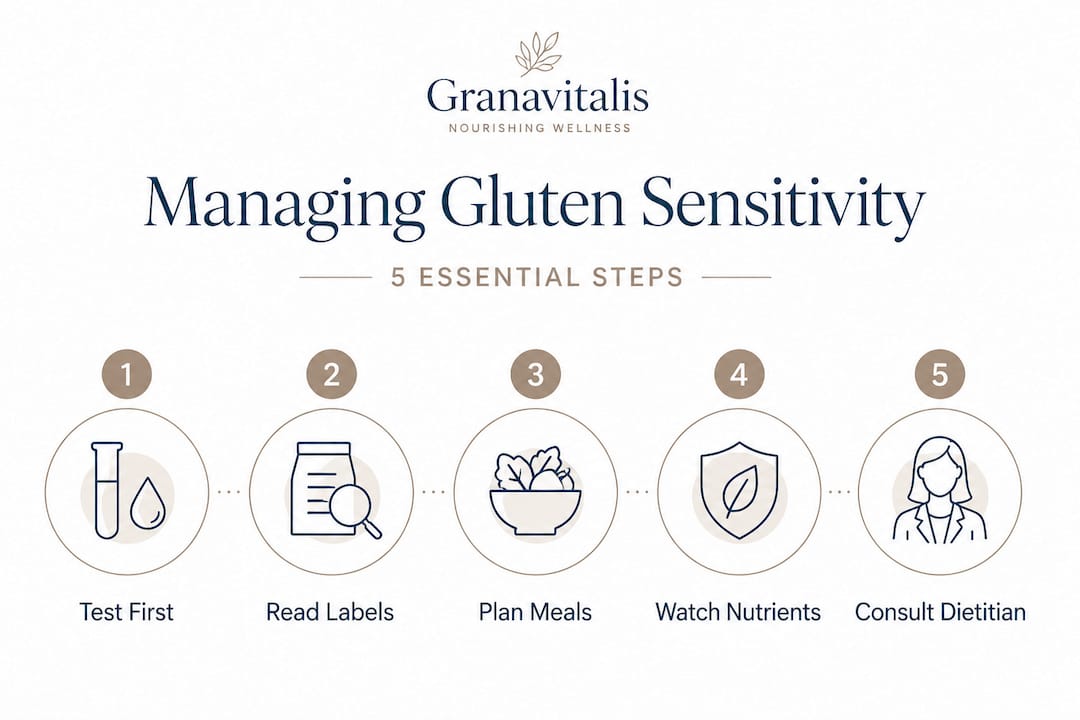
Key dietary management strategies include:
- Remove gluten-containing grains: Wheat, barley, rye, and conventional oats should be eliminated or significantly reduced. Replace with naturally gluten-free grains such as quinoa, buckwheat, millet, teff, amaranth, and brown rice.
- Explore wheat-free flour options for home baking. Ancient grain flours and nut-based flours offer nutrient density alongside good texture and flavour.
- Focus on whole, unprocessed foods. Many naturally gluten-free meals such as grilled fish, roasted vegetables, legumes, eggs, and salads require no substitutes at all.
- Consider a low-FODMAP approach if symptoms persist despite a strict gluten-free diet. A registered dietitian can guide a structured low-FODMAP elimination and reintroduction.
- Monitor your nutrient intake. Gluten-containing grains are a significant source of fibre, B vitamins (especially folate and B1), iron, and zinc. Removing them without thoughtful substitution can lead to deficiencies over time.
A gluten-free diet requires planning to avoid these nutritional gaps, particularly around fibre, B vitamins, and minerals. Long-term GFD adherence without oversight risks nutrient gaps and a less varied diet. Choosing a gluten-free grains guide helps you navigate replacements that are genuinely nutritious rather than simply “free from.”
Eating out deserves special attention. Cross-contamination is a concern, though for NCGS (as opposed to coeliac disease) low levels of exposure are often tolerable. Communicating your needs clearly at restaurants and checking menus in advance reduces stress. Resources like eating out gluten free provide practical guidance for navigating menus without anxiety. Psychological factors also matter. Anxiety around food can itself heighten gut sensitivity, and some individuals benefit from mindfulness-based approaches alongside dietary changes.
Why gluten sensitivity is more than a trend: one expert’s take
Now that we have covered the practical and scientific essentials, it is time to add some real-world perspective to this complex debate. There is a tendency in both directions to oversimplify NCGS. One camp insists it is entirely fabricated by wellness culture. The other treats a gluten-free diet as a universal health upgrade. Neither position serves anyone well.
Here is what the data actually shows: self-reported prevalence of NCGS sits around 10%, yet only 16 to 30% of self-reporters react to gluten in controlled trials. That gap is telling. It does not mean those people are lying about their symptoms. It means the symptoms are real but the cause is frequently misattributed. FODMAPs, stress, gut dysbiosis, and expectation effects account for a meaningful proportion of what people label as gluten sensitivity.
This matters for two reasons. First, it means unnecessary dietary restriction is widespread. Cutting out gluten and wheat without good reason can reduce dietary variety, increase food anxiety, and create social difficulties without delivering any actual health benefit. Second, and more importantly, people whose symptoms genuinely stem from wheat or gluten deserve a proper diagnosis rather than a cultural narrative. When NCGS is dismissed as a trend, real sufferers lose access to appropriate clinical pathways.
Our view is this: take symptoms seriously, but test rather than assume. A structured elimination and challenge process, guided by a clinician, gives you far more useful information than a self-imposed dietary change ever can. Understanding the facts about gluten in grains provides a good foundation, but the self-diagnosis route frequently leads people to restrict unnecessarily or, worse, to miss an underlying condition like coeliac disease that requires strict adherence and monitoring.
The most useful shift in thinking is this: your symptoms are real and worth investigating. Gluten may or may not be the cause. A clinician’s guidance will give you the answer; guesswork usually will not.
Explore gluten-free options for a healthier you
Living with gluten sensitivity does not mean living on bland, nutrient-poor replacements. At Granavitalis, we have built our range around the idea that eating gluten free should feel like a genuine upgrade, not a compromise.

Whether you are searching for high-fibre, protein-rich ancient grain flours, nutrient-dense gluten-free muesli crafted from real whole foods, or superfood blends to close nutritional gaps, our products are sourced with purity and purpose in mind. Every ingredient is chosen to support energy, gut health, and sustained wellbeing, without fillers, unnecessary additives, or industrial shortcuts. When your diet changes, your food should rise to meet the challenge. Explore the Granavitalis range and find wholefood nutrition that works as hard as you do.
Frequently asked questions
Can you develop gluten sensitivity later in life?
Yes, symptoms can appear in adults at any age and are not restricted to childhood, though the reasons for adult onset are not fully understood.
Is there a test for gluten sensitivity?
No single test exists. Diagnosis follows the Salerno criteria, involving exclusion of coeliac disease and wheat allergy followed by a supervised dietary trial and controlled gluten challenge.
Are gluten sensitivity and IBS the same?
No, but NCGS overlaps with IBS significantly, and some people diagnosed with IBS may also be reacting to wheat or gluten without realising it.
Can going gluten free cause nutrient deficiencies?
Yes. Avoiding gluten without planning can lead to shortfalls in fibre, B vitamins, iron, and zinc, so it is important to replace gluten-containing grains with nutritious alternatives.
Is a low-FODMAP diet better than gluten free for some symptoms?
For some individuals, yes. Gut dysbiosis and FODMAPs play a role in symptoms that are often mistaken for gluten sensitivity, meaning a low-FODMAP approach may resolve symptoms that a gluten-free diet alone does not.