
Gluten Found in What Grains: The Facts Explained
Choosing what goes on your plate is more involved when you are focused on gut health and following a gluten-free lifestyle. For many British adults, understanding where gluten hides and how it appears in both modern and ancient grains is a daily concern, especially with strict labelling rules set by UK food authorities. This guide offers clear insight into what gluten is, how it affects your body, and which ancient grains or alternatives keep both nutrition and digestion in balance.
Table of Contents
- What Is Gluten and Where Is It Found?
- Major Gluten-Containing Grains Explained
- Ancient Grains: Gluten Content Clarified
- Avoiding Hidden Gluten and Cross-Contamination
- Gluten-Free Grain Alternatives for UK Diets
Key Takeaways
| Point | Details |
|---|---|
| Understanding Gluten Sources | Gluten is primarily found in Wheat, Rye, Barley, and some Oats; care is needed for sensitivities. |
| Ancient Grains and Gluten | Ancient grains like Spelt and Khorasan contain gluten and should be approached cautiously by those with sensitivities. |
| Cross-Contamination Risks | Gluten can be hidden in unexpected foods and through kitchen equipment; vigilance is essential. |
| Nutritious Gluten-Free Alternatives | Options like Rice, Quinoa, and Buckwheat provide excellent nutritional benefits for gluten-free diets. |
What Is Gluten and Where Is It Found?
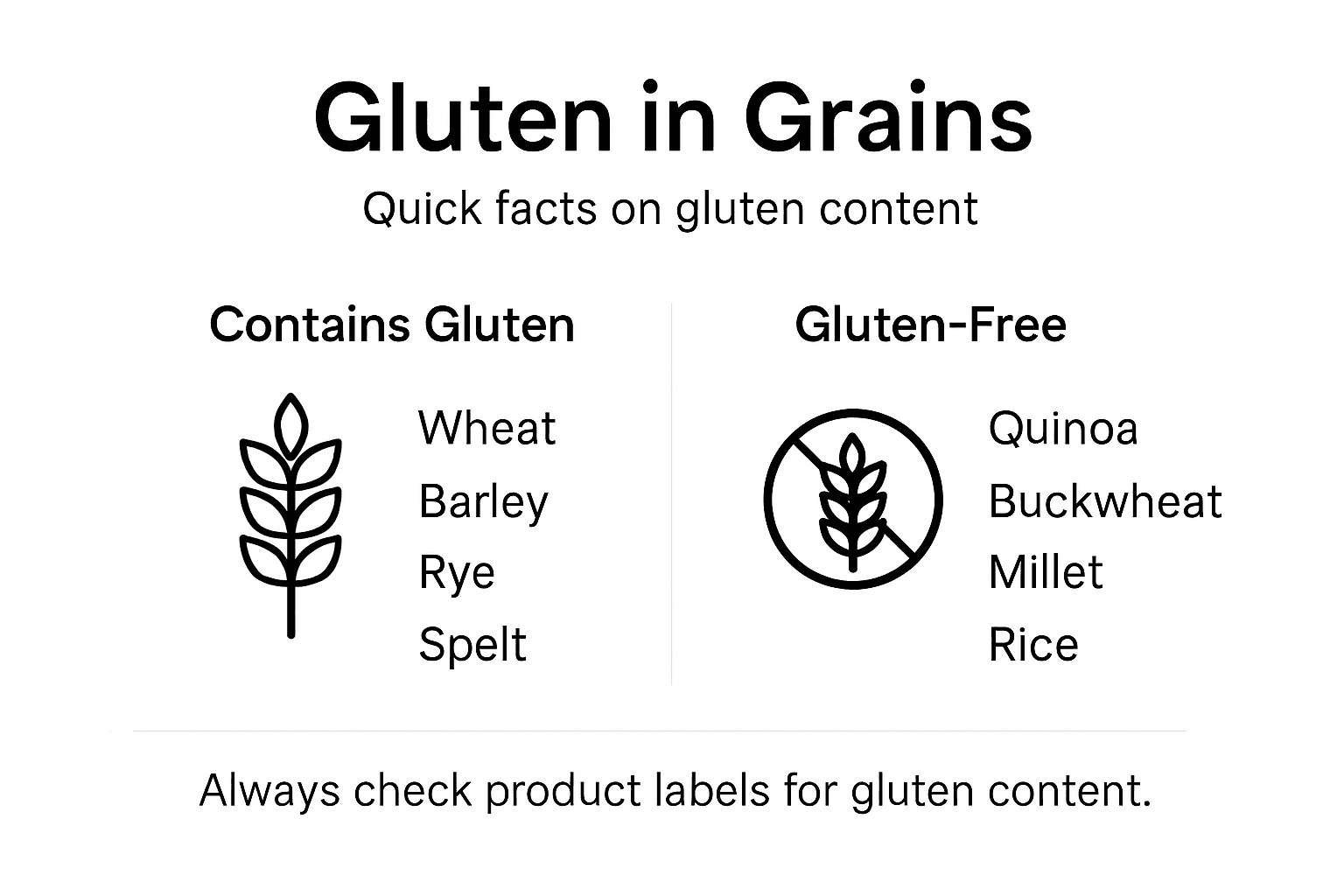
Gluten is a complex protein found naturally in several cereal grains, creating structural elasticity in many baked products. Specifically, gluten emerges from the combination of two proteins - glutenin and gliadin - which are present in wheat, rye, barley, and some oat varieties. When these proteins interact with water, they form a sticky network that provides dough its characteristic stretchy texture.
In the United Kingdom, food safety regulations mandate clear labelling of gluten-containing grains. The primary grains containing gluten include:
- Wheat (including varieties like spelt and Khorasan)
- Rye
- Barley
- Certain hybrid grain strains
These grains are fundamental ingredients in numerous food products, from bread and pasta to pastries and breakfast cereals. Understanding their gluten content is crucial for individuals managing coeliac disease, gluten sensitivity, or those choosing to limit gluten consumption. Notably, while wheat is the most common source, other grains like rye and barley also contain significant gluten proteins that can trigger adverse reactions in sensitive individuals.
Pro Tip: When shopping for groceries, always carefully read ingredient labels and look for “gluten-free” certifications to ensure you’re selecting appropriate products for your dietary needs.
Major Gluten-Containing Grains Explained
Understanding the specific grains that contain gluten is crucial for individuals managing dietary restrictions or health conditions like coeliac disease. Food safety regulations in the United Kingdom mandate clear identification of these grains to protect consumers with gluten sensitivities.
The primary gluten-containing grains include:
-
Wheat: The most common gluten source, encompassing multiple varieties
- Standard wheat
- Spelt
- Khorasan (Kamut)
- Durum
- Rye: A dense grain with significant gluten content
- Barley: Frequently used in brewing and baking
- Oats: Potentially contaminated during processing, though pure oats are often considered safer
Each of these grains contains unique protein compositions that trigger gluten-related responses. Wheat, in particular, contains the highest concentration of gluten-forming proteins, making it the most problematic for individuals with gluten sensitivities. Rye and barley follow closely, with complex protein structures that can cause adverse reactions in those with gluten intolerance.

Interestingly, some ancient grain varieties like spelt and Khorasan wheat, while technically containing gluten, are sometimes reported to be more easily digestible for certain individuals. However, they are not suitable for those with coeliac disease or severe gluten allergies and should be approached with caution.
To clarify the differences among major gluten-containing grains, here is a comparative overview:
| Grain | Gluten Content Level | Common Uses | Note on Tolerance |
|---|---|---|---|
| Wheat | Highest | Bread, pasta, pastries | Most reactive for sensitivities |
| Rye | Moderate | Rye bread, whisky | Also triggers gluten responses |
| Barley | Moderate | Beer, malt, soups | Problematic for most affected |
| Oats* | Low (unless pure) | Porridge, biscuits | Risk of cross-contamination |
*Pure oats may be suitable for some, but always check labels.
Pro Tip: When purchasing packaged foods, always scrutinise ingredient lists carefully and look for “gluten-free” certifications to ensure your dietary safety.
Ancient Grains: Gluten Content Clarified
The rising popularity of ancient grains has sparked considerable interest in their nutritional profile and gluten content. Nutritional research datasets reveal that many ancient grain varieties, contrary to popular belief, contain significant amounts of gluten proteins similar to modern wheat strains.
Ancient wheat varieties include:
- Spelt: A primitive wheat variety
- Khorasan (Kamut): An ancient wheat strain
- Einkorn: One of the oldest known wheat types
- Emmer: Another heritage wheat variety
Despite their historical origins, these grains are not automatically gluten-free. In fact, they contain gluten proteins structurally very similar to contemporary wheat, which means individuals with coeliac disease or gluten sensitivity must approach them with the same caution as standard wheat products.
Interestingly, while these grains have been cultivated for thousands of years, their gluten content remains fundamentally unchanged. Some individuals report experiencing different digestive responses to ancient grains compared to modern wheat, but scientific evidence does not support claims of universal digestibility. The protein structures remain remarkably consistent across different wheat varieties.
Pro Tip: Always consult healthcare professionals and carefully read product labels, regardless of whether you are consuming modern or ancient grain products.
Avoiding Hidden Gluten and Cross-Contamination
Gluten exposure can occur through unexpected sources, making vigilance crucial for individuals with coeliac disease or gluten sensitivity. Food safety guidance highlights the critical importance of preventing cross-contamination in food preparation environments.
Common hidden gluten sources include:
-
Kitchen Equipment
- Shared cutting boards
- Toasters
- Colanders and strainers
- Wooden utensils
-
Food Processing
- Shared manufacturing lines
- Bulk ingredient storage
- Communal food preparation areas
-
Unexpected Food Products
- Sauces and marinades
- Processed meats
- Medication and supplements
- Cosmetic products
Preventing gluten cross-contamination requires comprehensive strategies. In home kitchens, this means maintaining separate preparation areas, using dedicated gluten-free cooking utensils, and thoroughly cleaning surfaces between different food preparations. Professional food establishments must implement even more rigorous protocols, including staff training, separate storage, and meticulous equipment cleaning.
For individuals with gluten sensitivities, understanding these potential contamination risks is paramount. Even microscopic gluten particles can trigger significant health responses, making awareness and proactive management essential for maintaining dietary safety.
Pro Tip: Invest in separate kitchen tools and colour-code your cooking equipment to dramatically reduce the risk of accidental gluten cross-contamination.
Gluten-Free Grain Alternatives for UK Diets
Navigating dietary restrictions requires understanding safe and nutritious alternatives, particularly for individuals managing gluten sensitivities. Government health guidance recommends several naturally gluten-free grains that offer excellent nutritional profiles for British consumers.
Nutritionally rich gluten-free grain alternatives include:
- Rice: Multiple varieties (white, brown, wild)
- Quinoa: Complete protein source
- Buckwheat: Despite its name, not related to wheat
- Millet: Ancient grain with versatile cooking applications
- Corn (Maize): Widely available and adaptable
- Sorghum: Emerging as a nutrient-dense option
- Amaranth: High-protein pseudo-grain
Each of these grains provides unique nutritional benefits, offering alternatives that go beyond mere substitution. Quinoa, for instance, contains all essential amino acids, while buckwheat provides significant minerals like magnesium and manganese. Understanding these alternatives allows individuals to maintain a diverse and nutritionally balanced diet without compromising on taste or health.
Below is a summary of nutritious gluten-free grains and their key benefits for UK consumers:
| Grain | Nutritional Highlight | Popular Culinary Use |
|---|---|---|
| Rice | Easily digestible starch | Stir-fries, puddings |
| Quinoa | Complete protein source | Salads, stews |
| Buckwheat | High in magnesium | Pancakes, porridge |
| Millet | B vitamins rich | Porridge, flatbreads |
| Corn | High fibre and vitamin C | Tortillas, polenta |
| Sorghum | Iron and antioxidants | Porridge, baking flour |
| Amaranth | High in plant protein | Porridge, energy bars |
For those transitioning to gluten-free eating, experimenting with these grains can transform dietary limitations into culinary opportunities. The key is approaching these alternatives with curiosity and an open mind, exploring their distinct flavours and textures.
Pro Tip: Rotate your gluten-free grains to ensure a wide range of nutrients and prevent flavour fatigue in your meals.
Navigate Gluten with Confidence Using Granavitalis
Understanding which grains contain gluten is vital for anyone seeking to manage gluten sensitivity or coeliac disease effectively. This article highlights how wheat, rye, barley, and certain ancient grains carry gluten proteins that can impact health. If you are looking to avoid hidden gluten and embrace wholesome nutrition, finding reliable, naturally gluten-free alternatives is crucial.
At Granavitalis, we honour tradition and purity by offering a curated selection of Gluten Free Flours – Granavitalis sourced from ancient grains and clean wholefoods. 
Explore our range of nutrient-dense gluten-free options that support clarity, energy, and well-being without compromise. Begin your journey to real-food strength today by visiting our Grains – Granavitalis collection and discover traditional grains redefined for modern wellbeing. Ready to fuel your day with purity and purpose Visit Granavitalis now and take control of your gluten-free lifestyle.
Frequently Asked Questions
What grains contain gluten?
Gluten is predominantly found in wheat, rye, barley, and certain oats. These grains contain the proteins glutenin and gliadin, which create gluten.
Are ancient grains safe for those with gluten sensitivity?
Most ancient grains, such as spelt and Khorasan wheat, still contain gluten and are not safe for individuals with gluten sensitivity or coeliac disease. It’s essential to approach these grains with caution.
How can I prevent cross-contamination of gluten in my kitchen?
To prevent cross-contamination, maintain separate kitchen tools for gluten-free cooking, clean surfaces thoroughly, and avoid shared equipment with gluten-containing foods.
What are some gluten-free grain alternatives I can use?
Nutritionally rich gluten-free grains include rice, quinoa, buckwheat, millet, corn, sorghum, and amaranth, which are excellent substitutes for gluten-containing grains.