
What Grains Have Gluten – Essential Facts for UK Diets
Choosing the right grains can feel overwhelming when health and gluten awareness are top priorities. Gluten is a complex protein, most commonly found in wheat, barley, and rye, and is responsible for immune reactions in sensitive individuals. For those in the United Kingdom balancing nutritious choices and dietary restrictions, understanding gluten’s true nature and the myths surrounding it is vital. This article sheds light on gluten’s makeup, explores ancient grains, and clarifies hidden risks, empowering you to make informed plant-based decisions.
Table of Contents
- Gluten Defined: What It Is and Common Myths
- Gluten-Containing Grains: Wheat, Barley, Rye
- Ancient Grains With and Without Gluten
- Hidden Gluten Risks: Cross-Contamination
- Health Hazards and UK Food Regulations
Key Takeaways
| Point | Details |
|---|---|
| Understanding Gluten | Gluten is a complex protein primarily found in wheat, barley, and rye, which can cause significant health issues for those with coeliac disease or gluten sensitivities. |
| Gluten-Containing Grains | The main gluten-containing grains are wheat, barley, and rye, each with unique properties that can affect individuals differently, necessitating personalised dietary approaches. |
| Cross-Contamination Risks | Cross-contamination in food preparation poses serious risks for those managing gluten sensitivities, requiring vigilant avoidance and strict food handling practices. |
| Regulatory Compliance | UK regulations ensure proper labelling and safety thresholds for gluten-free products, helping consumers make informed choices about their food. |
Gluten Defined: What It Is and Common Myths
Gluten represents a complex protein found in specific grains, primarily wheat, barley, and rye. This protein complex acts like a molecular glue, providing elasticity and structure to many baked products. Within the UK population, understanding gluten becomes increasingly important, especially considering that approximately 1% experience coeliac disease.
Contrary to popular belief, gluten is not simply one singular protein but a combination of two primary protein groups: glutenins and gliadins. These proteins trigger immune responses in sensitive individuals, particularly those with coeliac disease or gluten-related disorders. When consumed, these proteins can cause significant inflammation and potential damage to the small intestine’s delicate lining, leading to diverse health complications beyond digestive issues.
Some persistent myths surrounding gluten require careful deconstruction. Many people incorrectly assume that all grains contain gluten or that gluten-related disorders only manifest through digestive symptoms. Research indicates that gluten sensitivity extends beyond traditional digestive responses, potentially impacting neurological function and immune system regulation. Symptoms can range from mild gastrointestinal discomfort to complex neurological manifestations, making accurate diagnosis challenging.
Pro tip: When investigating potential gluten sensitivity, consult a registered dietitian or nutritionist who can provide personalised guidance through comprehensive testing and dietary assessment.
Gluten-Containing Grains: Wheat, Barley, Rye
In the United Kingdom, three primary grains dominate the landscape of gluten-containing foods: wheat, barley, and rye. Common cereal crops with known gluten presence represent significant challenges for individuals with coeliac disease or gluten sensitivity. Wheat stands as the most prevalent gluten-containing grain, found in everything from bread and pasta to pastries and baked goods.
Barley and rye also present substantial gluten challenges, with unique protein compositions that can trigger immune responses. These grains are particularly common in British cuisine, appearing in products like traditional ales, breads, and various processed foods. Cereal varieties cultivated across the UK include both spring and winter wheat and barley, each with distinct agricultural and culinary applications.
The complexity of gluten-containing grains extends beyond simple classification. Different grain varieties can have varying levels of gluten proteins, with some wheat strains containing higher concentrations of glutenins and gliadins. This variability means that individuals with gluten sensitivities must remain vigilant, understanding that not all gluten-containing grains affect people identically. Some people might tolerate certain wheat varieties better than others, highlighting the importance of personalised dietary approaches.
Pro tip: Always carefully read food labels and consult with a nutritionist to understand the specific gluten content in different grain varieties and how they might impact your individual health.
Ancient Grains With and Without Gluten
The world of ancient grains presents a fascinating landscape of nutritional diversity, with some containing gluten and others offering gluten-free alternatives. Ancient cereals like spelt and einkorn represent a nuanced category of grains that intrigue health-conscious consumers. Spelt, an ancient wheat variety, contains gluten but is often perceived as more easily digestible compared to modern wheat strains, making it an interesting option for those with mild gluten sensitivities.
Some ancient grains offer completely gluten-free alternatives, providing valuable options for individuals managing coeliac disease or gluten intolerance. Buckwheat, despite its name, is not a wheat variety but a seed that is naturally gluten-free. Similarly, naked barley presents unique nutritional characteristics that set it apart from traditional gluten-containing grains. Oats, another ancient grain, can be gluten-free when processed in dedicated facilities to prevent cross-contamination.

The complexity of ancient grains extends beyond their gluten content. Each grain carries its own nutritional profile, processing characteristics, and potential health benefits. Some ancient grain varieties, like einkorn and emmer, contain gluten but are considered more nutritionally dense compared to highly processed modern wheat. The growing interest in these grains reflects a broader movement towards understanding food provenance, nutritional value, and traditional agricultural practices.
Pro tip: When exploring ancient grains, always verify processing methods and potential cross-contamination risks, especially if you have severe gluten sensitivities.
Here’s a summary of gluten content and considerations for both modern and ancient grains:
| Grain Type | Gluten Content | Notable Nutritional Benefit | Cross-Contamination Risk |
|---|---|---|---|
| Wheat (modern) | High | Source of B vitamins | Very common in UK kitchens |
| Spelt | Contains gluten | Higher protein than standard wheat | Risk from shared mills |
| Buckwheat | Gluten-free | Rich in minerals | Can be contaminated during processing |
| Naked barley | Lower gluten | High fibre content | Often processed near gluten grains |
| Oats* | Potentially gluten-free | Good beta-glucan content | Must be certified gluten free |
| *Oats are gluten-free only if processed in separate facilities. |
Hidden Gluten Risks: Cross-Contamination
Cross-contamination represents a serious and often overlooked threat for individuals managing gluten sensitivities. Food safety practices for preventing allergen exposure are critical in protecting vulnerable consumers from accidental gluten ingestion. This risk occurs most frequently in shared food preparation environments, where even microscopic gluten particles can trigger significant health responses for coeliac and gluten-intolerant individuals.
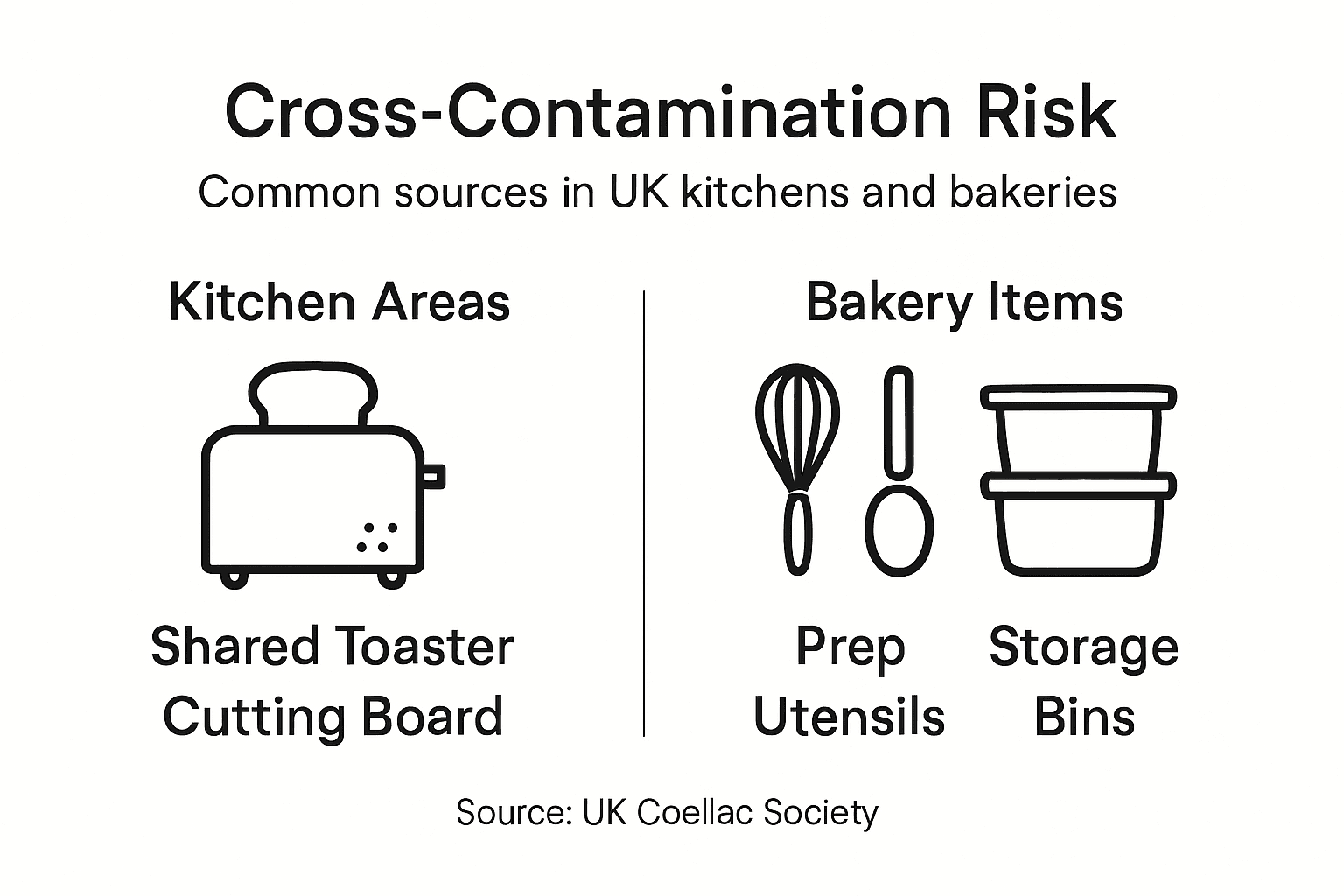
In domestic and commercial kitchens, cross-contamination can happen through numerous seemingly innocuous channels. Shared chopping boards, utensils, toasters, and cooking surfaces can transfer gluten between foods, making careful food handling essential. Allergen management guidance for food businesses emphasises the importance of rigorous cleaning protocols, dedicated preparation areas, and staff training to minimise these risks.
The complexity of preventing cross-contamination extends beyond physical separation. Different food processing environments, from bakeries to restaurants, require comprehensive strategies. This includes using separate preparation surfaces, colour-coded utensils, thorough cleaning between food preparation tasks, and maintaining strict ingredient segregation. Understanding these nuanced risks empowers individuals to make informed dietary choices and protect their health in various eating environments.
Pro tip: Always request separate preparation areas and clean utensils when dining out, and communicate your gluten sensitivity clearly to food handlers.
Health Hazards and UK Food Regulations
Gluten-related health hazards demand robust regulatory oversight, particularly within the United Kingdom’s food production landscape. The Foodstuffs Suitable for People Intolerant to Gluten Regulations establish critical standards protecting consumers with coeliac disease and gluten sensitivities. These regulations mandate strict compositional requirements, ensuring that gluten-free products genuinely meet safety thresholds for vulnerable populations.
Under current UK legislation, food manufacturers must adhere to comprehensive labelling guidelines that transparently communicate potential gluten risks. Food allergen labelling requirements specify that cereals containing gluten must be explicitly declared on packaging. This includes wheat, barley, rye, and their hybridised strains, with a maximum permissible gluten content of 20 mg/kg for products labelled as ‘gluten-free’.
The regulatory framework extends beyond mere labelling, encompassing rigorous food production protocols. Food businesses must implement comprehensive risk management strategies, including staff training, dedicated preparation areas, and systematic allergen control mechanisms. These measures protect consumers by minimising cross-contamination risks and ensuring accurate ingredient representation, particularly for individuals with serious gluten-related health conditions.
Pro tip: Always scrutinise food labels carefully, looking for explicit gluten-related warnings and checking certification marks that indicate rigorous gluten-free testing.
For quick reference, here is how UK food regulations impact consumers managing gluten-related risks:
| Regulatory Area | Key Requirement | Consumer Benefit | Real-World Example |
|---|---|---|---|
| Product labelling | Gluten declared on packs | Easy identification | ‘Contains wheat’ on bread |
| Safe gluten threshold | Max 20 mg/kg for gluten-free | Enhanced safety | Certified gluten-free biscuits |
| Allergen control | Staff training mandatory | Lower cross-contact risk | Separate fryer for chips |
| Ingredient disclosure | All gluten sources listed | Transparent choices | List includes rye, barley, wheat |
Discover Safe and Nourishing Grain Choices for Your Gluten-Sensitive Diet
Managing gluten intake demands both knowledge and access to high-quality alternatives that support your health goals and respect your sensitivities. This article highlights the challenges posed by wheat, barley, rye, and even some ancient grains containing gluten. At Granavitalis, we understand the need for purity and transparency in your food, which is why we offer carefully selected Gluten Free Flours – Granavitalis alongside a wide range of wholesome Grains – Granavitalis.

Take control of your gluten-conscious lifestyle with nutrient-dense, traditionally rooted options that empower your wellbeing. Explore our thoughtfully sourced products designed to fuel real strength, energy, and balance. Dive deeper into the full range of All Flours – Granavitalis today and start your journey towards clean living at Granavitalis. Practical, pure, and purposeful nutrition awaits you.
Frequently Asked Questions
What grains contain gluten?
The primary grains that contain gluten are wheat, barley, and rye. These grains can provoke immune responses in individuals with coeliac disease or gluten sensitivity.
Can ancient grains have gluten?
Yes, some ancient grains, such as spelt and einkorn, contain gluten. However, there are also gluten-free ancient grains, like buckwheat and quinoa, which are suitable for those avoiding gluten.
How can I identify gluten in food products?
You can identify gluten in food products by carefully reading labels that declare allergen information. Gluten-containing grains must be explicitly listed on packaging, particularly wheat, barley, and rye.
What are the risks of cross-contamination with gluten?
Cross-contamination can occur when gluten-free foods come into contact with gluten-containing grains or surfaces, leading to accidental ingestion. Practising strict food handling and preparation routines is essential for minimising this risk.