
Discover wheat-free flours: 10+ healthy baking options
TL;DR:
- Wheat-free flours include nuts, seeds, grains, legumes, and roots, offering rich flavor and nutrition.
- Certification is crucial to avoid cross-contamination, especially for gluten-sensitive and allergy sufferers.
- Understanding flour behavior and proper blending are key to successful wheat-free baking.
Switching away from wheat does not mean settling for bland, crumbly bakes or a drastically limited store cupboard. In fact, the opposite is true. Wheat-free flours include everything made from nuts, seeds, grains, legumes, and roots, opening up a surprisingly rich world of flavour and nutrition. From earthy buckwheat to silky almond, these alternatives have earned their place on every health-conscious kitchen shelf. This guide covers what wheat-free actually means, which flours deliver the best nutritional value, how to bake with them confidently, and how to choose safe, certified sources.
Table of Contents
- What makes a flour wheat free?
- Types of wheat-free flours and their nutritional benefits
- Certifying wheat-free flours: Safety and cross-contamination risks
- Using wheat-free flours in baking: Tips for success
- Our take: Rethinking wheat-free baking for health and flavour
- Find your wheat-free flour and healthy products
- Frequently asked questions
Key Takeaways
| Point | Details |
|---|---|
| Wheat-free flour options | Nut, seed, ancient grain, legume, and root flours are naturally wheat-free and nutritious. |
| Certification is essential | Certified gluten-free sources help avoid cross-contamination for coeliac and gluten-sensitive diets. |
| Ancient grains boost health | Buckwheat, sorghum, and teff offer superior nutrition, digestibility, and new flavours for wheat-free baking. |
| Blends improve baking texture | Combining flour types and binders yields the best wheat-free results for cakes, bread, and more. |
| Safe product selection | Choose trusted brands and packaged flours to ensure wheat-free purity and peace of mind. |
What makes a flour wheat free?
Having set the context, let’s clarify exactly what ‘wheat-free’ means in baking. The term sounds straightforward, but it catches many people out. Wheat-free simply means the flour contains absolutely no wheat whatsoever. Not reduced wheat. Not low-gluten wheat. Zero. This matters enormously if you have a wheat allergy, coeliac disease, or simply choose to avoid wheat for gut or inflammatory reasons.
Here is where the confusion often starts: wheat-free and gluten-free are not the same thing. Gluten is a protein found in wheat, barley, rye, and some oats. A flour can be gluten-free without being wheat-free if it contains wheat starch (a processed form with most gluten removed). Equally, a blend labelled ‘gluten-free’ may be processed in a facility that handles wheat. Always read ingredient lists carefully, especially for pre-mixed gluten-free diet basics blends.
Wheat-free flours fall into five broad categories:
- Nut flours: almond, coconut, hazelnut
- Seed flours: buckwheat, hemp, sunflower
- Grain flours: rice, sorghum, millet, teff, oat (certified)
- Legume flours: chickpea, lentil, fava bean
- Root flours: cassava, tapioca, arrowroot
Each category behaves very differently in the oven, which is the essential thing to understand before swapping anything. No single gluten-free flour substitutes 1:1 for wheat because wheat’s gluten network gives baked goods their stretch, rise, and chew. You are not simply replacing one powder with another. You are rethinking structure altogether. Understanding the difference between wheat and gluten grains is a helpful first step, as is getting familiar with gluten-free grains before you start experimenting.
Pro Tip: When testing a new wheat-free flour for the first time, start with a simple flatbread or pancake recipe. These forgiving formats reveal a flour’s flavour and texture without requiring complex gluten structure.
Types of wheat-free flours and their nutritional benefits
Now that the term is clear, let’s explore the most popular wheat-free flour types and what they offer for your health. The nutritional differences between these flours are genuinely striking, far beyond what most people expect.
| Flour | Protein per 100g | Key nutrients | Best use |
|---|---|---|---|
| Almond | 21g | Vitamin E, magnesium | Cakes, muffins |
| Buckwheat | 13g | Rutin, magnesium, iron | Pancakes, bread |
| Sorghum | 11g | Iron, B vitamins, fibre | Bread, flatbreads |
| Teff | 13g | Calcium, iron, zinc | Dense loaves, wraps |
| Chickpea | 22g | Fibre, folate, protein | Savoury bakes |
| Cassava | 2g | Neutral taste, binding | Blends, pastry |
| Coconut | 6g | MCTs, fibre | Sweet bakes |
Nut flours like almond are high in healthy fats and protein, which creates beautifully moist cakes and muffins. The drawback is density; they rarely rise much without additional support from eggs or raising agents. Coconut flour is extremely absorbent, typically requiring three times more liquid than a standard recipe.
Buckwheat is a powerhouse. Despite the name, it is completely unrelated to wheat. It is high in rutin and magnesium, while sorghum and teff are particularly rich in iron and protein. These ancient grains deliver genuine nutritional currency, not just a wheat substitute. Explore our ancient grain health guide for a deeper look at why these grains have lasted thousands of years.

Legume flours, especially chickpea, are exceptional for savoury baking. They bind well naturally, bring a pleasant nuttiness, and contribute meaningful fibre and plant protein. They do have a distinct flavour, so they work best in recipes that welcome it.
Root flours like cassava and tapioca are largely neutral in flavour and act as binding agents and texture improvers within blends. They rarely shine alone but elevate nearly every mix they join. The health benefits of buckwheat extend well beyond baking too, making it one of the most versatile ancient grains you can keep in your kitchen. For a full overview of options, the ancient grain guide at Granavitalis covers the landscape in detail.
Worth knowing: Teff flour contains around 180mg of calcium per 100g, making it one of the most calcium-dense grain flours available. That is a compelling reason to include it in your regular rotation.
Certifying wheat-free flours: Safety and cross-contamination risks
Many wheat-free flours are healthy, but choosing safe sources is essential. Here’s why certification matters more than most people realise.
Cross-contamination is not a theoretical risk. It is a practical, documented problem. Around 30% of gluten-free grains tested by ConsumerLab showed contamination with yeast or mould, which highlights why certified sources are non-negotiable for anyone with coeliac disease or a serious wheat allergy. Contamination can happen at the growing stage if wheat is cultivated in adjacent fields, at milling if shared equipment is used, or during packaging and storage.
| Flour type | Contamination risk | Certification needed |
|---|---|---|
| Oat flour | High | Yes, certified GF essential |
| Millet | Moderate | Recommended |
| Buckwheat | Low to moderate | Recommended |
| Almond | Low | Check packaging |
| Cassava | Low | Check packaging |
Oats require certified gluten-free labelling specifically because of widespread cross-contamination in the supply chain. Some coeliacs also react to oat protein (avenin) independently, so even certified oat flour is not universally safe.
A point that often surprises people: ancient wheat varieties such as spelt, einkorn, and emmer are absolutely not wheat-free. They are types of wheat. Their gluten structure differs from modern wheat, but they still contain gluten and are entirely unsuitable for those with wheat allergies or coeliac disease. This misconception causes real harm, so it is worth repeating clearly.
“Just because a flour sounds ancient or artisan does not make it safe for wheat-free diets. Spelt is wheat. Einkorn is wheat. Full stop.”
When shopping, look for flours with a certified gluten-free symbol from a recognised body such as the Coeliac UK crossed grain trademark. Sealed, tamper-evident packaging from a dedicated gluten-free producer matters too. A quick check of the gluten in grains overview can help you distinguish safe options from those that look safe but are not.
Using wheat-free flours in baking: Tips for success
With safe and nutritious options at hand, here’s how to bake successfully without wheat. The good news is that once you understand a few key principles, wheat-free baking becomes genuinely enjoyable rather than frustrating.
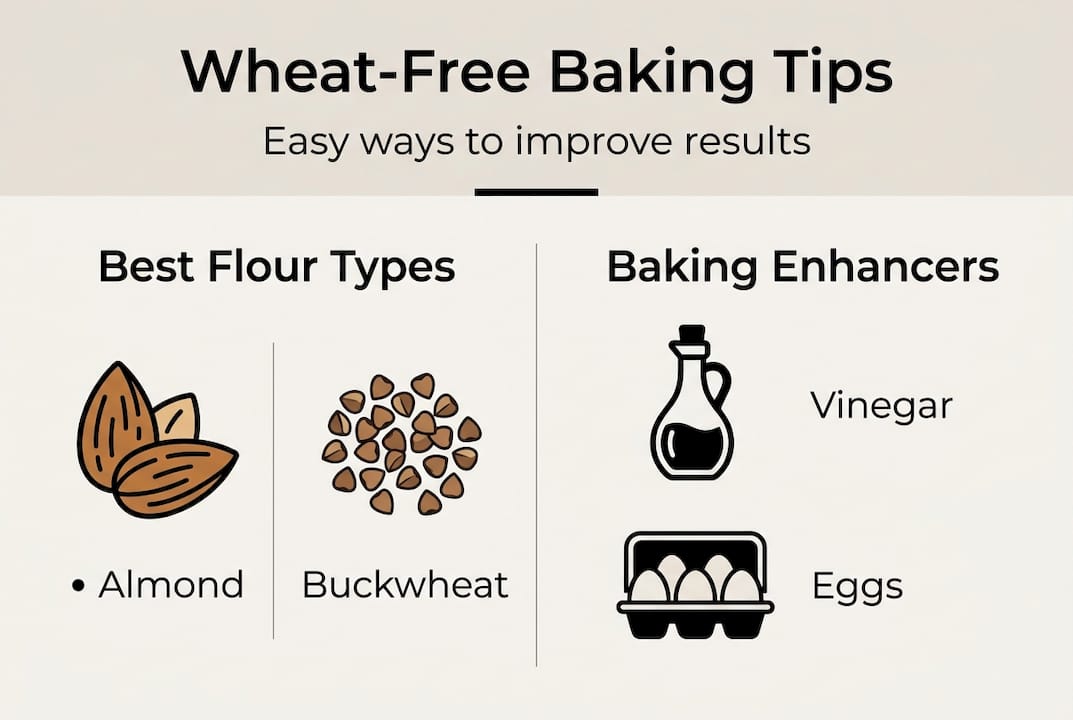
- Blend your flours. Most successful wheat-free bakes use two or three flours together. A typical starting point is 60% base flour (such as rice, sorghum, or almond) combined with 30% starch (tapioca or potato) and 10% a flavour flour (buckwheat or teff). Blends with tapioca and potato starch alongside binders like xanthan gum or psyllium husk produce the most wheat-like results.
- Use a binder. Xanthan gum and psyllium husk both mimic gluten’s binding role. Eggs and flaxseed (ground and mixed with water) also work beautifully. Without a binder, most wheat-free bakes crumble or fail to rise properly.
- Adjust your liquid. Coconut flour and almond flour absorb moisture very differently to grain flours. Expect to increase liquid by up to 25% when working with coconut flour specifically.
- Rest your doughs and batters. Wheat-free batters often benefit from a 20-30 minute rest before baking. This allows the starches to hydrate fully and often improves both texture and rise.
- Trust tested benchmarks. In UK testing, Freee by Doves Farm is widely regarded as the best all-purpose gluten-free plain flour, and sorghum is noted for mimicking wheat’s soft crumb especially well.
For recipes that need more structure, consider the guide to choosing gluten-free grains which pairs grain types to specific baking outcomes. Understanding ancient grain realities also helps set realistic expectations before you begin. These resources from wheat-free flour recommendations are worth bookmarking for regular reference.
Pro Tip: If your wheat-free bread keeps collapsing, add one teaspoon of apple cider vinegar to your batter. The acidity strengthens the structure from gluten-free flours and improves crumb texture noticeably.
Our take: Rethinking wheat-free baking for health and flavour
Beyond practical advice, here is why we believe wheat-free flours change the game entirely. Most discussions around wheat-free baking frame it as a compromise: something you do because you must, not because you want to. We fundamentally disagree.
When you prioritise certified gluten-free ancient grains like buckwheat and sorghum for nutrition and superior digestibility over generic commercial blends, you are not settling. You are upgrading. These grains carry genuine nutritional complexity that modern wheat flour, stripped and enriched in processing, simply cannot match.
The real shift is mental, not culinary. Wheat-free baking asks you to understand your ingredients rather than follow a formula blindly. Once you grasp how each flour behaves, a whole new vocabulary of flavour opens up. Nutty teff in a breakfast loaf. Earthy buckwheat in savoury galettes. Chickpea flour in crisp flatbreads. These are not consolation prizes. They are genuinely exciting culinary territory. And for those who care about why gluten-free grains matter for long-term wellbeing, the evidence points clearly toward ancient grains as the more digestible, more nourishing foundation for everyday eating.
Find your wheat-free flour and healthy products
If you are ready to try wheat-free baking, here is where you can find high-quality products to start. At Granavitalis, we have curated a range of wholefood products that complement a wheat-free lifestyle beautifully.
Our nut and seed butter selection pairs perfectly with wheat-free baking projects, adding richness and nutrition to everything from muffins to breakfast bowls. For mornings on the move, the keto chocolate chip muesli offers a satisfying, wheat-free start without compromise. And for an everyday nutritional boost, our superfoods immunity mix brings zinc and vitamin B1 into your routine with clean, purposeful ingredients. Every product we carry reflects our commitment to purity, performance, and the real nutritional power of nature.
Frequently asked questions
What flours are naturally wheat free?
Naturally wheat-free flours include almond, coconut, buckwheat, rice, corn, sorghum, millet, teff, chickpea, cassava, and tapioca. Always check for gluten-free certification if cross-contamination is a concern for you.
Is oat flour wheat free?
Oat flour is wheat-free by ingredient, but it is only safe for gluten-free diets if it carries certified gluten-free labelling, as cross-contamination during processing is very common.
Can ancient grain flours like spelt and einkorn be used for wheat-free baking?
No. Ancient wheats such as spelt and einkorn contain gluten and are types of wheat, making them entirely unsuitable for wheat-free or coeliac diets regardless of their traditional origins.
What’s the best wheat-free flour blend for baking cakes?
Blends such as King Arthur Measure for Measure or Bob’s Red Mill 1-to-1 produce cakes closest to a wheat texture, as expert benchmarks confirm these perform consistently well with added binders in sweet baking.
How do I avoid cross-contamination in wheat-free flour?
Buy from certified gluten-free brands, check all packaging carefully, and avoid bulk bins entirely. Around 30% of tested gluten-free grains show contamination, so the source of your flour matters as much as the flour itself.