
The role of botanicals in wellness: everyday nutrition guide
Botanicals deliver phytonutrients, fibre, antioxidants and mild adaptogenic compounds that support energy, recovery and gut health across every stage of your day. Around 25% of people in the UK now use some form of botanical food supplement or herbal medicine, and the evidence base, while uneven, is strong enough in several areas to justify a food-first approach. The practical upshot: you do not need a complex supplement stack to benefit.
Start here today:
- Add a tablespoon of ground flaxseed, hemp seeds or a nut butter to breakfast for polyphenols, omega-3s and plant protein.
- Use culinary herbs such as turmeric, ginger and rosemary liberally in cooking; they contribute meaningful antioxidant load at normal serving sizes.
- Before buying any botanical supplement, check for a Certificate of Analysis (COA) from a third-party lab on the product page.
- If you take prescription medication, speak to a pharmacist before adding a new botanical product.
Pro Tip: Start with food-form botanicals before moving to concentrated extracts. Whole foods provide co-factors that isolated extracts often lack, and the safety profile is far better understood.
Table of Contents
- What counts as ‘botanicals’ for everyday nutrition?
- How do botanicals support health and performance?
- Are botanical products safe, and how are they regulated in the UK?
- How do you choose high-quality wholefood botanicals?
- Practical ways to add botanicals to your daily routine
- Key takeaways
- A perspective on botanicals and real-food nutrition
- Granavitalis: wholefood botanicals for daily nutrition and performance
- Useful sources and further reading
What counts as ‘botanicals’ for everyday nutrition?
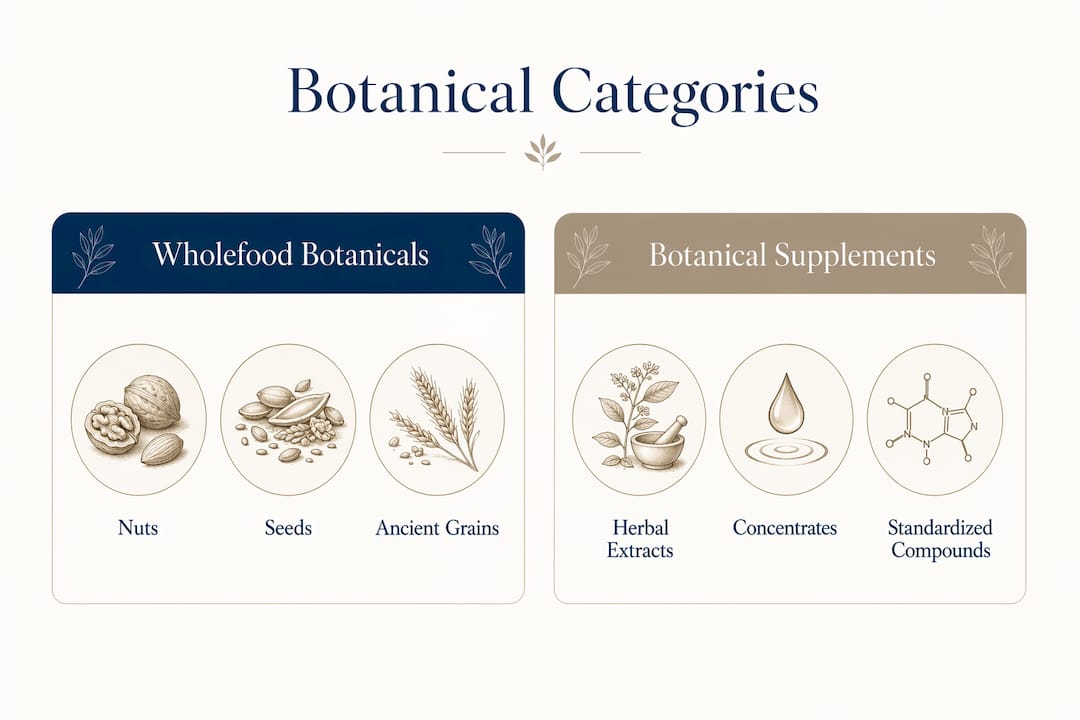
The word “botanical” covers a broader range than most people assume. For practical nutrition purposes, there are five useful categories.
| Category | Examples | Typical use |
|---|---|---|
| Wholefood botanicals | Nuts, seeds, ancient grains, legumes | Daily meals, baking, snacking |
| Culinary herbs and spices | Turmeric, ginger, rosemary, cinnamon | Cooking, teas, smoothies |
| Botanical extracts and tinctures | Ashwagandha extract, chokeberry concentrate | Capsules, drops, functional drinks |
| Adaptogens | Ashwagandha, rhodiola, lion’s mane mushroom | Stress support, cognitive focus |
| Botanical food supplements (BFS) | Spirulina, moringa, maca powder | Powders, capsules, bars |
The distinction between a botanical food supplement (BFS) and a herbal medicinal product (HM) matters legally and practically. A BFS sits under food law; an HM makes therapeutic claims and requires regulatory authorisation. Delivery form also shapes how much you absorb: a fresh herb in a meal behaves differently from a standardised extract in a capsule, and a tincture delivers bioactives faster than a dried powder. For traditional nutrition approaches, wholefood forms remain the most accessible and safest starting point.
How do botanicals support health and performance?
Botanicals act via phytonutrients, micronutrients, fibre and specific bioactive compounds to support resilience, recovery and nutrient density. The mechanisms are distinct enough to be worth separating.
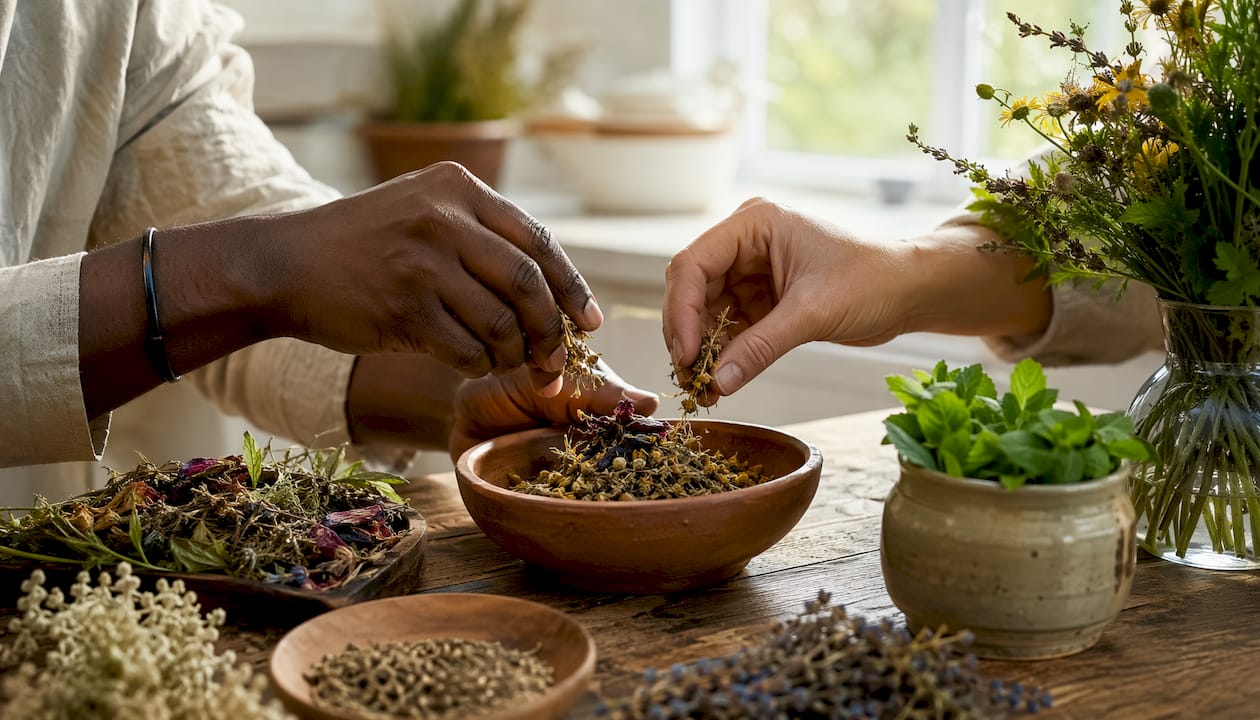
Antioxidant and anti-inflammatory effects are the most studied pathway. Polyphenols in berries, turmeric’s curcuminoids and the flavonoids in dark leafy herbs all reduce oxidative stress markers. For athletes, chokeberry supplementation shows promise for improving redox balance, though the evidence on inflammation and exercise performance still requires more robust trials.
Gut modulation is where wholefood botanicals earn their keep most reliably. Prebiotic fibre from seeds, ancient grains and legumes feeds beneficial microbiota, which in turn influences immune function, mood and nutrient absorption. This is an area with strong mechanistic and observational evidence, even if large-scale RCTs remain limited.
Plant proteins support muscle repair and recovery. Plant protein sources such as hemp, pea and ancient grain flours provide essential amino acids alongside fibre and micronutrients that animal proteins do not.
Adaptogenic pathways are the least standardised area. Ashwagandha has the strongest human trial data for reducing perceived stress and supporting sleep quality; rhodiola has moderate evidence for fatigue reduction. Most other adaptogens sit at the mechanistic or observational level.
Evidence caveat: Individual metabolic baselines influence whether a person benefits from a given botanical supplement, which means population-level averages can mask wide individual variation. Dose, duration and product quality all interact with your personal response. Treat any botanical protocol as a monitored trial, not a guaranteed outcome.
| Mechanism | Key botanicals | Evidence level |
|---|---|---|
| Antioxidant / anti-inflammatory | Chokeberry, turmeric, green tea | Moderate (some RCTs) |
| Gut microbiota support | Flaxseed, oats, chicory root | Moderate to high (observational + RCTs) |
| Plant protein for recovery | Hemp, pea, ancient grains | Moderate (RCTs in athletes) |
| Adaptogenic stress response | Ashwagandha, rhodiola | Moderate (ashwagandha); Limited (others) |
| Cognitive support | Lion’s mane, bacopa | Limited (small RCTs) |
Are botanical products safe, and how are they regulated in the UK?
The UK draws a clear regulatory line between food supplements and herbal medicines. The Food Standards Agency oversees botanical food supplements under food law, while the MHRA regulates herbal medicinal products. A product that makes a therapeutic claim, or that is presented as treating a condition, must hold either a full marketing authorisation or a Traditional Herbal Registration (THR), which requires evidence of at least 30 years of traditional use under the Human Medicines Regulations 2012.
The practical implication: if a product’s label says “supports healthy joints” it is likely a food supplement; if it says “relieves joint pain” it should carry a THR or marketing authorisation. Products making medicinal claims without that status are non-compliant.
Safety risks consumers often underestimate:
- Botanicals can interact with approximately 120 prescription drugs, including anticoagulants, antidepressants and immunosuppressants.
- “Natural” does not mean safe at any dose. Concentrated extracts carry different risk profiles from food-form botanicals.
- Vulnerable groups, including pregnant women, people over 65 and those on multiple medications, face higher interaction risk.
Quality checks before you buy:
- COA from an accredited third-party laboratory, ideally testing for heavy metals, pesticides and microbial contamination.
- Transparent country of origin and batch number on the label.
- No restricted or banned herbs (check the MHRA’s list of herbal ingredients subject to enforcement action).
- Permitted nutrition or health claims only; medicinal language without a THR is a warning sign.
How do you choose high-quality wholefood botanicals?
The gap between a well-sourced botanical product and a poorly labelled one is wider than most shoppers realise. Queen’s University Belfast research on athlete supplement use found consistent dosing and product quality to be the two factors most predictive of whether a botanical delivers its claimed benefit.
Scan a label for: the botanical’s Latin binomial name (e.g. Withania somnifera for ashwagandha), the part of the plant used (root, leaf, seed), the standardised extract percentage where relevant, and a batch number traceable to a COA. Organic certification reduces pesticide load but does not guarantee potency. Heavy metal testing is non-negotiable for soil-grown botanicals such as spirulina, moringa and turmeric.
For performance-focused buyers, the QUB overview on botanical food supplements notes that market growth has outpaced regulatory clarity, meaning marketing claims frequently exceed the evidence. A product citing a single small study is not the same as one with replicated RCT data.
Pro Tip: For athletic use, look for products that specify the extract ratio or standardised active compound (e.g. “5% withanolides”) rather than just total herb weight. Unstandardised powders vary batch to batch and make consistent dosing impossible.
Practical ways to add botanicals to your daily routine
Food-first is not a compromise; it is the most reliable delivery mechanism for most people. Here is a realistic weekly framework.
- Breakfast: Stir a tablespoon of ground flaxseed and a teaspoon of cinnamon into porridge made with oat or spelt flour. Add a spoonful of raw nut butter for plant protein and healthy fats.
- Mid-morning: A small handful of nibbed hazelnuts or mixed seeds provides magnesium, zinc and polyphenols without a sugar spike.
- Lunch: Build a grain bowl using an ancient grain base (freekeh, einkorn or teff), topped with roasted turmeric-spiced vegetables and a tahini dressing.
- Pre-training (2–3 hours before): A polyphenol-rich smoothie with chokeberry or blueberry, hemp protein and ginger supports antioxidant status going into exercise. For plant-based recovery, consistent intake over several days before an event matters more than a single large dose.
- Post-training: Pair a plant protein source with a carbohydrate within 45 minutes. Protein snacks for athletes that combine legume protein with wholefood botanicals cover both macronutrient and micronutrient recovery needs.
- Evening: Ashwagandha (if using a standardised supplement) is most commonly taken in the evening in trials showing sleep-quality benefits. A chamomile or valerian tea is a lower-risk, food-adjacent alternative.
- Weekly reset: Rotate your herb and spice palette. Diversity in plant inputs drives microbiome diversity, which is where much of the long-term benefit accumulates.
Expect noticeable changes in energy and digestion within two to four weeks of consistent food-form botanical use. Adaptogenic effects typically require six to eight weeks of daily intake before meaningful changes are measurable.
Key takeaways
Botanicals support everyday wellness through phytonutrients, fibre, antioxidants and adaptogenic compounds, but food-first use, product quality and realistic timelines are what separate genuine benefit from marketing noise.
| Point | Details |
|---|---|
| Food-first approach | Whole botanical foods (seeds, herbs, ancient grains) are safer and better evidenced than isolated extracts for most people. |
| Evidence is uneven | Antioxidant and gut-support mechanisms have the strongest evidence; adaptogenic and cognitive claims need more RCTs. |
| UK regulatory distinction | BFS products sit under food law; herbal medicinal products require MHRA authorisation or a THR. |
| Safety is not automatic | Botanicals can interact with approximately 120 prescription drugs; always disclose use to your GP or pharmacist. |
| Granavitalis approach | Granavitalis sources ancient grains, nut butters and plant proteins with COA-backed transparency for daily wholefood botanical nutrition. |
A perspective on botanicals and real-food nutrition
The conversation around botanicals tends to split into two unhelpful camps: breathless enthusiasm that treats every herb as a cure, and blanket scepticism that dismisses anything without a Phase III trial. Neither serves you well.
What the evidence actually shows is more nuanced. The strongest case for botanicals is not in the supplement aisle; it is in the diversity and quality of your daily food. Turmeric in a curry, flaxseed in your porridge, a varied grain base at lunch: these are not dramatic interventions, but they are consistent, low-risk and cumulative. The integrative healthcare direction that UK clinicians are increasingly moving towards reflects exactly this: botanicals as part of a wider nutritional strategy, not as replacements for acute care.
Where I think people go wrong is in expecting a single botanical supplement to compensate for a poor diet or inadequate recovery. Ashwagandha will not fix a sleep deficit caused by three coffees after 3 PM. Chokeberry extract will not offset chronic under-eating. The botanicals that move the needle are the ones embedded in a nutrient-dense food pattern, taken consistently, from sources you can verify.
Granavitalis is built around exactly that premise: heritage grains, premium nut butters and clean plant proteins that carry both nutritional density and sourcing transparency. The brand’s insistence on COA-backed quality is not marketing language; it is the minimum standard any botanical product should meet.
Granavitalis: wholefood botanicals for daily nutrition and performance
Nutrient-dense botanicals do not have to mean a shelf of capsules. Granavitalis brings together raw organic nut butters, ancient grain flours and clean plant proteins, all sourced with full COA transparency and minimal processing, so your daily food does the work.
Whether you want a ready-made polyphenol hit from the organic nut and seed butter selection box, a single-ingredient wholefood botanical like nibbed hazel nuts, or the concentrated richness of raw organic pecan butter, every product is traceable from source to shelf. Browse the full range at Granavitalis and find the wholefood botanical that fits your routine today.
Useful sources and further reading
UK regulatory authorities:
- The Human Medicines Regulations 2012 — the legal framework for traditional herbal medicinal products in the UK.
- GOV.UK: Apply for a Traditional Herbal Registration — requirements and restricted ingredients for herbal medicinal products.
- GOV.UK: Guidance on new provisions for traditional herbal medicinal products — MHRA and Food Standards Agency regulatory context.
Academic and practitioner sources:
- HerbMed-UK review, University of London — prevalence, consumer attitudes, safety and interactions.
- Botanical ingredients: intakes, regulations, risks and attitudes, Queen’s University Belfast — market data, regulatory gaps and consumer motivations.
- Nutrition Bulletin, Queen’s University Belfast: athlete guidance on botanical supplements — dosing consistency and product quality for performance use.
- Nutrients journal: individual metabolic response to supplements — metabolic variability and heterogeneous responses.
- Chokeberry supplementation and athletic performance, Food & Function (RSC Publishing) — systematic review of polyphenol-rich supplementation in athletes.
This article is general nutritional information, not medical or clinical advice. Confirm current regulations and any supplement use relevant to your own health situation with the MHRA, Food Standards Agency, or a qualified healthcare professional.