
Botanical protein: benefits, sources, and how to use them
TL;DR:
- Botanical protein refers to plant-derived sources like legumes, grains, nuts, and seeds, which vary widely in amino acid profiles and digestibility. Properly combining and processing these sources, such as pairing grains with legumes or choosing ancient grains, ensures complete nutrition without reliance on supplements. Regulatory frameworks in Europe require evidence-based health claims, emphasizing safe preparation and diverse, consistent intake for long-term wellness.
Not all plant proteins are created equal, and the term “botanical protein” adds another layer of confusion for anyone trying to eat more intelligently from plants. You might have seen it on a supplement label or in a wellness blog, wondering whether it means something scientifically precise or just sounds impressive. The reality is that botanical protein is a practical, useful framework for thinking about protein from plant sources, and understanding it properly can genuinely improve how you eat, recover, and fuel your day.
Table of Contents
- Defining botanical protein: What it means and why it matters
- Botanical protein sources: From ancient grains to nuts and seeds
- Achieving complete nutrition: Complementing botanical proteins
- Regulation and safety: Health claims and safe consumption in Europe
- Our take on botanical protein: Practical wisdom and myths busted
- Discover botanical protein products for your wellness routine
- Frequently asked questions
Key Takeaways
| Point | Details |
|---|---|
| Botanical protein is plant-based | It refers to protein from legumes, grains, seeds, nuts, and other plants. |
| Ancient grains offer quality | Quinoa and amaranth provide better amino-acid profiles compared with other cereals. |
| Completeness needs variety | Combine different plant proteins to achieve full essential amino-acid coverage. |
| EU regulates health claims | Only evidence-backed claims are allowed about plant protein foods in Europe. |
| Safe processing is crucial | Proper soaking and cooking are vital for safe plant protein consumption. |
Defining botanical protein: What it means and why it matters
Botanical protein does not carry a single, regulated definition in European food law. It is a descriptive term, widely used in nutrition science and food technology, to refer to protein from plant-based sources including legumes, grains, oilseeds, nuts, and seeds. Think of it as an umbrella label covering the vast world of plant-derived proteins rather than one specific ingredient or compound.
Why does this matter for you? Because not all plant protein foods perform the same way in your body. The protein in a handful of pumpkin seeds behaves differently from the protein in a bowl of lentils or a scoop of hemp powder. Each source brings a different amino-acid profile, digestibility rate, and functional behaviour in cooking. Knowing this helps you build meals and routines that actually deliver on their nutritional promises.
The major botanical groups that contribute dietary protein include:
- Legumes: lentils, chickpeas, black beans, soybeans, peas
- Cereals and ancient grains: wheat, oats, spelt, einkorn, teff, sorghum
- Pseudocereals: quinoa, amaranth, buckwheat
- Oilseeds: flaxseed, sunflower seeds, sesame
- Nuts: almonds, walnuts, pecans, cashews
- Algae and botanical extracts: spirulina, chlorella, pea protein concentrate
If you want to go deeper on the heritage and story behind these food categories, understanding ancient grains is a great place to start. The context of where these foods come from shapes how we use them today.
| Botanical group | Example sources | Typical protein content (per 100g) |
|---|---|---|
| Legumes | Lentils, chickpeas | 18 to 25g |
| Pseudocereals | Quinoa, amaranth | 13 to 15g |
| Nuts | Almonds, pecans | 15 to 21g |
| Seeds | Hemp, pumpkin | 20 to 30g |
| Ancient grains | Teff, spelt | 10 to 15g |
This table illustrates just how varied botanical protein content can be. Seeds often outperform grains in raw protein density, yet ancient grains bring a wider range of micronutrients and dietary fibre alongside their protein contribution. Choosing just one source would mean missing out on the broader nutritional picture.
Botanical protein sources: From ancient grains to nuts and seeds
Not every botanical protein source is nutritionally equivalent, and the differences go beyond simple gram-per-gram comparisons. What separates genuinely powerful sources from average ones is the quality of the amino acids they provide and how well your body absorbs and uses those proteins.
Ancient grains like quinoa and amaranth are genuinely exceptional because they offer complete amino-acid profiles, meaning they contain all nine essential amino acids your body cannot produce on its own. This is rare in the plant kingdom and is one reason these crops have been cultivated for thousands of years across South America and parts of Africa and Asia. The nutritional advantages of ancient grains go far beyond their protein content, but protein quality is a standout feature.
Legumes, seeds, and nuts, while typically incomplete proteins on their own, are dense in specific amino acids that grains lack. This complementarity is the key insight that makes botanical protein planning both practical and empowering.
How processing affects botanical proteins
When seeds and grains are processed into flours, concentrates, or isolates, the functional food properties change. Solubility, emulsification, and texture all shift depending on how the protein is extracted and treated. This is why pea protein isolate behaves differently in a smoothie compared to whole split peas in a soup. It also explains why the botanical proteins in meat analogues and dairy alternatives require careful formulation to perform well. For everyday eating, whole or minimally processed sources generally retain more of their nutritional complexity.
| Source | Complete protein? | Best paired with | Common use |
|---|---|---|---|
| Quinoa | Yes | Legumes or greens | Salads, bowls, porridge |
| Lentils | No (low in methionine) | Grains or seeds | Soups, dahls, patties |
| Hemp seeds | Near-complete | Grains | Smoothies, porridge |
| Pea protein | No (low in methionine) | Rice or oat protein | Protein blends |
| Amaranth | Yes | Legumes | Porridge, baking |
Explore a wider range of options in our guide to 7 nutritious ancient grains that deserve a place on your plate. If you want practical meal inspiration, our collection of high-protein breakfast ideas with ancient grains and plants is a genuinely useful starting point.
Pro Tip: Mixing a grain-based protein (like amaranth or oat) with a legume-based protein (like pea or lentil) in a single meal or across your day gives you full coverage of essential amino acids without any single exotic ingredient.
Achieving complete nutrition: Complementing botanical proteins
Here is where most people misunderstand plant-based protein. The concern that plant foods cannot provide complete nutrition is largely a myth, but it does require a little knowledge to navigate. Plant proteins are often incomplete, meaning they lack sufficient quantities of one or more essential amino acids. Grains tend to be low in lysine but rich in methionine. Legumes are the opposite. Combining them resolves the gap entirely.
You do not need to do this in a single sitting. Research now confirms that spreading complementary proteins across the day, rather than engineering every meal to be nutritionally perfect, is enough to meet your amino-acid needs. This simplifies things enormously for people building a sustainable plant-based routine.
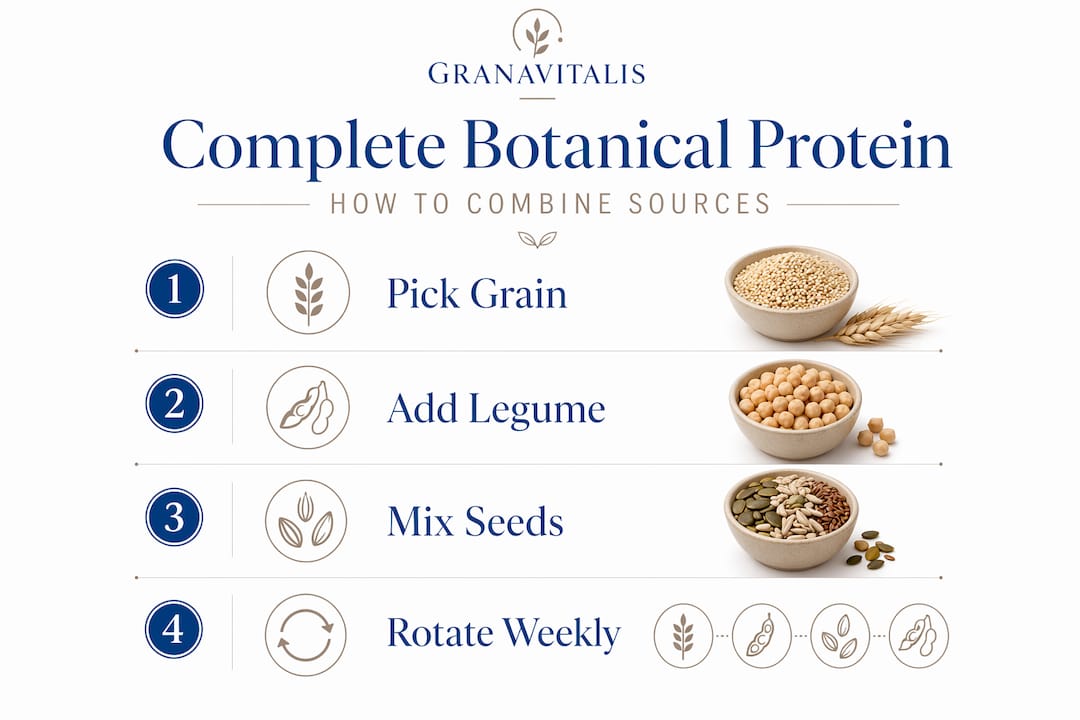
A practical approach to protein complementing:
- Start your day with a grain-based breakfast. Oats, amaranth porridge, or a spelt-flour pancake all contribute methionine-rich protein.
- Add a seed or nut topping. Hemp seeds, pumpkin seeds, or a spoonful of pecan butter bring additional protein density and healthy fats.
- Include a legume at lunch or dinner. Lentils, chickpeas, or black beans provide the lysine your grains did not.
- Use a quality plant protein blend as a supplement when food intake is limited. Look for blends that combine pea and rice or pea and oat protein for amino-acid balance.
- Rotate your sources weekly. Variety is both nutritionally optimal and practically enjoyable.
“Combining plant protein sources ensures complete nutrition without relying on animal products, provided dietary variety is maintained consistently over time.”
For meals built around this principle, our guide to high-protein plant-based meals with ancient grains walks you through practical recipes and portions. You can also look at 7 essential examples of ancient grains for balanced nutrition if you want to expand your rotation beyond the obvious choices.
If you are an active person with higher protein demands, such as someone training regularly or recovering from physical exertion, a purpose-built supplement like a quality protein product can help bridge gaps without complicating your diet.
Pro Tip: Rotate your grain and legume combinations every week. Try teff and black beans one week, amaranth and lentils the next. This keeps meals interesting and ensures you are drawing from a broad pool of amino acids rather than relying on the same narrow set.
Regulation and safety: Health claims and safe consumption in Europe
If you shop for plant-based protein products in Europe, you will encounter a range of health claims on packaging. Some state “high in protein,” others promise support for “muscle maintenance” or “sustained energy.” These statements are not freely made in the EU. The EFSA health claims regulation requires that every health claim on a food product be backed by robust scientific evidence, assessed by the European Food Safety Authority.
There is an important distinction between nutrition claims and health claims. A nutrition claim, such as “source of protein” or “high in fibre,” describes the nutritional composition of a food. A health claim goes further and states that the food does something specific for your body. The latter requires far more evidence and regulatory approval. As a consumer, this matters because it means claims like “supports heart health” or “boosts immunity” on a packet of grain flour must meet a defined evidential threshold.
Key steps to ensure safe and beneficial botanical protein use:
- Always buy from brands that are transparent about sourcing and processing methods
- Check that health claims on packaging are phrased in ways that comply with EU regulations
- Cook and soak beans and legumes thoroughly before eating to neutralise anti-nutrients
- Store seeds and nut products correctly to prevent oxidation of their fats
- Diversify your botanical protein sources rather than relying heavily on one food
On the topic of safety, one specific concern worth knowing about is lectins. Plant lectins can pose risks to human health when consumed in large quantities from improperly prepared foods. Raw or undercooked kidney beans are the most frequently cited example, containing a lectin called phytohaemagglutinin that can cause severe gastrointestinal distress. Thorough soaking and boiling deactivates lectins effectively. This is not a reason to avoid legumes. It is a reason to prepare them properly, which most traditional cuisines have always done instinctively.
For a broader view on how botanical foods connect to everyday wellbeing, our feature on ancient grains and modern wellness explores how heritage foods navigate the modern food landscape. You can also find a useful overview of health food regulation context relevant to the UK and European markets.
Our take on botanical protein: Practical wisdom and myths busted
Here is the uncomfortable truth that most nutrition content avoids: no single botanical protein food will transform your health. Not spirulina. Not hemp. Not even quinoa, as genuinely impressive as its amino-acid profile is. The idea that you can identify one superfood and let it do all the heavy lifting is a product of marketing, not nutrition science.
What actually works is far less glamorous. Consistency, variety, and a diet built around whole botanical foods across every meal. The people who benefit most from plant-based protein are not those chasing the next trending ingredient. They are the ones who quietly eat lentils on Monday, buckwheat on Wednesday, and hemp seeds every morning, without making it complicated.
The overlooked power of mixing ancient grains, seeds, and legumes is not that each one is individually extraordinary. It is that together, they cover nutritional ground that no single food can cover alone. Methionine from oats, lysine from chickpeas, omega-3s from flaxseed, iron and zinc from pumpkin seeds. This is how traditional diets around the world have functioned for millennia, long before anyone coined the phrase “botanical protein.”
We also see too many people jump between trend proteins without giving any approach time to work. Your body adapts to nutritional inputs over weeks and months, not days. Rotating sources intelligently, as described above, and doing it consistently over time, is what builds the nutritional foundation that supports long-term wellness with ancient grains and plant-based eating.
The myth worth busting most firmly: you do not need complex meal planning or expensive products to eat complete botanical protein. A bowl of whole grain porridge topped with hemp seeds and a lunch of lentil soup achieves what no single supplement can replicate. The strategy is diversity and daily habit, not novelty.
Discover botanical protein products for your wellness routine
At Granavitalis, we have built our range around exactly the philosophy this article describes. Whole botanical sources, minimal processing, and transparency about what you are eating and why.
If you are ready to put botanical protein to work in your daily routine, our raw organic pecan butter is a genuinely nutrient-dense option for adding healthy fats and plant protein to breakfast or snacks. For those with higher protein targets, our kick-ass vegan protein blend brings together complementary plant proteins in a clean, effective formula. And if you want to layer in additional botanical power, our superfoods mix with açai, chia, and acerola gives your routine a concentrated boost of antioxidants and plant nutrition. Every product is selected because it earns its place at the table.
Frequently asked questions
Is botanical protein suitable for vegans and vegetarians?
Yes, botanical protein is plant-based by definition, making it entirely suitable for vegan and vegetarian diets with no modification needed.
Do botanical proteins provide all essential amino acids?
Some sources like quinoa are complete, but most plant proteins are incomplete and benefit from being paired with complementary sources such as grains alongside legumes.
Are there safety issues with botanical protein sources?
Proper preparation is essential. Lectins in some plants must be deactivated through thorough soaking and cooking, particularly for kidney beans and other legumes.
How do EU regulations affect health claims about botanical proteins?
The EU health claims regulation requires all health claims on plant-protein foods to be evidence-based and approved by EFSA, meaning any claim you see on packaging must meet rigorous scientific standards.