
Understanding plant-based recovery for athletes
TL;DR:
- A well-planned plant-based diet can support serious physical recovery by emphasizing whole foods, phytonutrients, and strategic meal timing. Key factors include sufficient protein distribution, antioxidant intake, targeted supplements, and gradual transition, which collectively reduce inflammation and enhance muscle repair. Evidence shows that plant-based diets can match or exceed omnivorous diets in recovery markers, making them a viable approach for athletes seeking optimal performance and health.
Most people assume plant-based diets struggle to support serious physical recovery. That assumption is wrong, and the science proving it has grown substantially over the past decade. Understanding plant-based recovery means moving past the protein panic and into a more nuanced picture: one where whole foods, phytonutrients, and smart meal timing work together to rebuild muscle, reduce inflammation, and prepare your body for the next session. This guide covers the evidence, the practical strategies, and the honest nuances that most articles skip.
Table of Contents
- Key takeaways
- The science of plant-based recovery
- Plant-based vs omnivorous recovery: what the evidence says
- Practical strategies for optimising recovery meals
- Supplements that support plant-based athletes
- Transitioning to plant-based recovery nutrition
- My honest take on plant-based recovery
- Fuel your recovery with Granavitalis
- FAQ
Key takeaways
| Point | Details |
|---|---|
| Protein needs are met with planning | Distribute 1.2–2.0 g/kg of protein across 3–5 daily meals to support consistent muscle repair. |
| Antioxidants accelerate recovery | Plant foods reduce exercise-induced inflammation, enabling more frequent and intense training. |
| Timing your post-workout meal matters | Consume 20–40 g protein and 30–60 g carbohydrates within two hours of training for best results. |
| Targeted supplements fill genuine gaps | Vitamin B12, algal omega-3, and magnesium are the non-negotiable foundations for plant-based athletes. |
| Gradual transition reduces stress | Stepwise dietary changes are more sustainable and less disruptive than overnight overhauls. |
The science of plant-based recovery
The first thing to get straight is protein. Recovery nutrition on a plant diet is not a guessing game, but it does require deliberate choices. Research recommends that active individuals consume 1.2–2.0 g/kg per day of protein, spread across three to five meals, with each meal delivering 20–40 g. That is entirely achievable without animal products, provided you choose your sources with care.
The amino acid leucine deserves particular attention. It is the primary trigger for muscle protein synthesis, and plant foods do contain it. Soya beans, lentils, pumpkin seeds, and hemp protein are all meaningfully rich in leucine. The broader concern with plant proteins is that most are not “complete” in isolation, meaning they do not supply all nine essential amino acids in sufficient quantities on their own. The solution is combination. Rice and peas, or lentils and quinoa, together produce a far more complete amino acid profile than either alone. A guide on balancing plant protein covers how to structure these combinations practically.
Beyond protein, plants bring something omnivorous diets often underdeliver on: a dense supply of antioxidants, fibre, and phytonutrients. Plant-based diets reduce inflammation through higher antioxidant intake, which directly supports faster recovery between sessions. Fibre also plays a role that most people overlook entirely.

Pro Tip: Fermentation of plant fibres like pectin by gut bacteria produces butyrate, a short-chain fatty acid that reduces systemic inflammation and strengthens the gut lining. A stronger gut means more efficient nutrient absorption and a measurably lower inflammatory burden after hard training.
One common pitfall: assuming that eating plant foods automatically means eating well for recovery. White rice, refined bread, and fruit juice are all plant-based. Whole foods with intact fibre and micronutrient density are what drive the recovery benefit. The category matters, not just the label.
Plant-based vs omnivorous recovery: what the evidence says
The comparative research is more reassuring than most people expect. Well-planned plant-based diets produce comparable VO2max and power output to omnivorous diets, while simultaneously delivering higher antioxidant protection against exercise-induced oxidative stress. That combination matters because oxidative stress is one of the primary drivers of delayed muscle soreness and extended recovery time.
The table below illustrates how the two dietary approaches compare across several key recovery markers:
| Recovery marker | Plant-based diet | Omnivorous diet |
|---|---|---|
| Antioxidant intake | Significantly higher | Moderate |
| Inflammatory markers | Generally lower | Variable |
| VO2max and power output | Comparable | Comparable |
| Recovery window speed | Faster with good planning | Standard |
| Gut microbiome diversity | Typically higher | Lower on average |
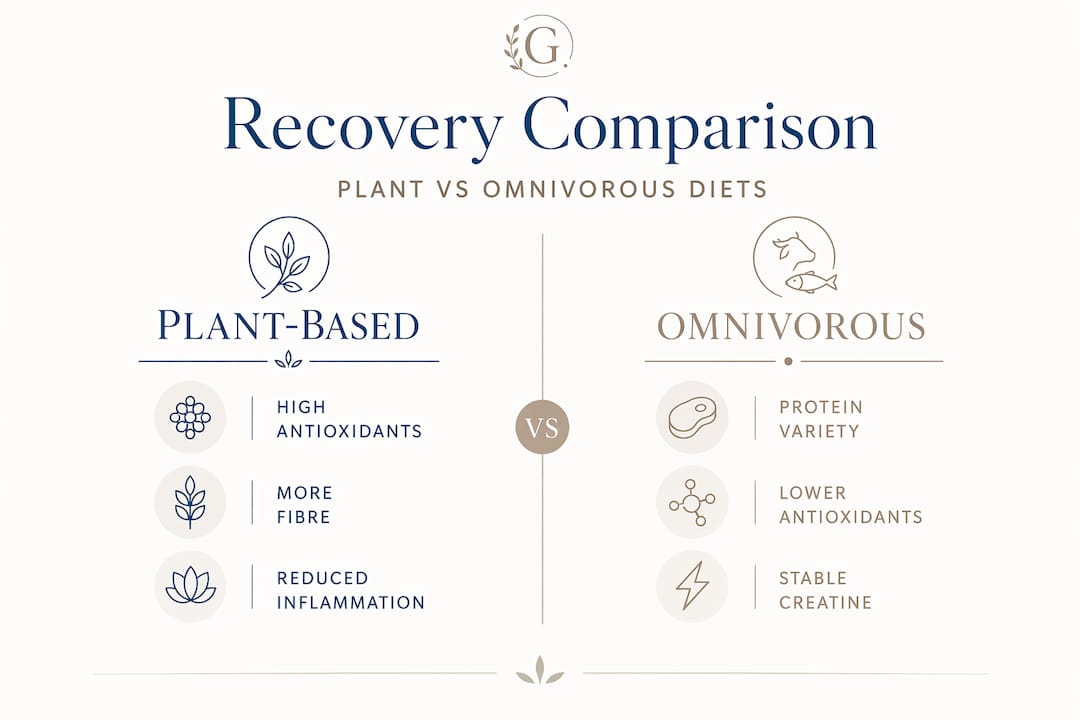
The inflammation point is not trivial. Chronic low-grade inflammation slows tissue repair and blunts adaptation to training. The anti-inflammatory effect of plant foods is one of the genuine structural advantages of a plant-centred approach, not just a marketing claim.
What supplementation fills in the gaps? That question comes up constantly, and the honest answer is: less than you might think, if the diet is well constructed. Creatine and B12 are the two most evidence-backed additions. A small number of athletes also benefit from algal omega-3 for joint health and inflammation control. The specifics are covered below.
“The primary advantage of plant-based recovery is the high antioxidant content that reduces inflammation and accelerates training recovery cycles.” — Independent
For practical meal inspiration, a smoothie built on soya milk, frozen berries, hemp protein, and rolled oats gives you protein, antioxidants, complex carbohydrate, and anti-inflammatory phytonutrients in one glass. That is not a compromise. That is good recovery nutrition.
Practical strategies for optimising recovery meals
Knowing what to eat is only part of the picture. When you eat, how much you eat, and what you combine it with determines how much of that nutritional value your body actually uses. Post-workout meals should deliver 20–40 g of high-quality plant protein alongside 30–60 g of carbohydrates within one to two hours of finishing exercise. That window is real, and missing it consistently slows recovery.
Here is a practical framework for structuring your plant-based recovery meals:
- Within 30 minutes of training: Prioritise a fast-digesting carbohydrate source such as a banana or a date-based energy ball to begin replenishing glycogen quickly.
- Within 90 minutes: Sit down to a proper recovery meal. A bowl of brown rice, black beans, roasted sweet potato, and tahini delivers protein, complex carbohydrates, and healthy fats in the right proportions.
- Healthy fats in moderation: Include sources like avocado, nut butter, or seeds. Keep fat portions moderate immediately post-workout, as high fat intake slows gastric emptying and delays protein absorption.
- Antioxidant colour on the plate: Aim for at least two colours of vegetables or fruit at every recovery meal. Colour signals phytonutrient diversity. Blueberries, spinach, red pepper, and beetroot are all particularly good choices.
- Hydration alongside nutrients: Water supports all nutrient transport. Some athletes find plant-based recovery drinks practical for convenience when a full meal is not immediately possible.
Pro Tip: Pairing carbohydrates with protein, fibre, or fat is not just about satiety. It is what keeps blood sugar stable, which directly affects energy availability during recovery. A spike-and-crash cycle after a high-carb meal without protein delays muscle glycogen restoration.
The single biggest mistake people make when learning how to recover on a plant diet is over-relying on protein supplements while neglecting whole-food carbohydrate. Muscle repair requires both macronutrients working together, not protein alone.
Supplements that support plant-based athletes
Most plant-based athletes do not need a shelf full of supplements. They need a few well-chosen ones, used consistently. Here is where the evidence points:
- Vitamin B12: Mandatory on plant-based diets. B12 is not reliably obtained from plant foods. Deficiency causes fatigue, nerve issues, and impaired recovery. A daily supplement or B12-fortified foods are non-negotiable.
- Algal omega-3 (EPA and DHA): The plant-based alternative to fish oil. Algae are where fish obtain omega-3 in the first place. Algal EPA and DHA support joint health, reduce exercise-induced inflammation, and aid sleep quality.
- Magnesium: Supports muscle relaxation, reduces cramping, and improves sleep depth. Many active individuals are mildly deficient regardless of diet. Found in leafy greens, pumpkin seeds, and dark chocolate, but supplementation can help when training volume is high.
- Plant protein isolates: Convenient and effective for hitting protein targets when whole-food intake falls short. Look for pea or rice/pea blends with a complete amino acid profile. Check for third-party testing.
- Supplement quality: NSF Certified for Sport is the gold standard for supplement verification. It confirms the product contains what it claims and is free from banned substances. For serious athletes, this is not optional.
- Adaptogens and botanicals: Ashwagandha and turmeric have emerging evidence for recovery support and inflammation reduction. They are useful additions, not foundations. Build the basics first.
Transitioning to plant-based recovery nutrition
The shift to plant-based eating rarely fails because of nutrition knowledge. It usually fails because people try to do too much at once. A gradual, stepwise transition focusing on overall well-being is consistently more sustainable and less psychologically stressful than an overnight overhaul.
Practical guidance for a smooth transition:
- Replace one meal at a time. Start with breakfast or a post-workout snack. Build familiarity before tackling every meal.
- Check your nutrient status. A baseline blood panel for B12, iron, vitamin D, and omega-3 index gives you actual data rather than guesswork.
- Think beyond protein. Most people obsess over protein while ignoring iron, zinc, and iodine. Legumes, seeds, and seaweed help, but awareness matters.
- Notice your body’s signals. Energy dips, sleep changes, and training performance are all useful feedback. Track them loosely for the first two months.
- Get professional input when needed. A registered dietitian with plant-based experience can personalise your approach. There is no single correct plan.
Pro Tip: Successful plant-based recovery requires intentional pairing of macronutrients at each meal. A plate that looks healthy on paper can still leave you fatigued if carbohydrates are not balanced with protein or fibre. Build the habit of checking the composition, not just the ingredient list.
Individual variation is real. Some people thrive immediately on a plant diet. Others need six months of refinement before recovery feels truly supported. Neither experience is wrong. The goal is a sustainable approach that improves over time, not a perfect plan from week one.
My honest take on plant-based recovery
I have spoken with a lot of people who approached plant-based recovery nutrition with either blind optimism or deep scepticism, and both groups tend to make the same mistake. They look for a system that removes all uncertainty. That system does not exist.
What I have seen work consistently is curiosity without dogma. The people who get the best results are those who treat food as useful data: they notice what helps them sleep better, recover faster, and feel stronger across a month of training. They are not attached to being “perfectly plant-based.” They are attached to feeling good and performing well.
In my experience, the benefits of plant-based recovery are not instant. The inflammation reduction, the gut health improvements, the antioxidant loading: all of these build over weeks, not days. People who quit after two weeks because they feel tired have not given the transition a fair trial. Fatigue in the first few weeks is almost always about caloric insufficiency or a missed micronutrient, not a fundamental incompatibility with the diet.
What I find most underrated is the fibre effect. The gut microbiome changes that come from a high-fibre plant diet have a measurable impact on inflammation and recovery. Most people do not feel that benefit for four to six weeks. When it arrives, training bounce-back noticeably improves.
My advice: start with the foundations. Get your protein distribution right. Get your B12 sorted. Build your plate with whole foods rather than processed plant substitutes. Then pay attention. The answers are in your own data.
— Jarrod
Fuel your recovery with Granavitalis
If understanding plant-based recovery has shown you where your nutrition needs to grow, Granavitalis has the whole-food tools to support that growth without compromise.

Granavitalis sources clean plant proteins, ancient grain flours, raw nut butters, and superfood mixes built around nutritional integrity rather than convenience shortcuts. Every product is selected for purity, density, and genuine performance value. The immune booster superfood bundle is a practical starting point for anyone looking to support recovery and immune resilience through whole-food nutrition. For healthy fat and nutrient-dense snacking, the organic nut and seed butter range delivers flavour and function in equal measure. Built on the same principle as everything at Granavitalis: real ingredients, purposeful formulation, no filler.
FAQ
How much protein do plant-based athletes actually need?
Research recommends 1.2–2.0 g/kg of bodyweight per day for active individuals, distributed across three to five meals. Most people can meet this through legumes, tofu, tempeh, hemp, and quality plant protein supplements.
Can a plant-based diet match omnivorous diets for recovery?
Yes. Well-planned plant-based diets produce comparable VO2max and power output to omnivorous diets, with the added benefit of higher antioxidant intake and reduced inflammatory markers.
What supplements are non-negotiable on a plant-based diet?
Vitamin B12 is mandatory, as it cannot be reliably sourced from plant foods. Algal omega-3 and magnesium are the next most evidence-backed additions for active plant-based individuals.
When should I eat after training on a plant-based diet?
Aim to consume 20–40 g protein and 30–60 g carbohydrates within one to two hours of finishing exercise. A rice and bean bowl, a soya-based smoothie, or lentil soup with bread all fit this target well.
How long does it take to see the benefits of plant-based recovery nutrition?
Most people notice meaningful improvements in recovery, energy, and inflammation within four to eight weeks of consistent plant-based eating. The gut microbiome changes that drive many of these benefits take time to develop, so patience in the early stages is warranted.