
Plant based diet energy levels: your complete guide
TL;DR:
- A well-planned plant-based diet provides sustained energy by including key nutrients such as iron, B12, selenium, and iodine. Proper meal structure, pairing iron-rich foods with vitamin C, and regular nutrient testing help prevent deficiencies and energy dips. Whole foods with targeted supplementation support optimal energy levels and overall vitality.
A well-planned plant-based diet supports sustained energy for daily activities by delivering complex carbohydrates, healthy fats, and plant proteins that release fuel steadily throughout the day. The key word is “planned.” Plant based diet energy levels depend almost entirely on whether you cover the nutrients that whole plant foods cannot supply on their own. 57% of UK individuals cite nutrient deficiency as their primary concern about going plant-based. That worry is legitimate, but it is also solvable. Iron, vitamin B12, selenium, iodine, and adequate calories are the variables that separate a vegan diet that drains you from one that powers you through the day.
Which nutrients affect energy on a plant-based diet?
Energy metabolism in the body depends on a specific set of micronutrients, and plant-based eating changes how you access several of them.
Iron is the most discussed. It carries oxygen to your muscles and brain. Without enough, fatigue sets in quickly. Plant foods contain non-haem iron, which the body absorbs less readily than the haem iron found in meat. Over 3.7 million UK adults already have low iron levels. That figure makes iron the single most important mineral to track when you shift to plant-based eating.
Vitamin B12 is non-negotiable. B12 is essential for energy release and nervous system health, and it does not occur naturally in plants. Every plant-based eater needs either fortified foods or a daily supplement. There is no dietary workaround.
Selenium is less talked about but equally relevant. UK dietary selenium intake has fallen to around 35 mcg per day, well below the adult reference nutrient intake of 60–75 mcg per day. Low selenium affects thyroid function, which directly regulates your metabolic rate and energy output.
Iodine follows a similar pattern. UK dairy is the primary iodine source for most British adults. Remove dairy and you remove iodine unless you consciously replace it with iodised salt or seaweed. Thyroid health and steady metabolism depend on it.
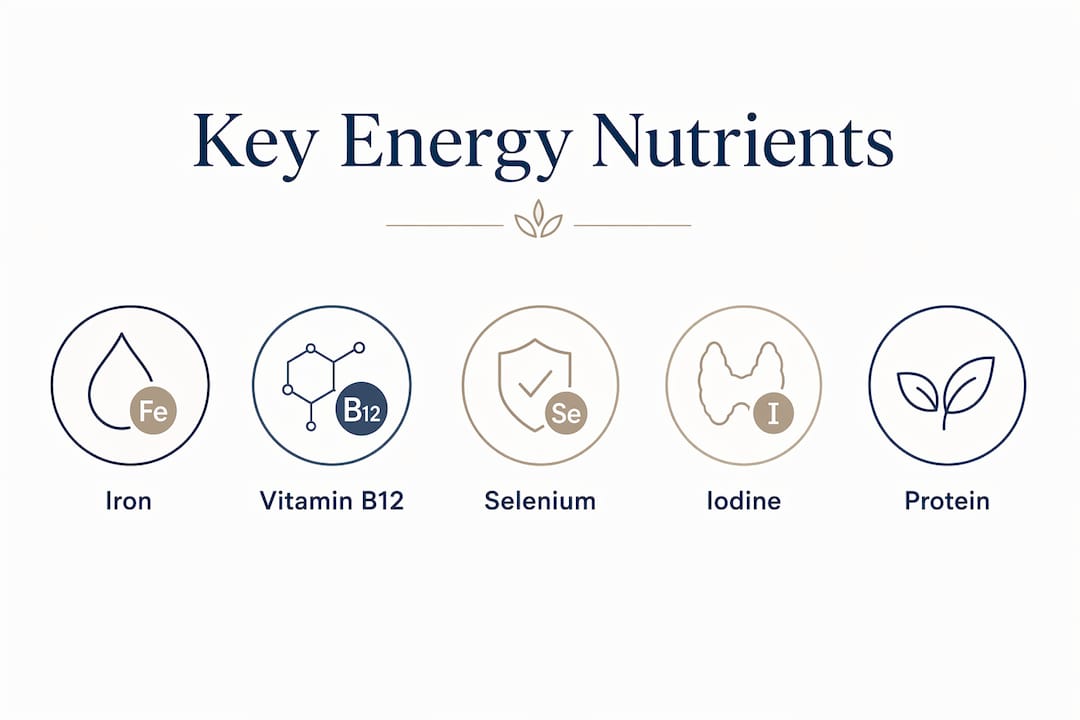
Protein and calories round out the picture. Plant proteins often come bound with fibre and phytates, which slow absorption. Soaking legumes and varying your protein sources improves bioavailability meaningfully. Lentils, chickpeas, hemp seeds, tofu, and tempeh each offer different amino acid profiles, so rotating them covers more ground than relying on one source.
Pro Tip: Pair iron-rich plant foods, such as lentils or spinach, with a vitamin C source like lemon juice or red pepper. Vitamin C can increase non-haem iron absorption by up to 300%, which is one of the most impactful single changes you can make for vegan diet energy.
| Nutrient | Key role | Best plant sources |
|---|---|---|
| Iron | Oxygen transport, fatigue prevention | Lentils, spinach, pumpkin seeds, fortified cereals |
| Vitamin B12 | Energy metabolism, nerve function | Fortified plant milks, nutritional yeast, supplements |
| Selenium | Thyroid and metabolic function | Brazil nuts, sunflower seeds, wholegrains |
| Iodine | Thyroid hormone production | Iodised salt, nori seaweed |
| Protein | Muscle repair, sustained fuel | Tofu, tempeh, hemp seeds, legumes |
How to structure meals for sustained energy on a plant-based diet
Meal structure matters as much as food choice. A plate that combines complex carbohydrates, protein, and healthy fats releases energy gradually rather than in a spike followed by a crash.
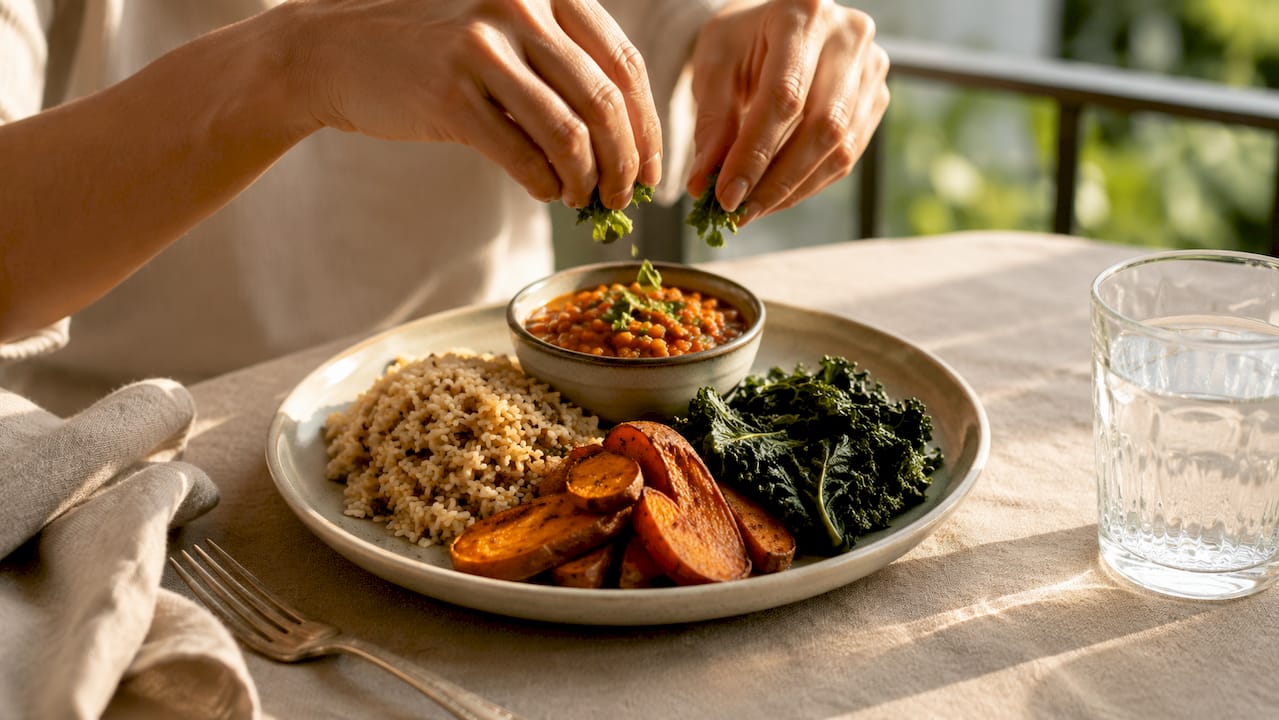
Build each main meal around three components. First, a complex carbohydrate: oats, brown rice, quinoa, or sweet potato. Second, a protein source: lentils, chickpeas, tofu, or hemp seeds. Third, a healthy fat: avocado, tahini, flaxseed oil, or a nut butter. This combination slows digestion and keeps blood glucose stable for hours. You can find practical ideas for balanced plant-based meals that follow this structure.
Meal timing also plays a role. Eating every 3–4 hours prevents the blood sugar dips that many people mistake for a vegan diet energy problem. A mid-morning snack of nuts and fruit, or a small portion of hummus with oatcakes, bridges the gap between breakfast and lunch without relying on caffeine.
Fortified foods fill the micronutrient gaps that whole plant foods leave. Fortified oat milk, fortified soya yoghurt, and nutritional yeast all contribute B12 and often vitamin D. Read labels, because not all plant milks are fortified equally.
- Start the day with a protein-anchored breakfast: overnight oats with hemp seeds and berries, or a tofu scramble with spinach.
- Include a vitamin C source at every iron-rich meal to maximise absorption.
- Add a healthy fat to every meal: a tablespoon of nut butter, a drizzle of flaxseed oil, or half an avocado.
- Snack on calorie-dense whole foods: a small handful of mixed nuts, a date with almond butter, or a smoothie with seeds.
- Take a B12 supplement daily, or use fortified foods at two to three meals.
Pro Tip: Plant-based breakfasts for active mornings do not need to be complicated. A bowl of oats with a tablespoon of nut butter, a banana, and a glass of fortified oat milk covers protein, complex carbs, healthy fats, B12, and calcium in under five minutes.
Practical foods that give you a plant based energy boost
Specific foods deliver a meaningful energy return per gram, and knowing which ones to reach for makes daily eating far more efficient.
High-energy, nutrient-dense options to keep in your kitchen:
- Hemp seeds: 10g of protein per 30g serving, plus omega-3 fatty acids and magnesium. Stir into porridge or blend into smoothies.
- Pumpkin seeds: Rich in iron, zinc, and magnesium. A 30g handful as a snack covers a useful portion of your daily iron needs.
- Nut butters: Calorie-dense, protein-rich, and packed with healthy fats. Raw organic nut butters with no added sugar or palm oil are the cleanest option.
- Lentils: One of the best iron and protein sources in plant-based eating. Red lentils cook in 15 minutes and need no soaking.
- Fortified plant milks: Contribute B12, vitamin D, and often calcium in a single glass.
- Nutritional yeast: A complete protein with a savoury flavour. Two tablespoons sprinkled on food adds B12 and B vitamins.
- Dates and dried figs: Fast-release carbohydrates for pre-workout or mid-afternoon energy without refined sugar.
For those who are very active or working to maintain weight, NHS guidance recommends an extra 600 calories per day via nutrient-dense additions like seeds, oils, and nut butters. This is not about eating more junk. It is about adding calorie-dense whole foods to meals you already eat.
A concept worth understanding is “hidden hunger.” Fibre-rich plant foods create fullness before you have consumed enough calories or micronutrients. You feel satisfied but run a deficit. The fix is to add calorie-dense, nutrient-rich foods to every meal rather than eating larger volumes of low-calorie vegetables.
Soaking nuts, seeds, and legumes overnight reduces phytate content and improves how much protein and iron your body actually absorbs. It takes 30 seconds of preparation the night before and makes a measurable difference to plant protein bioavailability.
Troubleshooting energy dips on a plant-based diet
Energy dips during the first weeks of plant-based eating are normal, not a sign that the diet is failing you.
New plant-based eaters often experience energy fluctuations early on due to higher fibre intake and lower overall calories. Energy typically stabilises after several weeks once meal composition improves. The body needs time to adapt its gut microbiome and digestion to a fibre-heavy diet.
Common causes of persistent fatigue on a plant-based diet:
- Iron deficiency: Symptoms include tiredness, pale skin, shortness of breath, and difficulty concentrating. A blood test confirms it.
- B12 deficiency: Causes fatigue, brain fog, and nerve tingling. Develops slowly and is easy to miss without testing.
- Insufficient calories: The most underestimated cause. Whole plant foods are less calorie-dense than meat and dairy, so volume needs to increase.
- Poor iron absorption: Drinking tea or coffee with meals inhibits non-haem iron absorption. Shift hot drinks to between meals rather than with them.
- Low iodine or selenium: Both affect thyroid function, which governs metabolic rate and energy production.
Periodically monitoring blood levels of key nutrients, including iron, B12, and vitamin D, is the most reliable way to sustain long-term vitality on a plant-based diet. A GP or registered dietitian can arrange these tests and interpret the results in context.
Consistent meal patterns and avoiding stimulants help maintain steady energy once the body adapts. Caffeine masks fatigue rather than resolving it. If you rely on multiple coffees to function, that is a signal to review your nutrient intake rather than increase your coffee consumption. Speaking of which, if you do drink coffee, choosing plant-based coffee options that align with your values keeps your whole routine consistent.
Key takeaways
A plant-based diet supports strong, sustained energy when it covers iron, B12, selenium, iodine, and sufficient calories through varied, nutrient-dense whole foods.
| Point | Details |
|---|---|
| B12 is non-negotiable | Supplement daily or use fortified foods at multiple meals to prevent energy and nerve decline. |
| Pair iron with vitamin C | This single habit can increase non-haem iron absorption by up to 300%. |
| Calories matter as much as nutrients | Add nut butters, seeds, and oils to meals to prevent hidden hunger and energy deficits. |
| Test your blood regularly | Annual checks for iron, B12, and vitamin D catch deficiencies before fatigue sets in. |
| Structure every meal | Combine complex carbs, protein, and healthy fats at each meal to keep energy stable all day. |
What I have learned about energy and plant-based eating
The most common mistake I see is treating a plant-based diet as a subtraction exercise. People remove meat and dairy, add a few vegetables, and wonder why they feel tired. The real work is addition: adding seeds, adding fortified foods, adding variety, and adding the habit of checking what your body actually needs.
The first two to four weeks are the hardest. Digestion changes, appetite signals shift, and energy can feel unpredictable. Most people who abandon plant-based eating do so in this window, before the adaptation is complete. Patience here is not passive. It means actively adjusting meal composition, tracking how you feel after different foods, and getting a blood test if fatigue persists beyond a month.
What surprises people most is how much nutrient synergy matters. Eating iron-rich lentils is not enough on its own. Eating them with roasted red peppers and a squeeze of lemon changes the nutritional outcome of that same meal. These pairings are not complicated once you know them, but they are not intuitive either.
The other thing I would say is this: processed vegan alternatives are not the answer. A vegan sausage roll is not a plant-based diet. Whole plant foods with targeted supplementation are what actually move the needle on energy and recovery. The closer your food is to its original form, the more it delivers.
— Jarrod
Granavitalis and your plant-based energy goals
Eating for sustained energy on a plant-based diet means choosing foods that are genuinely dense in the nutrients your body needs, not just foods that happen to be vegan.
Granavitalis sources raw organic nut and seed butters that add healthy fats, protein, and calories to any meal without fillers or refined oils. The Organic Nut & Seed Butter Selection Box gives you variety across different nutrient profiles, from almond to pecan to tahini, so you can rotate sources and cover more micronutrient ground. For a single high-impact addition, the Raw Organic Pecan Butter is one of the most calorie-dense, nutrient-rich options available. Granavitalis also offers a superfood bundle packed with antioxidants and micronutrients that complement a plant-based diet for both energy and immune support.
FAQ
Does a plant-based diet affect energy levels?
Yes. A plant-based diet can support strong, stable energy when it covers key nutrients including iron, B12, and sufficient calories. Poorly planned plant-based diets cause fatigue through deficiency rather than the diet itself.
What is the most common cause of low energy on a vegan diet?
Iron deficiency and insufficient calories are the two leading causes. Over 3.7 million UK adults already have low iron levels, and plant-based eaters face higher risk without deliberate dietary planning.
Do I need to supplement on a plant-based diet?
Vitamin B12 supplementation is mandatory for plant-based eaters, as B12 does not occur naturally in plants. Vitamin D and iodine supplements are also worth considering, particularly in the UK.
How long does it take for energy to stabilise on a plant-based diet?
Energy typically stabilises after several weeks once meal composition improves and the gut adapts to higher fibre intake. Persistent fatigue beyond four weeks warrants a blood test.
How can I increase energy quickly on a plant-based diet?
Add calorie-dense whole foods such as nut butters, seeds, and avocado to every meal, pair iron sources with vitamin C, and take a daily B12 supplement. These three changes produce the fastest improvement in vegan diet energy.