
What to eat on a plant-based diet: your guide to balanced meals
TL;DR:
- A balanced plant-based diet emphasizes whole foods like vegetables, legumes, grains, nuts, and fortified alternatives.
- Nutrients such as B12, iodine, calcium, and omega-3 require deliberate planning or supplementation.
- Choosing real ingredients over processed foods and focusing on whole, minimally processed items promotes better health.
Switching to a plant-based diet is one of the most positive steps you can take for your long-term health, yet the most common stumbling block is surprisingly simple: knowing exactly what to put on your plate. With conflicting advice online and supermarket shelves stacked with everything from lentil crisps to vegan sausages, it is easy to feel overwhelmed before you have even cooked a single meal. This guide cuts through the noise with UK-based evidence, practical meal ideas, and clear nutritional guidance, so you can build a plant-based way of eating that genuinely works for your body and your lifestyle.
Table of Contents
- Core foods to include in a plant-based diet
- Key nutrients to watch and how to get them
- Building meals: from breakfast to snacks
- Troubleshooting common problems and staying on track
- Why a plant-based diet is not automatically healthy
- Take action: delicious plant-based options from Granavitalis
- Frequently asked questions
Key Takeaways
| Point | Details |
|---|---|
| Diversity is crucial | A variety of plant foods ensures all nutrients are covered without gaps. |
| Focus on key nutrients | Pay extra attention to protein, B12, iron, calcium, and omega-3 with fortified foods and careful planning. |
| Prioritise whole foods | Whole, unprocessed foods deliver the best health benefits compared to highly processed plant-based alternatives. |
| Practical meals matter | Simple UK meal ideas like bean stews, vegetable soups, and nut-based snacks make healthy eating easy and enjoyable. |
Core foods to include in a plant-based diet
Now that you are ready to start, let us look at which foods should form the foundation of your plant-based diet. The good news is that the building blocks are straightforward, affordable, and widely available across UK supermarkets and health food shops.
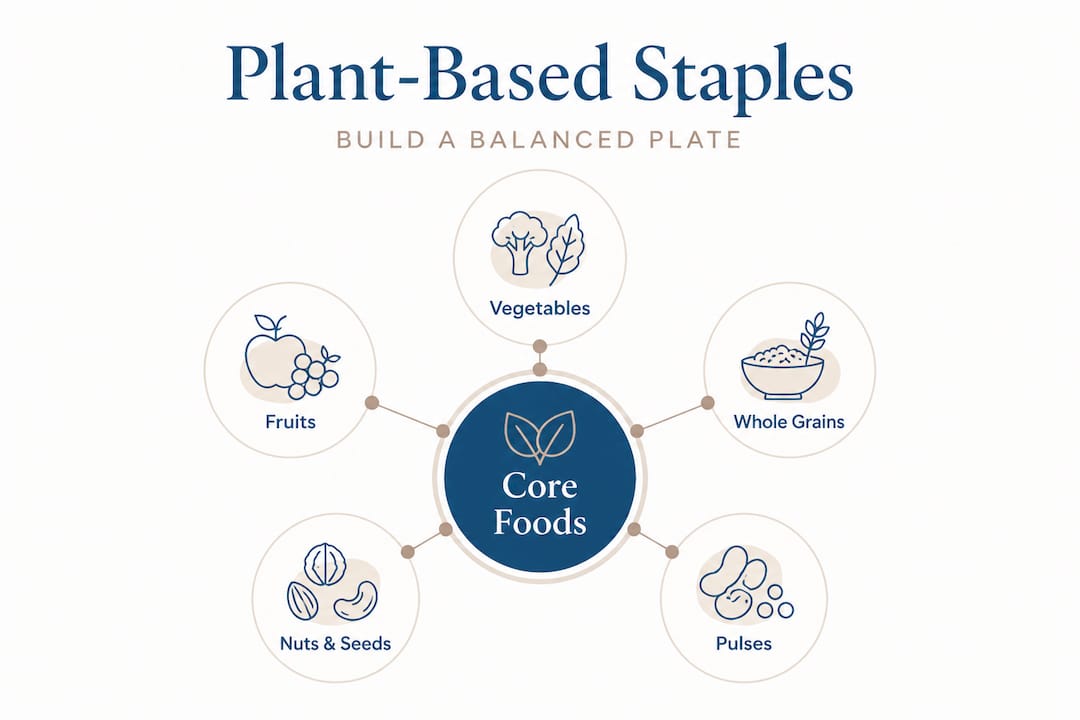
Plant-based food groups fall into several clear categories, and core foods include vegetables, fruits, wholegrains, legumes, nuts, seeds, and fortified plant-based alternatives such as milks and yoghurts. Each group brings something different to the table nutritionally, which is why variety is not just nice to have but genuinely essential.
The essential plant-based food groups:
- Vegetables and fruits: Aim for a wide range of colours. Dark leafy greens such as kale, spinach, and broccoli are especially valuable for calcium and iron. Berries, citrus fruits, and peppers deliver vitamin C, which helps your body absorb iron from plant sources.
- Wholegrains: Oats, brown rice, quinoa, spelt, and wholemeal bread provide sustained energy, fibre, and a meaningful contribution to your daily protein intake.
- Legumes: Chickpeas, lentils, black beans, kidney beans, and edamame are among the most nutrient-dense foods available. They are high in protein, fibre, and minerals.
- Nuts and seeds: Almonds, walnuts, sunflower seeds, hemp seeds, and chia seeds add healthy fats, protein, and micronutrients. A small handful daily goes a long way.
- Fortified plant-based alternatives: Oat milk, soya yoghurt, and fortified cereals fill nutritional gaps, particularly for calcium, iodine, and vitamin B12.
One important nutritional insight: combining pulses with wholegrains, such as lentils with rice or hummus with wholemeal pitta, gives you a complete protein profile containing all nine essential amino acids your body cannot make on its own.
| Food group | Top UK examples | Key nutrients |
|---|---|---|
| Vegetables | Kale, broccoli, spinach, carrots | Iron, calcium, vitamin C, folate |
| Fruits | Apples, berries, oranges, bananas | Vitamin C, potassium, fibre |
| Wholegrains | Oats, brown rice, quinoa, spelt | Fibre, B vitamins, protein |
| Legumes | Lentils, chickpeas, kidney beans | Protein, iron, zinc, fibre |
| Nuts and seeds | Walnuts, almonds, chia, hemp | Omega-3, protein, vitamin E |
| Fortified alternatives | Oat milk, soya yoghurt, cereals | Calcium, B12, iodine, vitamin D |
Pro Tip: Buy dried pulses and wholegrains in bulk and keep a stock of frozen vegetables and tinned legumes. They are just as nutritious as fresh options, far cheaper, and mean you can always pull together a balanced meal without a last-minute shop.
Key nutrients to watch and how to get them
Once you are familiar with the core foods, it is key to make sure your choices cover all the nutrients your body needs. A plant-based diet done well is genuinely rich in nutrition, but there are a handful of nutrients that require deliberate planning.

The British Heart Foundation advises that protein comes from beans, lentils, tofu, and nuts; calcium from fortified plant milks, green leafy vegetables, tofu, and tahini; iron from pulses, leafy greens, dried fruit, and fortified cereals; vitamin B12 from fortified foods or supplements; and omega-3 from flaxseed, walnuts, and rapeseed oil.
The British Dietetic Association also flags that vegans are at risk of B12, iodine, calcium, and omega-3 deficiencies, and notes that plant-based dairy imitations are often lower in calcium, potassium, zinc, and iodine than the dairy products they replace.
How to meet your daily needs, step by step:
- Protein: Aim for at least two to three servings of legumes or tofu daily. Explore plant-based protein sources like tempeh, edamame, and hemp seeds to keep meals varied and your amino acid intake broad.
- Calcium: Choose fortified oat or soya milk (look for at least 120mg calcium per 100ml), eat broccoli and kale regularly, and include tahini in dressings and dips.
- Iron: Lentils, chickpeas, pumpkin seeds, and fortified breakfast cereals are strong sources. Pair them with vitamin C-rich foods to maximise absorption.
- Vitamin B12: This nutrient is not reliably found in plant foods. Take a daily supplement or eat two to three servings of B12-fortified foods such as nutritional yeast, plant milks, or cereals every day.
- Vitamin D: In the UK, sunlight exposure is insufficient for much of the year. A daily supplement of 10 micrograms is recommended for everyone from October to March.
- Iodine: Often overlooked, iodine is critical for thyroid function. Fortified plant milks and seaweed (in moderate amounts) are your best plant-based sources.
- Omega-3: Ground flaxseed, chia seeds, walnuts, and rapeseed oil provide ALA (alpha-linolenic acid). For those wanting long-chain omega-3s (EPA and DHA), an algae-based supplement is the most reliable option.
Nutritional note: Not all plant-based alternatives are created equal. Some oat milks contain as little as 0.1% oats and are primarily water and oil. Always check the label for calcium content, added sugars, and whether the product is fortified with B12 and iodine. A product marketed as “plant-based” is not automatically nutritious.
| Nutrient | Best plant-based sources | Animal-based equivalent |
|---|---|---|
| Protein | Lentils, tofu, hemp seeds | Chicken, eggs, dairy |
| Calcium | Fortified milk, kale, tahini | Dairy milk, cheese |
| Iron | Chickpeas, spinach, pumpkin seeds | Red meat, liver |
| Vitamin B12 | Fortified foods, supplements | Meat, fish, eggs |
| Omega-3 | Flaxseed, walnuts, algae oil | Oily fish |
| Iodine | Fortified plant milk, seaweed | Dairy, white fish |
Pro Tip: Pair iron-rich foods with vitamin C at every meal. A squeeze of lemon over lentil soup, or sliced peppers in a chickpea stir-fry, can increase iron absorption by up to three times compared with eating iron-rich foods alone.
You can also explore plants high in protein to discover ingredients that do double duty on both protein and micronutrient content.
Building meals: from breakfast to snacks
Knowing what ingredients to use, the next practical challenge is creating satisfying, balanced meals at every eating occasion. The key is to stop thinking of plant-based eating as a diet of restrictions and start seeing it as a genuinely exciting expansion of what you cook.
The British Heart Foundation’s recipe collection offers excellent inspiration, including three-bean pasta, roasted tomato pasta, mushroom burgers, lentil dal, bean stews, butternut squash soup, pea and mint soup, quinoa salads, tabbouleh, hummus, roast chickpeas, and kale crisps. These are not niche health food dishes. They are straightforward, satisfying meals that most households in the UK already have the equipment and pantry basics to make.
Sample weekly meal ideas:
- Breakfast: Overnight oats with chia seeds and berries; wholegrain toast with almond butter and banana; smoothie with oat milk, spinach, flaxseed, and frozen mango.
- Lunch: Lentil and vegetable soup with wholemeal bread; chickpea and roasted pepper wrap; quinoa salad with cucumber, tomato, and tahini dressing.
- Dinner: Three-bean pasta with a rich tomato sauce; lentil dal with brown rice and wilted spinach; roasted vegetable and chickpea tray bake; mushroom and black bean burgers with sweet potato wedges.
- Snacks: Hummus with carrot sticks and oatcakes; roasted chickpeas with smoked paprika; a small handful of mixed nuts and dried fruit; kale crisps with nutritional yeast.
One of the most important nutritional targets for UK adults is fibre. Average UK fibre intake sits at around 20g per day, well below the recommended 30g. Only around 10% of UK adults currently get enough. A whole food plant-based diet, built around pulses, wholegrains, and vegetables, is one of the most effective ways to close that gap and support gut health and cholesterol reduction at the same time.
Batch cooking is your best friend here. Cooking a large pot of lentil dal or a tray of roasted vegetables on a Sunday means you have the foundation of several balanced meals ready to go throughout the week. Explore high-fibre vegan recipes and high-fibre plant breakfasts for practical ideas that make hitting 30g of fibre genuinely achievable.
Troubleshooting common problems and staying on track
Even with the right information, it is normal to hit a few snags. Here is how to deal with the most common pitfalls.
Common challenges and how to solve them:
- Nutrient gaps: Missing B12, iodine, or calcium is the most frequent issue. Solve it by committing to fortified foods daily and taking a B12 supplement.
- Over-relying on processed alternatives: Vegan sausages, plant-based burgers, and dairy-free cheeses are convenient but often high in salt, saturated fat, and additives. Use them occasionally, not as staples.
- Taste fatigue: Eating the same three meals on rotation leads to boredom and nutritional gaps. Introduce one new ingredient or recipe each week to keep things interesting.
- Social pressure: Eating out or at friends’ homes can feel awkward. Most UK restaurants now offer solid plant-based options, and a quick call ahead resolves most situations.
- Time constraints: Lack of time is the most cited reason for abandoning healthy eating. Batch cooking and keeping a well-stocked pantry eliminate this barrier almost entirely.
The British Heart Foundation recommends prioritising whole, unprocessed plant foods over refined plant-based snacks and planning for supplements or fortified foods in strictly plant-based diets to avoid deficiencies.
Research finding: Data from the UK Biobank cohort shows that a healthful plant-based diet is linked to 16% lower all-cause mortality, alongside reductions in cardiovascular disease and cancer risk. Critically, an unhealthful plant-based diet, one built on refined grains, sugary drinks, and processed snacks, increases those same risks.
A useful resource for understanding the relationship between fibre and protein in everyday meals is this fibre and protein guide, which helps you identify ingredients that genuinely earn their place on your plate.
Pro Tip: Keep the ingredients for two or three reliable, nutrient-dense meals always stocked in your kitchen. When energy is low and motivation is thin, having lentils, tinned tomatoes, and spices on hand means you will cook something nourishing rather than reaching for a processed alternative.
Why a plant-based diet is not automatically healthy
This is the conversation most plant-based nutrition guides avoid, and it is the most important one to have. The assumption that anything labelled “plant-based” or “vegan” is inherently good for you is one of the most widespread and damaging myths in modern nutrition.
The evidence is clear. UK Biobank data shows that adults following a healthful plant-based diet have 16% lower all-cause mortality, 8% lower cancer risk, and 8% lower cardiovascular disease risk compared to those with the lowest adherence. But those following an unhealthful plant-based diet, one heavy in processed foods, refined carbohydrates, and sugary drinks, see their risks increase. The food is plant-based. The outcomes are not healthy.
We see this pattern constantly. Someone removes meat from their diet and replaces it with plant-based sausages, white pasta, and oat milk lattes with flavoured syrups. They are technically eating a plant-based diet. But they are also eating a diet high in refined carbohydrates, low in protein, and almost entirely lacking in the micronutrients that make whole food plant eating so powerful.
The distinction that matters is not plant-based versus omnivore. It is whole food versus processed food. A bowl of lentil dal with brown rice and wilted spinach will do more for your health in a week than a month of plant-based ready meals. The ingredients list is your most reliable guide. When choosing healthful plants, prioritise foods that look like they came from the ground, not from a factory.
Pro Tip: Use the five-ingredient rule. If a product’s ingredients list is longer than five items, or if you cannot recognise what most of them are, it is worth reconsidering whether it belongs in your regular rotation. This single habit will steer you towards whole foods almost automatically.
The most sustainable, health-promoting plant-based diet is built on simplicity: real ingredients, minimal processing, and genuine nutritional density. That is not a restriction. It is freedom from confusion.
Take action: delicious plant-based options from Granavitalis
If you are ready to put these insights into practice, here is where to start.
At Granavitalis, everything we source is chosen with exactly this kind of whole food, nutrient-dense eating in mind. We believe the best plant-based diet is one built on ingredients with integrity, not lengthy additives lists.
Our immune-boosting superfood bundle brings together powerful botanicals and functional ingredients that complement a whole food plant-based diet, supporting your immune system, energy, and recovery without shortcuts. For those wanting to add more healthy fats, protein, and flavour to their meals, our organic nut and seed butter box is a brilliant starting point. Spread on wholegrain toast, stirred into porridge, or blended into a smoothie, these butters make plant-based eating genuinely satisfying. Explore our full range and recipe resources at Granavitalis to keep your plant-based journey grounded in real food.
Frequently asked questions
Can I get enough protein on a plant-based diet?
Yes, by eating a variety of beans, pulses, tofu, nuts, and wholegrains daily, you can cover all essential amino acids. Beans and pulses combined with grains provide a complete protein profile without any animal products.
Are supplements necessary on a plant-based diet?
Most people eating a plant-based diet need vitamin B12 and, during UK autumn and winter, vitamin D. The BHF recommends two to three portions of fortified foods daily for B12, plus monitoring iodine intake carefully.
What are some quick meal ideas for plant-based beginners?
Bean-based stews, lentil dal, roasted vegetable pasta, and hummus with roasted chickpeas are all straightforward, nutritious starting points. The BHF’s recipe collection includes many beginner-friendly options that come together in under 30 minutes.
Is a plant-based diet healthier than other diets?
A well-planned, whole food plant-based diet is associated with lower risk of heart disease and certain cancers, but the quality of food choices matters enormously. UK Biobank data confirms 16% lower all-cause mortality for those following a healthful, not just any, plant-based diet.
How can I increase fibre on a plant-based diet?
Eat more beans, pulses, wholegrain cereals, fruits, and vegetables consistently throughout the day. Increasing pulses, wholegrains, and vegetables supports gut health and helps reduce cholesterol over time.
Recommended
- What foods are on a plant based diet: complete 2026 guide – Granavitalis
- Easy plant-based breakfasts for active mornings: a guide – Granavitalis
- What foods are in a plant-based diet? 5 key groups – Granavitalis
- Plant-based diet explained: benefits, risks & longevity – Granavitalis
- Eating On The Wild Side: A Field Guide To Nutritious Food - Recipe For Success
- Tipos de dietas saludables: elige la mejor para ti