
Why nutrient synergy matters for your health
TL;DR:
- Nutrient synergy involves nutrients working together to enhance absorption and health benefits beyond individual effects. Proper food pairings, like vitamin C with plant-based iron or fats with carotenoids, significantly improve nutrient bioavailability, while certain combinations can actively inhibit absorption. Supporting a diverse gut microbiota further amplifies peptide, polyphenol, and nutrient benefits, emphasizing meal-focused strategies over isolated supplementation.
Nutrient synergy is defined as the phenomenon where two or more nutrients work together to produce absorption and health benefits that neither could achieve alone. Understanding why nutrient synergy matters is the difference between eating nutritiously and eating intelligently. A 2026 MDPI review confirms that food matrix interactions drive nutrient utilisation far more than raw nutrient quantity. Vitamins, minerals, polyphenols, and dietary fats each perform better in the right company. This is not a fringe concept. It is the operating principle behind every traditional dietary pattern that has sustained human health for centuries.
Why nutrient synergy matters for absorption and bioavailability
The mechanism behind nutrient synergy is not mystical. It is chemistry operating at the level of your digestive tract. When the right nutrients arrive together in the intestinal window, they trigger absorption processes that simply do not occur with isolated intake. The food matrix architecture of a whole meal, including its fats, fibres, acids, and phytochemicals, determines how much of any given nutrient your body actually captures.
Three mechanisms explain most of the benefit:
- Solubility enhancement. Fat-soluble nutrients like beta-carotene and lycopene require dietary fat to form micelles, the tiny transport vehicles that carry nutrients across the intestinal wall. National Geographic reports that cooked tomatoes with olive oil deliver up to three times more lycopene than raw tomatoes eaten without fat. Cooking breaks down cell walls, and fat enables micelle formation. Both steps are required.
- Redox chemistry. Vitamin C converts non-haem iron from its ferric (Fe³⁺) form to its ferrous (Fe²⁺) form, which the intestinal transporter DMT1 can actually absorb. Without this conversion, plant-based iron passes largely unused. BBC Science Focus summarises studies showing vitamin C and iron pairing produces quantifiable absorption increases that isolated supplementation cannot replicate.
- Enzyme inhibition. Piperine, the active compound in black pepper, inhibits hepatic and intestinal enzymes that would otherwise metabolise curcumin before it reaches systemic circulation. The result is a 2000% increase in curcumin bioavailability, according to BBC Science Focus. This is not a marginal gain. It is the difference between curcumin functioning as a therapeutic compound and functioning as expensive colouring.
The practical implication is that nutrient timing and co-presence within the same meal matter more than total daily intake figures. Eating spinach at lunch and your vitamin C source at dinner does not produce the same result as combining them in one meal.
Pro Tip: Add a squeeze of lemon juice or a handful of strawberries to any plant-based iron source, whether lentils, tofu, or leafy greens, to activate the vitamin C and iron synergy in a single sitting.

What are the best nutrient combinations to use daily?
Understanding the role of nutrient synergy becomes most useful when you can apply it at the meal level. These five pairings represent the strongest evidence base for practical, everyday use.
- Vitamin C with plant-based iron. Lemon juice over lentils, orange segments in a spinach salad, or tomatoes alongside tofu. The iron absorption enhancement from this pairing is particularly significant for anyone eating a predominantly plant-based diet, where non-haem iron is the primary source.
- Dietary fat with carotenoids. Olive oil with tomatoes, avocado with carrots, or a nut butter drizzled over roasted sweet potato. Cooking the carotenoid source and adding fat at the same meal maximises lycopene and beta-carotene uptake.
- Curcumin with piperine. Turmeric in any dish benefits from a pinch of black pepper. This pairing is one of the most dramatic examples of synergistic effects of vitamins and phytochemicals documented in the literature.
- Polyphenols with dietary fibre. Berries with oats, dark chocolate with almonds, or green tea alongside a fibre-rich meal. The polyphenol and fibre combination feeds gut microbiota that then metabolise polyphenols into more bioactive forms, extending their systemic benefit well beyond the small intestine.
- Fermented foods with protein sources. Fermented foods like kefir, miso, or tempeh improve protein digestibility by pre-breaking down antinutrients and enhancing gut enzyme activity, which supports broader nutrient utilisation across the meal.
| Pairing | Primary benefit | Best food examples |
|---|---|---|
| Vitamin C + non-haem iron | Increased iron absorption | Lemon juice over lentils, tomato with tofu |
| Fat + carotenoids | Enhanced lycopene and beta-carotene uptake | Olive oil with cooked tomatoes, avocado with carrots |
| Curcumin + piperine | Up to 2000% increase in curcumin bioavailability | Turmeric and black pepper in any cooked dish |
| Polyphenols + fibre | Microbiome-mediated systemic benefit | Berries with oats, dark chocolate with almonds |
| Fermented foods + protein | Improved digestibility and nutrient utilisation | Miso with tofu, kefir with seeds |
The science behind food pairings confirms that traditional culinary combinations, many developed intuitively over centuries, often reflect genuine nutritional intelligence.
Which nutrient combinations should you actually avoid?
The importance of nutrient synergy carries a less-discussed corollary: some combinations actively reduce absorption. These antagonistic interactions are common, often invisible, and worth knowing.
- Banana in a berry smoothie. This is perhaps the most counterintuitive finding in recent nutrition research. Adding a banana to a berry smoothie reduces flavanol absorption by 84%, according to reported research. Bananas contain polyphenol oxidase, an enzyme that degrades the flavanols in berries before they can be absorbed. The smoothie looks healthy. The absorption profile tells a different story.
- Coffee with plant-based iron sources. Coffee consumed alongside or shortly after an iron-rich meal lowers non-haem iron absorption by 54 to 66%. The polyphenols in coffee bind to iron and form insoluble complexes the intestine cannot absorb. Waiting 60 minutes after an iron-rich meal before drinking coffee largely eliminates this effect.
- Metformin and vitamin B12. A 2026 Frontiers systematic review of 40 studies found that approximately 10% of micronutrient interactions in a type 2 diabetes treatment context were antagonistic, with metformin-induced vitamin B12 depletion being the most clinically significant. B12 depletion affects cognitive pathways and neurological function. This is a reminder that nutrient interactions extend beyond food into the territory of medication and supplementation.
The broader lesson is that synergy is context-dependent. It occurs at specific limiting steps, such as absorption chemistry or gut microbial metabolism, and is not a guaranteed outcome of combining nutrients. More is not always better. The right combination at the right time is what produces the benefit.
Pro Tip: If you rely on plant-based iron sources, move your morning coffee to at least an hour after breakfast and pair every iron-rich meal with a vitamin C source. These two changes alone can meaningfully shift your iron status over weeks.
How does gut microbiota shape nutrient synergy outcomes?
The gut microbiome is not a passive bystander in nutrient synergy. It is an active metabolic partner. Only 5 to 10% of dietary polyphenols are absorbed in the small intestine. The remaining 90 to 95% reach the colon, where gut microbes metabolise polyphenols into bioactive metabolites with systemic effects on inflammation, cardiovascular function, and metabolic health. This means the health benefits you attribute to eating blueberries or drinking green tea are largely produced by your microbiome, not by direct absorption.
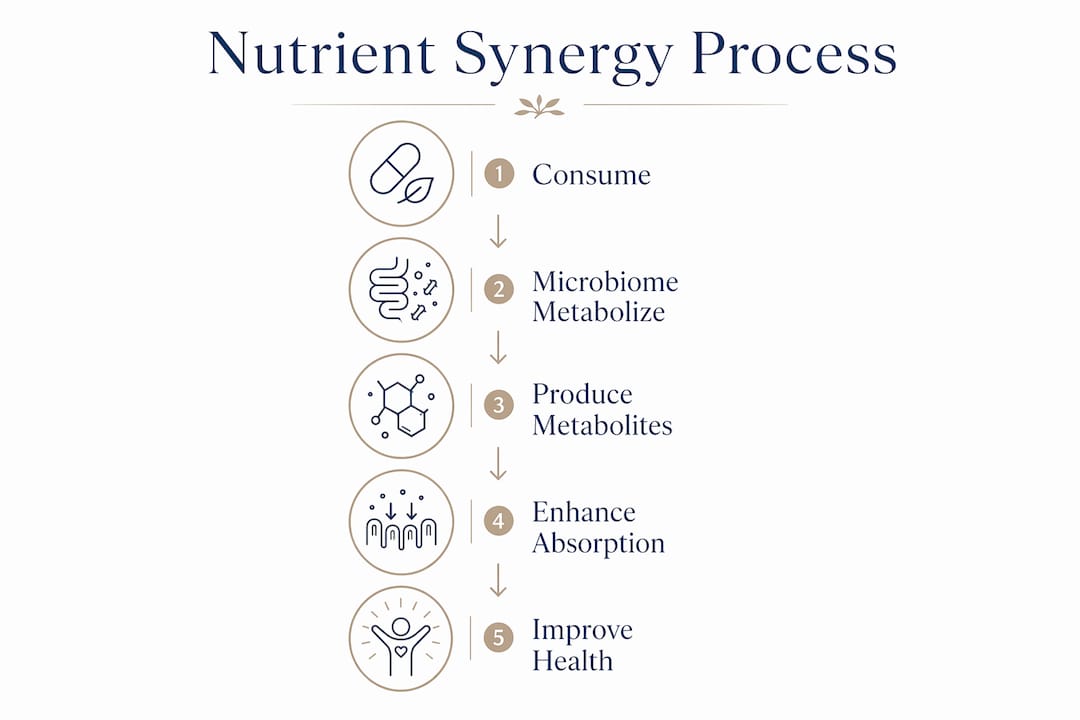
Dietary fibre amplifies this process. Fibre acts as a substrate for the same microbial populations that metabolise polyphenols, supporting their growth and enzymatic capacity. The fibre and polyphenol combination creates a mutually reinforcing cycle: fibre feeds the microbes, the microbes process the polyphenols, and the resulting metabolites benefit the host. Eating polyphenol-rich foods without adequate fibre reduces the microbial workforce available to convert them.
Individual variation matters significantly here. A 2026 RSC Food and Function study of 313 participants found that polyphenol intake correlates with increased polyphenol-utilising microbial genes, but the magnitude of benefit varies based on each person’s existing microbiome composition. Two people eating identical meals can experience meaningfully different health outcomes from the same polyphenol intake.
| Dietary component | Microbiome interaction | Systemic outcome |
|---|---|---|
| Polyphenols (berries, tea, dark chocolate) | Metabolised into bioactive compounds by colonic microbes | Reduced inflammation, improved cardiovascular markers |
| Dietary fibre (oats, legumes, seeds) | Fermented into short-chain fatty acids; feeds polyphenol-metabolising bacteria | Improved gut barrier integrity, metabolic regulation |
| Fermented foods (kefir, miso, tempeh) | Introduce beneficial microbial strains; enhance enzyme diversity | Improved protein digestibility, broader nutrient utilisation |
Dietary diversity is the most reliable strategy for supporting the microbiome’s role in nutrient synergy. Eating a wide range of plant foods, including nutrient-dense whole foods, consistently across the week builds the microbial diversity that makes synergistic effects more reliable and more pronounced. A plant-based dietary pattern is one of the most evidence-supported approaches for cultivating this microbial richness.
Key takeaways
Nutrient synergy produces measurably superior absorption and health outcomes compared to isolated nutrient intake, and it operates at the level of the meal, the microbiome, and the food matrix simultaneously.
| Point | Details |
|---|---|
| Synergy is meal-level, not supplement-level | Co-presence of nutrients in the same meal is required for most synergistic absorption effects to occur. |
| Fat unlocks fat-soluble nutrients | Carotenoids like lycopene and beta-carotene require dietary fat and cooking for meaningful absorption. |
| Some combinations actively block absorption | Banana with berries reduces flavanol uptake by 84%; coffee with iron reduces absorption by up to 66%. |
| The microbiome mediates polyphenol benefits | Up to 95% of polyphenols are processed by gut microbes, making fibre intake and microbial diversity critical. |
| Individual variation is real | Microbiome composition affects how much benefit you personally extract from synergistic food pairings. |
Nutrient synergy works best when you stop thinking in nutrients
I have spent years reading nutrition research, and the single most persistent mistake I see is the supplement-first mindset. People take isolated vitamin D, isolated magnesium, isolated iron, and wonder why their levels do not shift. The answer is almost always context. Vitamin D requires magnesium for activation. Iron requires vitamin C for absorption. Curcumin requires piperine to survive long enough to do anything useful. None of this is captured in a supplement label.
What traditional dietary patterns got right, whether it is the Mediterranean use of olive oil with tomatoes, or the South Asian habit of combining turmeric and black pepper in cooked dishes, is that they built synergy into the meal architecture without ever naming it. The science is now catching up to the intuition.
My honest recommendation is to stop auditing your diet by nutrient and start auditing it by meal. Ask not “did I get enough iron today?” but “did I pair my iron source with vitamin C at the same sitting?” That shift in framing produces better outcomes than any supplement stack I have seen. The nutrient integrity of your food choices depends as much on how you combine and prepare foods as on what you select.
Experiment deliberately. Try adding a fat source to your next carotenoid-rich meal and notice how satiety and energy differ. Move your coffee 60 minutes past breakfast for two weeks and observe whether your energy levels change. The body gives feedback when you listen at the right level.
— Jarrod
Build synergy into every meal with Granavitalis

Granavitalis sources products that make synergistic eating straightforward rather than effortful. Organic nut and seed butters deliver dietary fat alongside vitamin E, magnesium, and zinc in a single, minimally processed food. Adding a spoonful of raw organic pecan butter to a carotenoid-rich meal, whether roasted sweet potato, a carrot salad, or a tomato-based dish, provides the fat matrix that unlocks fat-soluble nutrient absorption. The organic nut and seed butter selection box from Granavitalis gives you a range of nutrient profiles to rotate through the week, supporting the dietary diversity that feeds a resilient microbiome. Purity of ingredient and minimal processing mean the synergistic potential of each food stays intact from source to spoon.
FAQ
What is nutrient synergy?
Nutrient synergy is the process by which two or more nutrients interact to produce absorption or health benefits greater than either achieves alone. It operates through mechanisms including solubility enhancement, redox chemistry, and enzyme modulation within the digestive tract.
How do vitamin C and iron work together?
Vitamin C converts non-haem iron from its ferric form to its ferrous form, which the intestinal transporter can absorb. This pairing is particularly significant for plant-based diets where non-haem iron is the dominant source.
Can food combinations reduce nutrient absorption?
Yes. Adding a banana to a berry smoothie reduces flavanol absorption by 84%, and coffee consumed with an iron-rich meal lowers non-haem iron absorption by 54 to 66%. Timing and food pairing both affect whether synergy or antagonism occurs.
Does cooking affect nutrient synergy?
Cooking significantly improves carotenoid bioavailability by breaking down plant cell walls and enabling micelle formation when fat is present. National Geographic reports that cooked tomatoes with olive oil deliver up to three times more lycopene than raw tomatoes without fat.
Why does the microbiome matter for nutrient synergy?
Only 5 to 10% of polyphenols are absorbed in the small intestine. The remaining 90 to 95% are metabolised by gut microbes into bioactive compounds with systemic health effects, meaning microbiome diversity directly determines how much benefit you extract from polyphenol-rich foods.