
Easy High Protein Breakfast Using Ancient Grains
Bold nutrition trends are reshaping how British adults start their day, with ancient grains now winning a place at the breakfast table. For health-conscious 25 to 40 year olds, easy high-protein vegan meals can be a challenge, yet ancient grains like quinoa offer a complete protein, packing all nine amino acids. Discover how smart ingredient combinations and preparation techniques unlock flavour and nutrition, helping you craft a satisfying breakfast that fits busy British lifestyles.
Table of Contents
- Step 1: Select Nutrient-Rich Ancient Grains And Vegan Proteins
- Step 2: Prepare Grains For Optimal Texture And Flavour
- Step 3: Combine Grains With Nuts, Seeds And Power-Up Botanicals
- Step 4: Assemble, Cook And Season For Balanced Nutrition
- Step 5: Check Texture And Taste For Complete Satisfaction
Quick Summary
| Key Insight | Explanation |
|---|---|
| 1. Combine ancient grains for protein | Mixing quinoa, amaranth, and millet offers a complete protein profile essential for energy and recovery. |
| 2. Use diverse vegan protein sources | Incorporating hemp seeds, chia seeds, and pea protein enriches nutritional value and enhances texture. |
| 3. Experiment with cooking techniques | Optimal preparation methods like soaking and gentle cooking unlock the best texture and flavour of grains. |
| 4. Layer complementary ingredients wisely | Adding various nuts, seeds, and botanical enhancers boosts both nutrition and taste in your breakfast bowl. |
| 5. Assess texture and flavour critically | Tasting and checking the consistency ensures a harmonious balance in flavours and textures for satisfaction. |
Step 1: Select nutrient-rich ancient grains and vegan proteins
Choosing the right combination of ancient grains and vegan proteins can transform your morning meal into a powerful nutritional powerhouse. The key is understanding which grains offer maximum nutritional benefits and pair seamlessly with plant-based protein sources.
Start by exploring exceptional ancient grains with impressive nutrient profiles. Ancient grains like quinoa, amaranth, and millet provide remarkable nutritional advantages packed with high-quality proteins, dietary fibre, and essential micronutrients. Quinoa stands out as a complete protein source containing all nine essential amino acids, making it an excellent foundation for your breakfast. Amaranth offers similar benefits with its robust protein content and rich mineral profile.
When selecting vegan proteins, look beyond traditional options. Consider incorporating hemp seeds, chia seeds, and pea protein powder alongside your ancient grains. These plant-based proteins complement the grains nutritionally and provide a smooth, satisfying texture. Aim for a balanced mix that delivers approximately 20 to 25 grams of protein per serving to support muscle recovery and sustained energy.
Top Tip: Mix different ancient grains and rotate your protein sources weekly to ensure a diverse nutrient intake and prevent flavour fatigue.
Here’s a quick comparison of popular ancient grains and vegan protein sources for breakfast bowls:
| Ingredient | Protein Content (per 100g) | Notable Nutrients | Culinary Texture |
|---|---|---|---|
| Quinoa | 14g | Complete amino acids, iron | Fluffy, slightly chewy |
| Amaranth | 13g | Magnesium, calcium, fibre | Nutty, dense |
| Millet | 11g | B vitamins, phosphorus | Light, tender |
| Hemp Seeds | 31g | Omega-3s, zinc, magnesium | Crunchy, creamy when blended |
| Chia Seeds | 17g | Omega-3s, calcium, antioxidants | Gel-like, crunchy |
| Pea Protein | 80g | Iron, arginine, folate | Smooth, powdery |
Step 2: Prepare grains for optimal texture and flavour
Preparing ancient grains requires precision and understanding to unlock their full culinary potential. Archaeological research reveals that traditional processing techniques significantly influence grain texture and flavour, making your preparation method crucial to the final result.
Start by carefully sorting and rinsing your chosen ancient grains. For quinoa, thorough rinsing removes the natural saponin coating that can impart a bitter taste. Whole grains like spelt or einkorn benefit from soaking overnight, which softens their robust texture and reduces cooking time. Specific processing steps such as dehulling, cleaning, and careful milling are essential for optimising the sensory qualities of ancient cereals. Consider experimenting with techniques like light toasting or sprouting to enhance natural flavours and improve digestibility.
When cooking, use precise water ratios and gentle heat to maintain the grains’ integrity. Different ancient grains require unique cooking approaches some work best in a rice cooker, others prefer slow simmering. Pay attention to texture throughout the cooking process, stirring occasionally and checking for that perfect balance between tender and slightly chewy.

Expert Tip: Experiment with sourdough fermentation techniques to naturally enhance the flavour complexity and digestibility of your ancient grains.
Step 3: Combine grains with nuts, seeds and power-up botanicals
Creating a nutritionally balanced breakfast involves thoughtfully layering complementary ingredients that work together to fuel your morning. When crafting your ancient grain bowl, select nuts, seeds, and botanical enhancers that amplify both flavour and nutritional profile.
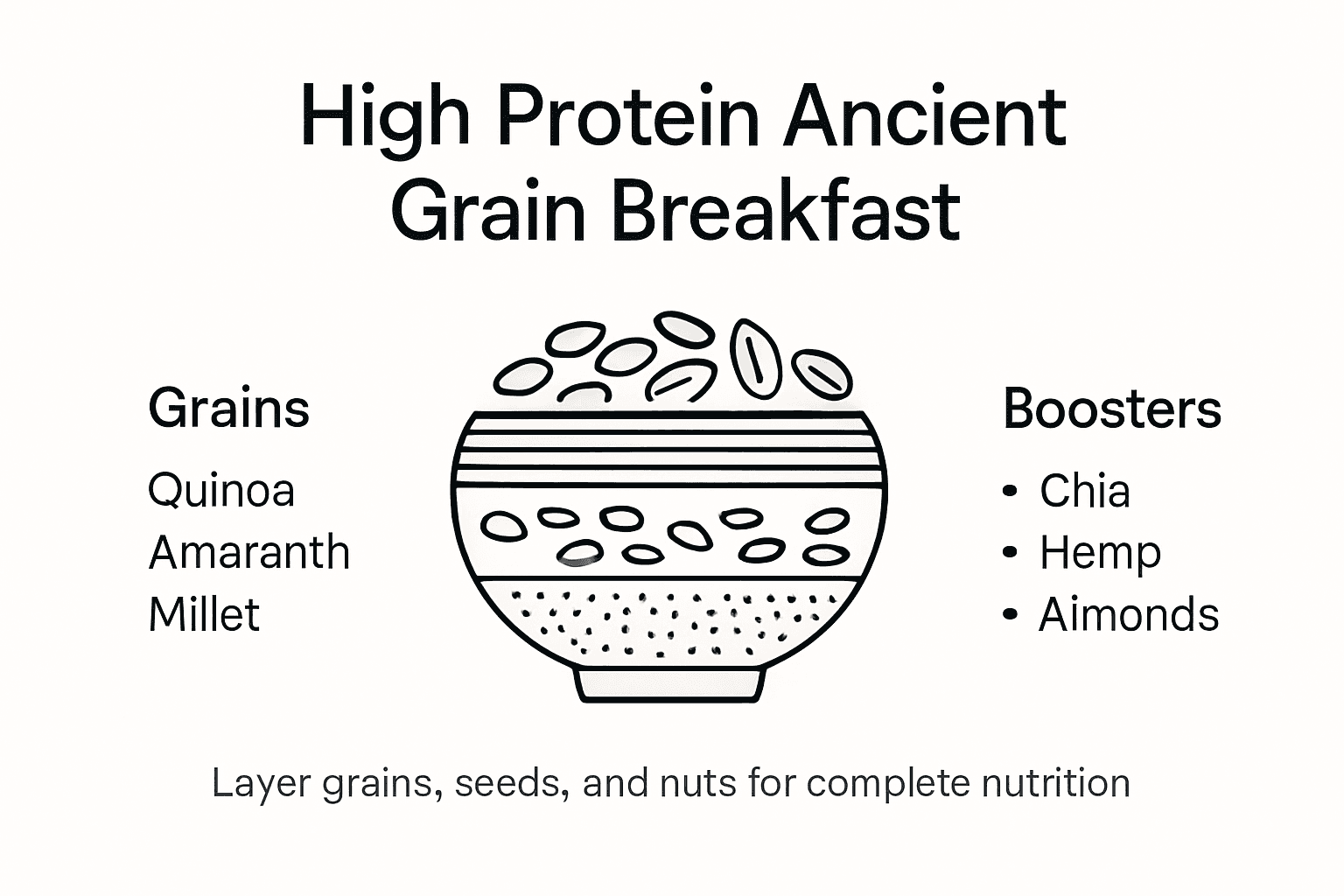
Start by choosing a variety of nuts and seeds that offer distinct textures and nutrient profiles. Almonds provide crunch and vitamin E, chia seeds bring omega-3 fatty acids, while hemp seeds contribute complete plant protein. Consider adding botanical boosters like maca powder for energy, spirulina for mineral density, or ground turmeric for anti-inflammatory properties. The goal is creating a harmonious blend where each ingredient enhances the others without overwhelming the delicate ancient grain base.
Layer your ingredients strategically. Begin with a warm base of quinoa or amaranth, then sprinkle nuts and seeds generously. Add your botanical powders sparingly, remembering that these concentrated ingredients pack powerful nutritional punches. Finish with a drizzle of plant-based milk or a dollop of coconut yoghurt to bind the elements together and create a creamy, satisfying texture.
Expert Tip: Toast your nuts and seeds lightly before adding them to your grain bowl to unlock deeper flavours and improve nutrient absorption.
To help you refine your breakfast bowl, here is a summary of botanical enhancers and their unique benefits:
| Botanical Enhancer | Main Benefit | Flavour Profile | Suggested Quantity |
|---|---|---|---|
| Maca Powder | Natural energy boost | Malty, earthy | 1 teaspoon per bowl |
| Spirulina | Dense minerals | Mildly grassy | ½ teaspoon per bowl |
| Turmeric | Anti-inflammatory | Warm, peppery | ¼ teaspoon per bowl |
| Cinnamon | Blood sugar control | Sweet, aromatic | ½ teaspoon per bowl |
| Cardamom | Digestive support | Floral, spicy | Fine pinch per bowl |
Step 4: Assemble, cook and season for balanced nutrition
Transforming your carefully selected ancient grains into a nutritious breakfast requires precision and creativity. Commercial baking techniques demonstrate how hydrated grain blends can be assembled with strategic cooking methods to enhance texture and nutritional value.
Begin by assembling your base grains with thoughtful proportions. Mix quinoa, amaranth, and millet to create a diverse protein profile. Use low heat and a covered pot to gently cook your grains, maintaining their delicate nutrients and preventing moisture loss. The key is achieving a fluffy yet substantial texture that serves as the perfect canvas for your additional ingredients. Incorporate your botanical enhancers and seeds during the final moments of cooking, allowing them to warm through without losing their nutritional potency.
Seasoning is where your breakfast truly comes alive. Instead of overwhelming salt, experiment with warming spices like cinnamon, cardamom, or turmeric. These not only add depth of flavour but also bring additional anti inflammatory and metabolic benefits. A light drizzle of cold pressed olive oil or a sprinkle of nutritional yeast can provide a subtle savoury note that elevates the entire dish without compromising its clean nutritional profile.
Expert Tip: Allow your grains to rest for 5 minutes after cooking to help them absorb remaining moisture and develop a more cohesive texture.
Step 5: Check texture and taste for complete satisfaction
The final moment of culinary creation is a sensory journey that transforms your carefully prepared ancient grain breakfast from a mere recipe to a personalised dining experience. When exploring nutrient-rich breakfast strategies, understanding how to assess your dish becomes crucial.
Begin by examining the texture critically. Your grains should present a delicate balance between tender and toothsome. Press a spoon gently against the surface to check for consistent moisture distribution. The ideal consistency will hold together without being mushy, with each grain maintaining its individual character. Taste systematically starting from the edges moving towards the centre, noting how different seasonings and ingredients interact across the bowl.
Evaluate flavour complexity by taking small, deliberate spoonfuls. Consider the interplay between your grain base, botanical enhancers, nuts, and seeds. Are the warming spices present without overwhelming the natural grain flavours? Does each bite offer a harmonious blend of textures and tastes? Make minor adjustments like a pinch of sea salt, a drizzle of maple syrup, or an extra sprinkle of toasted seeds to elevate the overall sensory experience.
Expert Tip: Pause between tastings to reset your palate and ensure you’re experiencing the full depth of flavours in your nutritious breakfast bowl.
Boost Your Mornings with Ancient Grains and High-Quality Vegan Proteins
If you are searching for a simple way to power your day with nutrient-rich ancient grains combined with effective plant-based proteins you are not alone. Many struggle with finding clean and natural foods that provide sustained energy without compromising flavour or texture. This article highlights the balance between ancient grains like quinoa and amaranth and vegan proteins such as hemp or pea protein powder. At Granavitalis we understand how important it is to source ingredients that honour tradition while delivering modern nutrition so you can fuel muscle recovery, mental clarity and long-lasting vitality.

Discover our range of vegan protein powders specially crafted to complement ancient grains and elevate your breakfast routine. Each product embodies purity and performance to support your real-food goals. Start your journey today at Granavitalis and explore options like the Metabolic Advantage Pack for a nutrient-dense boost tailored to your active lifestyle. Embrace the wisdom of tradition and take control of your nutrition now.
Frequently Asked Questions
What are some easy ways to incorporate ancient grains into my breakfast?
To incorporate ancient grains into your breakfast, start by using quinoa, amaranth, or millet as a base for your grain bowl. Cook these grains according to their specific instructions and combine them with nuts, seeds, and plant-based proteins to enhance nutritional value.
How can I prepare ancient grains for better texture and flavour?
To improve the texture and flavour of ancient grains, rinse them thoroughly before cooking to remove any bitterness, especially with quinoa. Experiment with soaking whole grains overnight or lightly toasting them before cooking to enhance their taste and aid digestion.
How do I create a high-protein breakfast using ancient grains?
To create a high-protein breakfast, combine your cooked ancient grains with plant-based proteins like hemp seeds, chia seeds, or pea protein powder. Aim for approximately 20 to 25 grams of protein per serving by mixing various sources together for a well-rounded meal.
What should I add to my ancient grain bowl for extra nutrition?
Enhance your ancient grain bowl with a variety of nuts, seeds, and botanical boosters. Add ingredients like almonds for vitamin E, chia seeds for omega-3s, or maca powder for energy, ensuring a balanced meal rich in nutrients.
How do I assess the texture and taste of my ancient grain breakfast?
To assess texture, check that your grains are tender yet slightly chewy, avoiding a mushy consistency. Taste the mixture in small bites, noting the balance of flavours from the ingredients; adjust with spices or sweeteners as needed for the best experience.
Why should I mix different ancient grains and protein sources?
Mixing different ancient grains and protein sources ensures a diverse nutrient intake and keeps your meals interesting. Rotate your choices weekly to maintain variety and prevent flavour fatigue, making your breakfasts enjoyable and nutritionally balanced.
Recommended
- 7 High-Protein Breakfast Grains for Energy and Wellness – Granavitalis
- High Protein Breakfast: Complete Guide to Lasting Energy – Granavitalis
- 7 High-Protein Porridge Grains to Power Your Morning – Granavitalis
- Complete Guide to High Protein Porridge – Granavitalis
- 5 alternatives to wheat | UK Food Intolerance | Blog