
Fast High Protein Breakfast: Quick, Nutritious Steps for You
Most british adults know that mornings often leave little time for proper nutrition, yet over 60 percent struggle to meet recommended daily protein goals. Whether you are powering through a busy London commute or heading to the gym before work, the right breakfast can shape your whole day. Discover how simple ancient grains and natural protein sources fit the british lifestyle, offering lasting energy and efficient recovery in just minutes.
Table of Contents
- Step 1: Gather Ancient Grains And Protein-Rich Ingredients
- Step 2: Prepare And Portion Ingredients For Speed
- Step 3: Blend Grains, Nuts, And Seeds For Optimal Texture
- Step 4: Cook Or Assemble Your Protein Breakfast Quickly
- Step 5: Check For Taste, Texture And Nutritional Balance
Quick Summary
| Essential Insight | Detailed Explanation |
|---|---|
| 1. Select high-protein ingredients | Incorporate ancient grains, nuts, seeds, and proteins to create a nutrient-dense breakfast. Aim for variety to balance amino acids. |
| 2. Portion ingredients for efficiency | Prepare and measure ingredients in advance to simplify morning assembly and reduce preparation time. |
| 3. Blend for optimal texture | Combine grains, nuts, and seeds thoughtfully to enhance flavour and nutrient absorption while enjoying diverse textures. |
| 4. Cook/assemble quickly | Use pre-cooked proteins and efficient cooking methods to prepare a balanced meal in under 7 minutes. |
| 5. Check taste and nutritional balance | Evaluate your breakfast’s taste, texture, and protein content to ensure it meets dietary needs and is enjoyable to eat. |
Step 1: Gather ancient grains and protein-rich ingredients
In this first stage of creating a fast high protein breakfast, you will collect the core nutritional elements that transform an ordinary morning meal into a powerhouse of sustained energy. Your goal is to select protein-dense ancient grains and complementary ingredients that provide a balanced nutritional profile.
Start by exploring protein-rich plant sources recommended by nutritional experts. Key ingredients include quinoa, amaranth, and buckwheat, which offer complete protein profiles. Supplement these ancient grains with nuts such as almonds, chia seeds, and hemp seeds, which amplify protein content and provide healthy fats. Consider adding protein-concentrated ingredients like Greek yoghurt, eggs, or plant-based protein powders to boost your morning meal’s nutritional density.
Focus on creating a diverse mix of ingredients that offer complementary amino acids. By combining different protein sources, you ensure a comprehensive nutrient intake that supports muscle recovery and sustained energy release. Select whole, minimally processed ingredients that retain their natural nutritional integrity.
Here is a quick-reference summary of nutrient sources and their main breakfast benefits:
| Ingredient Type | Key Example | Main Nutritional Benefit |
|---|---|---|
| Ancient Grain | Quinoa | Complete plant protein |
| Nut | Almond | Healthy fats, vitamin E |
| Seed | Chia seed | Omega-3, dietary fibre |
| Dairy/Alt | Greek yoghurt | High protein, calcium |
| Egg/Alternative | Eggs | Complete protein, B12 |
| Protein Powder | Plant-based powder | Efficient protein boost |
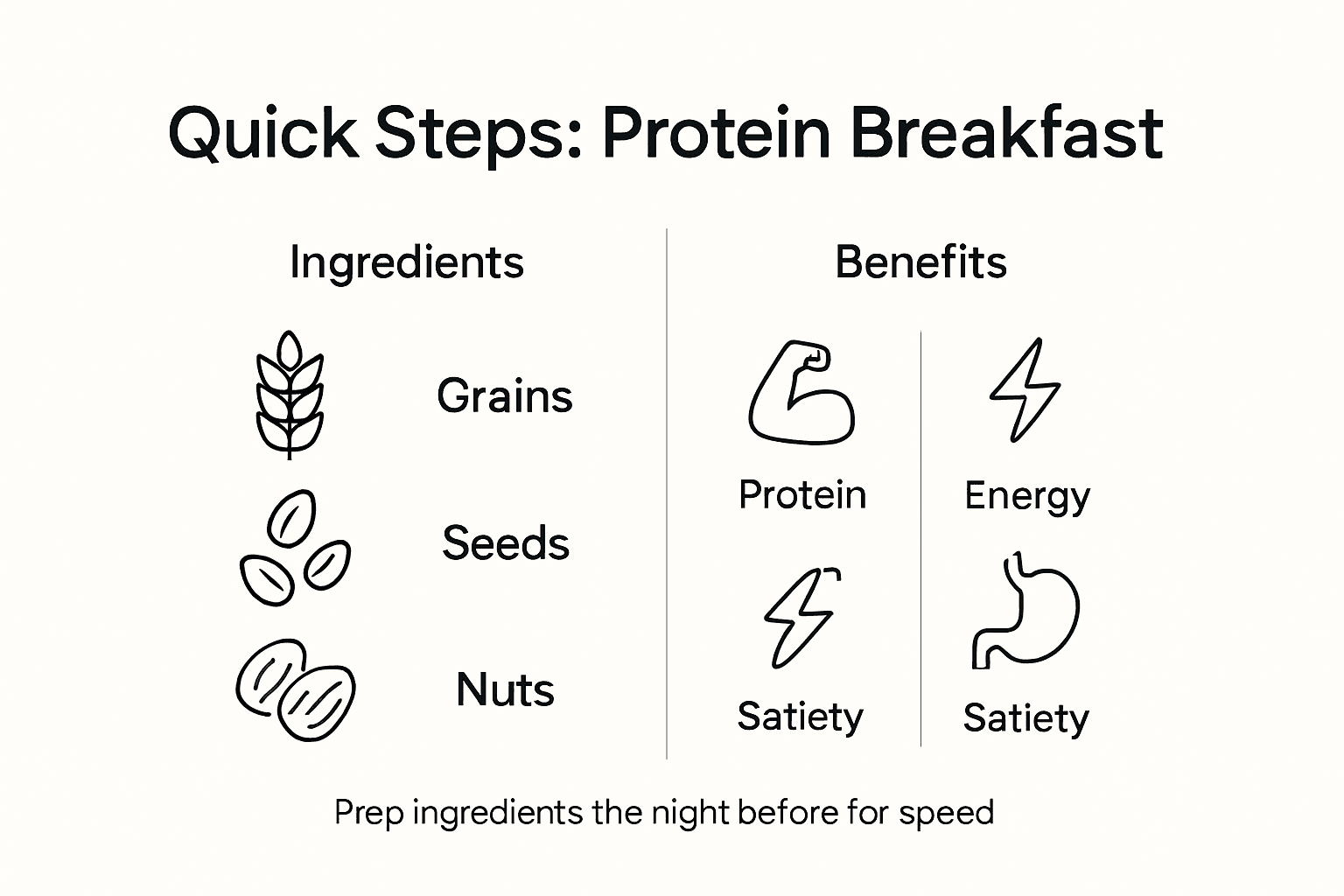
Top tip: Prepare your protein-rich ingredients the evening before to streamline your morning routine and ensure a swift, nutritious breakfast preparation.
Step 2: Prepare and portion ingredients for speed
This stage transforms your collection of ingredients into a streamlined breakfast preparation system that minimises morning stress and maximises nutritional efficiency. Your objective is to create a simple portioning strategy that saves time without compromising the quality of your meal.
Learn to implement practical portion control techniques recommended by nutrition experts. Utilise standard kitchen tools like measuring cups and spoons to quickly divide ingredients into precise servings. For ancient grains like quinoa or amaranth, measure out single portion sizes into small containers or resealable bags the evening before. This approach allows you to grab and go, reducing morning preparation time. Consider using a kitchen scale initially to understand what recommended portion sizes look like, then transition to visual estimations using your hand or standard kitchen tools.
Prepare protein sources in advance for maximum efficiency. Hard boil eggs, pre-chop nuts, and measure out seeds into individual portions. If using yoghurt or protein powders, have these measured and ready in separate containers. The key is creating a system where you can assemble your breakfast quickly without sacrificing nutritional balance or taste.
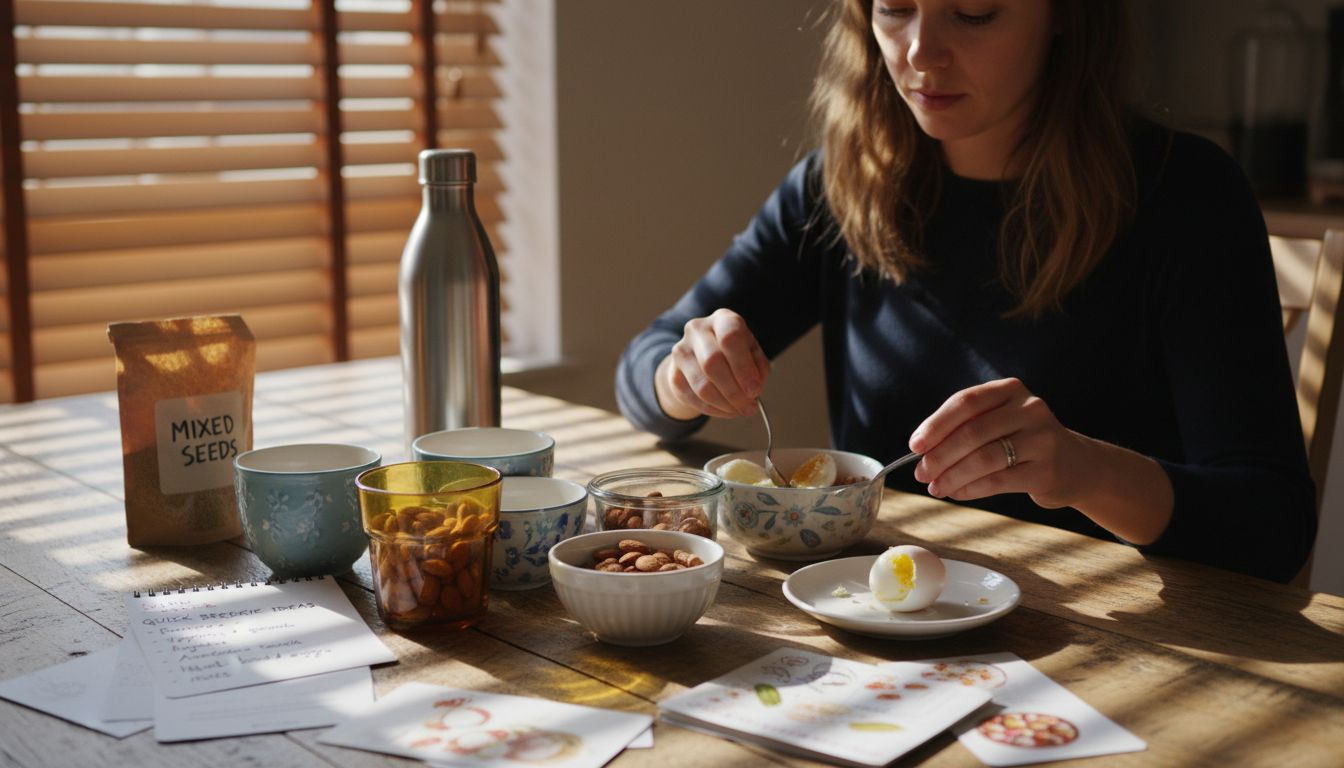
Top tip: Invest in a set of matching small containers with tight lids to create a uniform meal prep system that makes portioning and storing ingredients effortless.
Step 3: Blend grains, nuts, and seeds for optimal texture
This stage is about transforming your carefully selected ingredients into a harmonious breakfast blend that delivers both nutritional power and sensory satisfaction. Your goal is to create a balanced mixture that combines different textures and flavours while maximising nutrient absorption.
Follow the European dietary recommendations for incorporating nuts and seeds into your morning meal. Begin by selecting a base of ancient grains like quinoa or amaranth as your foundational ingredient. Toast these lightly to enhance their nutty flavour profile. Next, introduce a variety of nuts and seeds such as almonds, chia seeds, hemp hearts, and pumpkin seeds. Aim for a mix that provides crunch, healthy fats, and protein diversity. Chop larger nuts into smaller pieces to ensure even distribution and improve overall texture.
Consider your blending technique carefully to maintain ingredient integrity. Use a food processor for a finer consistency, or simply mix ingredients by hand for a more rustic approach. If preparing overnight oats or a porridge style breakfast, allow the grains and seeds to soak slightly to soften their texture while preserving their nutritional value. The key is creating a blend that offers multiple textural experiences in each spoonful.
Top tip: Experiment with small batch mixtures to discover your ideal grain and seed combination before preparing larger quantities.
Step 4: Cook or assemble your protein breakfast quickly
This final stage transforms your carefully prepared ingredients into a delicious protein-packed breakfast that can be assembled in minutes. Your mission is to create a nutritious meal that balances speed with exceptional flavour and nutritional value.
Learn from the expert techniques for rapid high protein breakfast preparation. Start by using pre-cooked or quickly prepared protein sources like boiled eggs, cottage cheese, or Greek yoghurt. For hot breakfasts, consider simultaneous cooking methods such as preparing scrambled eggs while toasting your grain base. If using oats, opt for quick cooking varieties or overnight preparation techniques that minimise morning preparation time. Combine your pre portioned grains, nuts, and seeds with protein sources in a single bowl, layering ingredients for visual appeal and textural variety.
Prioritise efficiency by arranging your ingredients and tools within easy reach before beginning preparation. Select cooking methods that require minimal active cooking time such as microwave porridge, instant egg wraps, or no cook techniques like overnight chia puddings. The goal is a protein rich breakfast that takes no more than 5 to 7 minutes to assemble and delivers sustained energy for your morning.
Compare the typical preparation times of popular high protein breakfast options:
| Approach | Prep Time | Speed Tip |
|---|---|---|
| Overnight oats with seeds | 5 min | Prepare night before |
| Boiled eggs & grain bowl | 7 min | Pre-boil eggs in advance |
| Greek yoghurt, fruit & granola | 3 min | Use pre-measured toppings |
| Smoothie with protein powder | 4 min | Portion ingredients in advance |
Top tip: Keep a small selection of interchangeable protein sources in your refrigerator to provide variety and flexibility in your morning meal preparation.
Step 5: Check for taste, texture and nutritional balance
This concluding stage ensures your protein breakfast delivers maximum sensory enjoyment and nutritional impact. Your objective is to perform a quick final assessment that confirms your meal meets both culinary and health requirements.
Adopt expert nutritional strategies for creating satisfying high protein breakfasts. Evaluate your breakfast across three critical dimensions: taste complexity, textural variety, and nutritional density. Aim to incorporate creamy elements like Greek yoghurt, crunchy components such as toasted nuts, and fresh ingredients like berries or sliced fruit. These layers create a multi sensory experience that keeps your palate engaged while providing essential nutrients.
Pay attention to protein distribution and overall macronutrient balance. Your ideal breakfast should provide approximately 25 to 30 grams of protein, include complex carbohydrates from whole grains, and feature healthy fats from nuts or seeds. Take a moment to visually inspect your meal ensuring it looks appealing and appetising. Adjust ingredient proportions if any single element dominates the overall composition too heavily.
Top tip: Keep a small notebook to record your favourite breakfast combinations and their specific ingredient ratios for future quick and consistent meal preparation.
Unlock Your Fast High Protein Breakfast with Granavitalis
Struggling to prepare a quick high protein breakfast that fuels your day with real nutrition Instead of rushing, discover how combining ancient grains with quality protein sources can transform your morning routine. This article highlights the challenge of balancing speed and nutrition in breakfast preparation. At Granavitalis we provide premium Vegan Protein Powders and Whey Protein Powder that perfectly complement your ancient grain blends for sustained energy and muscle recovery. Every ingredient is chosen to support your goals for purity performance and purpose.

Elevate your breakfast experience now with thoughtfully crafted wholefoods from Granavitalis. Visit Granavitalis to explore our nutritional range designed to simplify your meal prep and boost your vitality. Begin your journey to fast nutritious mornings and clean eating today.
Frequently Asked Questions
What are some protein-rich ancient grains I can use for breakfast?
To create a high protein breakfast, consider using quinoa, amaranth, and buckwheat. Aim to include these grains as the base of your meal, ensuring you have a complete protein source.
How can I prepare my breakfast ingredients in advance?
You can streamline your morning routine by measuring and portioning ingredients the evening before. For instance, prepare single portion sizes of grains and pre-chop nuts, allowing you to save time and effort in the morning.
How can I ensure my high protein breakfast is balanced nutritionally?
Aim for a breakfast that provides 25 to 30 grams of protein, includes complex carbohydrates, and features healthy fats. Assess your meal by combining ingredients like Greek yoghurt, nuts, and seeds for a nutritional boost.
What is the fastest way to cook or assemble my protein breakfast?
To prepare your breakfast quickly, utilise pre-cooked protein sources like boiled eggs or cottage cheese. For example, combine these with your pre-portioned grains and nuts to assemble a nutritious meal in 5 to 7 minutes.
How can I improve the taste and texture of my protein breakfast?
Enhance your breakfast by incorporating a variety of textures, such as creamy Greek yoghurt and crunchy nuts. Experiment with different ingredient combinations to find a flavour profile that you enjoy while ensuring a balanced nutritional intake.
Should I record my breakfast combinations and recipes?
Yes, keeping a small notebook to track your favourite breakfast combinations can help you maintain consistency and make quick preparations in the future. Document specific ingredient ratios to simplify your morning routine.
Recommended
- High Protein Breakfast: Complete Guide to Lasting Energy – Granavitalis
- Master High Protein Gluten Free Breakfasts for Active Days – Granavitalis
- Cheap High Protein Breakfast: Easy Vegan UK Guide – Granavitalis
- Best Source of Protein for Breakfast – Honest Nutrition – Granavitalis
- 7 Must-Try Traditional Hungarian Breakfast Ideas
- 7 Key Advantages of a Balanced Lifestyle for Women – EMILY SANDERS LIFESTYLE