
Plant-based amino acids for performance and wellness
TL;DR:
- Thoughtfully planned plant diets can provide all essential amino acids for muscle and long-term health.
- Combining legumes and grains at meals enhances plant protein quality by improving amino acid balance.
- Supplements like pea or rice protein aid performance by filling specific amino acid gaps when necessary.
The idea that plant proteins are somehow second-rate is one of the most persistent myths in sports nutrition. Whole-food plant diets, when thoughtfully constructed, deliver every essential amino acid your body needs for muscle repair, energy, and long-term health. While plant-based proteins generally have lower DIAAS scores than animal proteins, this gap closes considerably with smart food choices and meal planning. Whether you train hard, move regularly, or simply want to feel your best on a plant-based diet, the science is clear: variety and intention are your most powerful tools.
Table of Contents
- The fundamentals of amino acids and plant proteins
- Overcoming protein quality challenges with plant-based diets
- Dietary strategies for maximising plant-based amino acid intake
- Role of supplements and performance solutions for plant-based eaters
- What most nutrition guides miss about plant-based amino acids
- Explore plant-powered essentials for your nutrition
- Frequently asked questions
Key Takeaways
| Point | Details |
|---|---|
| Essential amino acids matter | Plant sources can meet all essential amino acid needs if planned carefully. |
| Protein quality is dynamic | Smart food combinations and meal ratios improve digestibility and efficacy. |
| Athletes benefit from variety | Combining plant protein types and aiming higher total intake supports muscle and recovery. |
| Supplements are optional | Most requirements are covered with diverse meals, but supplements help close rare gaps. |
| Meal pairing beats daily pooling | Pairing complementary proteins in each meal is more effective than relying on daily intake. |
The fundamentals of amino acids and plant proteins
Amino acids are the building blocks of every protein in your body. They drive muscle repair, enzyme production, hormone synthesis, and immune function. Of the 20 amino acids your body uses, nine are classified as essential because your body cannot make them. You must get them from food. The remaining eleven are non-essential, meaning your body can synthesise them as needed.
Animal foods tend to contain all nine essential amino acids in proportions that closely match human needs. Most plant foods, by contrast, are lower in at least one essential amino acid, often called a limiting amino acid. This is where the myth of plant protein inferiority takes root, but it is far from the whole story.
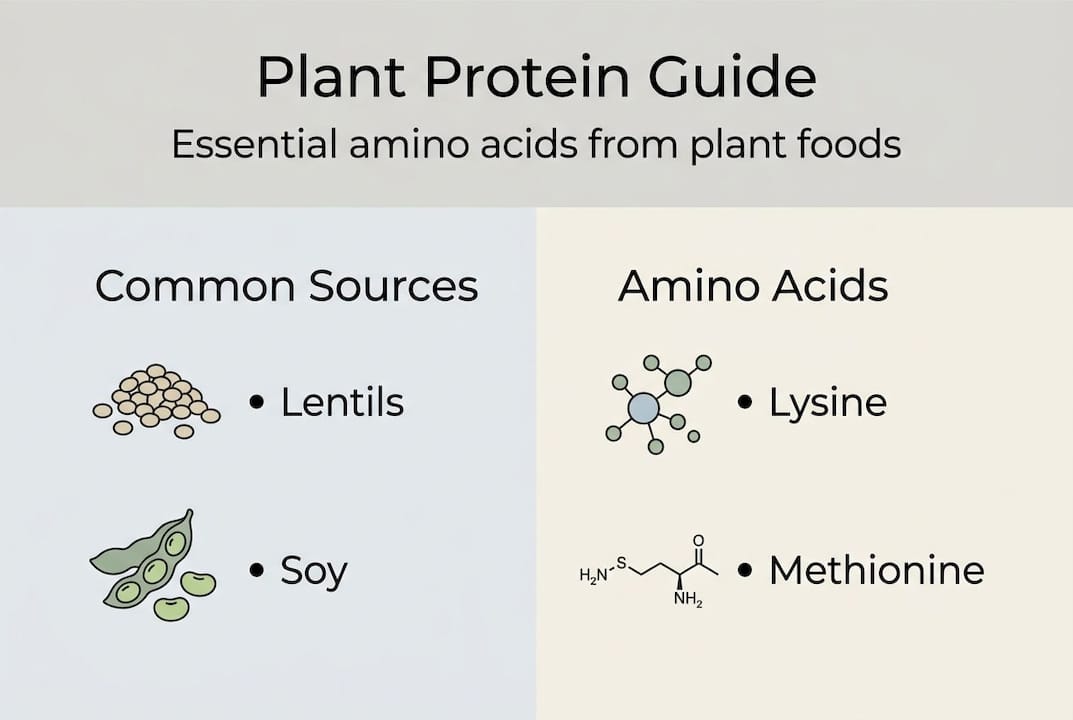
Common limiting amino acids in plant proteins include lysine, which is low in most grains, and methionine, which is low in legumes. Leucine and other branched-chain amino acids (BCAAs) can also fall short in certain legumes. Interestingly, mung bean sprouts show notably high BCAA content, which makes them a useful addition to a performance-focused plant diet.
Understanding the plant protein benefits goes beyond just the amino acid profile. Plant proteins also carry fibre, phytonutrients, and anti-inflammatory compounds that animal proteins do not. The goal is not to replicate meat but to build a food pattern that covers your amino acid bases while delivering all these additional advantages.
Key essential amino acids and their primary plant sources:
| Amino acid | Role | Best plant sources |
|---|---|---|
| Lysine | Muscle repair, immune function | Lentils, chickpeas, tofu |
| Leucine | Muscle protein synthesis trigger | Soy, pumpkin seeds, mung beans |
| Methionine | Antioxidant production | Sunflower seeds, oats, quinoa |
| Threonine | Gut lining integrity | Hemp seeds, lentils, sesame |
| Tryptophan | Mood and sleep regulation | Pumpkin seeds, soy, oats |
For a deeper look at how protein wellbeing for vegans plays out in practice, the key takeaway is simple: no single plant food needs to be perfect. The whole diet does.
Pro Tip: Sprout your legumes and seeds before eating them. Sprouting increases bioavailability of amino acids and reduces anti-nutrients like phytic acid, making the protein more accessible to your body.
Overcoming protein quality challenges with plant-based diets
Protein quality is measured using a metric called DIAAS (Digestible Indispensable Amino Acid Score). It accounts for both the amino acid content of a food and how well your digestive system can actually absorb and use those amino acids. Plant-based proteins generally have lower DIAAS scores than animal proteins, which is a real consideration but not a dealbreaker.
The good news is that food combinations change everything. When you pair foods that complement each other’s amino acid gaps, the combined DIAAS of a meal rises significantly. This is not just theory. Well-planned vegan meals with a 2:1 legume:grain ratio achieve higher DIAAS, bringing plant-based meals much closer to the quality of animal protein meals.
“The amino acid profile of a meal matters more than the profile of any single food. Combining legumes and grains at the right ratio transforms plant protein quality from adequate to excellent.”
How common plant protein combinations compare:
| Meal combination | Protein quality outcome | Key benefit |
|---|---|---|
| Lentils + brown rice (2:1) | High DIAAS | Lysine and methionine balanced |
| Chickpeas + quinoa | Very high DIAAS | Complete amino acid coverage |
| Tofu + oats | High DIAAS | Leucine and threonine covered |
| Pea protein + rice protein | High DIAAS | Common in commercial blends |
Here is a practical approach to building better plant protein meals:
- Always anchor your meal with a legume source (lentils, beans, tofu, tempeh, edamame).
- Add a grain or seed to complement the amino acid gaps (rice, oats, quinoa, hemp seeds).
- Aim for the 2:1 legume:grain ratio by volume as a starting point.
- Include a small amount of a complete source such as soy or hemp to top up leucine.
- Vary your combinations daily to cover the full spectrum of essential amino acids.
For a broader view of your vegan protein sources and how they rank, variety remains the single most important factor. This protein sources guide offers further detail on active adult needs. Understanding the protein in vegan diets from a practical standpoint helps you move from knowing the theory to actually applying it at every meal.
Dietary strategies for maximising plant-based amino acid intake
Knowing which foods to combine is one thing. Building a daily eating pattern that actually delivers enough amino acids for your goals is another. Let’s make it practical.

For general health, most adults need around 0.8g of protein per kilogram of body weight daily. For active individuals and athletes, the target rises considerably. For athletes, target 1.6 to 2.0g/kg protein; plant diets are non-inferior for muscle protein synthesis and performance when total protein intake is matched and varied sources are used. That is a meaningful finding for anyone training on plants.
However, real-world data shows a gap between targets and actual intake. In a New Zealand vegan study of 193 participants, mean protein intake was just 0.80 to 0.98g/kg per day. After adjusting for digestibility, roughly 50% of participants met their lysine and leucine requirements, with legume consumption being the key differentiator. Eat more legumes. It really is that direct.
Practical strategies to hit your amino acid targets:
- Distribute protein across three to four meals rather than concentrating it in one sitting.
- Aim for 30 to 40g of protein per meal to trigger muscle protein synthesis effectively.
- Prioritise legumes at least twice daily for lysine coverage.
- Use hemp seeds, pumpkin seeds, and soy as leucine boosters between meals.
- Ferment or sprout grains and legumes to improve digestibility and amino acid release.
Best food pairings for amino acid coverage:
- Lentil soup with sourdough rye bread
- Tempeh stir-fry with brown rice and edamame
- Chickpea curry with quinoa
- Hemp protein smoothie with oat milk and pumpkin seeds
- Tofu scramble with sunflower seed toast
For plant protein for active lifestyles, timing also matters. Consuming protein within two hours of training supports recovery. Research on blending protein sources confirms that mixed plant protein blends outperform single-source options for amino acid delivery.
Pro Tip: If you find it hard to hit 30g of protein at breakfast, stir two tablespoons of hemp seeds and a scoop of pea protein into your porridge. You will add roughly 20g of protein with minimal effort and excellent amino acid coverage.
Role of supplements and performance solutions for plant-based eaters
Whole foods should always be the foundation. But for athletes, older adults, or anyone with higher demands, supplements can close the gaps that even careful meal planning sometimes leaves open.
The critical insight here is that total protein adequacy can mask individual amino acid deficits. You might hit your daily protein target in grams while still falling short on leucine or lysine specifically. This is where targeted supplementation becomes genuinely useful rather than just a marketing convenience.
When plant protein supplements make sense:
- You train more than four times per week and struggle to hit 1.6g/kg from food alone
- You are over 50, where leucine thresholds for muscle protein synthesis rise
- You travel frequently and cannot always control meal composition
- You are in a calorie deficit and need protein density without excess calories
- You are recovering from illness or injury and need accelerated amino acid delivery
Types of plant protein supplements worth knowing:
- Pea protein isolate: High in BCAAs, excellent leucine content, easy to digest
- Brown rice protein: Lower in lysine alone, but excellent when blended with pea protein
- Hemp protein: Contains all essential amino acids plus omega-3 fatty acids
- Soy protein isolate: Highest DIAAS of all plant proteins, closest to whey in quality
- BCAA blends from fermented sources: Useful for intra-workout support without a full protein load
For a clear comparison, understanding vegan vs whey protein helps you decide what fits your goals. Research on plant diets and muscle protein synthesis confirms that plant isolates support performance when dosed correctly. Exploring the different vegan protein powder types will help you match a supplement to your specific needs rather than guessing.
Pro Tip: Blend pea and rice protein in a 70:30 ratio. This combination produces an amino acid profile that rivals whey, with particularly strong leucine and lysine coverage for post-training recovery.
What most nutrition guides miss about plant-based amino acids
Most articles on plant protein tell you to “eat a variety of foods” and leave it there. That advice is not wrong, but it misses the most important practical detail: when you combine amino acids matters as much as whether you combine them.
The old idea that you can pool amino acids across an entire day and your body will sort it out is an oversimplification. Complementary proteins at meals outperform the daily pooling approach. Muscle protein synthesis requires a sufficient leucine trigger at each meal, around 2 to 3g, alongside 30 to 40g of total protein. Spreading your legumes across three meals is not just tidier. It is physiologically more effective.
There is also a broader misconception that plant-based eating is primarily a young person’s game. The evidence says otherwise. Active older adults on a balanced vegan diet show daily muscle protein synthesis rates matching omnivorous peers. The key variables are total protein intake and leucine adequacy at each meal, not the protein source itself.
For anyone serious about performance, keeping a food diary for even two weeks reveals where your amino acid gaps actually are. It is rarely random. Most people are consistently low in lysine or leucine at specific meals. Fix those meals, and your results follow. A quality vegan protein powder guide can also help you identify where a targeted supplement fills a genuine gap rather than an imagined one.
Explore plant-powered essentials for your nutrition
Putting these strategies into practice starts with having the right foods to hand. At Granavitalis, every product is chosen because it earns its place in a performance-focused, plant-based kitchen.
Our raw pecan butter delivers healthy fats and amino acids in a form that is as clean as it gets. For variety and convenience, the nut and seed butter box gives you a rotating selection of nutrient-dense butters to keep your meals interesting and nutritionally broad. When you want to add a functional boost to your smoothies or breakfasts, our superfoods mix brings zinc, vitamin B1, and plant-powered support into every serving. Real food, real results.
Frequently asked questions
Which plant foods have the most complete amino acid profiles?
Soy, hemp, chia seeds, and quinoa offer a full spectrum of essential amino acids. Combine legumes with grains and seeds to ensure lysine and methionine are both covered across every meal.
How can vegans ensure they get enough lysine?
Regularly including legumes such as lentils, chickpeas, and beans is the most reliable strategy, as legumes are key for lysine and fill the gap that grains and seeds leave behind.
Is plant protein sufficient for athletic performance?
Yes, provided total intake is adequate and sources are varied. Plant diets are non-inferior for muscle protein synthesis and performance when protein targets are met consistently.
Do plant-based eaters need supplements for amino acids?
Most needs can be met through careful food combinations, but total protein adequacy can mask amino acid deficits, making targeted supplements worthwhile for athletes or those with elevated requirements.
What is the best meal pairing to boost plant protein quality?
Pairing legumes and grains in a 2:1 ratio is the most effective approach, as well-planned vegan meals with a 2:1 legume:grain ratio achieve higher DIAAS and significantly improve overall amino acid balance.