
Vegan protein vs whey: which boosts fitness best?
TL;DR:
- Vegan proteins, when dosed correctly, match whey for muscle gain and recovery outcomes.
- Total daily protein intake and leucine per meal are key to effective muscle synthesis, regardless of source.
- Vegan proteins are generally better tolerated and aligned with dietary preferences while supporting fitness goals.
The idea that whey protein is the gold standard for muscle gain and recovery has shaped gym culture for decades. But the science has moved on. Blended vegan proteins match whey for muscle recovery and strength when dosed correctly, according to recent meta-analyses. That changes the conversation entirely. Whether you are plant-based by choice, lactose intolerant, or simply curious about your options, this guide cuts through the noise. We will look at what the evidence actually shows, where each protein type genuinely excels, and how to make the right choice for your specific goals and lifestyle.
Table of Contents
- What actually makes a protein ‘effective’?
- Science review: Vegan protein vs whey for muscle and recovery
- Other factors: Digestion, allergens, and daily lifestyle
- Practical guide: How to choose the right protein for your goals
- Our perspective: What most guides miss about protein choices
- Discover premium plant-based protein options
- Frequently asked questions
Key Takeaways
| Point | Details |
|---|---|
| Vegan and whey both effective | Modern research shows vegan and whey proteins deliver similar muscle and strength results if intake and quality are matched. |
| Digestive and allergy benefits | Vegan proteins are better tolerated by people with lactose intolerance or dairy allergies and offer added fibres. |
| Choose for your lifestyle | Pick a protein source based on your goals, digestion, ethics, and daily habits for the best long-term results. |
| Intake and blend matter | Using the correct dose and a properly blended vegan protein is key to equalling whey for fitness benefits. |
What actually makes a protein ‘effective’?
Before comparing labels and amino acid charts, it helps to understand what your body is actually doing with protein after a workout or a meal. When you train, muscle fibres sustain small amounts of damage. Protein triggers a process called muscle protein synthesis (MPS), where the body repairs and builds new muscle tissue. The speed and scale of MPS depends on two things: how much protein you consume and which amino acids it contains.
Amino acids are the building blocks of protein. There are 20 in total, and nine are considered essential because your body cannot produce them on its own. Of these nine, one stands out above the rest: leucine. Leucine acts as the main trigger for MPS. Without enough of it per meal, the anabolic response is blunted, regardless of how much total protein you consume.
Here is what the evidence tells us matters most:
- Total daily intake: Hitting your protein target across the whole day is the single biggest factor for muscle and recovery outcomes.
- Leucine per serving: Aim for at least 2.5g of leucine per meal to fully activate MPS.
- Amino acid completeness: A protein source should provide all nine essential amino acids in meaningful amounts.
- Absorption rate: Whey is fast-digesting; many plant proteins are slower. This affects the timing of MPS but not the overall daily result.
The real differentiator is not whether your protein comes from a cow or a pea. It is whether you are hitting the right amounts, with the right amino acid profile, consistently.
Meta-analyses show no difference in lean mass or strength gains when total protein intake is matched between vegan and whey groups. That is a significant finding. It means the source matters far less than most people assume. What matters is understanding vegan protein for daily wellness and building a consistent, well-structured intake around your actual lifestyle.
Absorption rate does play a role in timing. Whey spikes amino acid levels in the blood quickly, which can be useful immediately post-workout. Plant proteins tend to release more gradually. But across a full day of eating, these differences largely even out. The body is remarkably good at using what it gets, provided you give it enough.
Science review: Vegan protein vs whey for muscle and recovery
Armed with a definition of protein effectiveness, it is crucial to see what clinical trials and meta-analyses reveal when comparing vegan and whey proteins directly.
The research picture has shifted considerably in recent years. Earlier studies often showed whey outperforming plant proteins for MPS in short-term lab settings. Those studies, however, frequently used lower doses of plant protein and did not account for leucine content. More recent, better-designed trials tell a different story.
Blended vegan protein at 30g or more, providing 2.5 to 3g of leucine, matches whey for muscle growth and body composition outcomes. That is not a marginal result. It is a direct equivalence when the dosing is right. The plant protein muscle gain guide explores this in more detail if you want to go deeper on the evidence.
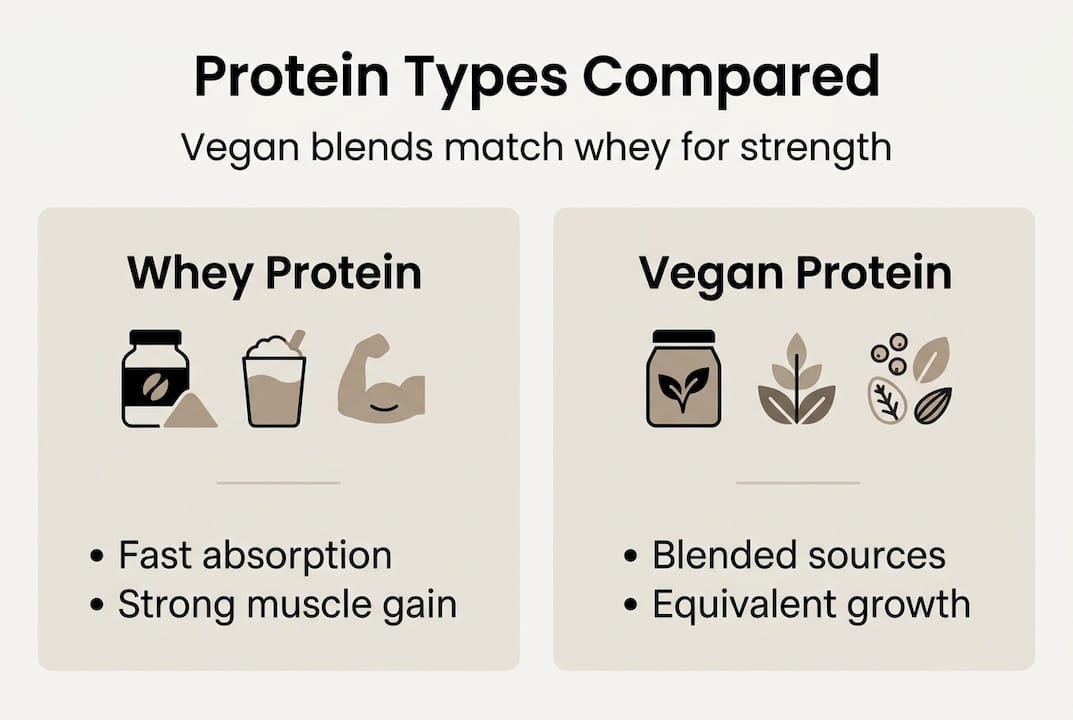
| Outcome | Whey protein | Vegan protein (matched dose) |
|---|---|---|
| Muscle mass gain | Strong | Equivalent |
| Strength increase | Strong | Equivalent |
| Recovery speed | Fast (acute) | Comparable over time |
| Fat loss support | Moderate | Moderate |
| Digestive comfort | Variable | Generally better |
No significant difference in hypertrophy appears after 8 to 12 weeks of training when total protein is equated between groups. That is the long-term view, and it is the one that matters most for anyone building a sustainable fitness routine.
The key benchmark: Aim for 1.6g of protein per kilogram of body weight per day for muscle growth. This applies whether your protein comes from whey, pea, rice, soy, or a blend of all three.
Pro Tip: If your vegan protein blend is low in leucine, add a small amount of leucine powder to your shake. Even 1g extra can meaningfully improve the anabolic response per serving. Check the label first, as some quality blends already hit the 2.5g target.
For recovery specifically, vegan protein for recovery is well supported when you use a multi-source blend rather than a single plant protein. Pea and rice together, for example, cover the amino acid gaps that each has individually.
Other factors: Digestion, allergens, and daily lifestyle
Muscle and recovery are not the only concerns for most readers. Let us examine how day-to-day experience, digestion, and additional nutrition compare between the two protein types.
Whey comes from milk. That means it contains lactose and dairy proteins, both of which cause problems for a significant portion of the European population. Bloating, cramping, and digestive discomfort are common complaints among whey users, particularly those with lactose sensitivity. Vegan proteins are better tolerated and free from lactose, making them a practical choice for anyone with dairy-related sensitivities.
That said, vegan proteins are not without their own allergen considerations:
- Soy protein is one of the top 14 allergens in Europe and unsuitable for those with soy intolerance.
- Pea protein is generally well tolerated but can cause gas in larger quantities for some people.
- Hemp protein contains beneficial fats but is lower in leucine and overall protein content per serving.
- Rice protein is hypoallergenic and easy to digest, making it a strong base for blends.
Beyond allergens, vegan proteins bring nutritional benefits that whey simply does not offer. Many plant-based sources carry fibre, antioxidants, and phytonutrients alongside their protein content. These contribute to gut health, inflammation management, and long-term wellness in ways that isolated whey cannot replicate. You can explore the nutrition benefits of vegan protein to see how these compounds support daily health beyond the gym.
Pro Tip: No single plant protein covers all essential amino acids in ideal ratios. Combine two or more sources, such as pea with rice or hemp with soy, to create a complete amino acid profile. Many quality supplements already do this for you, but it is worth checking the label.
For practical daily use, vegan proteins also tend to be lighter on the stomach before morning training sessions. If you train fasted or semi-fasted, a plant-based shake is often easier to handle than a dairy-heavy whey product. Exploring top vegan protein sources can help you build variety into your routine beyond supplements alone.

Practical guide: How to choose the right protein for your goals
Now that you understand how vegan and whey options differ in science and lifestyle fit, let us turn that knowledge into practical action.
Choosing the right protein is not about picking the most popular option. It is about matching the source to your body, your goals, and your daily habits. Here is a straightforward process to follow:
- Clarify your primary goal. Are you focused on building muscle, improving recovery, managing weight, or simply meeting daily protein needs? Each goal has slightly different requirements.
- Check your tolerances. Do you have any dairy sensitivity, lactose intolerance, or known allergens? If yes, vegan protein is the clearer choice from the start.
- Calculate your daily target. Use the 1.6g per kilogram of body weight benchmark as your baseline for muscle gain. For general wellness, 1.2 to 1.4g per kilogram is sufficient for most active adults.
- Evaluate your protein per meal. Each serving should provide at least 25 to 30g of protein and ideally 2.5g or more of leucine to fully support MPS.
- Choose your format. Powders, whole foods, or a mix of both. Whole food sources like legumes, tofu, tempeh, and seeds provide additional micronutrients that powders lack.
For those choosing vegan protein specifically:
- Use a blend, not a single source. Pea and rice together are the most researched and effective combination.
- Check leucine content on the label. If it is not listed, contact the brand or look for third-party analysis.
- Consider leucine fortification if your chosen blend falls short of 2.5g per serving.
- Rotate your whole food sources across the week to cover a wide range of amino acids and micronutrients naturally.
Matching intake and choosing blends or leucine-fortified vegan protein is as effective as whey for most fitness goals. If you want specific product guidance, the best vegan protein powder breakdown is a useful next step. For meal-based ideas, high-protein vegan meals gives you practical recipes to build your intake around real food rather than supplements alone.
Our perspective: What most guides miss about protein choices
Most protein debates get stuck in a narrow loop: which source produces more muscle in a 12-week trial? That is a useful question, but it is not the only one worth asking. In our view, the bigger picture is almost always ignored.
Digestive comfort matters every single day. Fibre and phytonutrients matter for long-term health. Personal ethics, environmental values, and food enjoyment matter for sustainability. A protein you tolerate well, enjoy consuming, and can afford consistently will always outperform a theoretically superior option that you dread or cannot digest.
The role of protein in daily life extends far beyond muscle. It supports immune function, hormone production, skin integrity, and cognitive performance. Choosing protein is not a gym decision. It is a lifestyle decision.
We believe the best protein is the one that fits your whole life, not just your training plan. Both whey and vegan protein can be excellent. The real question is which one supports your values, your digestion, your ethics, and your enjoyment over the long term. That is the answer worth finding.
Discover premium plant-based protein options
Ready to choose a vegan protein that aligns with both your fitness and lifestyle? Explore highly-rated options from Granavitalis.
At Granavitalis, every product in our range is selected with the same standard: purity, performance, and purpose. From our raw organic pecan butter to our curated organic nut and seed butter selection, we source ingredients that deliver real nutritional value without compromise. Our plant-based options are crafted for active Europeans who want clean, effective nutrition rooted in wholefood tradition. Whether you are building a post-workout routine or simply upgrading your daily intake, the Granavitalis vegan protein range gives you quality you can trust and flavours you will actually look forward to.
Frequently asked questions
Is vegan protein as good as whey for muscle growth?
Yes, when you use a high-quality blend or leucine-fortified vegan protein at an adequate dose, it matches whey for muscle gains provided total daily protein intake is sufficient.
Are there digestive benefits to choosing vegan protein?
Vegan proteins are better tolerated and lactose-free, making them a practical and comfortable choice for anyone with dairy sensitivities or digestive concerns.
What is the ideal protein intake for muscle gain?
Aim for 1.6g per kilogram of body weight daily for muscle growth, and this target applies equally whether your protein source is plant-based or whey.
Does whey protein increase strength faster than vegan options?
Short-term studies show a faster acute MPS response with whey, but no meaningful strength difference emerges over the long term when total protein intake is matched between groups.
Which vegan proteins are best for fitness results?
Look for blends of pea and rice protein, and choose options fortified with leucine to ensure you hit the 2.5g per serving threshold that supports muscle and recovery.