
Vegan Protein Essential: Powering Recovery and Balance
Choosing the right protein after exercise is never as simple as grabbing the nearest shake. For many health-conscious British adults, finding high-quality vegan protein sources means balancing nutritional needs with ethical values. Vegan protein is not only lower in saturated fat but also provides all the essential amino acids required for muscle repair and recovery when plant foods are varied. This guide highlights practical ways to combine plant protein sources, ensuring you support your body with complete nutrition for lasting strength and energy.
Table of Contents
- Vegan Protein Essential: What It Means
- Key Vegan Protein Sources And Blends
- Plant Protein Quality And Amino Acids
- Choosing And Using Vegan Protein For Recovery
- Risks, Misconceptions, And Alternatives
Key Takeaways
| Point | Details |
|---|---|
| Vegan Protein Sources | Vegan protein, sourced from plants, provides essential amino acids and is typically lower in saturated fats compared to animal protein. |
| Essential Amino Acids | By combining different plant proteins, one can achieve complete protein profiles necessary for muscle repair and overall health. |
| Whole-Food Approach | Prioritising unprocessed, nutrient-dense plant proteins supports better digestion and nutrient availability, enhancing recovery and performance. |
| Nutrition Planning | A well-planned vegan diet can meet all nutritional needs, requiring thoughtful combinations to avoid deficiencies, particularly in B12 and iron. |
Vegan protein essential: What it means
Vegan protein is simply protein that comes exclusively from plant sources rather than animals. This includes legumes, pulses, nuts, seeds, and grains—the foundation of what Granavitalis champions in its whole-food approach to nutrition.
The key difference from animal protein? Vegan protein sources tend to be lower in saturated fat and cholesterol, whilst delivering the same essential amino acids your body needs for muscle repair, enzyme production, and countless other functions.
Why Your Body Needs It
Protein isn’t optional—it’s fundamental to survival. Yet here’s the reality: most people, vegan or not, consume more protein than they actually need.
Your body uses protein for:
- Repairing and building muscle tissue after workouts
- Creating enzymes that drive metabolic processes
- Supporting immune function and hormone production
- Maintaining skin, hair, and connective tissue
- Enabling recovery between training sessions
The critical misconception? That vegan diets can’t provide adequate protein. A well-planned vegan diet supplies all necessary amino acids when you eat a diverse range of plant-based foods.
What Makes Vegan Protein “Essential”
Essential means your body cannot manufacture it—you must obtain it through food. The term applies to the nine essential amino acids that plant proteins can absolutely provide when combined thoughtfully.
Animal proteins are considered “complete” because they contain all nine amino acids in one source. Plant proteins? They’re complete too—just sometimes in different combinations. Pair legumes with grains, or seeds with nuts, and you’ve got everything your body requires.
Vegan protein is sufficient for health and muscle maintenance when sourced from varied plant foods—no animal products necessary.
The Whole-Food Approach
Granavitalis’s philosophy centres on sourcing unprocessed, nutrient-dense plant proteins rather than isolated supplements. Ancient grains, premium nuts, and clean plant-proteins rooted in traditional nutrition offer superior bioavailability and sustained energy compared to processed alternatives.
This isn’t about meeting a minimum quota. It’s about building genuine strength through foods that fuel both body and mind.
Pro tip: Combine different plant protein sources throughout your day—beans at lunch, seeds in your breakfast, nuts as a snack—to ensure you’re capturing the full spectrum of amino acids your body needs for optimal recovery.
Key vegan protein sources and blends
Not all plant proteins are created equal. Some deliver complete amino acid profiles on their own, whilst others shine when paired together. Understanding your options transforms vegan protein from a logistical puzzle into a straightforward nutritional strategy.
The Complete Proteins
Soy products stand out as the rare plant-based complete proteins. Tofu, tempeh, and edamame contain all nine essential amino acids, making them incredibly efficient choices for recovery and muscle maintenance.
These three deserve regular rotation in your diet:
- Tofu: neutral flavour, absorbs seasoning, versatile in stir-fries and curries
- Tempeh: firm texture, nutty taste, excellent grilled or crumbled into meals
- Edamame: whole beans, convenient snack, satisfying protein boost between workouts
Seitan, made from wheat gluten, also provides a complete amino acid profile with impressive protein density—around 25 grams per 100 grammes.
Legumes: The Foundation
Legumes and pulses form the backbone of vegan protein strategies. Lentils, chickpeas, and beans offer substantial protein alongside fibre and micronutrients that animal sources simply cannot match.
Key legumes to embrace:
- Lentils: red, green, brown varieties with different cooking times and textures
- Chickpeas: versatile from hummus to curries, naturally sweet flavour
- Black beans: dense, earthy, brilliant in grain bowls and Latin-inspired dishes
- Puy lentils: hold their shape beautifully, perfect for salads
The catch? Legumes alone lack certain amino acids. Combine them with grains and you’ve solved that puzzle entirely.

Here is a comparison of key vegan protein sources by their completeness and nutritional highlights:
| Protein Source | Amino Acid Completeness | Typical Protein per 100g | Extra Nutritional Benefit |
|---|---|---|---|
| Tofu | Complete protein | ~8g | Contains calcium and iron |
| Tempeh | Complete protein | ~19g | High in probiotics |
| Seitan | Complete protein | ~25g | Very low in fat |
| Lentils | Incomplete alone | ~9g | Rich in fibre |
| Chickpeas | Incomplete alone | ~7g | Good source of folate |
| Edamame | Complete protein | ~11g | Contains vitamin K |
| Almonds | Incomplete alone | ~21g | High in vitamin E |
| Pumpkin seeds | Incomplete alone | ~19g | Provides magnesium |
Seeds and Nuts
Seeds deliver concentrated nutrition. Hemp seeds, pumpkin seeds, and sunflower seeds pack protein alongside healthy fats and minerals. They’re portable, require no cooking, and work in breakfasts, snacks, and meals.
Nuts provide protein and healthy fats, though consume mindfully due to calorie density. Almonds, peanuts, and cashews all contribute meaningfully when portioned sensibly.
Combining various plant proteins ensures balanced amino acid intake—pair legumes with grains, seeds with nuts, soy with vegetables.
Strategic Blending
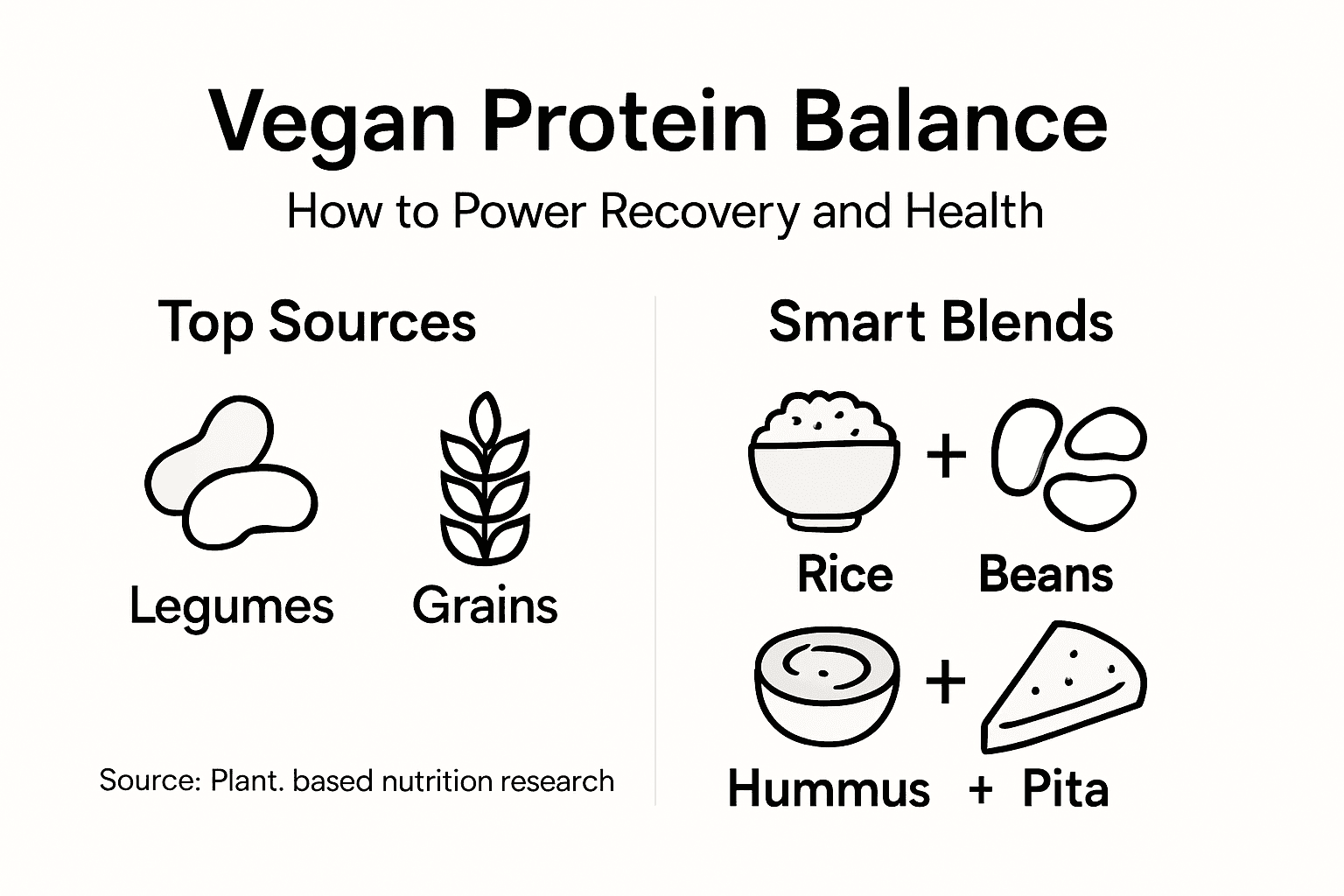
The beauty of vegan protein lies in synergy. Rice and beans together create a complete amino acid profile. Hummus on wholemeal bread achieves the same effect. This isn’t chance—it’s how plant-based nutrition naturally balances itself.
Granavitalis’s approach mirrors this philosophy: ancient grains paired with premium plant-proteins deliver what your body actually needs, without reliance on isolated powders or processed shortcuts.
Pro tip: Build your weekly meals around these three combinations: lentils with quinoa, chickpeas with brown rice, and tofu with wholegrain pasta—each provides complete nutrition and keeps your protein intake naturally varied.
Plant protein quality and amino acids
Protein quality isn’t about quantity—it’s about whether your body can actually use what you consume. Two plant proteins might contain identical gram counts, yet one delivers superior results because of its amino acid composition and digestibility.
Understanding Amino Acid Profiles
Your body requires nine essential amino acids that it cannot manufacture independently. Animal proteins typically contain all nine, which is why they’re considered complete. Many plant proteins lack one or more, making them incomplete on their own.
This isn’t a flaw—it’s simply how plant nutrition works. The solution? Strategic combining.
Key essential amino acids include:
- Leucine: signals muscle protein synthesis
- Methionine: supports liver function and detoxification
- Lysine: aids calcium absorption and immune response
- Isoleucine: contributes to energy metabolism
- Valine: supports blood sugar regulation
Protein Quality Assessment
Digestibility matters as much as composition. Your body must actually absorb what you eat. Plant-based proteins vary in quality based on amino acid profiles and how efficiently your digestive system can process them.
Soaking, fermenting, and cooking improve digestibility significantly. Tempeh, for instance, undergoes fermentation which enhances nutrient absorption compared to raw soy.
Vegans obtain all essential amino acids through varied diets combining different protein sources—careful planning ensures complete amino acid intake.
Processing for Superior Quality
Traditional preparation methods enhance what plants naturally offer. Soaking legumes reduces antinutrients. Fermenting increases bioavailability. These aren’t modern shortcuts—they’re time-tested techniques that maximise nutritional value.
Granavitalis’s commitment to minimal processing preserves these benefits whilst respecting traditional nutrition wisdom. Ancient grains and clean plant-proteins retain their full amino acid potential without industrial degradation.
Combining for Completeness
The complementary protein strategy works perfectly. Lentils lack methionine but contain lysine. Rice lacks lysine but provides methionine. Together they form a complete profile.
This approach requires no special knowledge:
- Beans plus grains (rice, oats, bread)
- Lentils plus quinoa or millet
- Nuts plus seeds plus legumes
Eat varied plant foods throughout your week and your body naturally receives everything it requires.
Pro tip: Track your protein sources across three days rather than obsessing daily—this reveals natural variety and ensures you’re hitting complete amino acid profiles without overthinking individual meals.
Choosing and using vegan protein for recovery
Recovery isn’t just about eating protein—it’s about eating the right protein at the right time. Your post-workout window demands strategic choices that maximise muscle repair and adaptation.
Timing Matters
Within 30 to 120 minutes after training, your muscles are primed to absorb amino acids and begin rebuilding. This is when leucine, the amino acid that triggers muscle protein synthesis, becomes especially valuable.
Your recovery nutrition should prioritise:
- Adequate total protein intake across the day
- Leucine-rich sources like soy, legumes, and nuts
- Sufficient carbohydrates to replenish glycogen stores
- Micronutrients supporting adaptation and repair
Building Your Recovery Strategy
Vegan athletes require strategic dietary planning to ensure sufficient protein and essential amino acids for optimal recovery. Diverse sources matter more than single sources.
Post-workout recovery meals might look like:
- Tofu stir-fry with brown rice and vegetables
- Lentil curry with quinoa and coconut milk
- Chickpea pasta with roasted vegetables and olive oil
- Tempeh Buddha bowl with grains and leafy greens
Each combines protein, carbohydrates, and micronutrients your body needs to bounce back stronger.
Supplementation Considerations
Vegan diets naturally contain lower levels of certain compounds like creatine and beta-alanine found abundantly in animal products. Supplementation may support performance and recovery for serious athletes.
Before supplementing, ensure your foundation is solid: whole-food protein sources, adequate calories, and varied micronutrient intake. Supplements amplify existing good habits—they don’t replace them.
Recovery demands complete amino acid profiles, sufficient energy, and consistent protein distribution throughout your day, not just post-workout.
Beyond Protein Alone
Recovery hinges on more than protein. Energy balance matters—undereating undermines adaptation regardless of protein quality. Micronutrients like iron, zinc, and B vitamins enable the metabolic processes driving recovery.
Granavitalis’s whole-food approach naturally provides these supporting nutrients. Ancient grains deliver micronutrients. Clean plant-proteins come with fibre and bioactive compounds. Your body recovers through comprehensive nutrition, not isolated nutrients.
Practical Implementation
Don’t overcomplicate this. Consistency beats perfection.
Your weekly recovery plan:
- Include soy products at least twice weekly
- Rotate legumes across meals daily
- Add nuts or seeds to every breakfast
- Pair protein sources with carbohydrates post-workout
- Eat broadly—varied plant foods provide varied micronutrients
Pro tip: Prepare three batches of different legume-based meals on Sunday and rotate them throughout the week—this ensures consistent recovery nutrition without daily meal prep stress.
Risks, misconceptions, and alternatives
Vegan protein gets blamed for problems that poor planning actually causes. The truth? A well-structured vegan diet delivers complete nutrition. What requires attention is knowing what to watch for and how to address genuine nutritional gaps.
The Real Risks
Vegans face legitimate nutritional challenges, but they’re manageable with knowledge. Potential deficiencies include vitamin B12, iron, calcium, iodine, and omega-3 fatty acids, not protein itself.
These gaps exist because:
- B12 occurs naturally only in animal products
- Plant-based iron absorbs less efficiently than animal iron
- Calcium sources differ from dairy-dependent patterns
- Iodine concentration varies widely in plant foods
- Omega-3 conversion from plant sources is limited
None of these are insurmountable. They’re manageable through awareness.
To clarify the unique challenges and solutions for vegan nutrition, see the following summary:
| Nutritional Challenge | Why It Matters | Vegan Solution |
|---|---|---|
| Vitamin B12 | Essential for nerves | Supplements or fortified foods |
| Iron | Prevents anaemia | Consume with vitamin C for uptake |
| Calcium | Bone and nerve health | Use fortified plant milks, tofu |
| Omega-3 fatty acids | Brain and heart health | Include flaxseed or algae oil |
| Protein completeness | Muscle repair, growth | Combine varied plant proteins |
Deconstructing the Protein Myth
The biggest misconception? That vegans cannot obtain complete protein or sufficient amounts for muscle maintenance. This persists despite overwhelming evidence to the contrary.
Protein insufficiency occurs when calories drop too low or food variety disappears—problems affecting non-vegans equally. Well-planned vegan diets supply adequate protein when structured thoughtfully.
The myth thrives because:
- Animal protein dominates nutritional narratives
- Plant protein requires slightly more planning
- Visible variety feels less efficient than a single steak
- Marketing favours animal-derived solutions
Practical Alternatives
Fortified foods bridge specific gaps. Plant-based milk fortified with B12 and calcium. Nutritional yeast providing B vitamins. Algae supplements delivering omega-3s directly rather than relying on conversion.
Supplements aren’t failure—they’re tools. B12 supplementation is sensible strategy, not evidence of dietary inadequacy.
A balanced vegan diet provides all necessary nutrients when planned carefully and monitored consistently for potential deficiency markers.
The Planning Imperative
Vegan nutrition demands intentionality that omnivorous diets can sidestep through animal products. This isn’t a flaw—it’s simply different.
Your risk management checklist:
- Track B12 intake through supplements or fortified foods monthly
- Monitor iron through varied legumes, seeds, and leafy greens with vitamin C
- Include calcium sources across meals deliberately
- Consider algae-based omega-3 supplementation
- Annual blood work identifying emerging deficiencies early
Granavitalis’s whole-food philosophy supports this naturally. Ancient grains deliver micronutrients. Premium nuts and seeds provide diverse minerals. Clean plant-proteins come with supporting nutritional contexts rather than isolation.
Pro tip: Schedule annual blood work checking B12, iron, vitamin D, and calcium levels—early detection prevents deficiency symptoms and informs supplementation needs before problems develop.
Power Your Recovery with Pure Vegan Protein from Granavitalis
Navigating the complexities of vegan protein quality and recovery nutrition demands intentional choices and trusted sources. If you want to overcome the challenge of obtaining complete essential amino acids for muscle repair without compromising on ingredient purity or tradition, Granavitalis offers a solution rooted in time and fuelled for today. Our collection of Vegan Protein Powders prides itself on delivering nutrient-dense, wholefood-based plant proteins designed to support your post-workout recovery and daily balance naturally.
Experience the difference that thoughtfully crafted, minimally processed vegan proteins can make to your performance and wellbeing. Visit Granavitalis now to explore how our range of clean plant-proteins, paired with ancient grains and mindful power-ups, empowers you to rebuild stronger and sustain energy through every challenge. Take the next step towards smart, natural nutrition and embrace recovery nutrition done right with Granavitalis.
Frequently Asked Questions
What are the primary sources of vegan protein?
Vegan protein primarily comes from plant sources, including legumes, pulses, nuts, seeds, and grains. Key examples are tofu, tempeh, lentils, chickpeas, and soy products.
How can I ensure I’m getting complete protein on a vegan diet?
To achieve complete protein intake, combine different plant protein sources throughout the day. For instance, pairing legumes with grains (like rice and beans) can provide all nine essential amino acids necessary for health and muscle maintenance.
Why is protein important for recovery after workouts?
Protein is crucial for repairing and building muscle tissue after exercise, creating enzymes, supporting immune function, and facilitating recovery between training sessions. Consuming adequate protein helps ensure that your muscles recover and adapt effectively to training.
Can a vegan diet provide enough protein for muscle maintenance?
Yes, a well-planned vegan diet can supply all the necessary protein to support muscle maintenance. By consuming a variety of plant foods, including legumes, whole grains, nuts, and seeds, you can obtain an adequate amount of protein and essential amino acids without any animal products.
Recommended
- Low Carb Vegan Protein: Fuelling Plant-Based Strength – Granavitalis
- Role of Protein in Vegan Diets: Vitality and Daily Wellness – Granavitalis
- High-Quality Protein: Powering Plant-Based Vitality – Granavitalis
- Top 10 Vegan Sources of Protein for Your Diet – Granavitalis
- 7 Good Plant Protein Sources for Eco-Friendly Restaurants – The Ocean Straw