
Best vegan protein powder for women: 2026 guide
Meeting your daily protein needs on a vegan diet can feel like a puzzle, especially when you’re juggling fitness goals, energy demands, and overall wellness. Many women aged 25 to 50 discover that whole foods alone don’t always provide enough protein to support muscle maintenance, recovery, and vitality. That’s where vegan protein powders step in, offering a convenient, nutrient-dense solution tailored to your lifestyle. This guide walks you through understanding why protein matters, preparing to choose wisely, comparing top options, and using your powder effectively to achieve real results.
Table of Contents
- Understanding Why Protein Matters For Vegan Women
- Preparing To Choose The Best Vegan Protein Powder
- Executing Your Choice: Comparing Top Vegan Protein Powders For Women
- Verifying Results: How To Use Vegan Protein Powders Effectively
- Explore Organic Nut And Seed Butters To Complement Your Protein Intake
Key takeaways
| Point | Details |
|---|---|
| Protein supports muscle and energy | Adequate intake helps maintain lean mass, balance hormones, and fuel daily activities for active vegan women. |
| Quality ingredients matter | Look for complete amino acid profiles, clean labels, and allergen-friendly sources like pea, rice, or hemp blends. |
| Timing and portion control optimise results | Consume protein around workouts and meals, starting with small doses to avoid digestive discomfort. |
| Personal goals guide your choice | Assess fitness aims, taste preferences, and nutritional needs before selecting a powder that fits your routine. |
Understanding why protein matters for vegan women
When you follow a vegan diet, hitting your daily protein target requires intention. Unlike omnivorous diets where animal products deliver concentrated protein, plant-based eating relies on combining legumes, grains, nuts, and seeds throughout the day. For women aged 25 to 50, this becomes especially important because protein is essential for muscle repair, hormone balance, and immune support, particularly if you’re active or managing the physiological shifts that come with age.
Your body needs protein to rebuild tissues after exercise, synthesise enzymes and hormones, and maintain lean muscle mass as metabolism naturally slows. Research suggests active women should aim for 1.0 to 1.2 grams of protein per kilogram of body weight daily, yet many vegan diets fall short without careful planning. Whole foods like lentils, chickpeas, and quinoa contribute valuable protein, but reaching optimal levels consistently can prove challenging when life gets busy.
Vegan protein powders bridge this gap effortlessly. They deliver concentrated, easily absorbed protein in a single scoop, making it simple to boost your intake post-workout or during hectic mornings. Beyond convenience, quality powders offer complete amino acid profiles, meaning they provide all nine essential amino acids your body can’t produce on its own. This completeness supports muscle recovery, energy production, and overall vitality in ways that single-source plant foods sometimes can’t match alone.
Pro Tip: Track your protein intake for a week using a nutrition app to identify gaps. You might be surprised how much you need to add, especially on training days.
Key benefits of supplementing with vegan protein powders include:
- Enhanced muscle recovery after strength training or endurance exercise
- Improved satiety, helping you feel fuller longer and manage weight goals
- Convenient nutrition for busy schedules, travel, or meal prep shortcuts
- Support for hormone balance and metabolic health as you age
Preparing to choose the best vegan protein powder
Before you buy, take a moment to clarify what you want from a protein powder. Are you aiming to build muscle, maintain lean mass during weight loss, or simply boost daily protein for general wellness? Your goals shape which product suits you best. For example, muscle-building benefits from higher protein content per serving, while weight management favours low-sugar, clean-ingredient formulas that keep calories in check.
Next, examine ingredient quality. Choosing the right vegan protein powder involves assessing protein type, completeness, allergen considerations, and taste preferences. Look for powders sourced from organic peas, brown rice, hemp, or blends that combine multiple plants for a fuller amino acid spectrum. Avoid products loaded with artificial sweeteners, fillers, or vague “proprietary blends” that obscure what you’re actually consuming. Transparency matters because your body deserves ingredients you can trust.
Taste and solubility also play practical roles. A powder that clumps in water or tastes chalky won’t become part of your routine, no matter how nutritious it is. Read reviews, check sample sizes if available, and consider flavour options like vanilla, chocolate, or unflavoured if you plan to blend into smoothies with fruits and greens. Some powders dissolve smoothly in cold liquids, while others work better blended or mixed into oatmeal and baked goods.
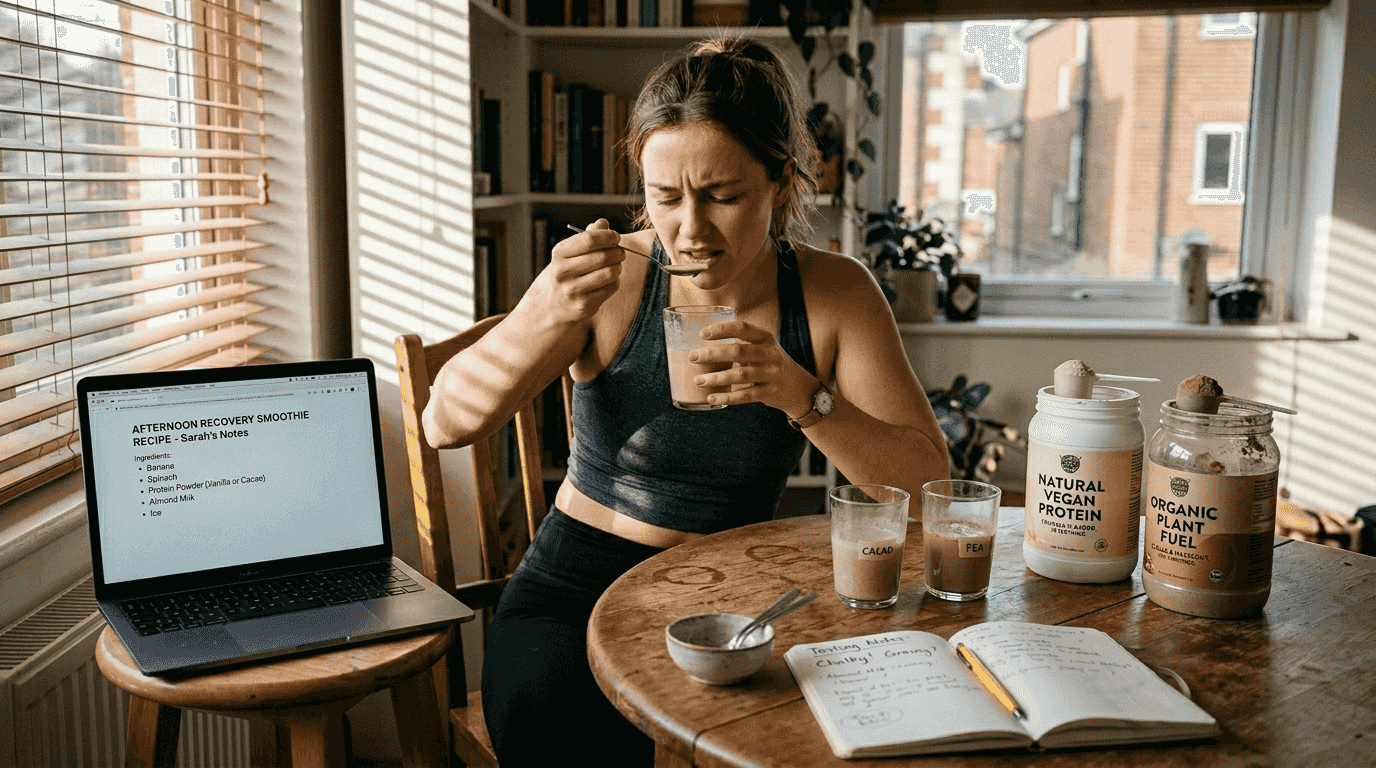
Pro Tip: Start with an unflavoured powder if you’re unsure. It’s versatile for both sweet and savoury recipes, from smoothies to soups.
Follow this checklist to prepare for your purchase:
- Define your primary goal: muscle gain, weight loss, or general wellness support.
- Identify any allergens or sensitivities, such as soy, gluten, or specific legumes.
- Check protein content per serving, aiming for at least 15 to 20 grams per scoop.
- Review the amino acid profile to ensure completeness or complementarity.
- Compare price per serving to fit your budget without sacrificing quality.
- Verify third-party testing or certifications for purity and safety.
Brand transparency also signals quality. Companies that openly share sourcing, manufacturing processes, and nutritional testing demonstrate commitment to your health. Look for certifications like organic, non-GMO, or vegan society approval, which confirm the product meets rigorous standards. When brands prioritise purity and performance, you can feel confident that every scoop supports your wellness journey.
Executing your choice: comparing top vegan protein powders for women
Now that you’re prepared, let’s explore the best options available in 2026. The market offers diverse protein sources, each with unique benefits. Pea protein delivers high levels of branched-chain amino acids crucial for muscle recovery, while brown rice protein provides a hypoallergenic alternative with a smooth texture. Hemp protein adds omega-3 fatty acids and fibre, supporting heart health and digestion. Blends combine these sources to create complete amino acid profiles that rival animal proteins.
Certain plant-based protein powders offer complete amino acid profiles and added nutrients ideal for active women. When comparing products, pay attention to protein content per serving, additional vitamins or minerals, and whether the formula includes digestive enzymes or probiotics to enhance absorption. Some powders fortify with iron, calcium, or B12, nutrients vegan women often need extra support with.
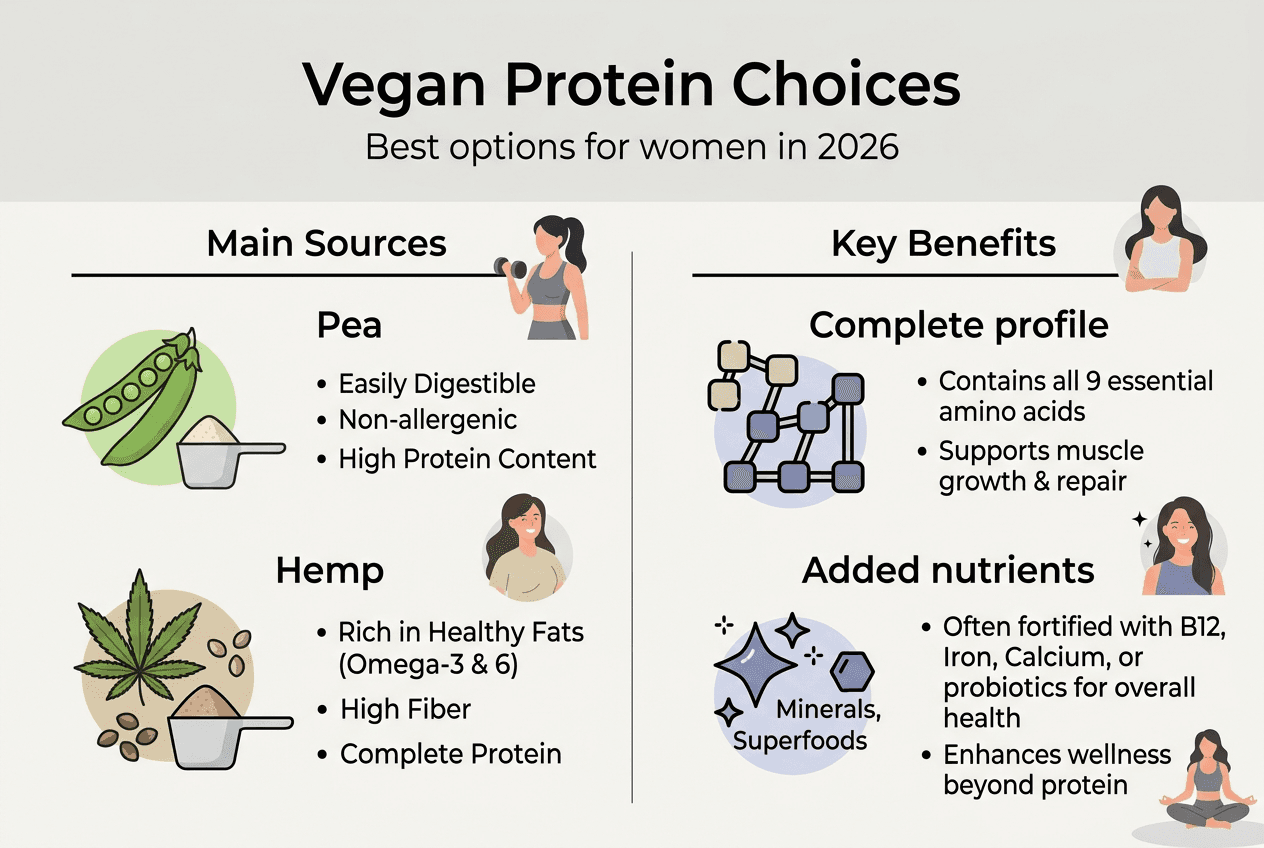
Here’s a comparison of popular vegan protein sources:
| Protein Source | Protein per Serving | Key Benefits | Considerations | | — | — | — | | Pea protein | 20-25g | High in BCAAs, supports muscle recovery, allergen-friendly | Can taste earthy, blend with other sources for balance | | Brown rice protein | 15-20g | Hypoallergenic, smooth texture, easy to digest | Lower in lysine, pair with pea for completeness | | Hemp protein | 12-15g | Contains omega-3s and fibre, supports heart health | Lower protein per serving, grittier texture | | Pea and rice blend | 20-24g | Complete amino acids, balanced taste, versatile | Slightly higher cost, check sweetener types |
When evaluating specific products, prioritise those with minimal ingredients and no added sugars or artificial additives. Clean-label powders list only recognisable components like pea protein isolate, natural vanilla, and stevia or monk fruit for sweetness. This simplicity ensures you’re fuelling your body with wholefood nutrition, not laboratory creations.
Top picks for 2026 include:
- Pea and rice protein blends for complete amino acid coverage and smooth taste
- Organic hemp protein for added omega-3s and fibre, ideal for digestive health
- Pea protein isolate for maximum protein per serving with minimal carbs and fats
- Multi-source blends combining pea, pumpkin seed, and quinoa for nutrient diversity
Remember, the best powder is the one you’ll actually use consistently. If a product ticks all nutritional boxes but tastes unpleasant, you won’t stick with it. Sample different brands, read customer feedback, and trust your palate alongside the science.
Verifying results: how to use vegan protein powders effectively
Once you’ve selected your powder, using it correctly maximises benefits. Timing matters. Effective use of vegan protein powders involves timing, portion control, and combining with balanced meals. Consuming protein within 30 to 60 minutes post-workout supports muscle repair when your body is primed to absorb nutrients. If you’re not exercising, adding a scoop to breakfast or a midday snack stabilises blood sugar and keeps energy steady.
Portion control prevents overconsumption. While protein is essential, excessive intake doesn’t automatically translate to more muscle or better health. Stick to recommended serving sizes, typically one to two scoops daily depending on your overall diet and activity level. Overdoing it can strain kidneys over time and lead to digestive discomfort like bloating or gas, especially if you’re new to higher protein intake.
Start gradually if you’re transitioning from lower protein consumption. Begin with half a scoop mixed into smoothies or oatmeal, then increase as your digestive system adapts. Drinking plenty of water throughout the day aids protein metabolism and reduces the risk of constipation, particularly with powders high in fibre like hemp.
Pro Tip: Blend your powder with frozen banana, spinach, almond milk, and a spoonful of nut butter for a nutrient-packed post-workout smoothie that tastes indulgent.
Follow these steps to integrate protein powder seamlessly:
- Mix one scoop with 250-300ml of water, plant milk, or juice immediately after exercise.
- Add powder to morning porridge, pancake batter, or energy balls for sustained protein throughout the day.
- Blend into smoothies with fruits, greens, and healthy fats for a complete meal replacement.
- Stir into soups or sauces for a savoury protein boost without altering flavour significantly.
- Monitor your energy levels, muscle recovery, and digestion over four to six weeks to assess impact.
- Adjust serving size or timing based on how your body responds and your evolving goals.
Tracking results helps you verify whether your chosen powder delivers. Notice improvements in workout recovery, sustained energy, or easier weight management. If you experience bloating or sluggish digestion, try a different protein source or reduce fibre content. Your body’s feedback guides adjustments, ensuring your supplement routine supports rather than hinders your wellness.
Combining protein powder with whole foods creates synergy. Pair your shake with a handful of nuts, a piece of fruit, or some whole grain toast to add complementary nutrients like healthy fats and complex carbohydrates. This balanced approach fuels your body holistically, honouring the principle that supplements enhance, not replace, a varied diet.
Explore organic nut and seed butters to complement your protein intake
Beyond protein powders, consider adding organic nut and seed butters to your nutrition toolkit. These wholefood spreads deliver healthy fats, additional protein, and rich flavour that pairs beautifully with your daily shake or smoothie. Granavitalis offers raw organic pecan butter, nut and seed butter selection boxes, and organic toasted hazelnut butter, all crafted from ethically sourced ingredients without added oils or sugars.
Stirring a spoonful of pecan or hazelnut butter into your protein shake adds creamy texture and nutrient density, boosting satiety and flavour. These butters complement plant-based protein by providing essential fatty acids and minerals like magnesium and zinc, supporting overall vitality. Whether spread on toast, blended into smoothies, or enjoyed straight from the jar, they’re a delicious way to round out your vegan nutrition with foods rooted in tradition and fuelled for today.
FAQ
What is the best vegan protein powder for women?
No single powder suits everyone because your needs depend on fitness goals, taste preferences, and dietary sensitivities. Look for products with complete amino acid profiles, clean ingredients, and at least 18 to 20 grams of protein per serving. Pea and rice blends often provide the best balance of nutrition, taste, and digestibility for most women.
How much protein should vegan women consume daily?
Active women generally need 1.0 to 1.2 grams of protein per kilogram of body weight, though this varies with exercise intensity, age, and wellness goals. For a 65kg woman, that’s roughly 65 to 78 grams daily. Adjust based on whether you’re building muscle, maintaining weight, or recovering from intense training.
Can vegan protein powders cause digestive issues?
Some powders high in fibre or certain protein isolates may cause bloating or gas, especially when you first start using them. Begin with half servings and increase gradually to let your digestive system adapt. Drinking plenty of water and choosing powders with added digestive enzymes can also minimise discomfort.
Are vegan protein powders suitable for weight loss?
Yes, high protein content supports satiety and helps preserve lean muscle during calorie restriction, both crucial for sustainable weight loss. Choose low-sugar, clean-ingredient powders without artificial additives, and use them to replace less nutritious snacks or boost meals. Protein also requires more energy to digest, slightly increasing calorie burn throughout the day.