
How to balance plant protein for better nutrition
TL;DR:
- Most people believe finding a single “complete” plant protein is necessary, but daily variety and proper pairing are more important for meeting amino acid needs. Combining legumes with grains and rotating sources throughout the week ensures balanced plant-based nutrition without obsessing over single-meal completeness. Consistent, strategic food choices build a sustainable and effective plant protein intake for muscle, wellness, and overall health.
Most people trying to eat more plant-based protein get stuck on one idea: finding the mythical “complete” protein that does all the work in a single meal. It’s a reasonable instinct, but it’s also one of the most persistent misconceptions in plant-based nutrition. Protein balance for muscle and wellness is best understood as consistently meeting your total protein needs while covering all essential amino acids across the day, not necessarily within a single food or powder. This guide walks you through exactly how to do that, step by step.
Table of Contents
- What you need to know before balancing plant protein
- Building blocks: Choosing and combining plant protein sources
- How to balance plant protein at the meal and day level
- Avoiding common mistakes when balancing plant protein
- Our expert take: Why plant protein ‘balance’ is misunderstood
- Discover balanced nutrition with Granavitalis
- Frequently asked questions
Key Takeaways
| Point | Details |
|---|---|
| Variety matters most | Eating a mix of plant proteins across the day covers all essential amino acids and supports well-being. |
| Balance meals, not just totals | Protein quality at the meal level is just as important as your daily total for muscle and health. |
| Legume-grain combinations work | Combining legumes and grains ensures you get complete, digestible protein in vegan meals. |
| Plant proteins can match animal proteins | With sensible planning, plant protein supports muscle and physical performance just as well as animal protein. |
What you need to know before balancing plant protein
Understanding a few core principles will save you years of second-guessing your meals and worrying unnecessarily about every bite.
Protein is built from amino acids, twenty in total, nine of which your body cannot produce on its own. These nine are called essential amino acids (EAAs), and you must get them from food. Non-essential amino acids, by contrast, your body can synthesise itself. The quality of a protein source is largely determined by how well it provides those nine essentials, particularly lysine, leucine, methionine, and cysteine.
Here is where the “complete protein” myth causes trouble. A food labelled complete simply means it contains all nine EAAs in reasonable proportions. Quinoa, soya, and hemp seed are often cited examples. But the label creates the impression that only complete proteins count, which isn’t true. Variety across the day is far more important than chasing completeness in every single meal or snack.
Common myths about plant protein, debunked:
- You must combine specific proteins at every meal. False. Your body draws on a pool of amino acids throughout the day.
- Plant protein is always inferior to animal protein. Overstated. Vegan diets with variety can preserve daily muscle protein synthesis rates comparably to omnivorous diets in active adults.
- You need huge quantities of plant food to get enough protein. Not necessarily. Strategic food choices close the gap efficiently.
- Protein powders are essential on a plant-based diet. Useful, but not mandatory for most people.
Pro Tip: Before optimising your diet, check what quality protein actually means in practical terms, because it goes well beyond a single number on a nutrition label.
| Plant protein source | Key strength | Limiting amino acid |
|---|---|---|
| Lentils | High lysine, iron-rich | Methionine |
| Brown rice | Easy to digest, versatile | Lysine |
| Hemp seeds | Full EAA profile, omega-3s | Lysine (moderate) |
| Chickpeas | Protein and fibre density | Methionine |
| Soya (tofu, edamame) | Near-complete amino profile | None significant |
| Pumpkin seeds | Zinc, magnesium, good EAAs | Lysine |
Active adults can absolutely maintain muscle and support recovery on a well-structured plant-based diet. The key word is “structured.” Random meals assembled without thought will leave gaps. But meals and snacks built around a working knowledge of protein fundamentals? Those get the job done. Explore the top vegan protein sources to start building your personal shortlist.
Building blocks: Choosing and combining plant protein sources
With the fundamentals clear, let’s move into selecting and combining foods for ideal plant protein balance.

Every plant food has what nutritionists call a “limiting amino acid.” This is the essential amino acid present in the lowest quantity relative to what your body needs. Grains, for example, tend to be low in lysine but higher in methionine. Legumes flip that equation: they’re rich in lysine but limited in methionine and cysteine. This is exactly why the classic grain-plus-legume combination has sustained populations for millennia. It isn’t folklore. Protein quality depends on the limiting amino acid profile and how foods are combined to address those gaps.
Step-by-step framework for combining plant proteins:
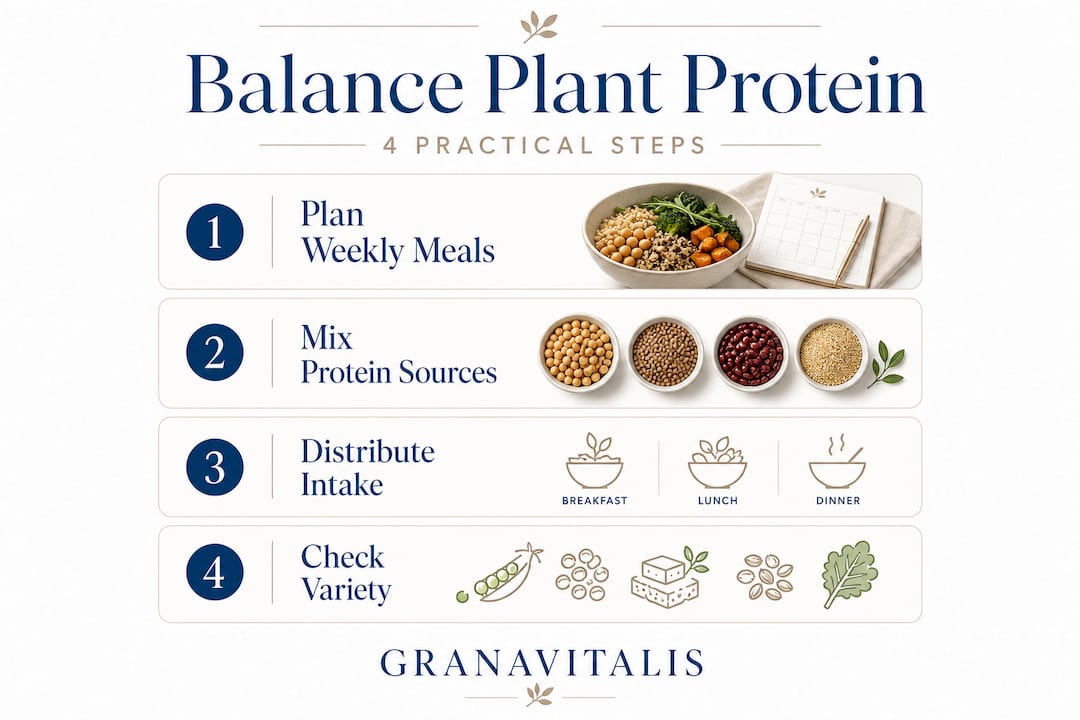
- Identify your go-to protein foods. Pick three to five plant sources you genuinely enjoy and will eat consistently. Lentils, chickpeas, tofu, hemp seeds, and brown rice are excellent starting points for most UK adults.
- Pair legumes with grains or seeds. A legume-plus-grain pairing is the most reliable way to cover the lysine-methionine gap in a single meal. Think lentil dhal with basmati rice, or hummus with wholemeal pitta bread.
- Add nuts and seeds as protein boosters. A tablespoon of hemp or pumpkin seeds on a salad or smoothie adds EAAs without much effort.
- Rotate your sources weekly. Don’t rely on the same two foods for every meal. Rotating between soya, lentils, chickpeas, and different grains ensures a broader amino acid spread over time.
- Don’t neglect variety in your vegetables. Some vegetables, particularly edamame, peas, and sweetcorn, contribute meaningful protein alongside micronutrients.
Practical combinations that work well:
- Lentil stew with brown rice (high lysine from lentils, methionine support from rice)
- Hummus with wholemeal pitta and roasted vegetables
- Tofu stir-fry with quinoa and broccoli
- Chickpea curry with wholegrain naan
- Black bean tacos with corn tortillas and hemp seed garnish
Pro Tip: Look at your meals across a week, not a day. If you see a pattern of mostly grains with very little legumes, that’s the adjustment to make first. See example balanced meals for practical inspiration.
| Pairing | Amino acid benefit | Example meal |
|---|---|---|
| Lentils + brown rice | Lysine (lentils) + methionine (rice) | Dhal and rice bowl |
| Chickpeas + wholemeal bread | Balanced EAAs across both | Hummus on wholemeal toast |
| Tofu + quinoa | Near-complete from both sources | Tofu quinoa power bowl |
| Pumpkin seeds + oats | Zinc and methionine boost to oat base | Overnight oats with seeds |
Understanding the role of protein in vegan diets makes these combinations feel less like chemistry homework and more like intuitive cooking. Once you see the pattern, it becomes second nature. And if you’re wondering why protein matters beyond just muscle, the short answer is: it matters for every system in your body, from hormones to immune function.
How to balance plant protein at the meal and day level
It’s not just about food choices. How you combine them throughout the day makes the real difference. Let’s get practical with meal structuring.
Digestibility is the concept that often gets overlooked. Not all protein you eat is fully absorbed. Protein quality is measured using tools like DIAAS (Digestible Indispensable Amino Acid Score), which accounts for both amino acid content and how well your gut absorbs it. Whole legumes score lower than isolated protein, but cooking methods, soaking, and food combinations all improve absorption meaningfully.
Meal-level balancing matters significantly: vegan meal patterns with different food-group compositions can differ in digestible indispensable amino acid scores even when daily protein totals look adequate on paper. In other words, hitting 60g of protein a day doesn’t automatically mean you’ve covered all your EAAs well.
“A daily protein target without attention to meal composition is like a budget that looks balanced on paper but leaves you short in the categories that matter most.”
Distributing protein across three to four meals also supports muscle protein synthesis better than eating the same total protein in one or two large meals. Aim for at least 20 to 30 grams of quality plant protein per meal if you’re physically active.
Sample daily meal pattern (70kg active adult, approx. 105g protein target):
| Meal | Foods | Approx. protein (g) | EAA coverage |
|---|---|---|---|
| Breakfast | Oat porridge with hemp seeds, soya milk | 18g | Methionine, leucine, lysine (partial) |
| Lunch | Lentil soup with wholemeal bread, pumpkin seeds | 28g | Strong lysine, methionine balanced |
| Snack | Edamame with mixed nuts | 16g | Leucine, isoleucine rich |
| Dinner | Tofu stir-fry with quinoa and broccoli | 35g | Near-complete amino profile |
| Total | ~97g | Broad EAA coverage across day |
Research shows that plant protein supplementation long-term produces similar outcomes to animal protein for physical performance and cardiometabolic health in adults, though individual results vary. The most consistent predictor of success is sustained dietary structure rather than any single food choice.
Practical steps for structuring your protein across the day:
- Anchor each meal with a legume or soya-based food as your primary protein source.
- Add a grain or seed to support the amino acid profile.
- Spread protein relatively evenly rather than front-loading or back-loading your day.
- Post-workout, prioritise leucine-rich sources such as soya, lentils, or a clean pea protein blend.
For guidance on building high-protein plant-based meals that are genuinely satisfying, the real key is volume and variety working together rather than relying on supplements to pick up the slack. Equally, balancing high-protein meals doesn’t require you to eat vast quantities if you choose nutrient-dense sources deliberately.
Avoiding common mistakes when balancing plant protein
With your meal plan underway, be alert for these common stumbling blocks that can quietly undermine your progress.
The biggest error most people make is building meals heavily around grains, potatoes, or pasta without balancing them with legumes, nuts, or seeds. This is incredibly common in the UK, where carbohydrate-centred meals are the cultural norm. Grains alone, even wholegrains, will leave you short on lysine over time.
Pitfalls to watch for:
- Eating mostly grains and vegetables with minimal legumes, nuts, or seeds in your diet
- Relying on the word “complete” on a label without checking the actual amino acid content
- Ignoring digestibility factors such as soaking lentils, cooking chickpeas properly, or fermenting soya
- Rotating the same two or three foods endlessly rather than expanding your plant protein repertoire
- Expecting a single supplement or food to do all the work
Meal composition can undersupply digestible indispensable amino acids even when total daily protein looks adequate on paper. This is the most important takeaway for anyone serious about performance and recovery.
“Balance means smarter planning, not overcomplication. Your body is remarkably good at working with what you give it, provided you give it enough variety.”
Pro Tip: If you’re unsure whether your plant-based diet is covering all amino acids, spend one week logging meals and look for days where legumes are entirely absent. That pattern, more than anything else, signals where to focus. Understanding the nuanced differences between plant and animal protein can also help you assess your own diet without unnecessary anxiety.
Avoiding these mistakes doesn’t require perfection. It requires consistency and a willingness to vary your food choices. That’s genuinely achievable for anyone cooking real food at home.
Our expert take: Why plant protein ‘balance’ is misunderstood
Here’s what years of working with wholefood nutrition have taught us: the obsession with finding a single “complete” protein source actually distracts people from what works.
The conversation in mainstream nutrition often reduces to “is this food complete?” But that framing misses the point entirely. Your body doesn’t evaluate individual foods. It draws from a circulating pool of amino acids built up across your meals throughout the day. Spreading your intake and rotating sources is functionally more powerful than hunting for a perfect food.
Athletes and active adults who thrive on plant-based diets are rarely the ones obsessing over amino acid scores at every meal. They’re the ones who eat consistently, rotate legumes and grains, add seeds where they can, and adjust based on how their body feels and performs. Simplicity, sustained over time, beats complexity applied inconsistently.
The amino acids worth genuinely keeping an eye on are leucine, which drives muscle protein synthesis, and lysine, which is the most commonly limiting amino acid in plant diets. If your meals regularly include lentils, chickpeas, soya, or pumpkin seeds, you’re covering both. That’s a much more useful mental model than obsessing over PDCAAS scores on the back of a packet.
One finding worth reflecting on: comparing vegan protein to whey for performance outcomes reveals the gap is far smaller than the sports nutrition industry would have you believe, particularly when plant sources are varied and well-combined. Consistency and smart food pairing close most of that gap in real-world conditions.
The biggest win isn’t the perfect meal. It’s a consistent weekly pattern where legumes appear daily, grains are paired thoughtfully, and seeds or nuts add depth to almost every meal. That’s a lifestyle, not a formula.
Discover balanced nutrition with Granavitalis
Ready to put balanced nutrition into action? Here’s where Granavitalis can help.
At Granavitalis, we’ve built our range around exactly this kind of real-food, thoughtfully structured nutrition. Every product is sourced and selected to support your protein goals without the complexity or compromise.
Whether you’re building your daily meal pattern around legumes and ancient grains or looking for a nutrient-dense boost between meals, our superfood bundle brings together the kind of wholefood ingredients that complement a protein-balanced plant-based day. Our superfoods mix combines acai, chia, and acerola for a clean, nutrient-rich addition to smoothies, breakfasts, or post-workout recovery meals. Rooted in tradition, crafted for the way you live and train today.
Frequently asked questions
Is it necessary to combine different plant proteins at every meal?
No. Getting variety across the day is enough for most people, provided total protein and essential amino acid needs are met over time. Forcing complete protein at every single meal adds unnecessary stress.
Are plant proteins really as effective as animal proteins for muscle and fitness?
With balanced intake and proper variety, plant protein can support muscle, wellness, and performance comparably to animal sources. Long-term plant protein supplementation does not show statistically significant differences from animal protein for most physical outcomes in adults.
What is the best plant protein pairing for a typical UK meal?
A meal with a 2:1 ratio of legumes to grains, such as lentil soup with brown rice, offers excellent amino acid coverage and digestibility. Higher-quality vegan meals consistently reflect this kind of legume-dominant composition.
Can you overeat plant protein?
Excess protein is not stored as protein but converted for energy or excreted. For most active adults, the focus should be on consistent distribution and variety rather than maximising total intake at any one meal.
What is PDCAAS and why does it matter?
PDCAAS (Protein Digestibility-Corrected Amino Acid Score) is a scientific method that measures protein quality based on both amino acid composition and digestibility. Protein quality optimisation based on PDCAAS helps you choose and combine foods that genuinely maximise nutritional value, not just quantity.