
Get 30g of protein in your morning oatmeal bowl
You can turn a plain bowl of oats into a 30g-protein breakfast in under ten minutes, using ingredients most kitchens already stock. No powder required, though it helps if you’re short on time.
Three builds get you there fast:
- Dairy route: oats cooked in milk, topped with Greek yoghurt and a spoon of hemp seeds — around 28 to 32g.
- Egg-white route: oats stirred with whisked egg whites (“proats”), cooked in milk — around 27 to 30g.
- Powder route: oats cooked in milk with one scoop of whey or plant protein powder and a spoon of nut butter — around 35 to 40g.
The reason to bother: a high-protein breakfast increases GLP‑1 and PYY, the hormones that signal fullness to your brain, and does it more effectively than a low-protein, high-carbohydrate bowl. That’s the whole case for pushing past the 8 to 10g a standard bowl of oats gives you.
Key Takeaways
Reaching 25 to 35g of protein in a bowl of oatmeal requires stacking two or three add-ins, since oats alone supply only about 5g per serving.
| Point | Details |
|---|---|
| Base oats are protein-light | Half a cup of dry oats gives roughly 5g protein; everything else comes from add-ins. |
| Milk swap is the easiest win | Cooking in dairy or soy milk instead of water adds 7 to 8g of protein per serving. |
| Powder needs a slurry | Mix protein powder into a splash of milk first to avoid clumping in cooked oats. |
| Egg whites go in last | Whisk them in once most liquid is absorbed, then stir over medium heat until fluffy. |
| Plant and animal protein perform similarly | Matched for energy and protein, both produce comparable fullness hormone responses. |
| Granavitalis fills the gaps | Nut butters, superfood mixes, and vegan protein powders slot into any recipe above to help hit the 30g mark. |
Table of Contents
- Six high protein oatmeal recipes you can make this week
- How much protein do you actually need in a bowl of oatmeal?
- Which ingredients raise protein without ruining the texture?
- Why does my oatmeal go gummy, watery, or curdled?
- Does a high-protein breakfast really reduce snacking later?
- Why Granavitalis backs wholefood protein over shortcuts
- Which Granavitalis products help you hit your protein target?
- Frequently asked questions
- Sources
Six high protein oatmeal recipes you can make this week
Each of these gets you into the 25 to 35g range using different base ingredients, so pick whichever suits your fridge and your dietary pattern. Protein figures are rounded and based on standard portion sizes; check exact values against USDA FoodData Central if you’re tracking precisely.
1. Protein-powder oats Cook ½ cup rolled oats in 1 cup milk. Once off the heat, stir in one scoop (about 25g) of whey or plant protein powder and a tablespoon of nut butter. Approximate protein: 38g. Swap dairy milk for oat or soy milk to make it dairy-free.
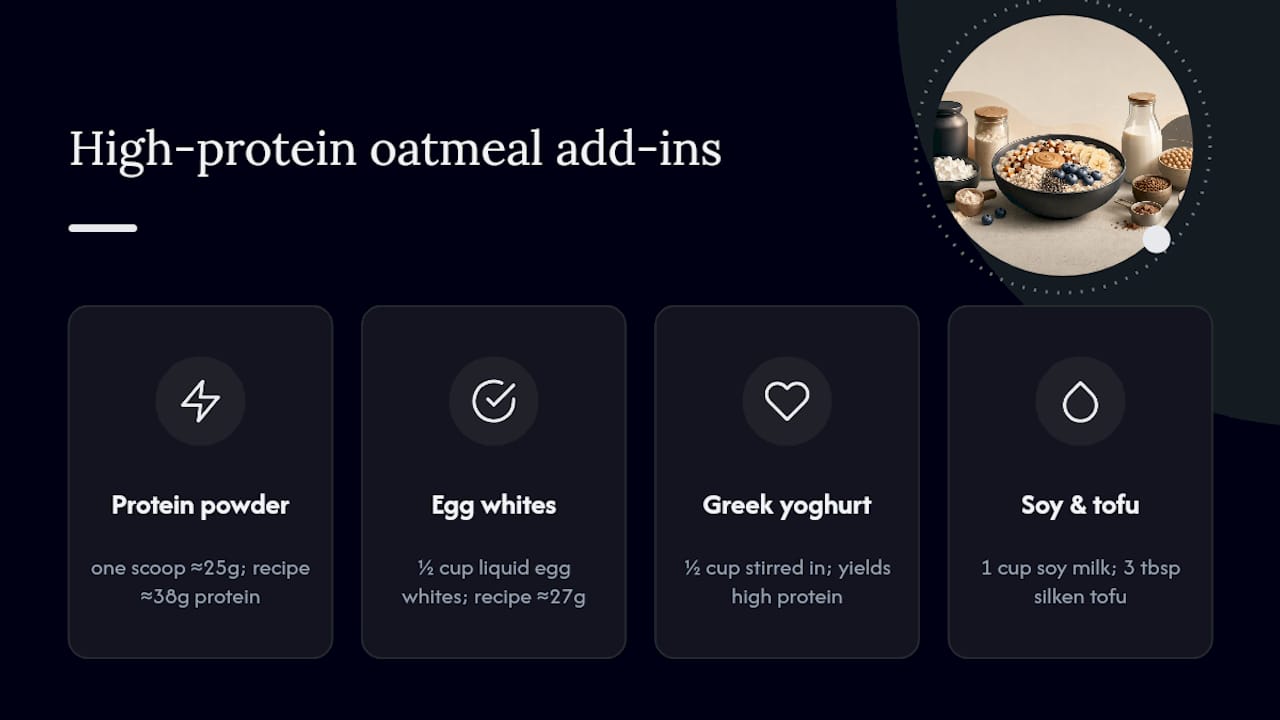
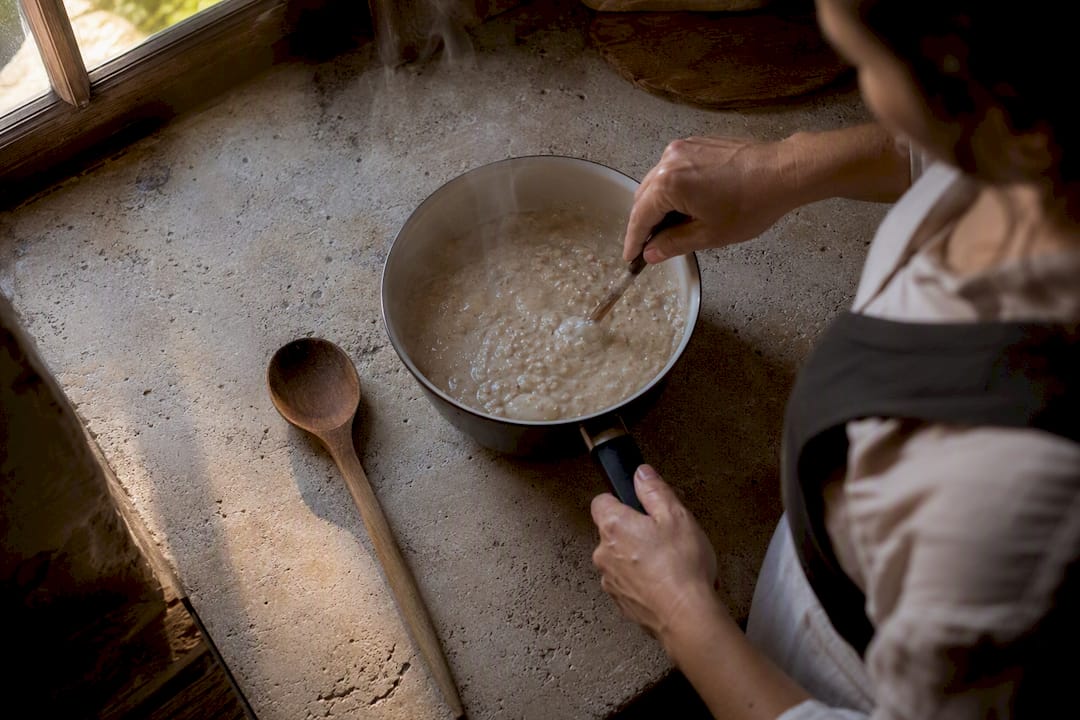
2. Egg-white proats Cook ½ cup oats in ¾ cup milk until most of the liquid is absorbed. Whisk in ½ cup liquid egg whites and stir continuously over medium heat for two to three minutes until the mixture turns light and fluffy rather than curdled. Approximate protein: 27g. This technique gets covered in more depth in our guide to high protein egg breakfasts.
3. Greek yoghurt stirred oats Cook ½ cup oats in water or milk, then stir through ½ cup full-fat Greek yoghurt once cooled slightly (adding it hot can split it). Top with berries and a tablespoon of chia seeds. This yields a high-protein meal. Cottage cheese works as a direct swap for yoghurt if you prefer a milder tang.
4. Overnight protein oats Combine ½ cup oats, 1 cup milk, ¼ cup cottage cheese or Greek yoghurt, and a tablespoon of chia seeds in a jar. Refrigerate overnight. Stir and add a spoon of nut butter before eating. This creates a high-protein overnight oats option. Our overnight oats recipes hitting 25 to 40g go into more combinations if you want variety through the week.
5. Vegan high-protein oats Cook ½ cup oats in 1 cup soy milk (soy has higher protein than oat or almond milk). Stir in 3 tablespoons of silken tofu blended smooth, plus a tablespoon of hemp seeds and a spoon of almond or peanut butter. This provides a high-protein vegan option. For more plant-based combinations, see how to make vegan protein oatmeal.
6. Baked high-protein oatmeal Mix 2 cups oats, 2 scoops protein powder, 2 eggs, 1½ cups milk, a mashed banana, and a spoon of nut butter or a superfoods mix. Pour into a baking dish and bake at 180°C for 25 to 30 minutes. Cuts into four portions, each with a high protein content. A nut butter or superfoods mix from Granavitalis works well folded into the batter for extra texture and micronutrients.
Pro Tip: Whisk egg whites into your oats only once most of the liquid has been absorbed. Adding them too early, into a watery pan, is what causes the stringy curdled texture people complain about.
How much protein do you actually need in a bowl of oatmeal?
Aiming for 25 to 35g of protein at breakfast isn’t an arbitrary round number. It’s the range used in the trials showing meaningful appetite suppression, including a study using a 350‑kcal breakfast at roughly 35g protein that increased fullness and reduced evening snacking compared with a standard 13g cereal breakfast. Below that range, the satiety effect weakens noticeably.
A plain bowl of oats provides relatively little protein. Half a cup of dry oats cooked in water contains about 5g of protein; most protein in these meals comes from added ingredients.
| Add-in | Typical portion | Protein added |
|---|---|---|
| Dairy or soy milk (replacing water) | 1 cup | around 7 to 8 grams |
| Protein powder | 1 scoop | approximately 20 to 25 grams |
| Greek yoghurt | ½ cup | about 12 grams |
| Cottage cheese | ¼ cup | around 6 grams |
| Egg whites | 1 white | roughly 3 to 4 grams |
| Nut butter | 2 tbsp | approximately 7 to 8 grams |
| Hemp seeds | 1 tbsp | about 3 to 4 grams |
| Chia seeds | 1 tbsp | around 2 to 3 grams |
Building a bowl is just stacking these on top of a 5g base. A few worked examples:
- Oats + milk (8g) + Greek yoghurt (12g) + hemp seeds (4g) = 29g.
- Oats + milk (8g) + protein powder (22g) = 35g.
- Oats + water (0g) + 3 egg whites (10g) + cottage cheese (6g) + nut butter (8g) = 29g.
- Oats + soy milk (8g) + hemp seeds (4g) + nut butter (7g) + chia (3g) = 27g.
If 35g feels like too many calories for your goals, drop the nut butter or halve the powder scoop and lean more on egg whites or milk, which add protein with far less fat. Verywell Health’s breakdown of add‑in portions is a useful reference if you want to keep adjusting the maths yourself.
Which ingredients raise protein without ruining the texture?
Rolled oats and steel-cut oats carry roughly the same protein per 100g, so the choice between them is really about texture and cooking time rather than nutrition. Steel-cut oats hold a firmer, chewier bite; rolled oats cook faster and go creamier, which matters more once you’re folding in yoghurt or powder.
Ancient grains sit in a different category entirely. Quinoa, amaranth and teff carry a higher protein percentage than oats and bring a more complete amino acid profile, making them a useful mix-in rather than a straight replacement. A spoon of cooked quinoa stirred through a finished bowl adds bulk and protein without the gumminess that comes from overcooking oats.
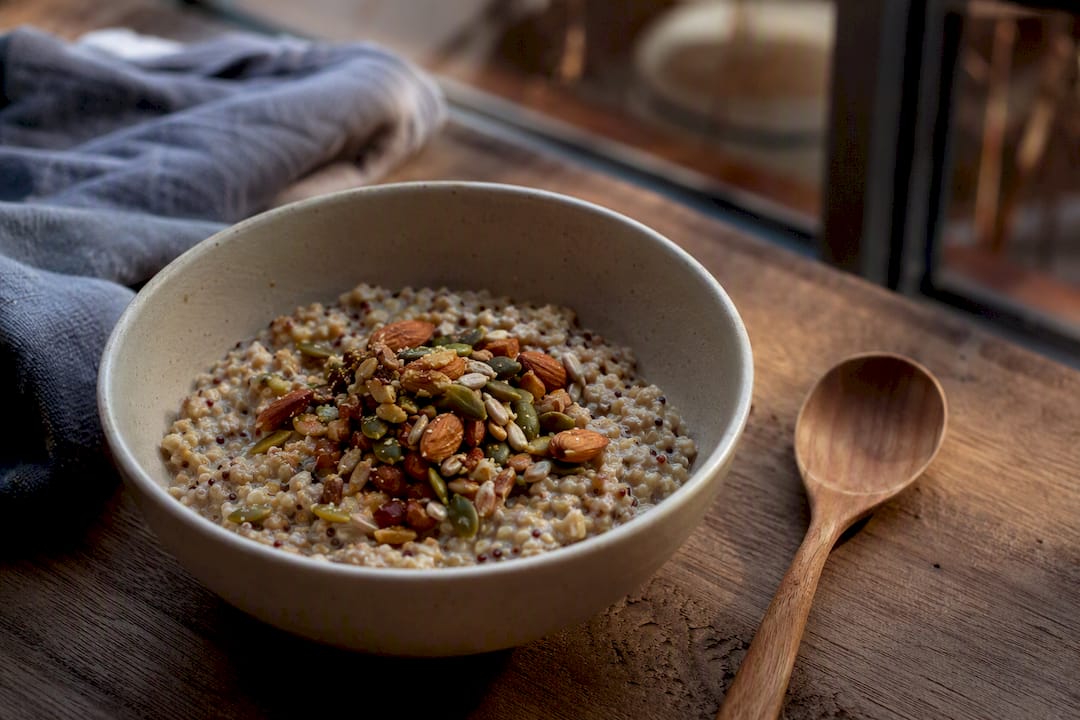
The milk swap is the single easiest lever. Cooking with dairy or soy milk instead of water adds roughly 7 to 8g of protein per serving, and soy milk specifically tends to sit closer to dairy in protein content than oat, almond, or rice milk, which are protein-poor by comparison.
Beyond that, your options split roughly into two camps:
- Dairy and animal: Greek yoghurt, cottage cheese, egg whites, and whey powder tend to add protein with minimal flavour disruption.
- Plant-based: soy or pea protein powder, hemp seeds, chia seeds, and nut butters work well together, though nut butters add meaningful fat and calories alongside the protein.
Ancient grain blends and seed mixes also help readers avoid decision fatigue on busy mornings. Our guide to boosting oatmeal protein with plant-based choices covers combinations that lean fully vegan if that’s your starting point.
Why does my oatmeal go gummy, watery, or curdled?
Most texture problems trace back to timing. Protein powder thickens oats considerably once it hits heat, so stir it into a small splash of milk first to form a slurry, then fold that into the cooked oats off the heat. Adding dry powder directly to a hot pan is what causes clumping.
Egg whites need the opposite approach: they go in once the oats have already absorbed most of their liquid, then get stirred continuously over medium heat for a couple of minutes until they turn light rather than stringy.
For storage, cooked oats and overnight oats both keep well in the fridge for three to four days in a sealed container. Baked oatmeal freezes in individual portions for up to two months. To reheat, add a splash of milk before microwaving. It restores the creaminess that fridge-time strips away.
Quick troubleshooting:
- Gummy oats: too much stirring or too little liquid. Ease off the spoon and add a splash more milk.
- Watery oats: protein powder added too early, before the oats thickened. Let the base cook down first.
- Curdled texture: yoghurt or egg whites added while the pan was too hot. Pull off the heat before stirring them in.
Pro Tip: Protein powder thickens as it sits, so oats that look perfect straight off the hob can turn stodgy five minutes later. If you’re prepping ahead, add the powder slurry just before serving rather than during cooking.
Does a high-protein breakfast really reduce snacking later?
The hormonal case is fairly consistent across the research. A controlled trial comparing a high-protein breakfast (about 35g protein) against a lower-protein version (about 13g) found the higher-protein breakfast increased fullness, altered ghrelin and PYY responses, and reduced evening snacking in participants source. Separate work has linked higher-protein breakfasts to reduced reward-driven food motivation later in the day, not just physical fullness.
Breakfasts providing roughly 30 to 35g of protein produced measurably greater increases in GLP‑1 and PYY, and a stronger reduction in hunger, than low-protein, carbohydrate-heavy breakfasts.
It doesn’t seem to matter much whether that protein comes from animal or plant sources. A 2025 study found comparable GLP‑1 and PYY responses between plant-based and animal-based breakfasts matched for energy and protein, supporting vegan high-protein options. Every recipe above is designed with that 30g mark in view, whether it gets there through yoghurt, egg whites, tofu, or powder.
Why Granavitalis backs wholefood protein over shortcuts
I’ve spent enough mornings testing oat combinations to have a firm view: powder is convenient, but the bowls that actually keep you full past 11am tend to lean on real food, yoghurt, seeds, nut butter, whole eggs, not just a scoop stirred in as an afterthought. That preference lines up with why Granavitalis builds its range around wholefood proteins and ancient grains rather than isolated shortcuts. It’s not dogma. It’s just what tends to hold up once the bowl’s empty and lunch is still three hours away.
Which Granavitalis products help you hit your protein target?
Once you’ve settled on a build, the ingredients matter as much as the maths. Granavitalis stocks nut and seed butters, vegan protein powders, and ancient grain blends that slot straight into any of the recipes above, whether you’re stirring one into a bowl of overnight oats or folding it into a baked batch. A spoon of raw organic pecan butter adds both protein and a rounder flavour than most standard peanut butters, and if you’re not sure which nut butter suits your palate, the organic nut and seed butter selection box lets you try a few before committing to one.
For toppings, the immune booster superfood bundle brings chia, hemp, and acai into one jar, useful for the overnight and vegan recipes above where seeds do a lot of the protein work. If you’re also looking at what to eat around training, the pre‑ and post-workout breakfast guidance from our partners at OneMor pairs well with the higher-protein builds here. Browse the full Granavitalis range to build your own version of the bowl that works for your mornings.
Frequently asked questions
How much protein powder should I add to oatmeal? One standard scoop, typically 20 to 25g of protein, is usually enough to push a bowl from around 10g up to 30g or more when combined with milk.
Can I get 30g of protein from oatmeal without protein powder? Yes. Combining milk, Greek yoghurt or cottage cheese, egg whites, and a spoon of nut butter or seeds reaches 28 to 32g without any powder at all.
Is Greek yoghurt or cottage cheese better for high-protein oats? Both add similar protein per portion. Greek yoghurt gives a smoother, tangier result, while cottage cheese adds more texture and a milder taste.
Does a vegan version reach the same protein levels? Soy milk, tofu, hemp seeds, and pea or soy protein powder can reach 25 to 30g per bowl, and research suggests plant and animal protein produce similar fullness effects when matched for total protein.
How long do high-protein oats keep in the fridge? Cooked or overnight oats keep for three to four days in a sealed container. Baked oatmeal freezes well for up to two months.
This article is general information, not a substitute for advice from a qualified doctor. Consult a qualified healthcare professional about your own circumstances before acting on anything here.
Sources
- High‑protein breakfast increases GLP‑1 and PYY — PubMed
- Beneficial effects of a higher‑protein breakfast on appetite‑related hormones — PMC
- Ways to make your oatmeal with more protein — Everyday Health
- 10 easy ways to add more protein to your oatmeal — Verywell Health