
How to make vegan protein oatmeal: 8g protein per cup
TL;DR:
- Combining grains, seeds, and nut butters creates a high-protein vegan breakfast that sustains energy.
- Soaking grains overnight improves digestibility, reduces cooking time, and boosts nutrient availability.
- Simple routines with 2-3 wholesome ingredients are more effective than complex, lengthy recipes.
Most vegan breakfasts look great on a plate but leave you reaching for snacks by mid-morning. Traditional porridge, for all its comfort, rarely delivers the protein your muscles and metabolism actually need. The fix is simpler than you might think. By layering ancient grains, seeds, and a handful of smart add-ins, you can turn a humble bowl of oats into a genuinely high-protein breakfast that keeps you fuelled for hours. This guide walks you through exactly what to use, how to prepare it, and how to cook it well, so you get the nutrition without the fuss.
Table of Contents
- What you need for high-protein vegan oatmeal
- How to prepare your grains and seeds
- Step-by-step guide to making vegan protein oatmeal
- Troubleshooting, nutrition enhancements, and serving ideas
- The truth about vegan protein oatmeal: What actually works
- Upgrade your oats with plant-based power
- Frequently asked questions
Key Takeaways
| Point | Details |
|---|---|
| Mix your proteins | Combining at least three plant-based protein sources in your oats creates a balanced, complete meal. |
| Use ancient grains | Adding quinoa or buckwheat to oats not only boosts protein but also improves flavour and texture. |
| Soak for best results | Soaking grains shortens cooking time and makes your oatmeal easier to digest. |
| Add nutrition with toppings | Nut butters, seeds, and fruits transform simple oats into a powerful, satisfying breakfast. |
What you need for high-protein vegan oatmeal
Before you start cooking, it helps to know what you’re working with. The good news is that you don’t need specialist equipment or a kitchen full of gadgets. A hob and a saucepan will do the job perfectly. If you prefer a quicker option, a microwave works well for single servings. For those who like to prep ahead, a glass jar is all you need for overnight oats.
The real decisions happen with your ingredients. Rolled oats are the obvious base, but they’re only the starting point. Mixing in ancient grain breakfast ideas like quinoa flakes or buckwheat groats changes everything. Quinoa is one of the few plant foods that qualifies as a complete protein at 8g/cup cooked, meaning it contains all nine essential amino acids. Buckwheat, despite its name, is entirely gluten-free and brings a satisfying earthiness alongside a solid amino acid profile.
Your core ingredient checklist:
- Rolled oats (the base)
- Quinoa flakes or buckwheat groats (ancient grain protein boost)
- Chia seeds (omega-3s, fibre, and protein)
- Hemp seeds (complete protein, soft texture)
- Pumpkin seeds (magnesium, zinc, and protein)
- Pea protein powder (optional, for an extra lift)
- Nut butter (flavour, healthy fats, and protein)
- Fresh or frozen fruit (natural sweetness and micronutrients)
- Cinnamon, vanilla, or cardamom (flavour without sugar)
The combination of grains and seeds matters more than any single ingredient. Reviewing plant-based porridge nutrition shows that mixing sources gives you a broader amino acid spread, which is what makes the difference between a bowl that satisfies and one that doesn’t.
| Ingredient | Protein per serving | Key benefit |
|---|---|---|
| Rolled oats (1/2 cup dry) | ~5g | Fibre, beta-glucan |
| Quinoa flakes (1/4 cup) | ~4g | Complete protein |
| Hemp seeds (2 tbsp) | ~6g | Omega-3, full amino acids |
| Chia seeds (1 tbsp) | ~2g | Fibre, hydration |
| Pumpkin seeds (1 tbsp) | ~2g | Zinc, magnesium |
Pro Tip: Soaking your ancient grains overnight in cold water reduces phytic acid, which is the compound that can block mineral absorption. It also softens the grains so they cook faster in the morning, saving you time without sacrificing nutrition.
How to prepare your grains and seeds
Now that you’ve gathered your ingredients, let’s look at how to prepare them for maximum nutrition and flavour. Preparation is where most people cut corners, and it’s also where the biggest gains in digestibility and texture are made.
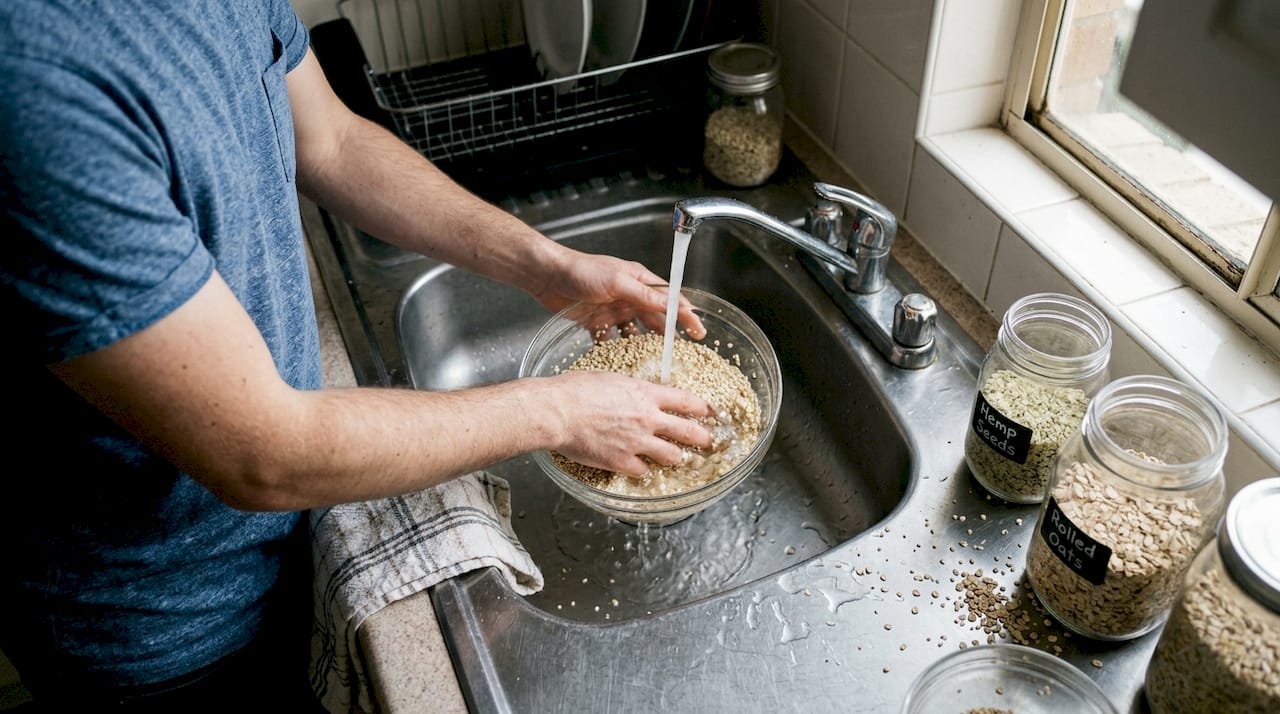
Soaking is the single most impactful step you can take before cooking. Rinse your oats, quinoa flakes, or buckwheat groats under cold water, then cover them with fresh water and leave them for at least four hours, or overnight. This process breaks down the outer layer of the grain, making nutrients more available and reducing the cooking time significantly.
If you’re short on time, a quick soak in boiling water for 10 to 15 minutes works well for quinoa flakes and buckwheat groats. It won’t replicate a full overnight soak, but it does reduce cook time and improves texture considerably.
Step-by-step grain preparation:
- Measure your grains: aim for 1/2 cup oats and 1/4 cup quinoa flakes or buckwheat groats per serving.
- Rinse thoroughly under cold running water.
- Place in a bowl or jar, cover with cold water, and soak for 4 to 8 hours.
- Drain and rinse again before cooking.
- Add seeds (chia, hemp, pumpkin) to the dry mix before cooking or stir in after.
The reason combining three or more protein sources matters comes down to amino acid completeness. No single plant food contains every essential amino acid in the right ratios. Following vegan protein oats prep principles, mixing oats, quinoa, and seeds pushes your bowl’s PDCAAS score (a measure of protein quality) much closer to 1.0, which is the benchmark for a complete protein.
A word of caution: Overcooking ancient grains turns them mushy and destroys some of their delicate nutrients. Undercooking leaves them chewy and harder to digest. Aim for a tender but slightly textured result. Taste as you go.
For those new to easy high-protein oat prepping, batch prepping your dry grain mix at the start of the week is a game changer. Measure out five portions, store them in jars, and your morning routine shrinks to just adding liquid and cooking.
Step-by-step guide to making vegan protein oatmeal
With your grains and seeds prepped, you’re ready to create your ideal vegan protein oatmeal. The method you choose depends on your morning schedule, but all three options below deliver excellent results.
Three cooking methods:
- Hob method: Combine soaked grains with 1.5 cups of plant milk or water. Bring to a gentle simmer, stir regularly, and cook for 8 to 10 minutes until thick and creamy.
- Microwave method: Place grains and liquid in a large microwave-safe bowl (it will bubble up). Cook on high for 3 minutes, stir, then cook for another 1 to 2 minutes.
- Overnight oats: Combine soaked grains with plant milk, chia seeds, and any flavourings in a jar. Refrigerate overnight. Eat cold or warm briefly in the morning.
| Method | Prep time | Cook time | Texture | Best for |
|---|---|---|---|---|
| Hob | 5 min | 8 to 10 min | Creamy, rich | Leisurely mornings |
| Microwave | 2 min | 4 to 5 min | Soft, quick | Busy weekdays |
| Overnight | 5 min | None | Thick, cold | Meal prep fans |
For the best nutritional outcome, prioritise 3+ protein sources such as oats combined with pea protein and seeds. This combination pushes the PDCAAS score close to 1.0, meaning your body can actually use the protein you’re consuming. Ancient grains add that nuance without requiring protein powders at all.
For a reliable power breakfast oatmeal, a solid base ratio is: 1/2 cup rolled oats, 1/4 cup quinoa flakes, 1 tbsp hemp seeds, 1 tbsp chia seeds, and 1.5 cups oat or soy milk. That single bowl delivers roughly 18 to 22g of protein before you add any toppings.
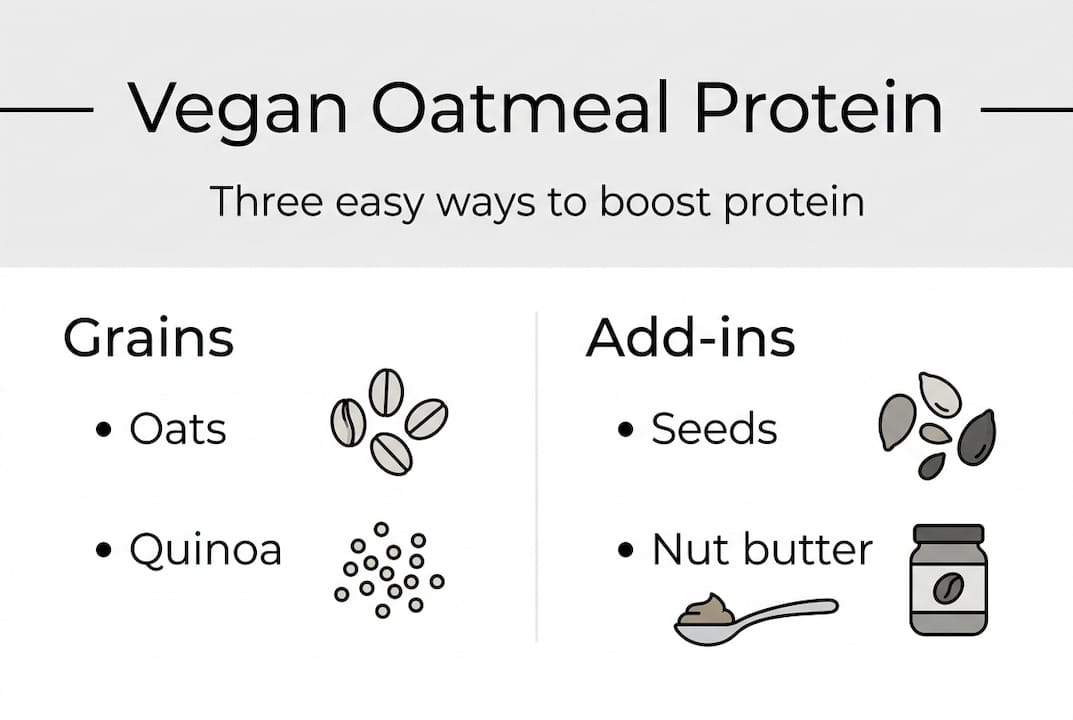
Pro Tip: Always add your seeds, nut butters, and fresh fruit after cooking, not during. Heat degrades some of the delicate fatty acids in hemp and chia seeds. Stirring them in at the end preserves their nutritional value and keeps the texture interesting.
Exploring plant-based breakfast protein options beyond oats can also inspire you to rotate your grain base throughout the week, keeping things fresh.
Troubleshooting, nutrition enhancements, and serving ideas
After making your oatmeal, let’s cover what to do if things go wrong, and ways to make your breakfast even better. Even experienced cooks run into issues with texture and flavour, so these fixes are worth knowing.
Common problems and quick fixes:
- Sticky, gluey oats: You’ve overcooked them or used too little liquid. Add a splash of plant milk and stir over low heat.
- Bland flavour: Oats absorb flavour well but need help. Add cinnamon, vanilla extract, or a pinch of sea salt during cooking.
- Inconsistent texture: Mixing grain sizes (fine quinoa flakes with whole buckwheat groats) can cause uneven cooking. Stick to similar textures or stagger when you add each grain.
- Too thin: Chia seeds are your best friend here. Stir in an extra tablespoon and let it sit for two minutes. They absorb liquid rapidly and thicken the bowl naturally.
On the nutrition side, a 1/2 cup quinoa and oats blend provides around 8g of protein per cup cooked, and that’s before seeds or nut butters enter the picture. The combination also supports sustained energy release, which is the opposite of what you get from a sugary cereal.
Topping ideas to boost nutrition and enjoyment:
- Sliced banana or fresh berries for natural sweetness and antioxidants
- A tablespoon of almond or pecan butter for healthy fats and extra protein
- Toasted pumpkin or sunflower seeds for crunch and minerals
- A drizzle of tahini for calcium and a nutty depth
- Coconut flakes (unsweetened) for texture and medium-chain fatty acids
For even more high-protein vegan ideas beyond breakfast, rotating your vegan protein sources throughout the day ensures you’re covering your full amino acid needs without overthinking it.
The truth about vegan protein oatmeal: What actually works
Here’s what we’ve noticed after years of working with ancient grains and plant-based nutrition: the people who struggle most with vegan protein oatmeal are usually the ones who’ve made it too complicated. They’re chasing the perfect protein powder, stacking eight superfoods, and wondering why their breakfast takes 30 minutes and still doesn’t taste right.
The truth is that simplicity wins. A bowl built on two or three quality whole grains, a couple of seeds, and a good nut butter consistently outperforms anything built around a long ingredient list. The vegan protein basics are genuinely straightforward once you stop looking for shortcuts.
What actually creates consistency is a routine you can repeat without thinking. That means fewer ingredients, not more. It means choosing grains you enjoy eating, not just ones that look impressive in a recipe. And it means trusting that quality ingredients, sourced well and prepared simply, do the nutritional heavy lifting without drama. The bowl that sustains you is the one you actually make every morning.
Upgrade your oats with plant-based power
You’ve got the knowledge. Now it’s time to make your oatmeal genuinely extraordinary with the right ingredients behind it.
At Granavitalis, we select every product to meet real nutritional goals, not marketing ones. Stirring a spoonful of organic pecan butter into your morning oats adds rich flavour, healthy fats, and a protein lift that no flavoured powder can replicate. If you want variety, our nut and seed butter box gives you a curated selection to rotate through the week. Ready to explore everything we offer? See all plant-based options and build a breakfast worth waking up for.
Frequently asked questions
How can I make vegan oatmeal a complete protein?
Combine oats with at least two other protein sources like quinoa, seeds, or pea protein to achieve a balanced amino acid profile. Prioritising 3+ protein sources pushes your bowl’s PDCAAS score close to 1.0, the benchmark for complete protein quality.
Should I soak oats and ancient grains before cooking?
Yes. Soaking oats, quinoa, or buckwheat improves digestibility, reduces cooking time, and enhances texture. A quick soak in boiling water for 10 to 15 minutes works if you’re short on time.
What are the best toppings for vegan protein oatmeal?
Top your oats with nut butters, toasted seeds, or fresh fruits to boost both nutrition and taste. These additions layer in healthy fats, minerals, and extra protein without complicating your routine.
Is vegan protein oatmeal suitable for weight management?
Yes. The high protein and fibre content helps keep you full for longer, reducing the urge to snack and supporting healthy weight maintenance over time.