
How to add plant-based protein to oatmeal for a healthy boost
TL;DR:
- Adding plant-based proteins to oatmeal enhances satiety, stabilizes blood sugar, and supports muscle repair. Incorporating ingredients like seeds, nut butters, and plant milks builds a more nourishing, satisfying breakfast routine. Consistent, varied protein sources foster lasting habits that improve energy and reduce mid-morning hunger.
You sit down to a warm bowl of oatmeal, feel satisfied for about forty minutes, then find yourself raiding the snack cupboard before ten o’clock. Sound familiar? Plain porridge, for all its wholesome reputation, simply does not deliver enough protein to keep hunger at bay through a busy morning. The good news is that a handful of plant-based additions can completely change the picture. This guide walks you through exactly why protein matters at breakfast, which ingredients work best, how to build your bowl step by step, and how to tell when your new routine is genuinely paying off.
Table of Contents
- Why add protein to your oatmeal?
- What you will need: Ingredients and tools
- How to add protein to oatmeal: Step-by-step guide
- Troubleshooting and common mistakes
- How to tell if your oatmeal is working: Satiety and energy
- What most overlook about adding protein to oatmeal
- Enhance your oatmeal with top plant-based proteins
- Frequently asked questions
Key Takeaways
| Point | Details |
|---|---|
| Protein boosts satiety | Adding protein to oatmeal helps keep you full for longer and curbs hunger cravings in the morning. |
| Versatile ingredients | Plant-based proteins like nuts, seeds, and protein powders are easy to add for flavour and nutrition. |
| Easy preparation | Simple swaps such as soy milk or nut butters transform ordinary oats into a protein powerhouse. |
| Start small, adjust | Begin with small amounts of protein and adapt recipes for your personal taste and texture preferences. |
Why add protein to your oatmeal?
Now that we have set the scene, let us explore why adding protein truly transforms your morning oats.
Oats are an excellent source of complex carbohydrates and soluble fibre, but a standard serving delivers only around 5 grams of protein. That is enough to fuel a gentle morning stroll, not a full day of work, training, and thinking. Protein slows the digestion of carbohydrates, which blunts blood sugar spikes and keeps energy levels steady rather than delivering that all-too-familiar mid-morning crash.
Longer-lasting fullness is perhaps the most immediate benefit you will notice. Boosting protein at breakfast increases satiety and helps manage hunger cycles, which means fewer impulsive snack choices and a calmer, more focused morning. Research consistently shows that satiety benefits of protein at the first meal of the day ripple positively through the rest of your eating pattern.
Beyond fullness, protein is essential for muscle repair. Whether you exercise before breakfast or simply want your body to recover well from yesterday’s activity, amino acids from plant sources support tissue rebuilding and overall metabolic health just as effectively as animal sources, provided you eat a variety of them throughout the day. If you are unsure whether getting enough protein is already a concern for you, that is a useful place to start.
Plant-based proteins are particularly easy to add to oats because many come in forms that blend naturally into a warm, creamy bowl. Here is a quick summary of what protein actually does for your breakfast:
- Slows carbohydrate digestion, reducing blood sugar spikes
- Increases feelings of fullness and reduces mid-morning hunger
- Supports muscle repair and recovery after physical activity
- Helps maintain steady energy and mental focus until lunchtime
- Suits a wide range of dietary preferences, from vegan to flexitarian
For a broader range of high-protein breakfast ideas beyond oatmeal, there are plenty of plant-forward options worth exploring too.
Pro Tip: If you are new to protein-enriched oatmeal, start by targeting an extra 8 to 10 grams of protein per bowl. That single change is often enough to notice a real difference in how long you stay full.
What you will need: Ingredients and tools
Understanding the benefits, let us look at what you need to get started with boosting protein in your oats.
The beauty of plant-based protein additions is that most of them are already sitting in your kitchen or are easy to source. Plant-based protein options such as nuts, seeds, and protein powders provide variety and taste, which means you will not find yourself eating the same bowl every single morning. Variety is important for both nutritional balance and long-term consistency.
Your main ingredient list includes:
- Rolled oats or steel-cut oats as the base
- Nut butters (almond, peanut, pecan) for creaminess and healthy fats alongside protein
- Hemp seeds, chia seeds, or pumpkin seeds for texture and protein density
- Silken tofu blended into the cooking liquid for a smooth, protein-rich result
- Soy milk or pea milk as a cooking liquid instead of water
- Vegan protein powder (pea, hemp, or rice-based) for a concentrated boost
- Quinoa flakes stirred in for a grain-based protein addition
For tools, you need very little: a medium saucepan, a wooden spoon or whisk for stirring, and a set of measuring cups or a kitchen scale. The vegan protein oatmeal guide at Granavitalis goes deeper on combinations if you want to build from there.

Here is a practical comparison of common protein additions so you can plan your bowl:
| Ingredient | Serving size | Protein per serving |
|---|---|---|
| Soy milk | 240 ml | 7 g |
| Hemp seeds | 3 tbsp (30 g) | 9.5 g |
| Pumpkin seeds | 2 tbsp (20 g) | 5 g |
| Almond butter | 2 tbsp (32 g) | 6.7 g |
| Vegan protein powder | 1 scoop (25 g) | 15 to 20 g |
| Silken tofu | 100 g | 6 g |
| Quinoa flakes | 4 tbsp (40 g) | 5.5 g |
Mixing two or three of these ingredients together is where you start to build a genuinely high-protein bowl without relying on any single source.
How to add protein to oatmeal: Step-by-step guide
With ingredients ready, you can now follow these practical steps to build your own custom protein oats.
-
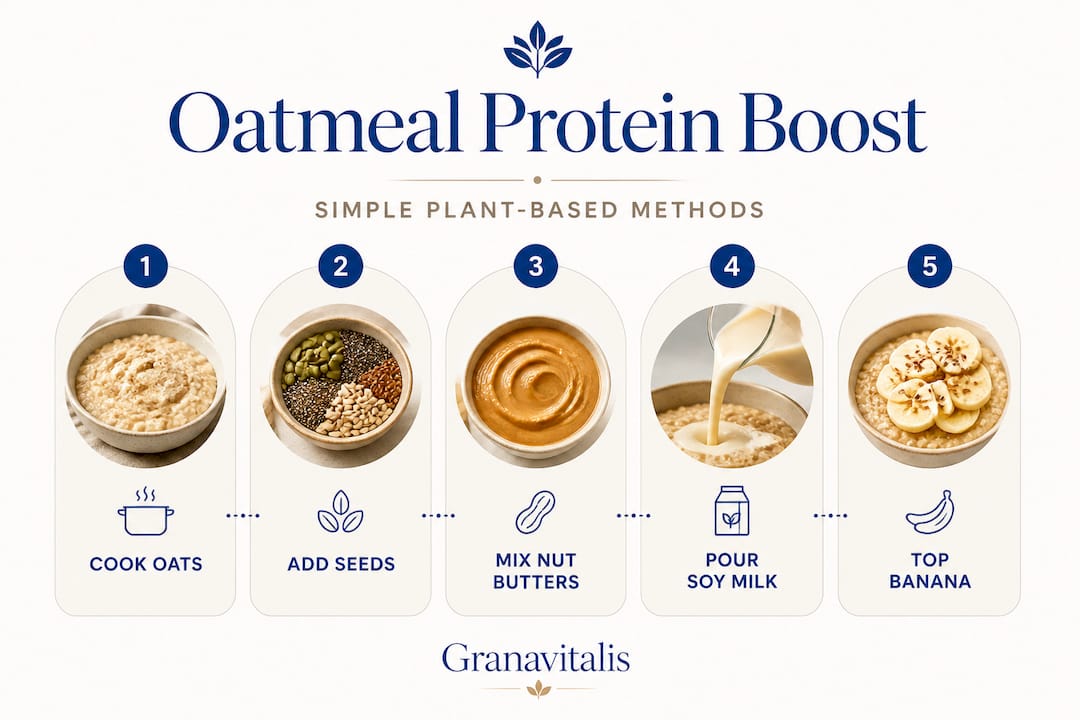
Choose your base. Rolled oats cook quickly (around 5 minutes on the hob) and have a creamy texture that blends well with added proteins. Steel-cut oats take 20 to 30 minutes but deliver a chewier, more filling result. A 50/50 blend of both is a good middle ground if time allows.
-
Select your cooking liquid. Swap plain water for soy milk or pea milk. Using soy milk instead of water can add up to 7 g more protein per serving without any noticeable change in taste or texture. Use 240 to 300 ml per serving.
-
Add your first protein layer. Stir in quinoa flakes or a spoonful of nut butter at the beginning of cooking. These mix in smoothly and become part of the creamy base. Combining grains and seeds further boosts overall protein content and improves the amino acid profile of the meal.
-
Stir in protein powder at the end of cooking. Remove the pan from the heat before adding powder to avoid clumping. Stir it in gradually with a small amount of extra liquid if needed. This protects the texture and prevents a gluey consistency.
-
Top with seeds, nuts, or nut butter. Adding seeds and chopped nuts after cooking preserves their crunch and prevents the delicate fats in seeds from oxidising through heat. This is also the point where you add fresh fruit, a drizzle of plant-based yoghurt, or a sprinkle of cinnamon.
For those who prefer not to cook in the morning, overnight oats solve the problem entirely. Here is how the two methods compare:
| Method | Prep time | Cook time | Protein flexibility |
|---|---|---|---|
| Hob-cooked oats | 2 minutes | 5 to 25 minutes | High: powders, butters, milks |
| Overnight oats | 5 minutes (evening) | None | High: seeds, tofu, soy milk |
| Microwave oats | 1 minute | 2 to 3 minutes | Moderate: liquids and butters |
If you want more ideas on natural porridge additions, the natural porridge protein tips resource covers a wide range of wholefood upgrades. For those who want to check whether their daily total is on track, tracking daily protein intake is a helpful habit to build alongside your new breakfast routine.
Pro Tip: Add seeds and nuts after cooking rather than during. Heat does not destroy their protein content, but it does soften their texture, and that satisfying crunch is part of what makes a bowl feel complete and indulgent rather than medicinal.
Troubleshooting and common mistakes
Even with a straightforward method, a few tweaks can help you master truly enjoyable, protein-boosted porridge.
The most common mistake people make is using too much protein powder at once. A full scoop dropped into hot oats can create a thick, gluey paste that is unpleasant to eat. Some protein powders can change the texture noticeably, so start with a half scoop and increase gradually over a week as your palate and recipe adjust.
The second pitfall is choosing sweetened protein powders or flavoured nut butters with added sugar. These can push the total sugar content of your bowl surprisingly high, which partly cancels out the blood sugar benefits of adding protein. Always check labels and choose unsweetened or minimally processed versions where possible.
Here are the most important points to keep in mind:
- Start with small amounts of protein powder (half a scoop) and build up
- Always mix thoroughly, adding a splash of liquid if the mixture becomes too thick
- Avoid sweetened protein products: added sugar undermines the satiety benefit
- Balance textures: a creamy base with crunchy toppings feels far more satisfying
- Rotate your protein sources week to week to maintain nutritional variety
For broader ideas on building a nutrient-rich breakfast bowl that goes beyond protein, there are practical frameworks worth bookmarking.
“Less is more when introducing new protein sources. Let your palate adjust, experiment with one ingredient at a time, and build a breakfast you genuinely look forward to.”
Pro Tip: If your oats feel heavy or dense after adding protein, stir in a handful of fresh berries or sliced banana. The natural moisture and sweetness balances the richness, and the additional fibre supports digestion beautifully.
How to tell if your oatmeal is working: Satiety and energy
After troubleshooting, here is how you know your protein upgrades are making a real difference.
The clearest sign is simple: you reach lunchtime without having thought much about food in between. Protein-enriched breakfasts increase morning satiety by over 30% compared to low-protein options, which translates directly into fewer mid-morning cravings and better focus on whatever the day demands of you.
Here is a practical way to track your progress over the first two weeks:
- Note your hunger level at 10:30 am on a simple scale of one to five, where one is comfortably full and five is ravenous. Do this for three days on plain oats, then again after switching to protein-enriched oats.
- Track your energy quality, not just whether you feel energised but whether that energy is steady. A protein-rich breakfast should produce a calm, consistent alertness rather than a quick lift followed by a dip.
- Observe your portion choices at lunch. Many people find they naturally select smaller portions or feel less driven to overeat when breakfast has been genuinely satisfying.
- Pay attention to mood and focus in the late morning. Blood sugar stability, supported by protein, has a measurable effect on cognitive clarity and emotional steadiness.
- Adjust your protein sources if results plateau. Rotating between seeds, nut butters, and powders keeps both your nutrition varied and your interest in the routine alive.
Exploring different high-protein porridge grains is a natural next step once you have found a base routine that works for you.
What most overlook about adding protein to oatmeal
Here is a perspective that is often missed in protein-boosting advice.
Most content on this subject gravitates towards protein powders as the headline solution. Pour a scoop in, job done. But the people who build lasting, genuinely healthy breakfast habits are not chasing a number on a nutrition label. They are building a bowl they actually want to eat every morning, one that feels like a pleasure rather than a protocol.
Whole ingredients like hemp seeds, pumpkin seeds, nut butters, soy milk, and silken tofu do something that powders alone cannot: they add real flavour, varied textures, and a depth of nourishment that includes healthy fats, minerals, and fibre alongside protein. Leveraging ancient grains like quinoa or amaranth in your oat base is another dimension entirely, bringing complementary amino acids and a nuttiness that makes the bowl feel genuinely satisfying.
The second thing people overlook is personalisation. Protein needs vary with body weight, activity level, and age. Someone in active training needs a different approach than someone managing their weight through moderate daily movement. Switching up your add-ins across the week, trying a seed-and-soy bowl on Monday and a nut butter-and-quinoa bowl on Thursday, keeps breakfast interesting and nutritionally richer than any single formula.
The real game-changer is not hitting twenty grams of protein before 8 am. It is building a consistent, varied morning ritual that you maintain across months and years. Small, sustainable habits outperform aggressive nutrition targets every time. Start with one protein addition this week. Get comfortable with it. Add a second next week. That is how lasting change actually happens.
Enhance your oatmeal with top plant-based proteins
For those eager to put these ideas into action, explore the following options from Granavitalis.
At Granavitalis, we source plant-based proteins and nut butters specifically chosen for purity, flavour, and real-world performance. Whether you are building your first protein oat bowl or refining a well-established morning routine, having the right ingredients makes all the difference.

Our Kick Ass Vegan Protein is a clean, plant-based protein blend designed to mix smoothly into warm oats without clumping or overpowering your bowl. For a whole-food addition with rich flavour and a healthy fat profile, the raw organic pecan butter stirs in beautifully and delivers natural protein alongside genuinely indulgent taste. If you want to explore a wider range of options, the nut and seed butter selection gives you several varieties to rotate through the week, keeping your breakfasts varied and nutritionally diverse. Rooted in quality, made for mornings exactly like yours.
Frequently asked questions
What is the best plant-based protein for oatmeal?
Nuts, seeds, and soy milk are all excellent choices, as plant-based protein options such as nuts, seeds, and protein powders provide both variety and taste. Combining two or three sources in a single bowl gives you a broader amino acid range.
How much protein should I add to my oatmeal?
Aim for 8 to 15 grams of added protein per serving to meaningfully improve fullness and energy, building towards 8 g protein per cup as a solid starting target. Adjust upward based on your body weight and activity level.
Can I add protein to oatmeal without using powders?
Absolutely. Adding nuts, seeds, soy milk, or tofu is a straightforward way to increase protein naturally, as shown in approaches to making a high-protein breakfast without relying on processed supplements at all.
How do I avoid a chalky taste from protein powder in oatmeal?
Start with a small amount of powder and mix it in thoroughly off the heat, following advice that some protein powders can change the texture significantly if added in excess. A splash of extra plant milk smooths out both flavour and consistency.
How long does a protein-enriched oatmeal keep you full?
A protein-rich oat breakfast can keep you comfortably satisfied for three to four hours, since protein-enriched breakfasts increase morning satiety by over 30% compared to low-protein alternatives. The exact duration varies with individual metabolism and overall serving size.
Recommended
- How to make vegan protein oatmeal: 8g protein per cup – Granavitalis
- High Protein Vegan Oatmeal: Make a Power Breakfast – Granavitalis
- Vegan porridge add-ins: boost flavour and nutrition naturally – Granavitalis
- Low-Calorie Plant Protein: 20g Blends Fuel Muscle & Wellness – Granavitalis
- Pure Plant Protein - Brainwellness