
High protein low carb breakfast without eggs
TL;DR:
- A high protein low carb breakfast without eggs is achievable using nutrient-dense alternatives like tofu, Greek yogurt, cottage cheese, chia seeds, and homemade protein bars. Combining diverse protein sources and choosing low-carb bases enhances nutritional value while maintaining practicality. Rotating savory and sweet options and employing efficient preparation methods support a sustainable, satisfying egg-free morning routine.
A high protein low carb breakfast without eggs is entirely achievable using nutrient-dense alternatives such as tofu, Greek yogurt, cottage cheese, chia seeds, and homemade protein bars. These options are not a compromise. They deliver the protein and satiety you need without relying on eggs as the default. Whether you avoid eggs by choice, allergy, or cost, the alternatives covered here are nutritionally complete, practical for busy mornings, and genuinely satisfying. Granavitalis has built its entire philosophy around exactly this kind of wholefood nutrition: real ingredients, real results, no shortcuts.
What are the best high protein low carb breakfast options without eggs?
The strongest egg-free, high-protein low-carb breakfasts share one quality: they combine a primary protein source with healthy fats and minimal starchy carbohydrates. Here are the options that consistently deliver on both nutrition and practicality.
-
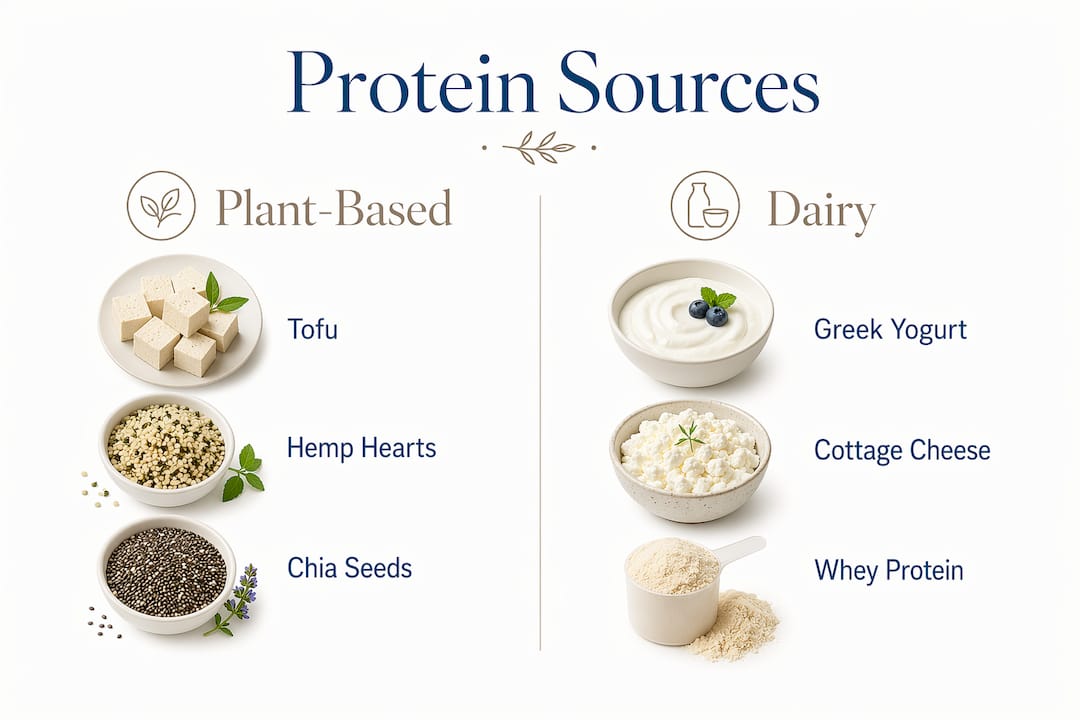
Tofu scramble with non-starchy vegetables. Tofu scrambles are protein-rich and contain minimal net carbs, making them one of the most direct egg replacements available. Season firm tofu with turmeric, smoked paprika, and nutritional yeast, then cook with spinach, courgette, and mushrooms for a savoury, filling plate.
-
Chia seed pudding. Made with unsweetened almond or coconut milk, chia pudding sets overnight and requires zero morning effort. It delivers fibre, omega-3 fatty acids, and a respectable protein base. Add a scoop of plant protein powder to push the macros further.
-
Greek yogurt bowls. Greek yogurt paired with keto granola and a handful of seeds gives you a quick, balanced breakfast with minimal cooking. Full-fat Greek yogurt typically contains 17 to 20 grams of protein per 200g serving, making it one of the most efficient egg-free protein sources.
-
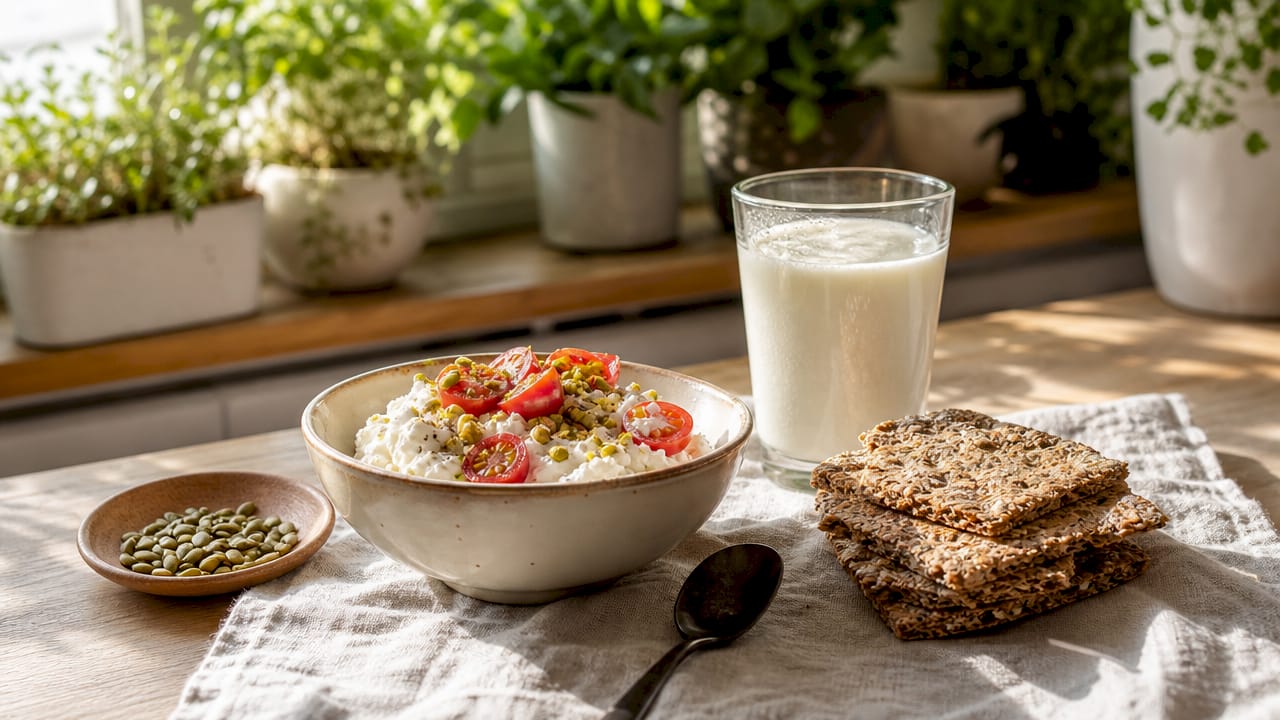
Cottage cheese combinations. Cottage cheese with walnuts, pumpkin seeds, and a few berries is a high-protein, low-carb bowl that takes under two minutes to assemble. It works equally well as a savoury option with cucumber, cherry tomatoes, and black pepper.
-
Cottage cheese breakfast bake. A keto cottage cheese bake using almond flour and protein powder delivers roughly 18g of protein and just 5g of net carbs per serving at around 183 calories. It can be made in batches on a Sunday and reheated throughout the week.
-
No-bake protein bars. Homemade bars made with almond butter, protein powder, and chia seeds require only 10 minutes of active preparation and one to two hours of chilling. They are portable, macro-balanced, and far more nutritious than anything from a petrol station shelf.
Pro Tip: Add a tablespoon of hemp hearts to any yogurt bowl or chia pudding. Hemp hearts provide approximately 10g of protein per three tablespoons, which is a meaningful boost with no cooking required.
How do you prepare egg-free high protein breakfasts efficiently?
Efficiency in the kitchen comes from knowing which methods suit which ingredients. Egg-free, high-protein low-carb breakfasts fall into three preparation categories: no-cook, stove-top, and baked. Each has its place depending on your schedule and preference.
| Breakfast option | Prep time | Protein (approx.) | Net carbs (approx.) | Method |
|---|---|---|---|---|
| Chia seed pudding | 5 min (overnight set) | 10–15g (with protein powder) | 4–6g | No-cook |
| Greek yogurt bowl | 3 min | 17–20g | 6–10g | No-cook |
| Tofu scramble | 10–12 min | 15–20g | 4–7g | Stove-top |
| Cottage cheese bake | 35–40 min | ~18g | ~5g | Baked |
| No-bake protein bars | 10 min + 1–2 hrs chill | 15–20g | 5–8g | No-cook |
The no-cook options are the most practical for weekday mornings. Prepare chia pudding or portion Greek yogurt bowls the evening before and your breakfast is already done. For stove-top tofu scrambles, the key is high heat and a dry pan to avoid a watery result. Press your tofu for at least 15 minutes before cooking to remove excess moisture.
For baked options, almond flour and nut butters are the structural backbone. They keep carb counts low while providing the richness and body that eggs would normally contribute. Almond flour absorbs moisture differently from wheat flour, so always follow recipe ratios carefully rather than substituting by weight.
- Batch-cook cottage cheese bakes on a Sunday. Slice into portions, wrap individually, and refrigerate for up to four days.
- Pre-mix dry ingredients for protein bars in a jar. When ready, add nut butter and liquid, press into a tin, and chill.
- Portion Greek yogurt into jars with seeds and nuts the night before. Add keto granola in the morning to keep it crunchy.
Pro Tip: When incorporating plant-based protein powder into baked recipes, reduce your oven temperature by 10°C and check five minutes early. Plant proteins can dry out faster than standard flour-based batters.
How to boost protein and control carbs in egg-free breakfast recipes
Maximising protein while keeping carbohydrates low requires deliberate ingredient choices rather than simply removing eggs and hoping for the best. The following strategies make a measurable difference.
-
Choose the right protein powder. Beef protein isolate produces fudgy, dense baked goods while whey protein can become rubbery if overbaked. Pea protein works well in puddings and smoothies but can add a slightly earthy flavour to bakes. Match your powder to the recipe format for the best result.
-
Add hemp hearts liberally. Three tablespoons of hemp hearts add 10g of protein to any bowl or pudding with almost no carbohydrates. They have a mild, nutty flavour that complements both sweet and savoury profiles. Sprinkle them over yogurt bowls, stir into chia pudding, or press into the top of no-bake bars.
-
Use almond flour or coconut flour instead of oats. Oats are a common breakfast staple but carry a significant carbohydrate load. Almond flour provides structure in bakes with a fraction of the carbs, and coconut flour absorbs liquid efficiently in puddings and pancake-style recipes. Both support a 30g plant protein breakfast when combined with other protein sources.
-
Avoid sweetened yogurts and flavoured protein products. Many commercially available yogurts and protein bars contain added sugars that push net carbs well above what a low-carb plan allows. Full-fat, plain Greek yogurt and unflavoured or naturally sweetened protein powders are the reliable choices.
-
Pair nut butters with seeds. Almond butter, pecan butter, or hazelnut butter combined with chia or pumpkin seeds creates a fat and protein combination that sustains energy for hours. Pumpkin seeds in particular are worth noting: they contain around 30g of protein per 100g, making them one of the most protein-dense seeds available.
Pro Tip: When substituting protein powders in a recipe, swap by weight rather than volume. Different powders have different densities, and a scoop of pea protein is not the same volume as a scoop of whey.
What are the common mistakes when removing eggs from low-carb breakfasts?
Removing eggs from a high-protein low-carb breakfast routine introduces a few predictable challenges. Knowing them in advance saves a lot of wasted ingredients and frustration.
Texture problems in baked goods are the most common issue. Eggs provide binding, lift, and moisture retention. Without them, bakes can crumble or turn dense. Flaxseed meal mixed with water (one tablespoon flaxseed to three tablespoons water, rested for five minutes) acts as a reliable binder in cottage cheese bakes and protein muffins.
Overly soft no-bake bars are usually caused by too much liquid. Adding liquid gradually and chilling for a full one to two hours is the fix. If bars still do not hold their shape, reduce the liquid by a tablespoon and increase the chia seeds, which absorb moisture and firm up the mixture.
Sodium management with cottage cheese matters if you eat it daily. Cottage cheese contains 300 to 400mg of sodium per half-cup, which adds up quickly across multiple servings. Choose low-sodium varieties where available, or balance with lower-sodium foods throughout the day.
Flavour monotony is the silent killer of any dietary change. Alternating between savoury and sweet profiles is the most effective way to maintain long-term adherence. A savoury tofu scramble on Monday, a sweet chia pudding on Tuesday, a Greek yogurt bowl with berries on Wednesday. Variety is not a luxury. It is a strategy.
“Replacing eggs requires balancing binding and protein completeness. Combining diverse sources like hemp hearts and cottage cheese replicates the nutritional profile more effectively than any single substitute.”
Key takeaways
A high protein low carb breakfast without eggs works best when you combine multiple protein sources, choose low-carb bases like almond flour and full-fat dairy, and rotate between sweet and savoury options to maintain consistency.
| Point | Details |
|---|---|
| Egg-free protein sources | Tofu, cottage cheese, Greek yogurt, hemp hearts, and protein powder each deliver 10–20g protein per serving. |
| No-cook options save time | Chia pudding and Greek yogurt bowls can be prepped the night before with no morning cooking required. |
| Protein powder selection matters | Beef isolate suits baked goods; pea protein suits puddings; whey works in bars but overbakes easily. |
| Sodium awareness with cottage cheese | Cottage cheese contains 300–400mg sodium per half-cup; choose low-sodium versions for daily use. |
| Flavour variety drives adherence | Alternating savoury and sweet profiles prevents monotony and supports long-term dietary consistency. |
Why egg-free breakfasts deserve more credit than they get
I have watched egg prices climb and egg allergies become more widely acknowledged, and yet the default advice in most nutrition circles is still “just eat eggs.” That frustrates me, because the alternatives are genuinely excellent. A well-made tofu scramble with smoked paprika and nutritional yeast is not a consolation prize. It is a different, equally satisfying meal.
What I have found from years of working with wholefood nutrition is that people abandon egg-free breakfasts not because the food is bad, but because they run out of ideas after three days. The fix is not willpower. It is a wider repertoire. Build five or six reliable recipes across both sweet and savoury categories, and you will never feel restricted.
The other thing worth saying plainly: protein powder is your friend here. A single scoop in a chia pudding or a cottage cheese bake transforms a modest breakfast into a genuinely high-protein meal. The key is choosing a clean, minimally processed powder. Not everything on the market qualifies. Look for short ingredient lists and no added sugars.
For anyone managing weight alongside these dietary goals, the high-protein breakfast and weight loss connection is well-supported. Protein at breakfast reduces appetite hormones and keeps you fuller for longer, regardless of whether eggs are involved.
— Jarrod
Build your egg-free breakfast routine with Granavitalis

Granavitalis sources the nut butters, seeds, and clean plant proteins that make egg-free, high-protein low-carb breakfasts genuinely easy to build. The Raw Organic Pecan Butter by RAWGORILLA is a standout ingredient for no-bake protein bars and yogurt bowls. It adds richness, healthy fats, and a depth of flavour that transforms a basic recipe into something worth waking up for. For variety across the week, the Organic Nut and Seed Butter Selection Box gives you multiple flavour profiles to rotate through your breakfast routine. Purity, performance, and purpose in every jar.
FAQ
What is the highest protein egg-free breakfast option?
Cottage cheese bakes and Greek yogurt bowls are among the highest-protein egg-free breakfasts, delivering 17 to 20g of protein per serving. Adding hemp hearts or a scoop of protein powder to either option pushes that figure higher.
Can you get enough protein at breakfast without eggs or meat?
Yes. Combining Greek yogurt, cottage cheese, hemp hearts, chia seeds, and plant protein powder gives you 25 to 35g of protein without eggs or meat. The key is using multiple sources rather than relying on one.
Are no-bake protein bars a good low-carb breakfast option?
No-bake bars made with almond butter, protein powder, and chia seeds are a practical, portable low-carb breakfast option. They require only 10 minutes of active preparation and deliver balanced macros when made with the right ingredients.
How do I stop egg-free breakfasts from becoming boring?
Rotate between savoury options such as tofu scrambles and cottage cheese bowls, and sweet options such as chia pudding and Greek yogurt with berries. Flavour variety is the most reliable way to maintain a new breakfast routine long-term.
Is cottage cheese suitable for a daily low-carb breakfast?
Cottage cheese is an excellent daily protein source, but its sodium content of 300 to 400mg per half-cup warrants attention for those monitoring salt intake. Opt for low-sodium varieties if you plan to eat it every day.