
High-fibre vegan recipes to boost health in 2026
TL;DR:
- Vegan diets built around whole foods and variety naturally meet daily fiber requirements.
- Incorporating ingredients like legumes, whole grains, seeds, nuts, vegetables, and fruit boosts fiber intake.
- Batch cooking and simple swaps make high-fiber vegan eating sustainable and easy to maintain.
Switching to a vegan diet is a brilliant move for your health, but hitting your daily fibre target can feel surprisingly tricky. Processed vegan foods line the supermarket shelves, and convenience often wins over whole-food cooking. The result? Many plant-based eaters fall short of the 25–38g of daily fibre their bodies genuinely need. The good news is that vegan diets naturally exceed the recommended daily allowance when meals are built around variety and whole foods. This guide gives you the recipes, comparisons, and practical strategies to make high-fibre eating effortless and genuinely delicious.
Table of Contents
- How to spot truly high-fibre vegan recipes
- Top 7 high-fibre vegan recipes for every meal
- Whole foods vs processed: How does fibre stack up?
- Practical tips to boost fibre in your vegan meals
- Our take: Why variety, simplicity and habit matter for high-fibre vegan success
- Supercharge your vegan fibre journey with Granavitalis
- Frequently asked questions
Key Takeaways
| Point | Details |
|---|---|
| Whole foods matter | Recipes based on real, minimally processed ingredients are the most effective source of dietary fibre for vegans. |
| Prep skills boost intake | Simple prep methods and batch cooking remove the most common practical barriers to high-fibre eating. |
| Diverse meals win | Mixing up legumes, grains, seeds, and vegetables daily helps you naturally exceed your fibre needs. |
| Processed foods fall short | Even ‘healthy’ convenience vegan foods often lack the fibre content of a homemade meal. |
How to spot truly high-fibre vegan recipes
With the importance laid out, let’s see how to make sure your recipes hit the mark. Fibre is the indigestible part of plant foods that feeds your gut bacteria, supports digestion, and helps maintain healthy cholesterol levels. Most adults need between 25g and 38g per day, yet the average intake sits well below that. The fix is simpler than you might think.
The foundation of any high-fibre vegan recipe is its ingredient list. Look for these powerhouse foods:
- Legumes: Lentils, chickpeas, black beans, and kidney beans (7–10g fibre per 100g cooked)
- Wholegrains: Oats, quinoa, barley, and brown rice
- Seeds: Chia, flaxseed, hemp, and sunflower seeds
- Nuts: Almonds, walnuts, and pecans
- Vegetables: Broccoli, artichokes, sweet potato, and peas
- Fruit: Raspberries, pears, and avocados
A quick checklist to assess any recipe:
- Does it contain at least one legume or wholegrains?
- Are there two or more vegetables?
- Is it minimally processed (no refined flour or stripped grains)?
- Does it include seeds or nuts for texture and added fibre?
Minimally processed recipes always win for fibre. Once a grain is refined or a vegetable is juiced, much of its fibre is lost. Keeping ingredients close to their natural state is the single most powerful thing you can do. Diversity in plant foods means it is easy for vegans to exceed daily fibre needs when meals include whole foods, and our plant-based food guide breaks this down further.
“The more colours on your plate, the more types of fibre you are feeding your gut. Different fibres feed different bacteria, so variety is everything.”
Pro Tip: Aim for at least five different colours on your plate each day. Each colour signals a different fibre type, and together they create a thriving gut environment.
Top 7 high-fibre vegan recipes for every meal
Now that you know what to look for, here is a curated menu to get you started. Plant-based meals featuring fibre-rich ingredients offer an easy way to reach and exceed the recommended intake, and these seven recipes prove it.
| Recipe | Key fibre ingredients | Fibre per portion |
|---|---|---|
| Breakfast quinoa bowl | Quinoa, chia seeds, berries | ~11g |
| Lentil shepherd’s pie | Green lentils, sweet potato | ~14g |
| Chickpea salad wrap | Chickpeas, avocado, wholegrain wrap | ~12g |
| Veggie chilli | Kidney beans, black beans, tomatoes | ~16g |
| Nutty overnight oats | Oats, flaxseed, almond butter | ~10g |
| Seedy snack bars | Sunflower seeds, oats, dates | ~8g |
| Roasted vegetable grain salad | Barley, roasted veg, pumpkin seeds | ~13g |
For breakfast, the quinoa bowl and overnight oats are your best friends. Our vegan protein oatmeal recipe shows you exactly how to layer in protein alongside fibre, and our plant-based breakfast ideas give you even more morning inspiration.
For lunch and dinner, the veggie chilli is a standout. Double the batch on a Sunday and freeze portions for the week. The lentil shepherd’s pie is another batch-cooking hero. If you want to explore ancient grains like barley and farro in your grain salad, our ancient grain inspiration page is worth bookmarking.
Batch-cooking tips:
- Cook a large pot of lentils or beans at the start of the week
- Roast a full tray of mixed vegetables on Sunday
- Prepare overnight oats in four jars at once for grab-and-go mornings
Pro Tip: Aim to include at least two different legumes each day. Variety in legumes means variety in fibre types, which supports a broader range of gut bacteria.
Whole foods vs processed: How does fibre stack up?
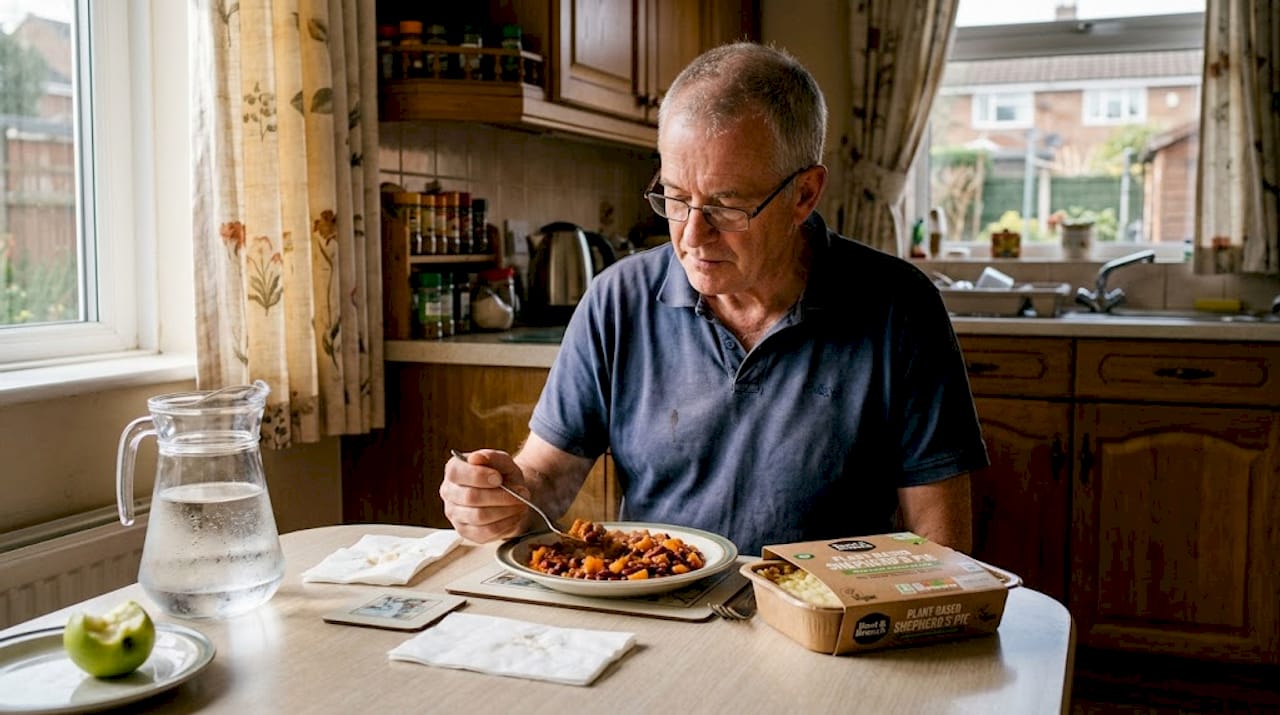
It is not just the ingredients but how you prepare them that matters. Let’s compare. The difference between a home-cooked bean burger and a store-bought veggie burger can be dramatic, not just in taste but in nutritional value.
| Food | Fibre per serving | Sodium per serving |
|---|---|---|
| Homemade black bean burger | ~9g | ~200mg |
| Store-bought veggie burger | ~2g | ~450mg |
| Home-cooked lentil soup | ~12g | ~180mg |
| Tinned vegan soup (processed) | ~3g | ~700mg |
| Homemade chickpea curry | ~11g | ~220mg |
| Ready-meal vegan curry | ~3g | ~850mg |
Processed vegan foods are much lower in fibre compared to whole foods, and the sodium difference above shows you are also getting a cleaner meal when you cook from scratch.
“Cooking in batches is not meal prep. It is an investment. Two hours on a Sunday can protect your fibre intake for the entire week.”
The solution is not to cook every meal from scratch every day. That is unrealistic. Instead, cook in bundles. Make a large pot of chilli, a tray of roasted vegetables, and a batch of cooked grains. Mix and match them across the week. You get variety without the daily effort. If you are curious about how whole-food protein sources compare too, our piece on vegan versus whey protein puts the numbers side by side.
Simple swaps that make a real difference:
- Swap white rice for barley or brown rice
- Replace store-bought hummus with home-blended chickpeas and tahini
- Choose a wholegrain wrap over a white flour tortilla
Practical tips to boost fibre in your vegan meals
Even small changes can yield big results. Here is how to put fibre gain into action. Common barriers such as skills and access can be overcome with the right recipes and preparation techniques, and these strategies are designed to fit around real life.
- Sprinkle seeds on everything. A tablespoon of chia or flaxseed on porridge, salads, or soups adds 3–5g of fibre instantly.
- Swap your grains. Replace white pasta with wholegrain, and white rice with quinoa or barley.
- Sneak vegetables into sauces. Blended courgette, carrot, or spinach disappears into tomato sauce but adds fibre and nutrients.
- Batch cook fibre-rich staples. Cook lentils, chickpeas, and brown rice in bulk and refrigerate for up to five days.
- Eat fruit whole, not juiced. A whole orange has 2.4g of fibre. Juiced, it has almost none.
- Add a handful of nuts to snacks. Almonds and walnuts offer fibre alongside healthy fats and protein.
- Use wholegrain flour in baking. Swap half the plain flour in any recipe for wholegrain or spelt flour.
- Plan your snacks. Sliced apple with almond butter, or oatcakes with hummus, keep fibre ticking over between meals.
For those looking to combine high fibre with solid protein, our guides on high-protein vegan meals and vegan protein sources show you how to do both without overcomplicating your kitchen routine.
Pro Tip: Keep a small bag of mixed seeds and a piece of fruit in your bag or at your desk. When hunger hits between meals, these two items alone can add 5–7g of fibre to your day without any cooking.
Our take: Why variety, simplicity and habit matter for high-fibre vegan success
Stepping back, what really makes a high-fibre vegan lifestyle sustainable? Here is our honest answer: it is not the most ambitious recipes that transform your fibre intake. It is the most repeatable ones.
We see it constantly. People start a plant-based journey with elaborate meal plans, exotic ingredients, and complex techniques. Within three weeks, they are back to convenience foods because the effort is unsustainable. The real shift happens when you build two or three go-to dishes and adjust them weekly. A lentil soup this week becomes a lentil and sweet potato stew next week. Small variations keep it interesting without demanding a complete reinvention.
Do not chase complex superfoods. Lean into what is quick, affordable, and already in your kitchen. Oats, lentils, tinned beans, frozen vegetables, and a bag of seeds will outperform any expensive supplement stack for fibre, every single time. Our approach to meal consistency reflects this thinking. Habit beats heroics. Build the habit, and the fibre takes care of itself.
Supercharge your vegan fibre journey with Granavitalis
Ready to take the next step? The recipes and strategies above work brilliantly with clean, whole-food ingredients that you can trust.
At Granavitalis, we have made it easy to add fibre-rich nutrition to every meal. Stir our Lean & Green® mix into smoothies or soups for a plant-powered fibre and nutrient boost. Our Kick Ass Vegan Protein pairs perfectly with overnight oats or post-workout bowls, adding protein without sacrificing fibre. For a natural, flavourful finishing touch, our pecan butter works beautifully stirred into porridge or spread on wholegrain crackers. Browse our full range and find the ingredients that make your high-fibre vegan lifestyle genuinely effortless.
Frequently asked questions
What foods are best for adding fibre to a vegan diet?
Top sources include lentils, beans, whole grains, seeds, nuts, fruits, and vegetables. Diversity in plant foods makes it easy for vegans to exceed their daily fibre needs without complicated planning.
How much fibre should I eat daily on a vegan diet?
Aim for at least 25–38g of fibre per day. Vegan diets often easily exceed this amount when meals are built around varied whole plant foods rather than processed alternatives.
Are processed vegan foods high in fibre?
Most processed vegan foods are significantly lower in fibre than home-cooked, whole-food meals. Processed vegan foods are lower in fibre and often higher in sodium, making scratch cooking the smarter choice.
Can I get enough fibre if I am new to vegan cooking?
Absolutely. With simple recipes and basic meal prep habits, meeting your fibre needs is very achievable. Barriers can be overcome with practical recipes and preparation skills, even if you are just starting out.